The roots that carry us, the threads that weave us
To be quite honest with you, this symbol of the family reunion has fascinated me for centuries. For us Bakus, seeing a family gather within a human’s mind is like watching a constellation form. Each member present isn't necessarily the real person from your waking life. Oh no, it is much more subtle than that. Your subconscious uses the face of your grandmother or your cousin to embody a part of yourself: your forgotten wisdom, your rebellious side, or even that nostalgia for a simpler time.
When you dream of a family reunion, you are diving deep into your roots. Roots are not just what tether us to the ground; they are the conduits through which we receive the very energy of life. If the reunion is joyful, it often means you are at peace with your history—that the different parts of your being are conversing harmoniously around the table of your mind.
But I also know that these dreams can feel heavy. Sometimes, the table is too long, the faces are blurred, or a quarrel breaks out. Do not fear these tensions. They are not premonitions of future fights, but messages about your own internal bonds. If you feel stifled by the presence of your relatives in a dream, perhaps it is a sign that you need to define your own boundaries. It is a bit like Dreaming of Chains: Meaning and Interpretation; sometimes, the links that unite us feel a little too much like shackles we didn't choose.
---
The theater of the unconscious: Who is sitting at your table?
Truth be told, I am not a fan of dream dictionaries that say "seeing your uncle means financial gain." It’s so terribly dry... A dream is a piece of poetry, not a ledger. To understand your family reunion dream, look instead at the overall atmosphere. Is it a celebration? A funeral? An endless meal where no one speaks?
In my long existence devouring nightmares, I have noticed that dreamers who feel lost in their professional lives often have dreams of large, confusing family gatherings. Why? Because their spirit is searching for an anchor. We return to the clan when the storm rages outside. It is a quest for security, a need to remember where we come from so we can know where we are going.
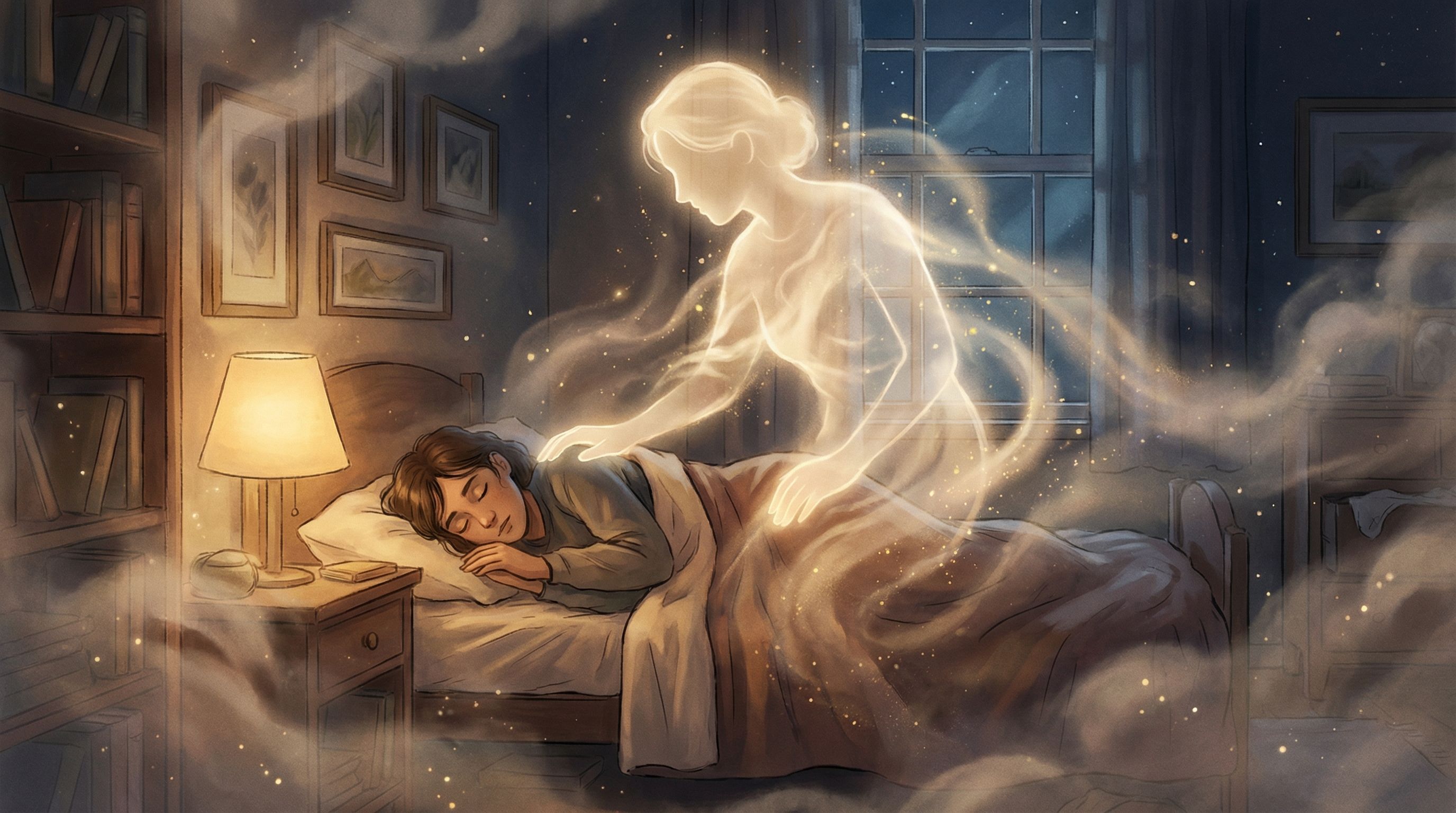
A while ago, a dreamer told me they had dreamed of a dinner with relatives who had long since passed away. They were terrified, thinking it was an ill omen. I reassured them: these "visits" are gifts. Your roots never truly die; they continue to nourish the tree you have become. These ancestors came to bring them a strength they could no longer find within themselves. It is a form of reconciliation with the passing of time.
On the other hand, if the reunion feels strange—if people are acting oddly—it might be that you are questioning the values passed down to you. You are no longer obligated to eat the dish served at that table if you are no longer hungry for it. The dream is showing you that you have the right to choose which traditions you wish to keep and which you prefer to let drift away with the morning mist.
Interpretation is never an exact science, and I sometimes doubt the meaning of certain details myself, but one thing is certain: your family in a dream is a mirror of your deepest humanity.
Have you ever noticed how some faces at the table seem to belong to another era entirely? There is a quiet grace in how our minds summon those we never met in waking life. In many Eastern traditions, it is believed that we carry the unhealed grief and the silent triumphs of seven generations back in our very bones. When you experience these deeper visitations, it is often a gentle nudge from your subconscious to acknowledge the invisible inheritance you carry. By confronting these ancient figures, you aren't just attending a simple dinner; you are participating in a profound dialogue, much like dreaming of ancestors who still wish to be heard. It is a reminder that you are the tip of a very deep root system, and sometimes, the sap simply needs to flow freely again.
To be quite blunt with you, I find it exhausting when popular psychology insists that a family gathering must always represent warmth and unity. What of those dreams where the soup is cold, the lights are flickering, and everyone sits in an unbearable, stifling silence? I once watched over a young dreamer who spent her nights wandering through a grand mansion where her relatives sat like polished wax dolls, completely unresponsive. It was terrifying for her, yet it was a brilliant defense mechanism of her mind. When your waking life demands too much emotional performance, your subconscious might freeze the frame to protect you. That cold, silent banquet isn't a curse; it is a sanctuary of temporary numbness. It is your mind's way of saying: you are allowed to observe without being consumed.
Sometimes, the dream-mind loves to play the trickster by introducing a complete stranger into this intimate circle. I remember a tired architect who told me he kept dreaming of his childhood dining table, but sitting right between his mother and his late grandfather was his demanding boss, quietly passing the salt. We laughed about it, but the meaning was beautifully clear. Your mind is clumsy yet honest; it blends your separate worlds when one begins to bleed into the other. Seeing a familiar face from your professional life, such as dreaming of a colleague sitting at your family altar, is a vivid boundary check. It tells you that your current worries are encroaching upon your most sacred, foundational spaces. It is a gentle plea from your sleeping self to close the office door before you sit down to feed your soul.
If you feel that these images are too dense or that the faces in your dreams trouble you, do not sit alone with these questions. In the Midnight Mind app, I helped design a Dreamed People Journal that allows you to note who appears in your nights and what messages these figures seem to carry. It is a wonderful way to see if the same faces return to speak to you about your roots.
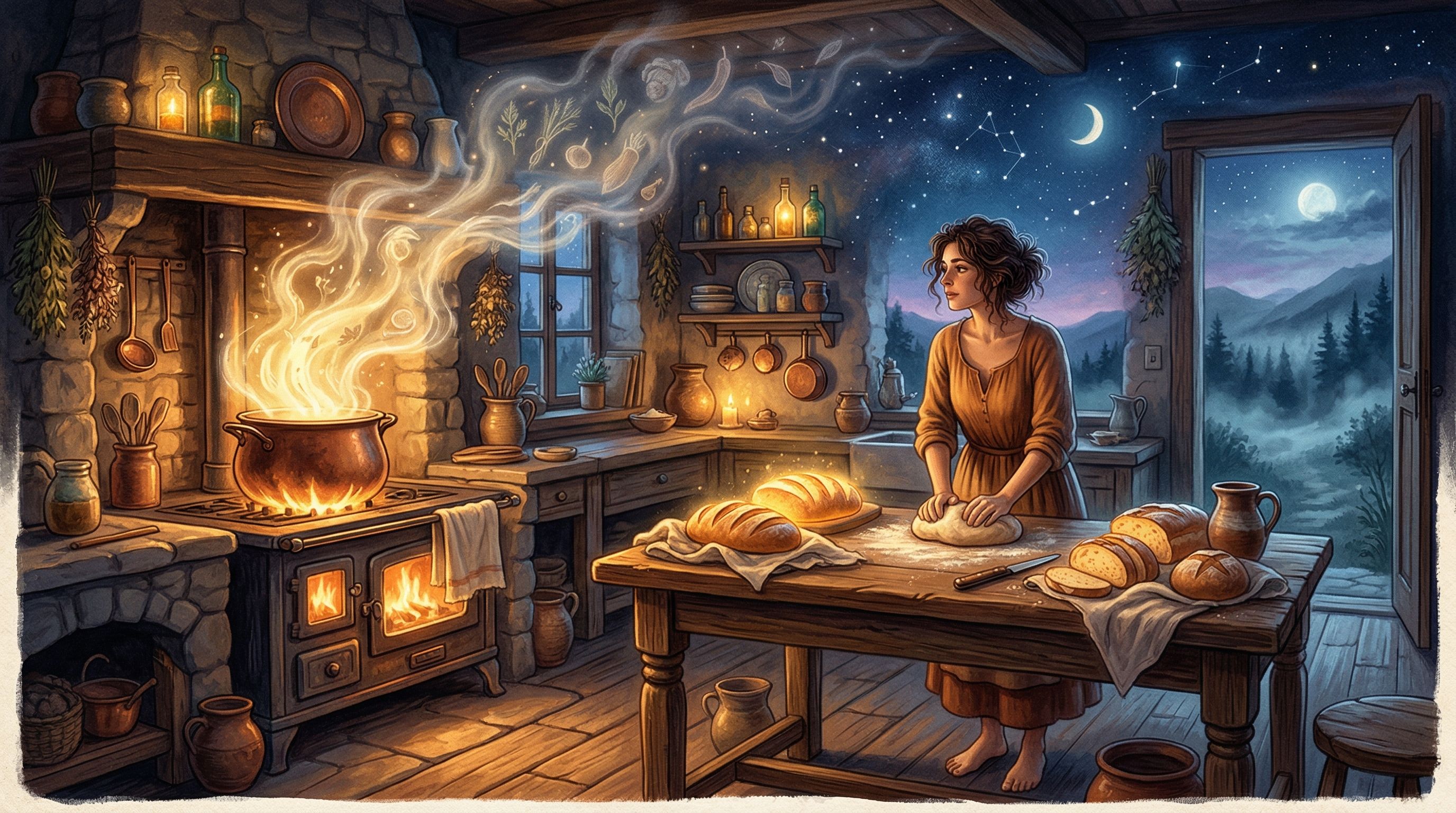
Does this symbol of the family table still intrigue you? You might try adding it to your personal collection to see how it evolves over your nights. After all, understanding one's dreams is a bit like learning to cook an ancestral recipe: it takes patience, a little intuition, and a great deal of gentleness.
---