Whispering Roots: A Legacy Beyond Blood
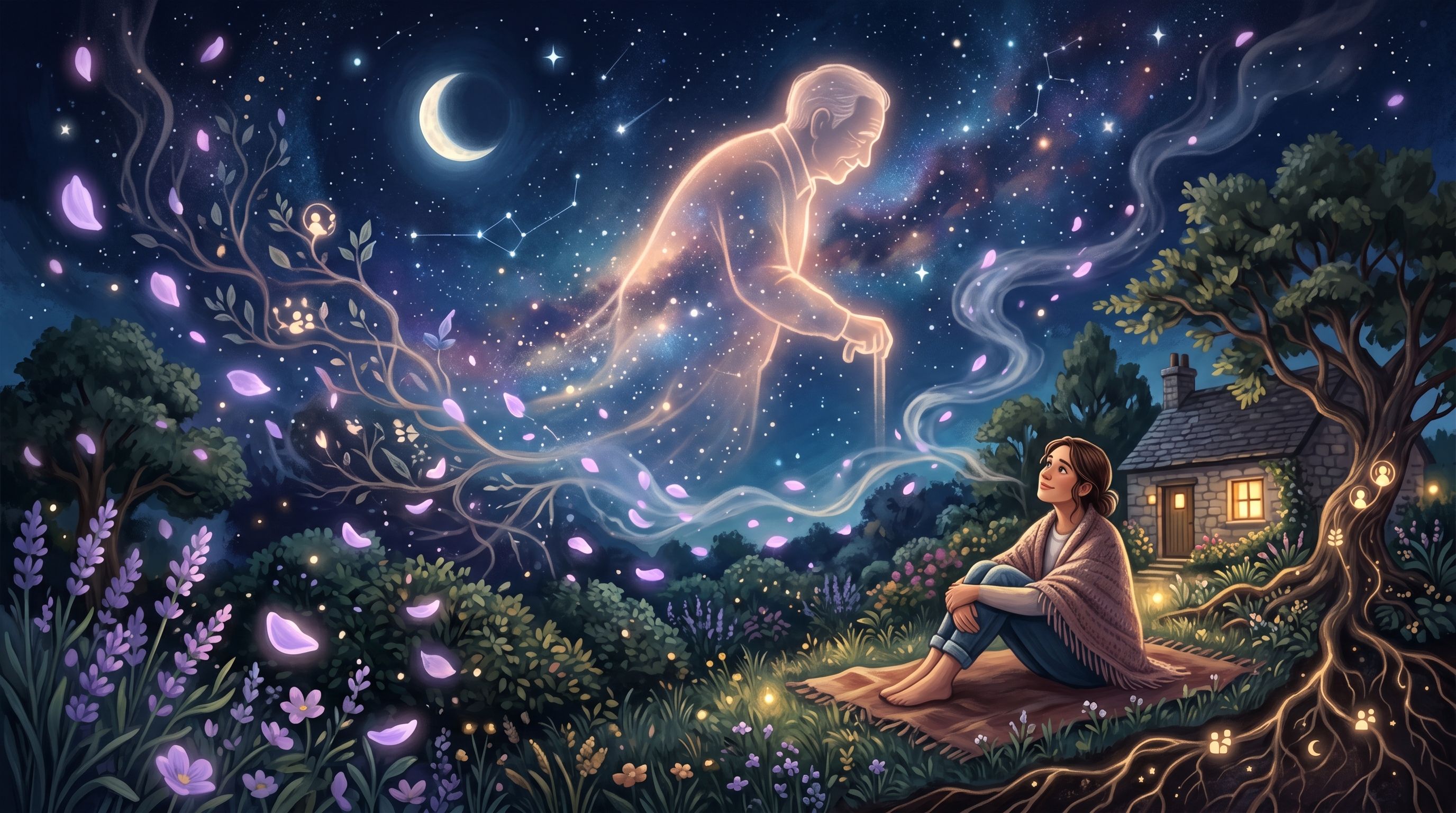
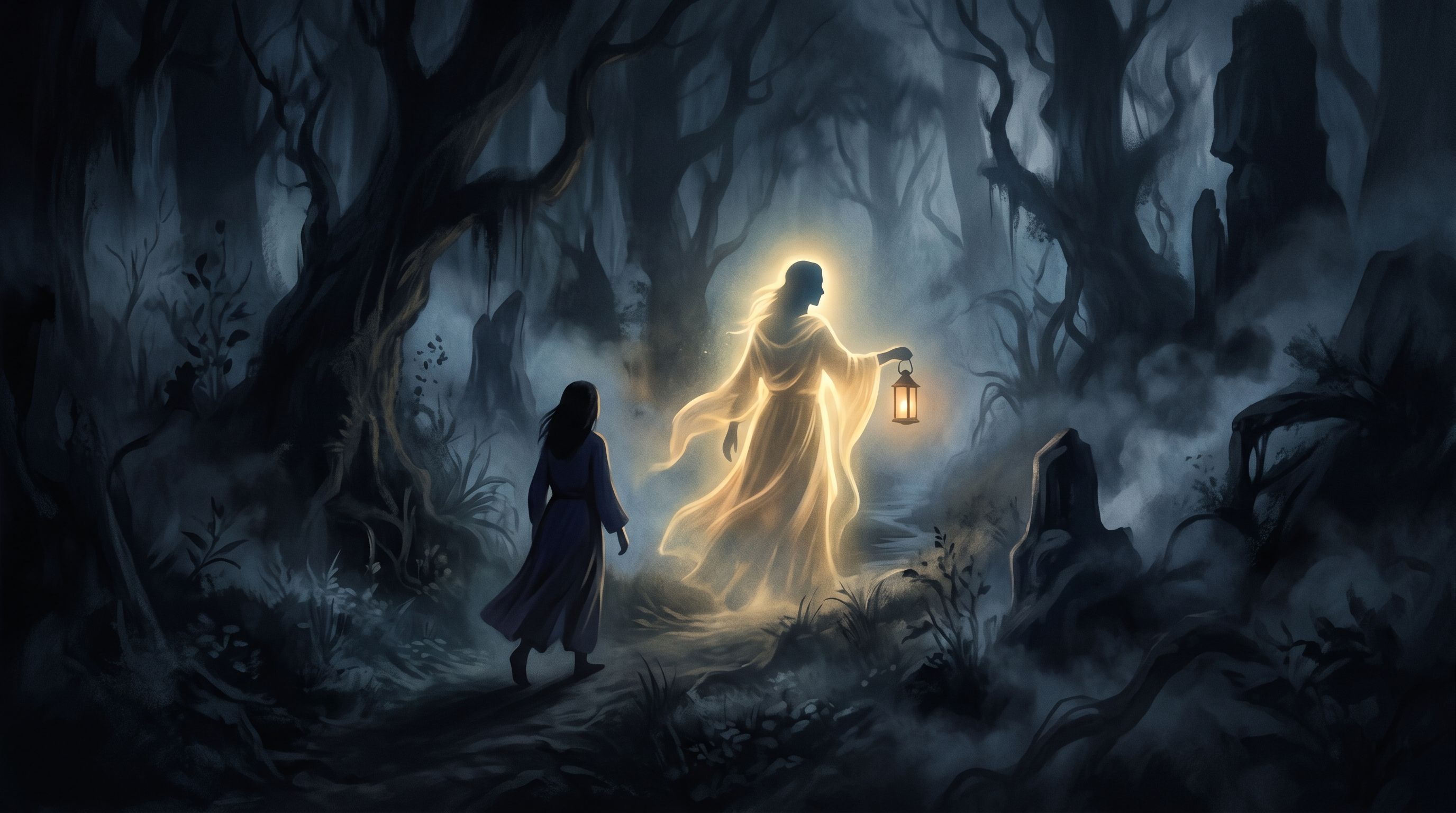
In my time devouring the nightmares and wonders of dreamers, I often come across ancient shadows. I see them—these figures of ancestors, standing at the edge of your consciousness, waiting in the dim light of your REM cycles. Honestly, this symbol has fascinated me for years because it touches upon something much vaster than simple genealogy. When you dream of an ancestor, you are coming face-to-face with your own foundations.
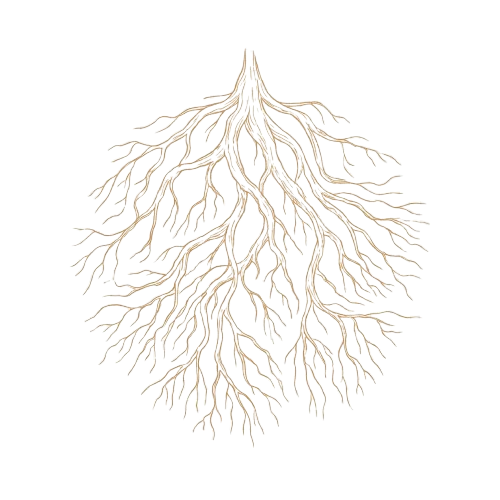
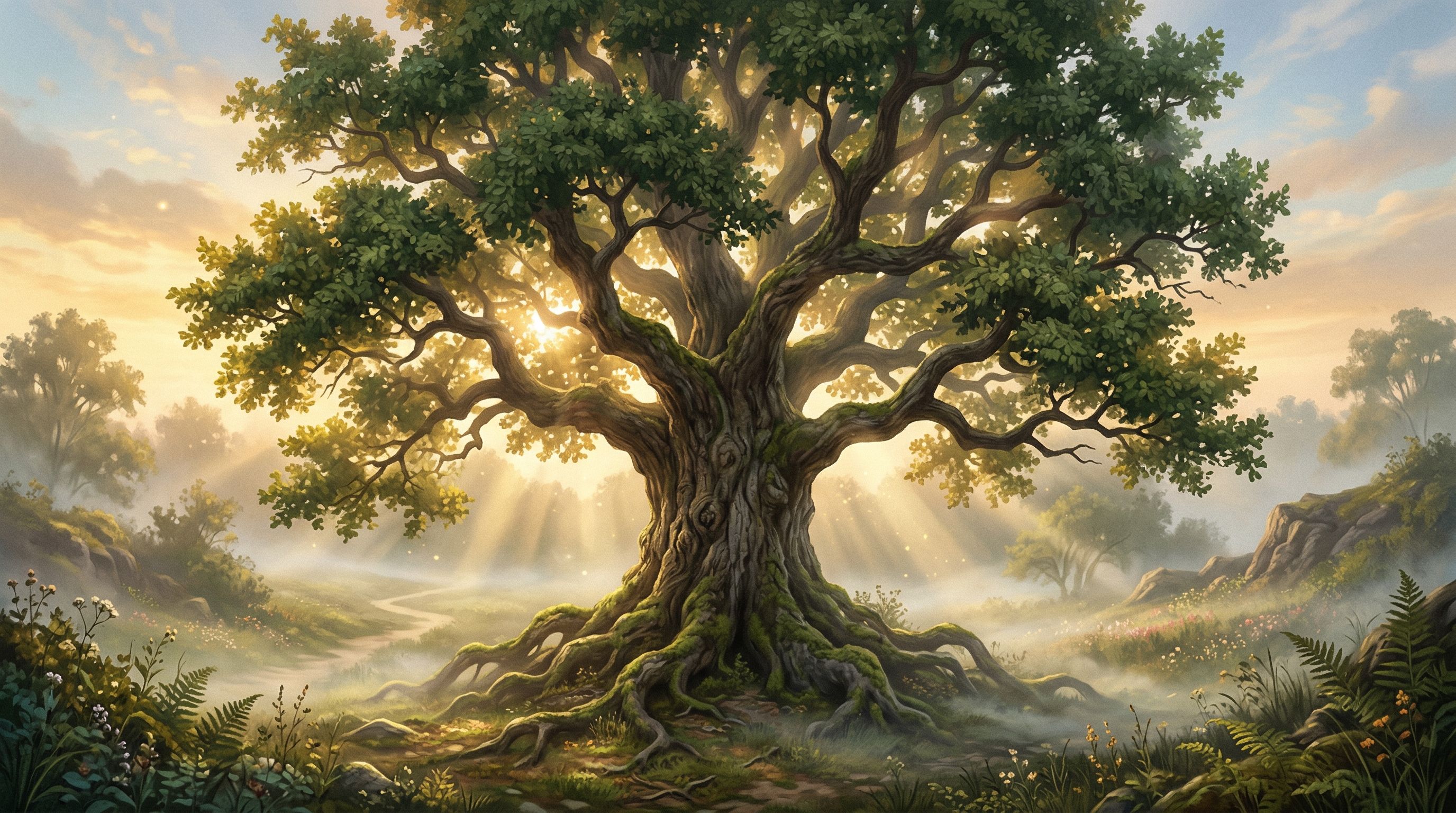
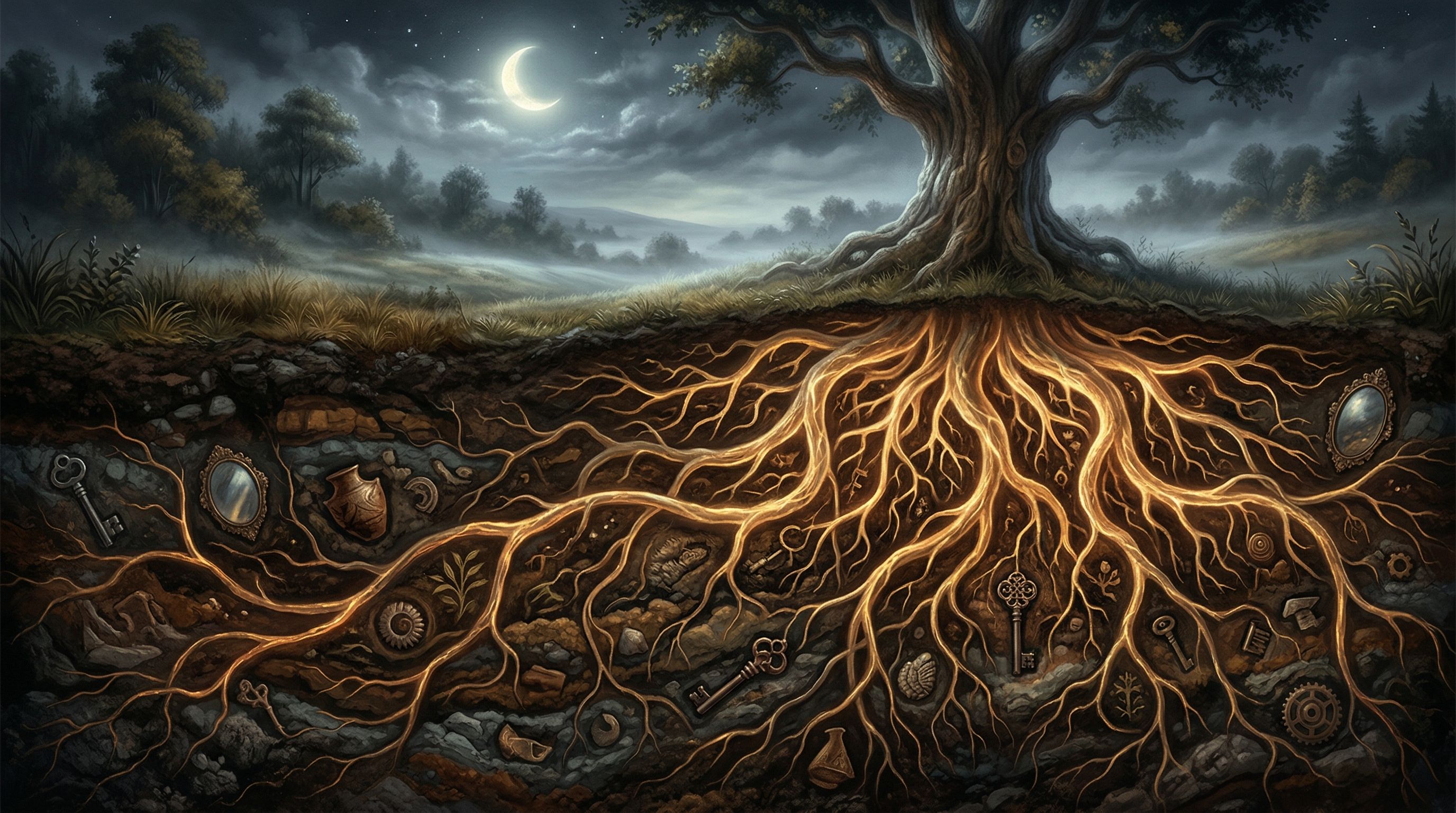
Imagine your mind as an immense, ancient tree. What you experience in your daily life—your tasks, your fleeting worries—are the leaves and the small branches. But the ancestor represents the sap and the complex, underground network of roots. When they appear, they ask a silent, echoing question: "Do you know where you come from, so that you may know where you are going?"
They aren't always benevolent figures, and I want you to be prepared for that. Sometimes, an ancestor can seem stern, distant, or even frightening, much like encountering an unusual animal in a place it doesn't belong. Do not let this coldness frighten you. In the world of dreams, severity is often a metaphor for the discipline or the boundaries needed to break a destructive cycle.
We all carry a heritage that doesn’t quite belong to us. Some specialists in psychology suggest that we inherit more than just eye color; we may carry "ghost emotions"—inherited fears, stifled talents, or unspoken secrets that ripple through generations. If the ancestor you see appears sad or angry, it’s quite likely that you are processing something that took root long before you were born.
🌙 Yume’s Echo: You are the latest page of a book that has been written for centuries. Sometimes, the authors just want to see how the story is going.
---
The Science of the "Ghost": Why Your Brain Reaches Back
While the experience feels mystical, there is a grounded side to why your brain chooses these specific avatars. Some researchers in the field of evolutionary psychology suggest that our brains are hardwired to seek ancestral archetypes during times of high stress. When your "modern" self feels overwhelmed, your subconscious reaches back to the "ancient" self for survival strategies.
During sleep, specifically during the deep stages of dreaming, your brain filters through memories. It doesn't just look at what you did yesterday; it looks at the narratives you’ve been told since childhood. If you were raised with stories of a resilient great-grandmother, your brain might "summon" her image when you are facing a situation that requires resilience.
It is also worth noting that these dreams often occur when we are at a crossroads. The ancestor acts as a biological and psychological anchor. They represent the fact that life, in its infinite complexity, has survived everything—wars, famines, heartbreaks—just to reach you. This realization can have a profound physiological effect, lowering cortisol levels upon waking as you feel less "alone" in your struggle.
---
The Ancestor as a Mirror: Between Wisdom and Burden
I’ll be honest with you: I’m not a fan of those generic dream dictionaries that claim an ancestor automatically announces "divine protection" or "imminent fortune." That is far too reductive for the complexity of your soul. As a Baku watching the tapestry of your unconscious, I see the ancestor primarily as a mirror.
If you see this forebear handing you an object, I want you to look at it closely in your mind's eye. This object is often the true key to the dream. Is it a piece of jewelry? A letter? A simple, weathered stone? It is a symbol of a quality or a truth you need to integrate into your current life. Sometimes, we look for answers in the outside world when they are already written in our cellular memory.
However, there is also what I call "the weight of the ancestors." It saddens me to see interpretations that forget our roots can sometimes stifle us. If, in your dream, the ancestor blocks your path or seems to chain you down, it means you might be ready to free yourself from a tradition or a family expectation that no longer fits who you are.
This is a sacred moment of individuation. It is the moment you decide to keep the wisdom of your elders while leaving behind their prejudices or their wounds. You are allowed to say "no" to the ghosts of the past if their path no longer serves your light.
---
Concrete Example: The Blacksmith’s Strength
I once met a dreamer who was haunted by the image of a blacksmith ancestor, even though he had no one of that trade in his known family tree. This man was in the middle of a terrifying career change, feeling fragile and uncertain.
The blacksmith in his dream wasn't a literal ghost; he was the manifestation of the dreamer’s own inner strength. By showing him the act of forging metal in the heat, his subconscious was reminding him of his own capacity to "forge" a new destiny out of the raw materials of his life.
The ancestor was the bridge between his current fear and his latent power. When he finally embraced the image, his anxiety began to dissipate, replaced by a steady, rhythmic confidence.
---
Listening to the Silence of the Elders
Dreams of ancestors are rarely loud or chaotic. They often take place in an atmosphere of profound stillness, a sort of heavy solemnity. This is a sign from your inner self that you need to slow down. In a world that constantly chases the "new" and the "instant," your mind brings you back to the "old" to stabilize your nervous system.
If you feel lost right now, as if you are floating without any anchors, this dream comes to remind you that you are a link in a chain. You are not a solitary island. Even if you don't know your family history, or if that history is a painful one, the image of the ancestor symbolizes a life force that is inherently yours.
My advice to you, as a devourer of shadows, is not to look for an immediate logical explanation. Let the image of this ancestor infuse within you like tea in warm water. How did you feel in their presence? Protected? Judged? Free? That raw emotion is the true translation of the dream. The rest—the clothes they wore, the words they spoke—is just the scenery.
The unconscious is a deep forest where every tree has a story to tell. Sometimes, it is good to sit at the foot of a hundred-year-old trunk and simply listen to the wind in the leaves. Your dreams are that wind. They are not there to scare you, but to help you breathe more deeply, knowing that your feet rest upon a soil rich with everything that came before you.
If you feel that these visions are repeating and you would like to keep a record of their faces or the objects they entrust to you, you might find peace in documenting them. If you want to explore your dreams more in depth, your Baku is waiting for you.
Take care of your dreams; they are the sentinels of your soul. May your sleep be light and your discoveries deep. 🔮
Have you noticed how these ancient visitors rarely speak? In my long nights of swallowing nightmares, dreamers often tell me they felt frustrated because their departed elders remained entirely silent. There is a peculiar, heavy quietness to these encounters, like the cool air in a room locked away for decades. I once met a young man who was deeply unsettled by this; he kept dreaming of a grandparent who merely stood by an open window, bathed in amber light, refusing to utter a single word. He assumed he was being judged. But silence in the dream world isn't an empty void; it is a room of resonance. By withholding spoken advice, your ancestor gently forces you to stop looking for easy, external maps. They do not want to command you; they want you to quiet your modern mind enough to hear the ancient drumbeat already guiding your steps.