The Shadow on the Shore: Why Does the Ferryman Make Us Shiver?
Honestly, I understand your unease. In our shared imagination, the ferryman evokes Charon and the voyage of no return. But in the world of dreams, death is rarely literal; it is almost always a shedding of skin. When you dream of a figure helping you cross a river or a border, your mind is simply processing a fear of change.
I remember a dreamer who constantly saw an old man holding out an oar to him. He was terrified. Yet, as we spoke (in the language of the mists, of course), it became clear that this old man was merely a reflection of his own budding wisdom, urging him to leave a job that was stifling him. It isn't the ferryman who is frightening; it is the vastness of the other shore.
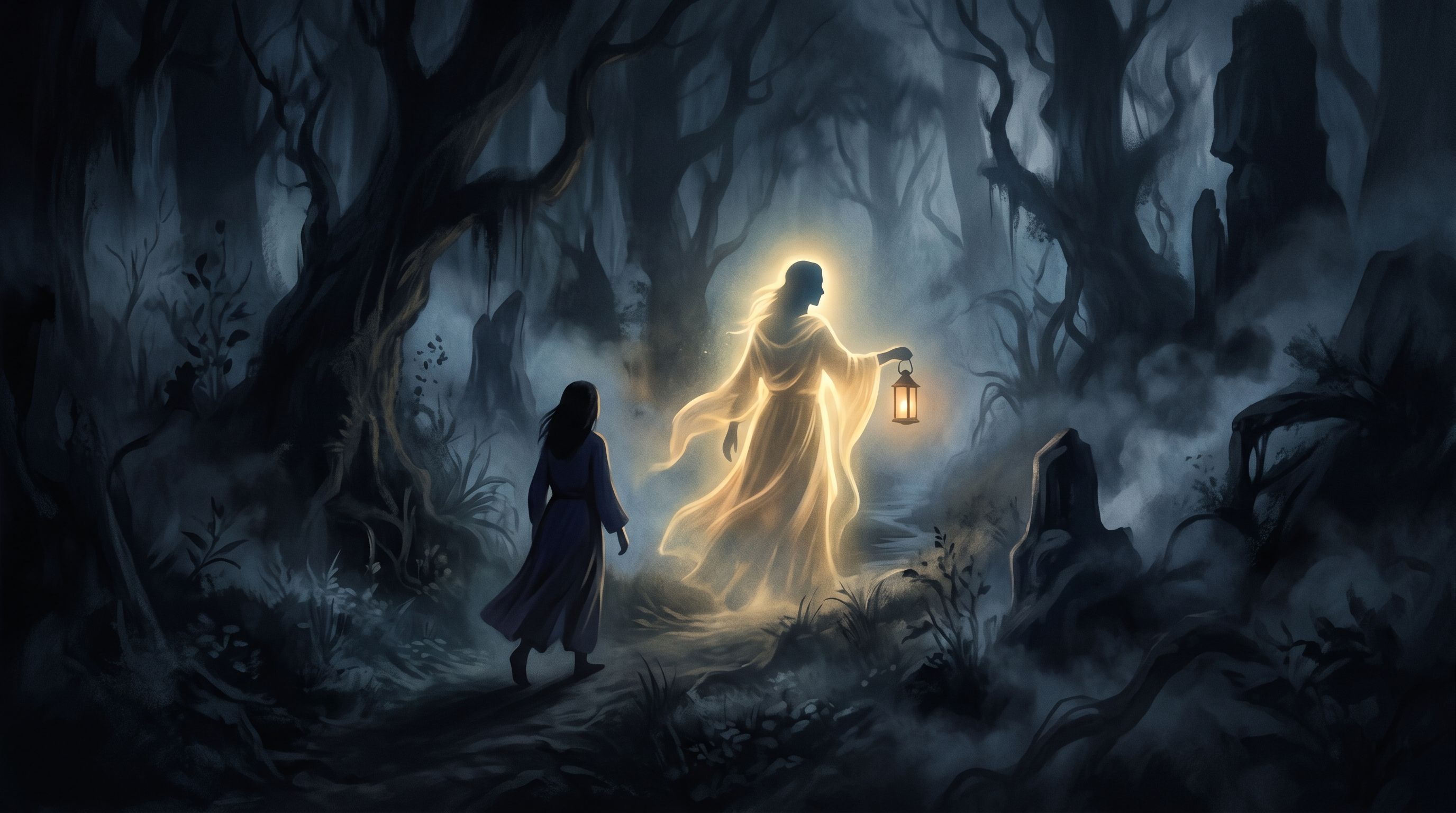
The ferryman often appears when we feel stuck. He is the catalyst. Sometimes, the setting itself emphasizes this waiting, such as when one finds themselves lost in an endless hallway that seems to lead nowhere. The ferryman arrives to break the stagnation. He is the living bridge. If you see him, it means you are ready, even if your conscious mind screams otherwise. This is what fascinates me about you humans: your soul always knows before your head does.
Sincerely, this symbol has fascinated me for centuries because it is universal. It reminds us that no one is an island and that, to pass from one emotional state to another, we sometimes need mediation. The ferryman is the acceptance that we cannot control everything alone.
More Than Simple Transport: The Alchemy of Letting Go
I have a small confession to make: I am not a fan of dream dictionaries that say "Ferryman = imminent death." It is a distressingly lazy interpretation. The ferryman is logistical help for your psyche. Sometimes, he takes very modern forms. I have seen ferrymen in the guise of taxi drivers, train conductors, or even paramedics in an ambulance racing through the city.
The heart of the message lies in the transition. What are you leaving behind? The ferryman often asks for a "toll." This isn't necessarily money. In your dreams, it might be a cherished object, a key, or even a piece of clothing. It is a poetic metaphor for renunciation. We cannot enter a new life carrying the old grudges of the past.
Ask yourself: how was the ferryman? Was he benevolent? Stern? Indifferent?
- If he was stern, perhaps you are being too hard on yourself during this period of change.
- If he was silent, it means the answer will not come from the outside, but from your ability to listen to the silence within.
- If he was waiting for you, it is wonderful news: the universe (or your subconscious, call it what you will) has already prepared the ground for your evolution.
There is something deeply reassuring about the presence of a ferryman. It means that the chaos you may currently feel has a structure, a purpose, and above all, an end. You are not drifting aimlessly on a black ocean; there is a pilot, a direction, and a destination. Even if you cannot yet see dry land through the fog of your doubts, the simple fact that the ferryman is there proves that the land exists.
To be honest, this symbol remains mysterious even to me at times. He changes his face according to the culture and the personal history of the one who sleeps. But one thing never changes: he is the guardian of movement. And in life, as in dreams, movement is health.
If this mysterious guide continues to haunt your nights, do not push him away. Welcome him. Ask him where he is taking you. You might be surprised by the gentleness of the journey once you stop rowing against the current. Dreams are whispers of our own wisdom, and the ferryman is undoubtedly the wisest of all our nocturnal guests.
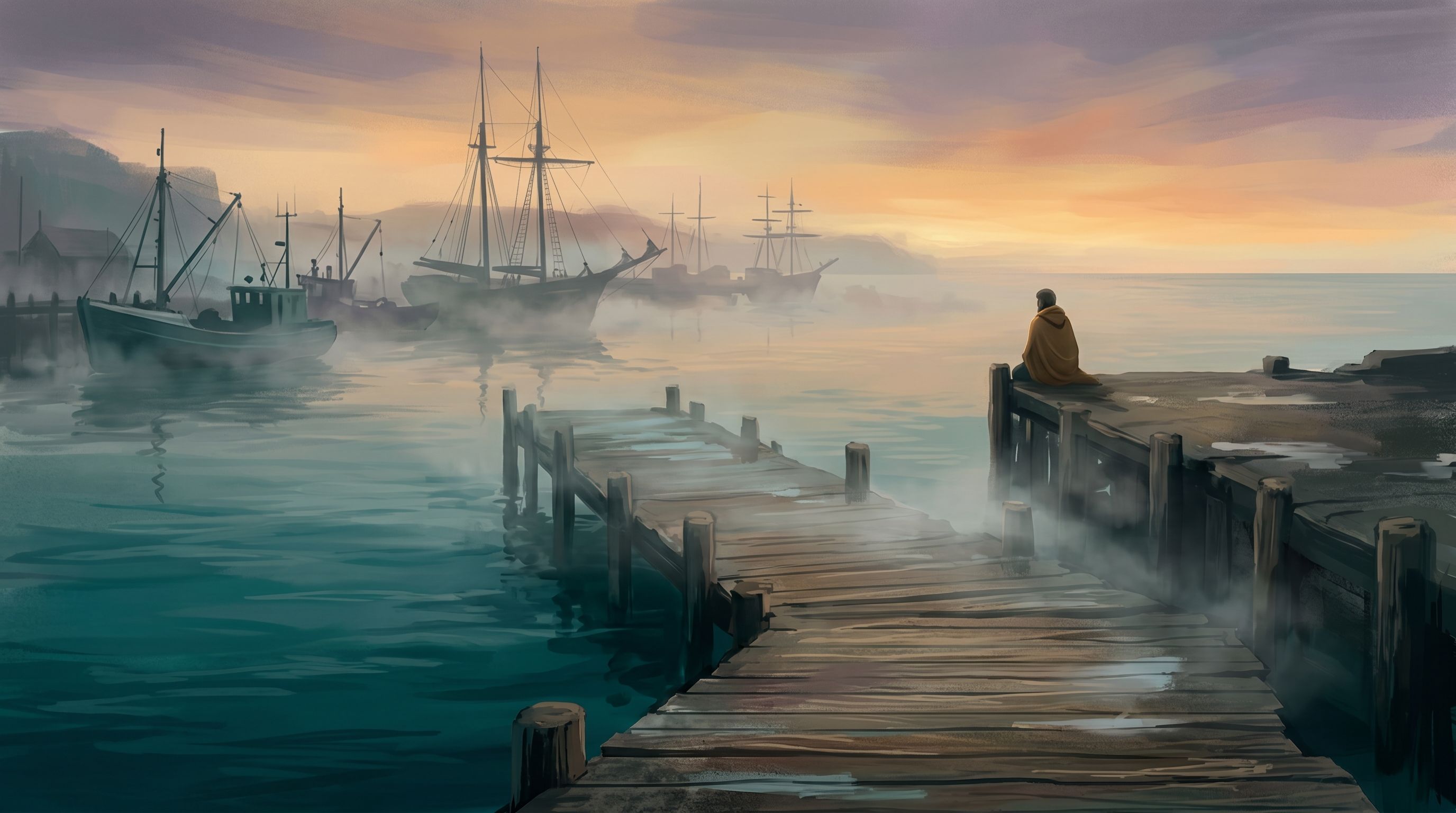
Have you noticed how quiet these dreams are? There is rarely a gust of wind, only the rhythmic, heavy slap of dark water against wood. When you try to speak to the ferryman, your voice often dissolves into the mist, unanswered. I find this sensory suspension beautiful, yet it is deeply unsettling for many dreamers. This silence isn't a refusal to communicate; it is an invitation to listen to your own internal resonance. In the quiet of dreaming of twilight, when the waking world's chatter finally dies down, the ferryman’s muteness forces you to face what you are carrying. If he answered you in words, he would just be another external authority telling you what to do. By remaining silent, he acts as a mirror. He doesn't judge your hesitation or your grief; he simply waits for you to sit down in the boat and let the current do its work.
There is a highly specific, agonizing phase of this dream that I often see people struggle with: the middle of the river. You have stepped off the solid ground of your past, but the new shore is still wrapped in thick fog. You are suspended. This feels remarkably like dreaming of purgatory—a temporary holding zone where your identity is completely fluid. I once watched over a dreamer who woke up sobbing because the ferryman had stopped rowing right in the middle of a black lake. She felt abandoned. But the truth was much gentler: her psyche was giving her a moment to grieve. You cannot simply jump from one life chapter to another without honoring the space between them. The ferryman stops because he knows your soul needs to adjust to the cold air of the transition before you can touch solid ground again.
Sometimes, you might find yourself refusing to step onto the vessel. I have seen dreamers argue passionately with their guide, trying to negotiate a different path or demanding to walk instead of ride. It is a natural human reaction to resist the unknown. But trying to bypass this guide is like trying to cross a chasm without a bridge; you are only exhausting yourself by ignoring the natural helpers your mind has summoned. The ferryman never forces you. He will not drag you into his boat by the collar. He simply stands there, patient as stone, holding the oar. If you turn back, you only return to a shore that has already begun to crumble behind you. The dream invites you to surrender to the movement, to trust that the water will hold you even when you cannot see the bottom.
If you feel that this silhouette still has things to tell you, or if you want to keep a record of every guide you cross paths with in your nights, Midnight Mind can help you map out your own dream world, with its creation studio and your personal symbol journal.