The Impact: When Life Leaves a Mark
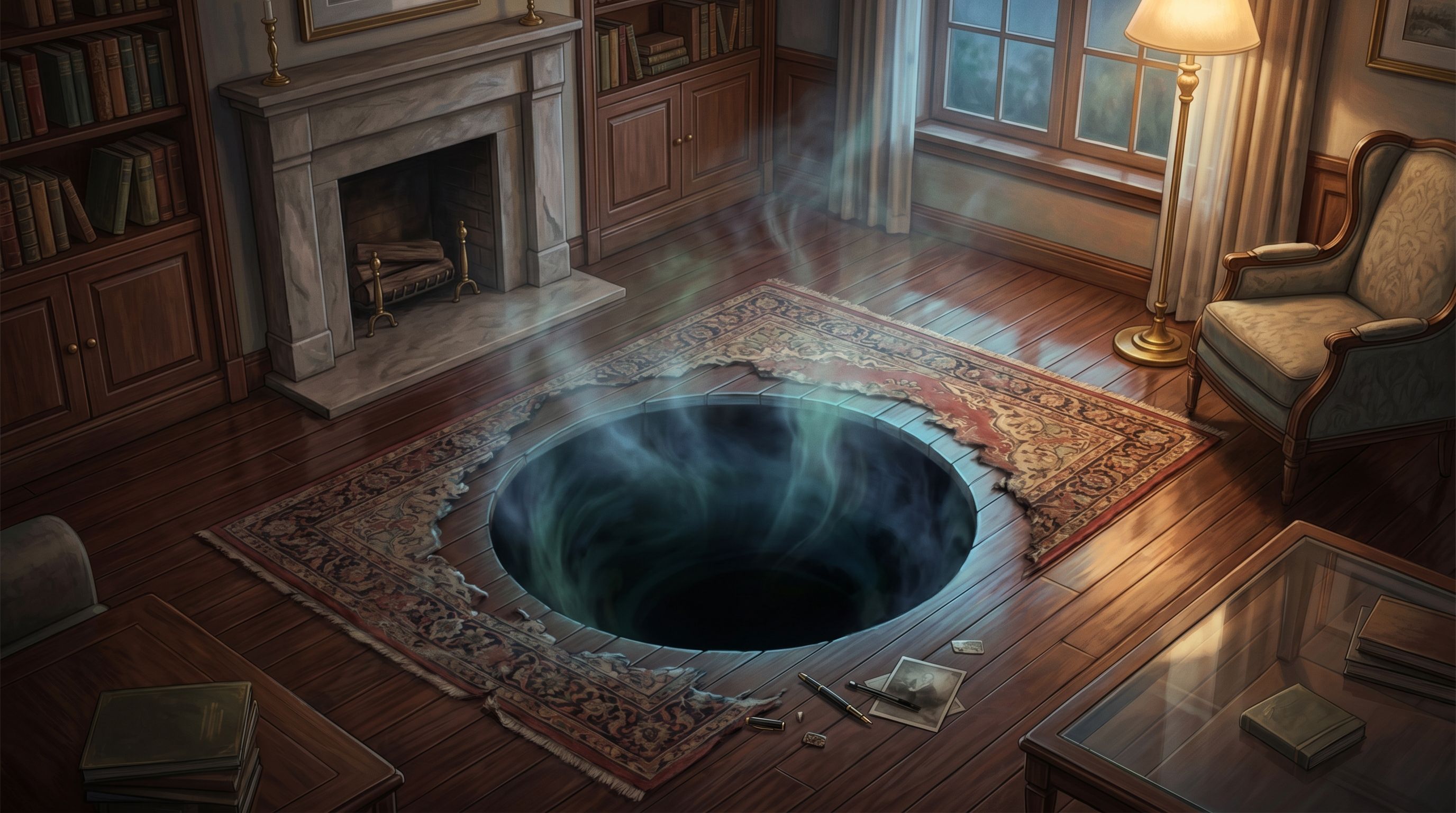
As I wander through the nocturnal landscapes of your mind, I often stumble upon these strange formations. A crater isn’t simply a hole in the ground; it is an open scar, a silent testament that an immense force has struck your inner earth.
This symbol has fascinated me for ages. Why does your subconscious choose such a dramatic image? A crater is the result of a collision. It isn’t the slow, gentle erosion you might see on an old mountain path; it is sudden, it is brutal.
In your dreams, this often represents an emotional shock or a change in trajectory that you hadn't seen coming. Some specialists in dream psychology suggest that these "impact sites" represent moments where our ego was forced to break open to allow a deeper truth to surface.
The crater tells you: "Look, something happened here." It isn’t necessarily negative. Sometimes, it is a sign that a truth has fallen from the sky—almost as if a cosmic force wanted to draw your attention to a specific point in your existence.
The dream doesn't show you the fall; it shows you the result. It asks you to accept that your ground is no longer flat, and that is perfectly okay. A landscape with relief and depth is always more interesting than a monotonous plain. Just as encountering a dwarf might represent a hidden, grounding force, the crater represents the space where that force has made its mark.
Befriending the Void and the Silence
I am not a fan of dream dictionaries that claim a hole signifies "loss" or "failure." That is far too simplistic. For me, the void of a crater is a breath. It is a zone where nothing grows for the moment, and it is that very silence that is precious.
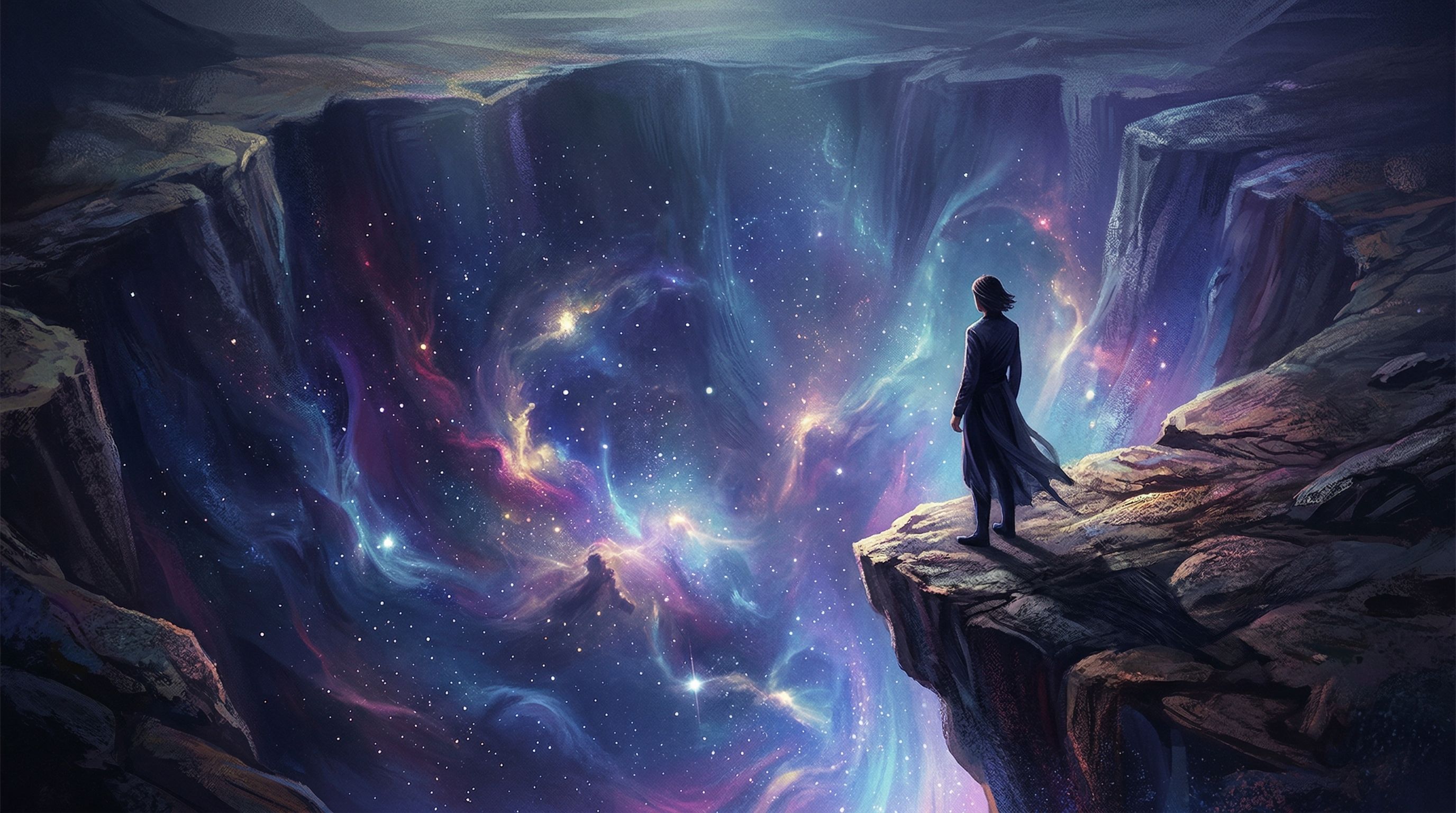
Have you noticed how different the air feels at the edge of an abyss? There is a sense of vertigo, yes, but also an immense clarity. Dreaming of a crater is sometimes your mind reclaiming the right to build nothing for a while.
You are being asked not to rush to fill this hole. In our modern world, we have a horror of the vacuum; we want to fill everything immediately with work, social media, or endless talk. Your dream, however, invites you to sit at the edge of this absence and simply breathe.
🌙 Yume’s Echo: A crater is not a sign of something missing; it is the physical proof that you have been touched by something greater than yourself.
To be honest, this symbol remains mysterious even to me, because every crater has its own temperature. Some are smoking, a sign that the emotion is still burning hot, that the anger or surprise is fresh.
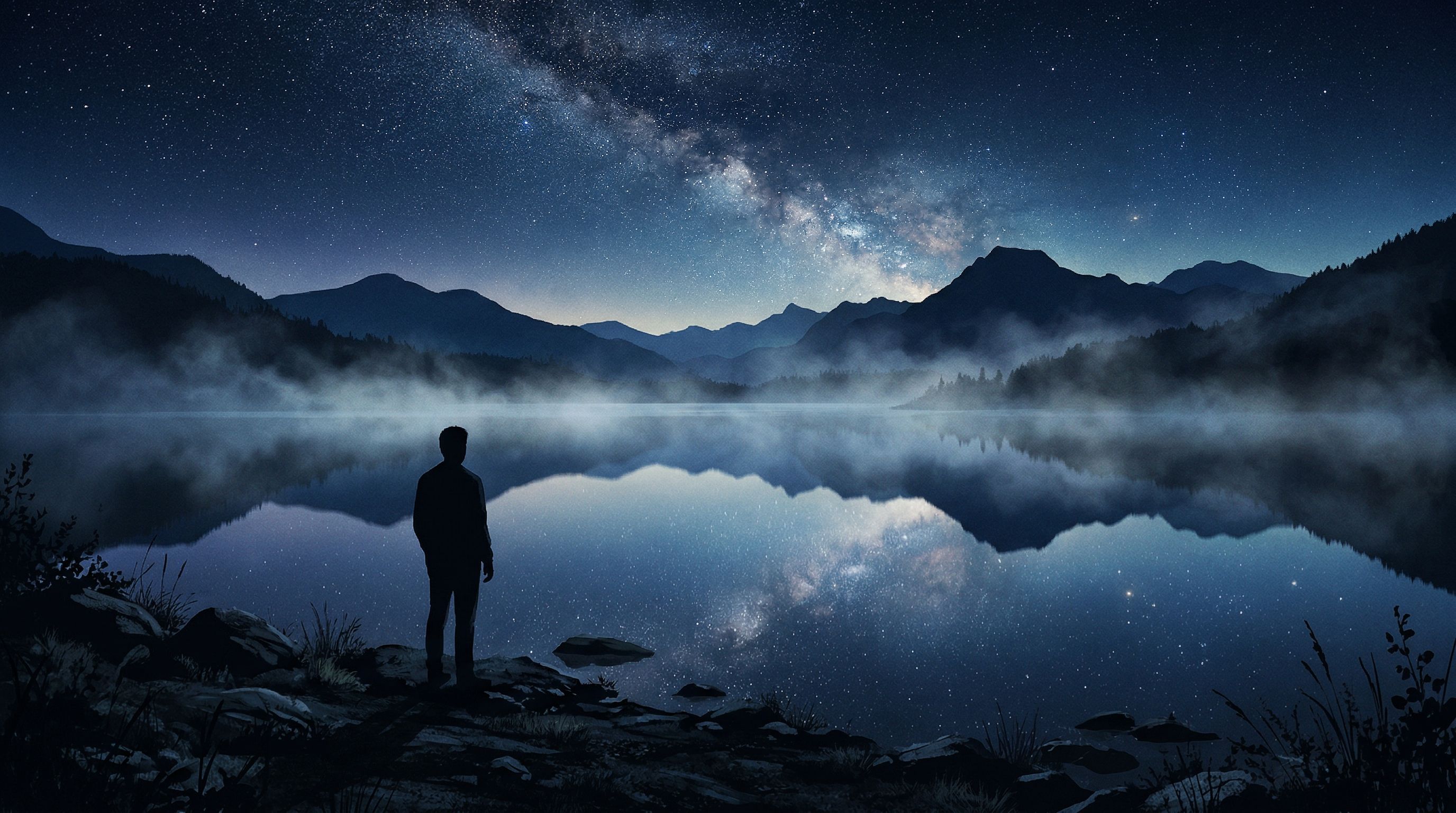
Others are cold, covered in moss or filled with deep blue water. These last ones are my favorites. They show that you have succeeded in transforming a shock into a source of wisdom—into a reservoir of calm emotions. Much like how vultures clean the landscape to allow for new life, the crater clears the old soil to make room for deep reflection.
Concrete Example: The Garden of Scars
Consider a dreamer who repeatedly saw craters appearing in her childhood home. To her, these were scars of trauma. However, through introspection, she realized these "holes" were actually the only places where the rigid, old soil of her upbringing had been broken enough to let new water settle.
Within months, her dream craters began to fill with clear rainwater, turning a landscape of fear into a series of interconnected lakes. This shift shows that the impact isn't the end of the story, but the beginning of a new ecosystem within your subconscious. It is a transition from a "hit" to a "home."
Baku Tips for Your Future Nights
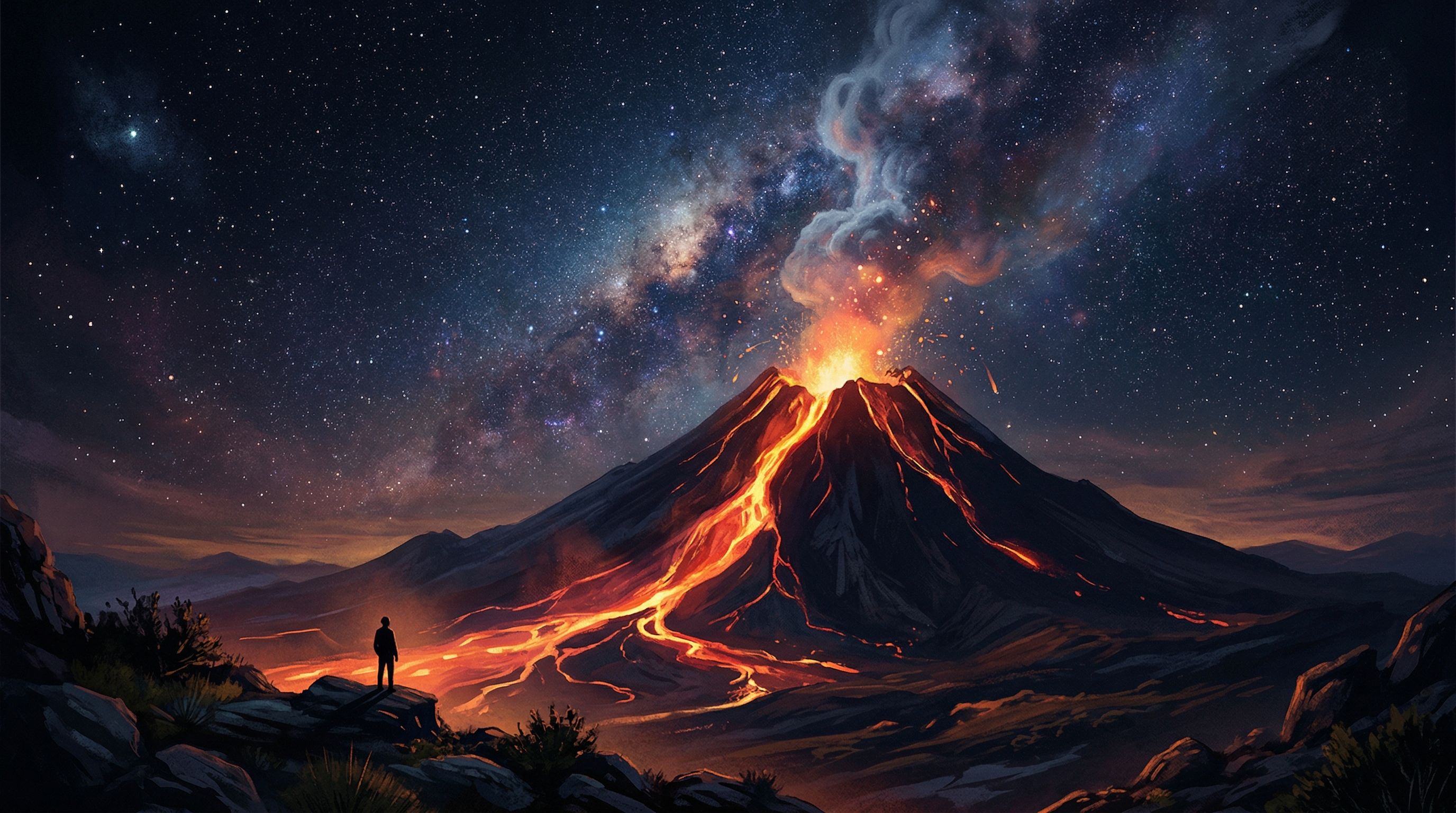
If this crater returns to visit you, do not try to ignore it. Approach it gently. Is it a volcanic crater, ready to erupt, or the remnant of a meteorite from somewhere far away?
If it is a volcano, it is your own creative force or your anger seeking a path. If it is a celestial impact, perhaps a new idea has "landed" in your life rather forcefully. In both cases, the message is the same: make space.
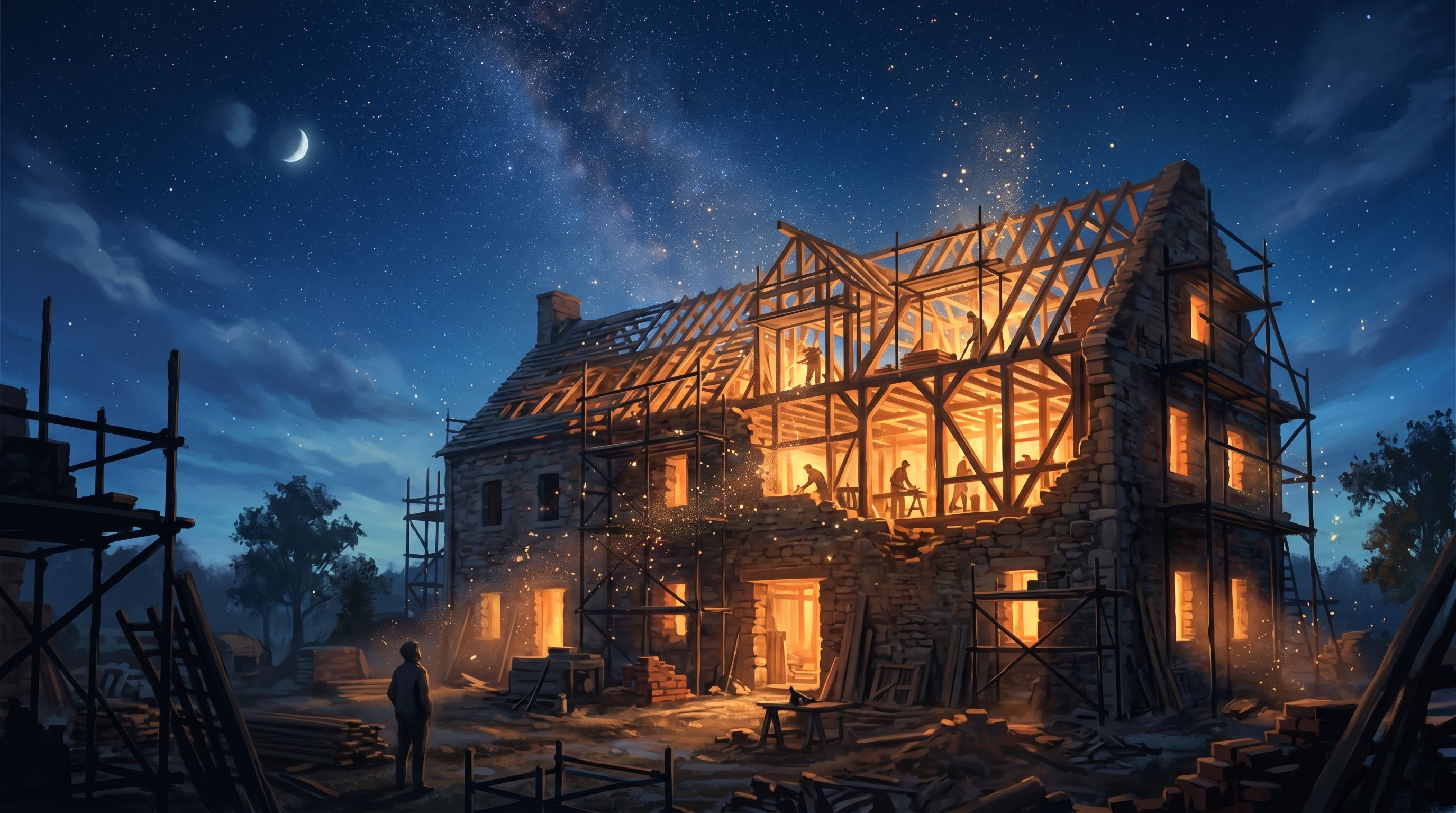
Do not fight the change in the landscape. Accept that the topography of your soul has shifted. Dreams are messengers; they are never there to punish you. A crater is an invitation to rebuild on new foundations—deeper and more authentic than before.
If you feel drawn to the bottom of the crater, do not be afraid of falling. It is often there, in the lowest, most humble parts of ourselves, that the rarest minerals are found. It is through the impact that the earth reveals its deepest secrets.
Have you ever noticed how sound behaves when you descend into a deep depression in the earth? In your dreams, the bottom of a crater is often wrapped in an almost unnatural silence, a sensory muting where the chaotic wind of the waking world cannot reach you. It reminds me of the stillness found when wandering through a ghost town—that sudden, heavy absence of life where you are left entirely alone with your own breath. This auditory isolation is a protective mechanism of your mind. When you have experienced an overwhelming life transition, your psyche sometimes builds these high, circular walls to shield you from external noise. For a little while, the crater acts as a sensory deprivation chamber, a sanctuary where nobody can demand anything of you, and where the echoes of the impact can finally settle into harmless dust.
I sometimes wonder why we are so quick to treat a crater as a site of destruction. If we shift our gaze slightly, we can see it through an older, more animistic lens: as a sacred vessel. In several ancient traditions, the earth was not merely broken by meteors; it was opened to receive the seeds of the stars. The crater becomes a womb, a terrestrial chalice carved out by a sudden fire. When your dream presents you with this hallowed depression, it might not be mourning what was lost, but preparing you to contain something entirely new. A flat surface cannot hold water, nor can it protect a seedling from the biting wind. The deep curve of the impact site, however, is designed to catch and cradle whatever the sky decides to drop next. It is a space of pure potentiality, waiting for the rain.
It honestly tires me when people assume dreams of craters must involve apocalyptic landscapes and giant, smoking ruins. Sometimes, the subconscious is far more subtle, even intimate. I once accompanied a dreamer who showed me a tiny, perfectly formed crater right in the middle of their own chest, no larger than a teacup. It didn't bleed; it was just a smooth, hollowed-out space where their heart used to feel heavy. We often overlook these micro-impacts in our waking life—a sharp word from a partner, a quiet disappointment at work—thinking we should just tough it out. But your dream-self remembers every single pebble that falls from your emotional sky. Even a small impact leaves a mark, and acknowledging these quiet, miniature hollows is the first step toward letting them soften.
If you want to explore your dreams more deeply, your Baku is waiting for you in the Midnight Mind app.
Sleep peacefully; I am watching over your shadows.
Yume