The Weight of the Invisible: When Your Mental Space Runs Thin
It is fascinating to see how your spirit acts as a master architect when you sleep. It doesn't simply tell you that you are stressed; instead, it prefers to let you feel the cold texture of the plaster descending toward your brow.
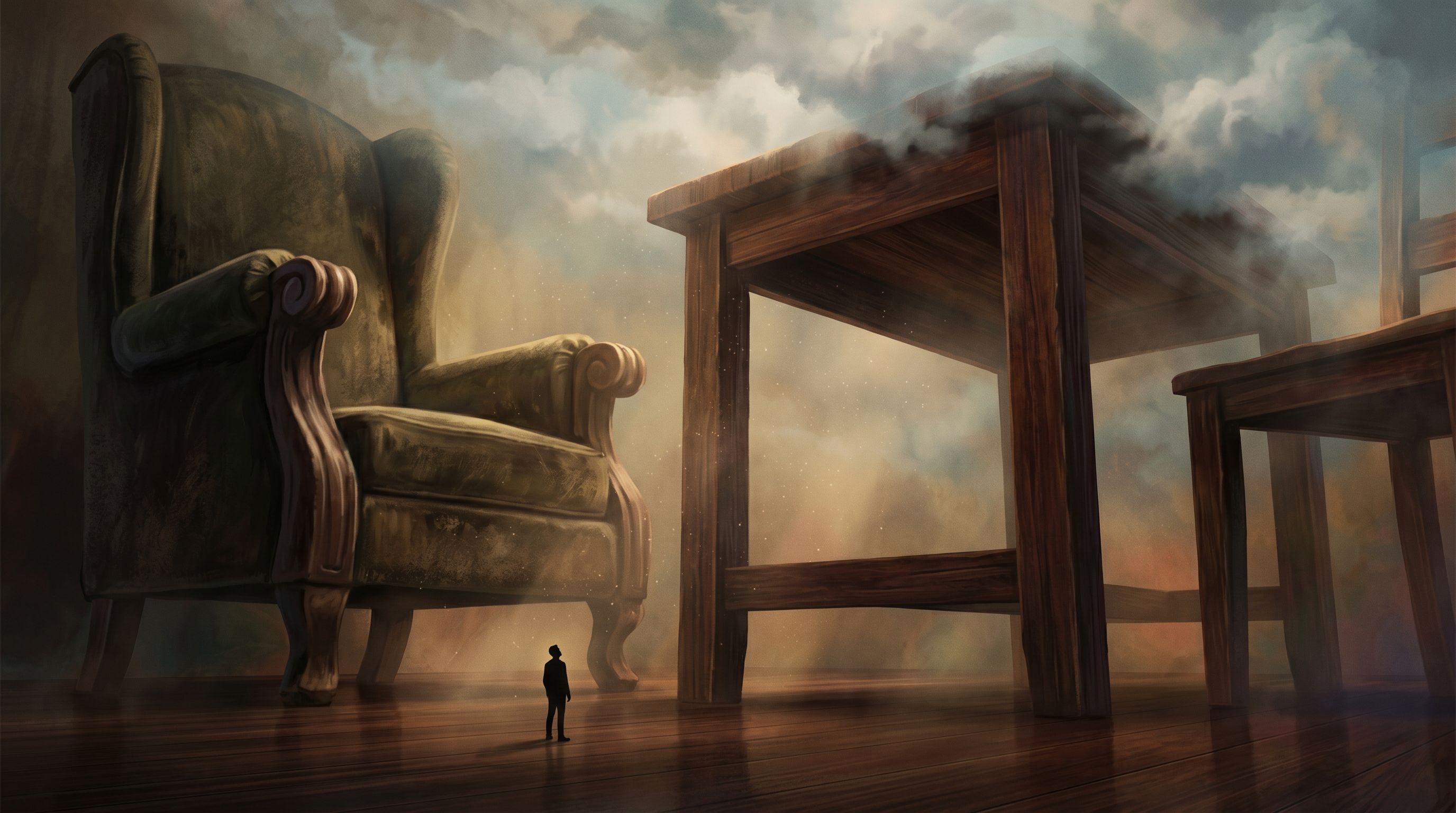
I once encountered the dream of someone who saw their familiar room transform into a tiny, suffocating box. This wasn't claustrophobia in a clinical sense, but a literal translation of their daily reality.
They felt they could no longer "stand tall" because the structures of their life—perhaps a job or a rigid relationship—no longer allowed them to remain upright.
When the ceiling is lowering, you must ask yourself: is the ceiling actually coming down, or is it that you have grown too large for the room?
Sometimes, we evolve faster than the framework we live in. This feeling of oppression is often the cry of a soul that feels cramped, much like turning your back on a situation that no longer serves your growth.
The dream is not there to crush you; it is there to show you that the current limits of your life have become obsolete.
🌙 The Echo of Yume: Sometimes the ceiling falls not to crush you, but to force you to crawl toward a door you hadn't noticed before.
---
Unpacking the Fall: Nuances and Whispers from the Shadows
Interpretation is never a straight line; it is a path that wanders through a forest of symbols. Depending on the speed at which the ceiling descends, the flavor of the message changes entirely.
Some specialists in dream psychology suggest that every architectural detail in a dream represents a part of your ego's defense system.
If the ceiling lowers slowly, it might be an alert regarding chronic exhaustion. It represents that mental load you accept day after day, until you can no longer lift your arms.
Conversely, a sudden drop evokes a shock—news or a sudden change that makes you feel as though the world is falling on your head, leaving you as vulnerable as losing your clothes in a public square.
Consider these variations I have observed in the wandering paths of the night:
- The ceiling stops just before touching you: This is a sign of incredible resilience, showing you still have a zone of control.
- You try to hold it up with your bare arms: You may be carrying the problems of others. Is it truly your role to support a sky that threatens to fall?
- The room is cluttered: Material obligations or "stuff" are contributing to this crushing feeling.
Concrete Example: The Velvet Weight
Imagine dreaming of a ceiling made of heavy, dark velvet descending in a library. This could represent the weight of "knowledge" or "expectations" you feel you must live up to. The softness of the velvet suggests the pressure is "polite" or "well-intentioned"—perhaps coming from family—yet it remains just as suffocating as stone because it restricts your movement.
---
Reclaiming Your Sky
This symbol remains mysterious even to me after all these years, for it touches the very essence of your relationship with security. The ceiling is what separates you from the infinite sky.
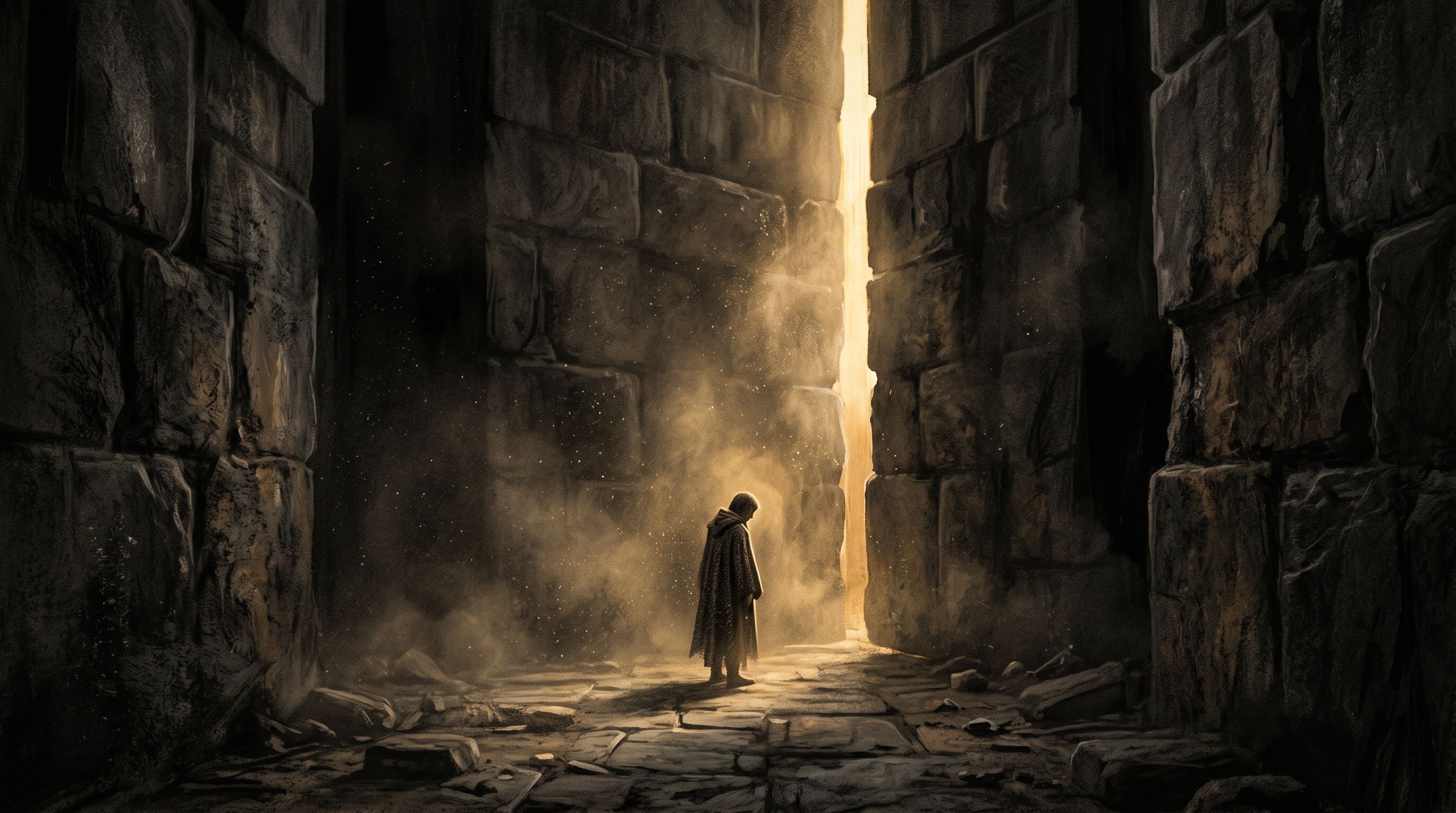
If it descends, perhaps it is also a hidden invitation to step out of the house—to leave rigid mental constructions behind and reconnect with the vast world.
Do not view this dream as a threat, but as a hand resting gently on your shoulder, asking: "Where is your space of freedom today?"
Sometimes, all it takes is a tiny crack in the wall, a shift in perspective, for the ceiling to drift back toward the heights. Dreams are but slightly distorted mirrors of your deepest needs.
What did you feel at the exact moment the ceiling moved? It is within that shiver that your truth is hidden.
If you want to explore your dreams more deeply, your Baku is waiting for you.
Have you ever noticed how the air pressure changes in these dreams right before the descent begins? It is not just a visual terror; it is a profound sensory shift. The sound in the room suddenly becomes deadened, as if the plaster were drinking your breath. I find that many dreamers describe a sudden, heavy warmth on their chest, a physical gravity that makes their eyelids feel leaden. It is as if your body is trying to process a profound fatigue that you ignore during the day. In many traditional Eastern views of sleep, this sudden heaviness is not an attack from the outside, but your own qi, or vital energy, condensing because it has nowhere left to circulate. Your subconscious is physically forcing you to lie down, to stop trying to hold up the world, and to finally surrender to gravity.
It irritates me when self-proclaimed dream gurus claim this dream is always about some vague 'existential dread.' Most of the time, the roots are far more practical, tangled in the sterile fluorescent light of our daily obligations. I recall a dreamer who worked under a deeply micromanaging director; night after night, they watched their bedroom ceiling sink, painted in the exact shade of their office drywall. They felt trapped by an authority they couldn't challenge. When you are constantly adapting to the impossible demands of dealing with a difficult boss or trying to fit into a corporate mold that shrinks every month, your mind translates this lack of agency into a descending roof. It is a visual metric of your compromised autonomy, showing you exactly how much room you have left to breathe before you must either bend your knees or walk out.
I have always been fascinated by traditional Japanese architecture, with its sliding paper screens and lack of fixed walls. In the West, a house is built to be permanent, so a shifting ceiling feels like an apocalyptic failure of the structure. But in our dreams, space is never permanent; it is fluid, responsive, and alive. What if the descending ceiling is not a collapse, but a restructuring? In some shamanic traditions, when the sky-world lowers to meet the earth-world, it is a sign that the sacred and the mundane are merging, forcing you to look closely at what is right in front of your eyes rather than staring up at distant, unattainable stars. It asks you to focus on the immediate, the small, and the intimate, rather than worrying about the grand, empty spaces of the future.
There is a beautiful, albeit painful, paradox hidden in this constriction. Think of a seed buried in the dark earth, or a chick trapped inside the calcified walls of its shell. To the inhabitant, the world must feel like it is closing in, tightening its grip until there is no room left to move. Yet, this intense pressure is the exact catalyst required for the shell to crack. When the ceiling descends so low that it touches your skin, it might actually be initiating a process of emotional and spiritual molting, where the old skin of who you used to be is squeezed off to make room for what is next. Sometimes, the only way to find out who you really are is to be pressed so tightly against your limitations that you have no choice but to break them.