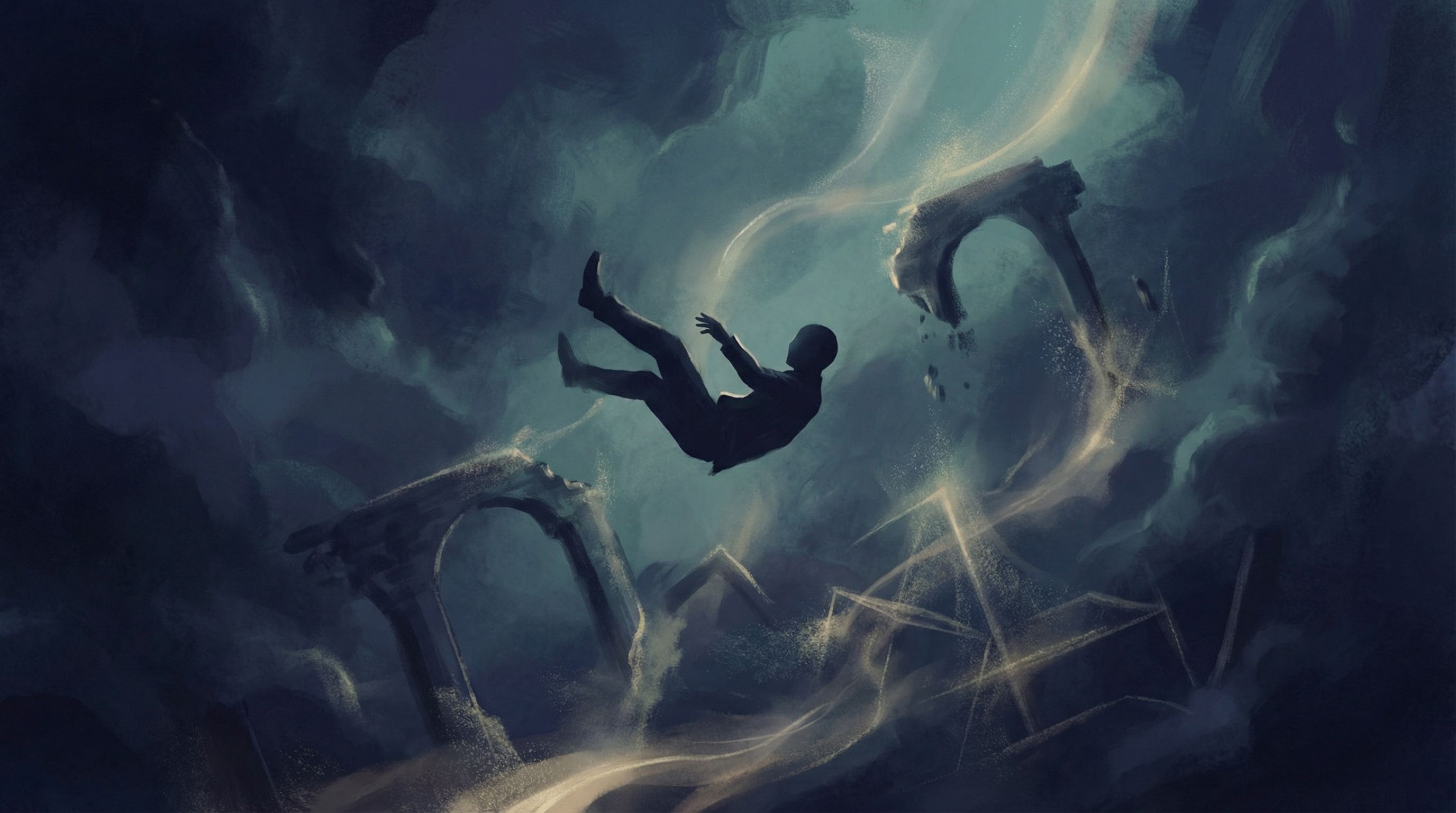
When the Architecture of Your Mind Becomes Too Narrow
To be honest, this symbol of moving walls has fascinated me for years as I wander through the dreamscape. In the complex weaving of your unconscious, space is never fixed; it is malleable, reacting to your deepest emotions. Why would your mind choose to box you in? You might feel trapped and think it is a bad omen, but I see things differently. I dislike simplistic interpretations that see nothing more than panic in dream-born claustrophobia.
Imagine for a moment that your soul is like a seed. To sprout, it must break through its shell. To grow, it must sometimes feel cramped in its pot. Seeing the walls close in is often the visual manifestation of a life structure that has become obsolete. You have evolved, you have learned, and now the old "you"—your old habits, the relationships that no longer nourish you—has become a space that is simply too small.
It isn't the wall attacking you; it is your own growth making the room feel tiny. Some specialists in sleep psychology suggest that our brains use these dramatic spatial shifts to represent "proprioceptive" stress—the way you perceive your body's place in the world. It’s a bit like that feeling of vertigo you might experience on a swing: there is that tipping point where you lose control, but that is exactly where you gain height. In your dream, the suffocation is the engine meant to drive you to push back the walls, or to find the door you hadn't noticed yet.
🌙 Yume's Echo: The walls of a cocoon are only a prison until the butterfly realizes it has wings to push them apart.
---
Suffocation: An Emotional Compass and the Weight of Materials
There is something very visceral about this dream. While we often speak of claustrophobia, the emotion of suffocation is the true key to your interpretation. Are they the walls of your office closing in? Are they the walls of your childhood home? The texture of the walls matters immensely, and I am always surprised by the precision of the details your mind can invent.
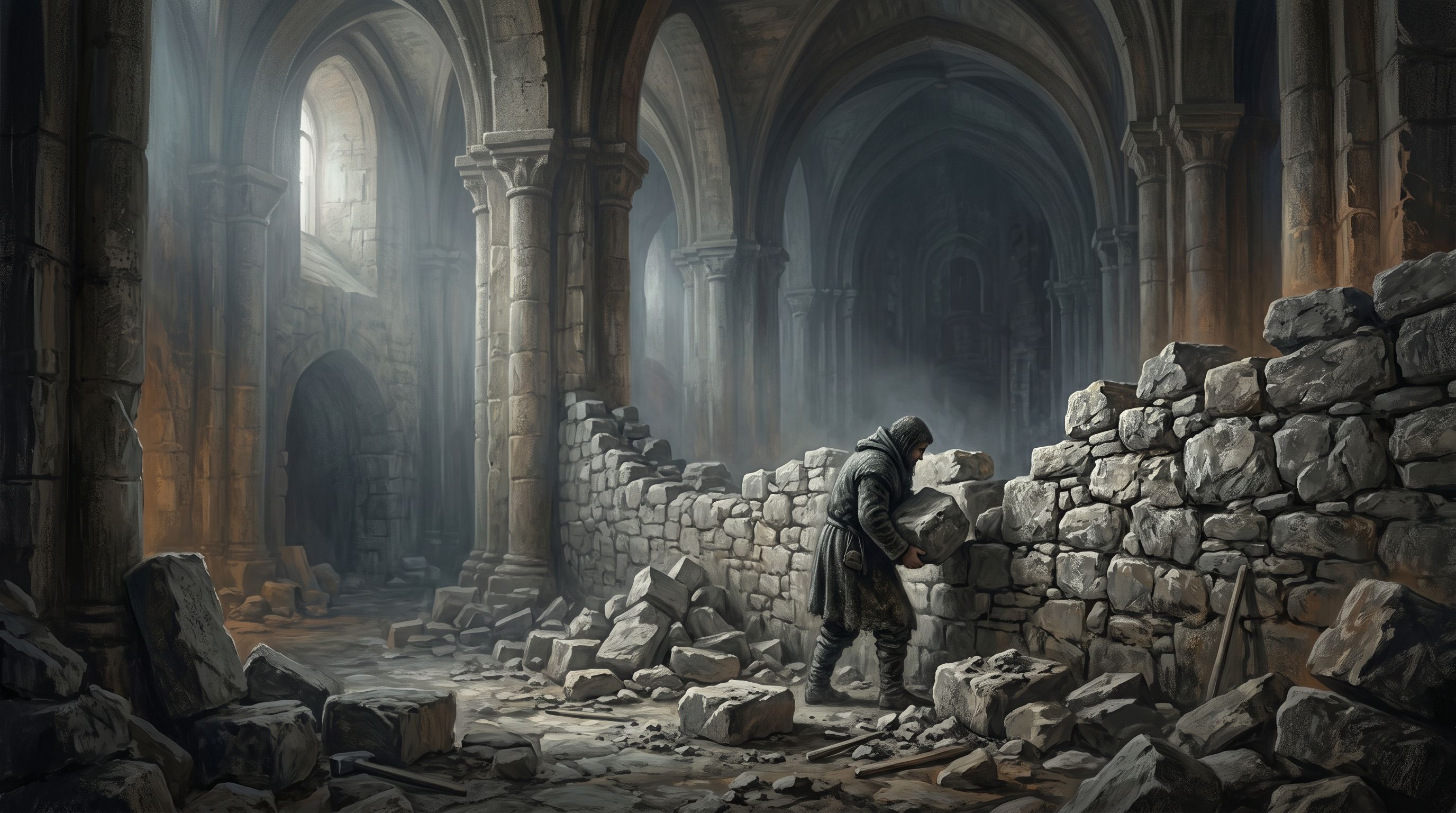
If the walls are made of cold, heavy stone, they might evoke burdensome traditions or responsibilities that tu feel tu cannot escape. If they are made of wood, perhaps it concerns your intimate environment or family roots. Sometimes, the sensation is less about the walls and more about the lack of light, a feeling similar to the vulnerability of seeing yourself sleeping in a dream, where tu are both the observer and the observed, trapped in a moment of transition.
Honestly? Exact interpretation isn't a rigid science. It’s a conversation between tu and your shadow. If tu feel the walls casting their shadow over tu, ask yourself: "What am I trying to avoid in my waking life that ends up surrounding me at night?" Often, it’s a choice tu don't want to make, a conversation tu are avoiding, or a truth tu refuse to face. The dream simply makes this psychological pressure physical so that tu can no longer ignore it. It is a different kind of darkness than simply closing your eyes to rest; it is a darkness that demands tu find your own light.
Concrete Example: The Library of Pressure
I once encountered a dreamer who repeatedly saw walls made of ancient, dusty books closing in on him. He felt crushed by the weight of the paper and the smell of old ink. In his waking life, he was a brilliant student who felt he had to know everything before making a single decision. He was suffocating under the weight of his own need for intellectual perfection. The dream wasn't telling him he was trapped by knowledge, but that his method of learning had become a cage. Once he started practicing "imperfect action," the walls in his dreams stopped moving and eventually turned into an open terrace.
---
Taming the Narrow to Find the Vast
My advice, if this dream comes to visit you again, is not to fight the walls with brute force. In the dream world, the harder you push, the greater the resistance you often encounter. Instead, try to look at the wall very closely. Is there anything written on it? What is its temperature? Does it pulse like a heart? Sometimes, by accepting the proximity of the wall, you discover a secret exit, a small latch, or a crack through which to escape.
The unconscious is a great dramatic poet. It uses the spectacular—like moving walls—to draw your attention to the subtle details of your daily life. It is never a punishment. It is a message of love from your mind telling you, "Look, you have become too big for this little box. It’s time to step out."
Researchers in the field of lucid dreaming often suggest that recognizing the "dream-like" quality of the walls can instantly stop their movement. By telling yourself, "This is my mind, and I have space," you reclaim the architecture of your inner world. Don’t see these walls as enemies. See them as the hands of a sculptor trying to give you a more defined shape. Sometimes, to find oneself, you must first feel the limits of what you no longer are.
🌙 Yume's Echo: When the room becomes too small, it is rarely because the walls moved, but because your soul grew.
The feeling of lacking air isn't there to make you stifle, but to teach you to breathe more deeply, more consciously, once you have broken through those barriers. Every time you face the closing walls, you are practicing the art of expansion.
Sleep peacefully, and never forget: even if the walls seem to touch, there will always be enough room within you for a new dream. If you want to explore these shifting architectures more deeply, your Baku is waiting for you.
Have you ever noticed how the walls seem to move faster when we are trying to force ourselves to stay in a space—or a love—that we have already outgrown? I often see this architecture of confinement manifest when someone is lingering in a relationship that has run its course. It is a slow, quiet suffocation, where you pretend everything is fine during the day, but at night, your spirit refuses to lie to you. The shrinking room is actually your own integrity demanding room to breathe. Sometimes, this constriction is the prelude to dreaming of a breakup, a necessary cracking of the vessel. It is painful, yes, but it is the pain of the shell breaking to let the bird out. I do not believe these dreams are meant to punish you; they are merely the heart's way of showing you that your current emotional boundary has become a cage.
There is a curious paradox in these shrinking spaces that many dream analysts tend to overlook. When the walls press in from all sides, they force your eyes away from the horizon and direct your gaze to what is immediately beneath your feet or right above your head. In the geometry of the mind, a dead end is often an invitation to look for a vertical escape. I once watched a dreamer who, just as the plaster was about to crush her, looked down and discovered a trapdoor she had walked over a thousand times without noticing. This is the secret of the closing room: it strips away all your distractions until you are forced to find dreaming of a secret passage within your own mind. The confinement is actually a catalyst, narrowing your focus so sharply that the only way left to go is inward, into the depths of your hidden strength.
Honestly, what always strikes me when I listen to these nightmares is how rarely we talk about the sound. We focus so much on the visual horror of the approaching stone, but what about that low, grinding groan of moving architecture? That deep vibration that shakes your teeth in your sleep? To me, that sound is the voice of your resistance. It is the friction of your conscious ego rubbing against the inevitable movement of your destiny. Some dream dictionaries will tell you this noise is just a sign of panic, but I disagree. I think that grinding sound is a wake-up call, a cosmic alarm clock. It is your soul’s way of saying, Listen to the pressure. When you wake up with your heart racing from that phantom noise, do not run from it. Let the resonance of that creaking wood or scraping stone remind you that you are still alive, and that you still have time to move before the final shift.