The Silk Curtain: When Closing Your Eyes is an Act of Refusal
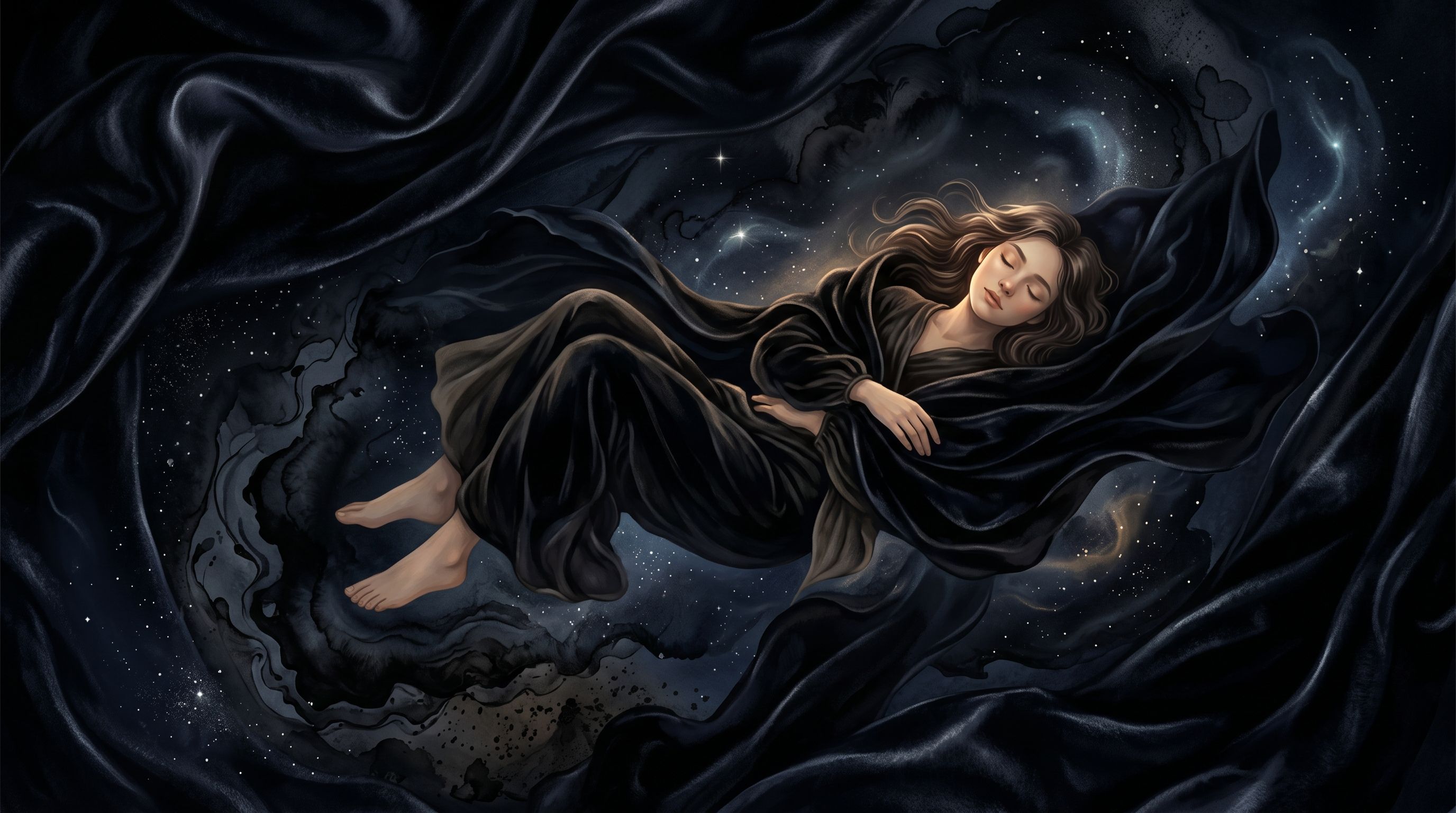
I often observe dreamers who feel a sense of guilt when they recount how they closed their eyes during a dream. You might feel as though you’ve "failed" the dream, or that you were too cowardly to face what was coming. But I want you to look at it differently. Closing your eyes in a dream is rarely about cowardice; it is more like erecting a silken barrier between your conscious self and a truth that is still ripening.
In the world of symbols, vision is often linked to logic and the "ego." When you choose to shut your eyes, you are essentially telling your subconscious that you have reached a limit. It is a safety valve. Think of it as a moment where you are navigating a canoe through turbulent waters; sometimes, the spray is so blinding that the only way to stay centered is to stop looking at the waves and start feeling the rhythm of the current.
This refusal is a form of wisdom. Your spirit knows when it can no longer look a conflict in the eye. Some specialists in dream psychology suggest that this "dream-blindness" occurs when the emotional charge of an image exceeds your current capacity to integrate it. Instead of forcing a confrontation that might wake you up in a state of panic, your mind draws the curtains. It is a gentle mercy.
🌙 The echo of Yume: Darkness is not the absence of a path; it is sometimes the only way not to get lost in the reflections.
---
The Inner Eye: Meditation at the Heart of the Dream
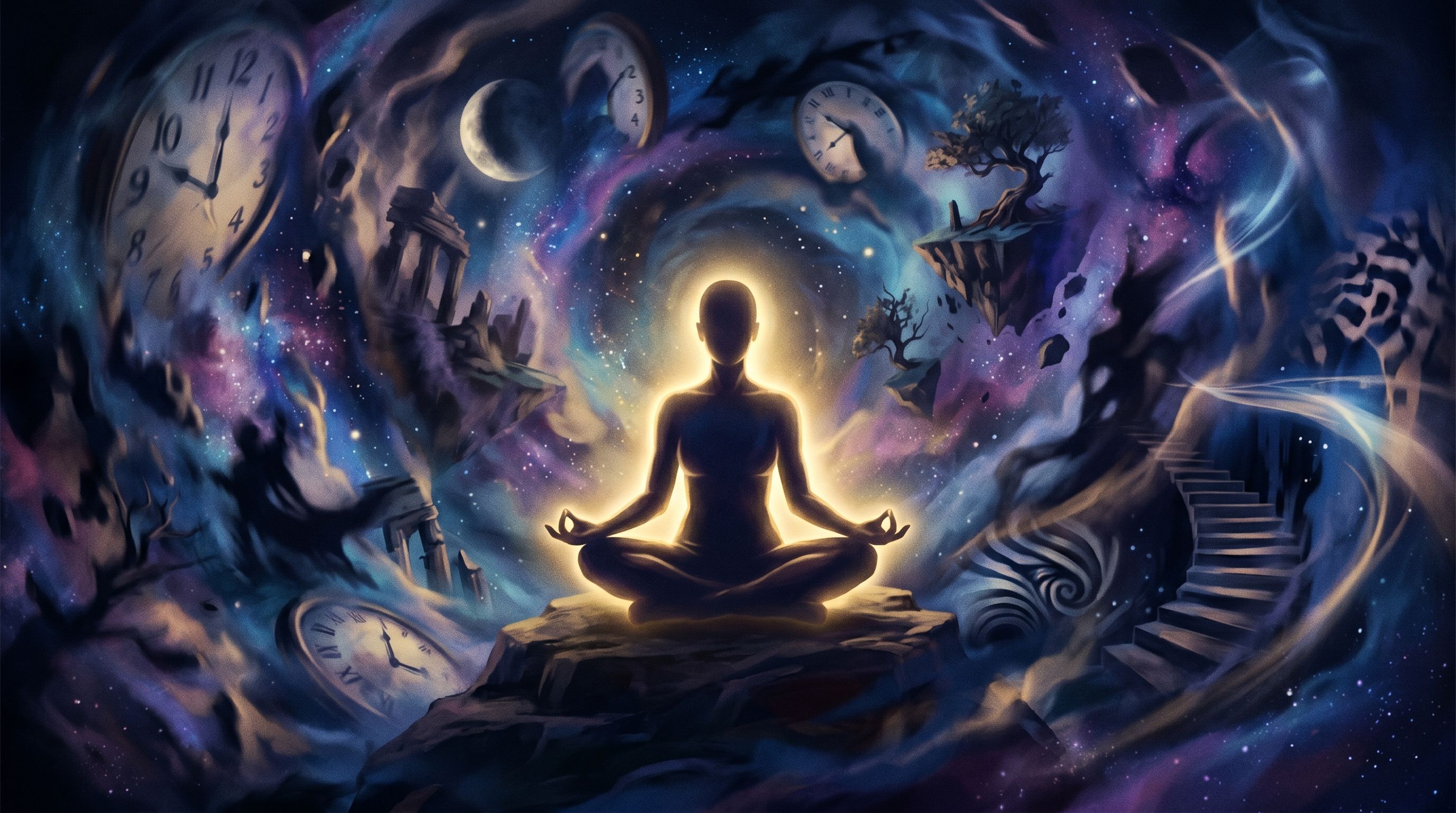
There is a more luminous side to this darkness that I find particularly beautiful. In my role as a Baku, I’ve noticed that true sight doesn’t always require a retina. In your dreams, closing your eyes can be a sign of profound meditation. It is the moment you stop being a spectator of the dream and start being the dream itself.
When you stop looking at the shifting shapes—perhaps you were just admiring a hat on a stranger or a complex landscape—and you close your eyes, the dream shifts from vision to sensation. You might begin to feel a warmth, a vibration, or a sudden clarity of thought. This is what some call the "third eye" or pure intuition.
If you feel at peace while your eyes are closed in the dream, it means your soul is seeking to reconnect with its own source. You are moving away from the "noise" of dream imagery to find the "silence" of your inner certainty. It is an act of spiritual power. You are deciding that the external illusion, no matter how vivid, no longer holds power over you. You become the still center of the storm.
---
The Mechanics of the Eyelids: Fatigue and Transition
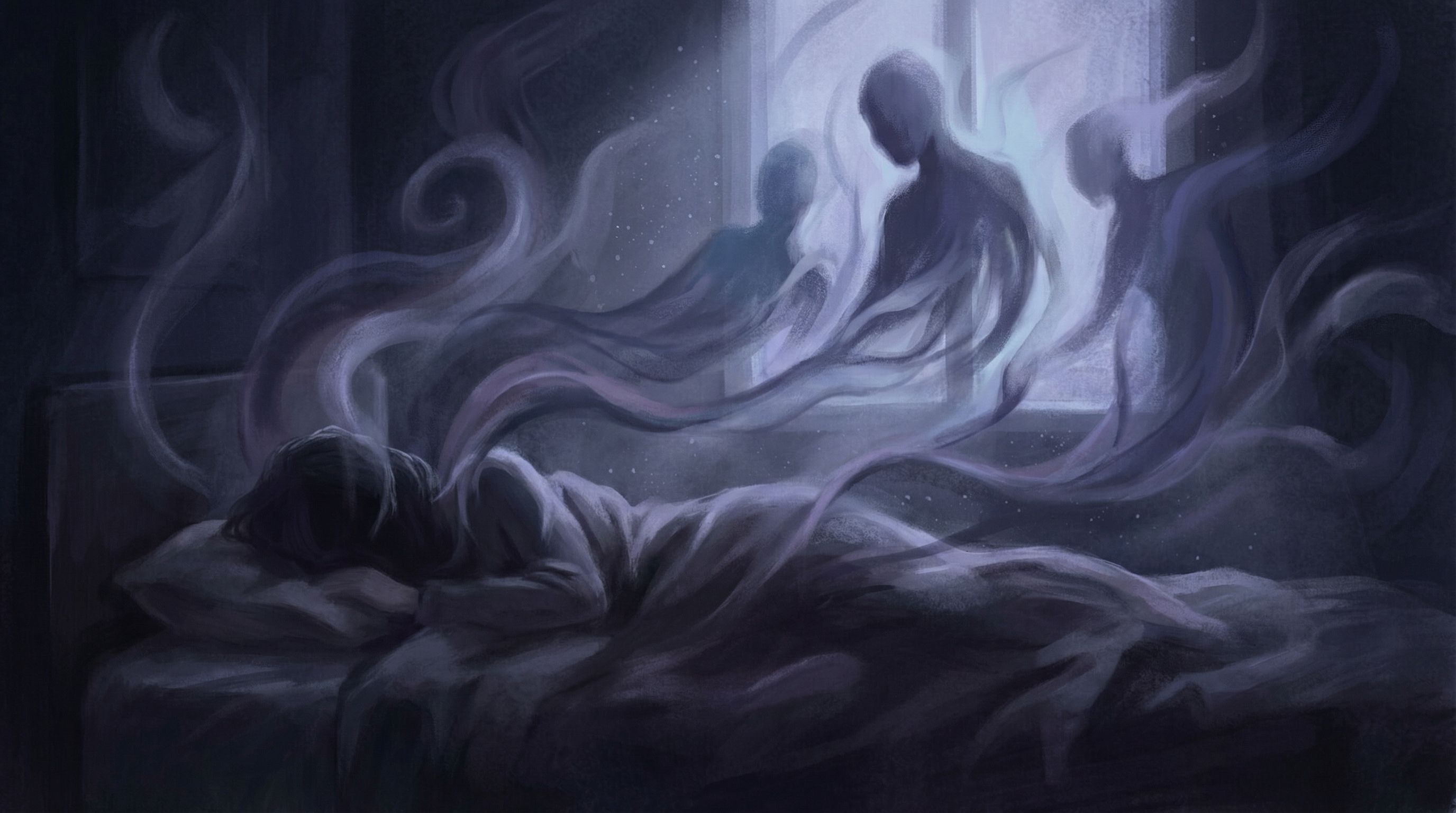
Sometimes, the reason is more grounded in the reality of your physical body. Have you ever experienced that frustrating dream where you desperately try to open your eyes, but they feel glued shut? Your lashes feel heavy, as if gravity itself were pulling them down.
While it’s tempting to look for a mystical meaning here, it is often a cry for rest. Your brain, during REM sleep, is working incredibly hard. It is processing emotions, filing away memories, and repairing your neural pathways. If you’ve been pushing yourself too hard in your waking life, your dream might reflect this sensory overload. Your subconscious is reclaiming its right to darkness.
Furthermore, closing your eyes often acts as a "cinematic cut." In the theater of your mind, it is the blackout between two acts. It allows the scenery to change and the narrative to shift. If you see yourself closing your eyes just before the dream ends or before the setting transforms, you are in a decompression chamber. You are digesting what you just experienced before moving on to the next lesson.
---
Concrete Example: The Gallery of Shadows
Imagine you are walking through a gallery filled with portraits of people from your past. The colors are too bright, the voices too loud. Suddenly, the intensity becomes overwhelming. In the dream, you stop, take a deep breath, and firmly close your eyes.
Initially, you might feel a flash of fear—what if something approaches while I am blind? But as you stand there in the darkness, the noise of the gallery fades. You begin to feel a sense of weightlessness. You realize that you don't need to see the portraits to know they are there; you can feel their energy. When you finally "wake up" within the dream or enter a new scene, you feel refreshed rather than drained. This is a classic example of using voluntary darkness to transition from sensory overload to emotional integration.
---
Embracing the Shadow
I invite you not to fear the darkness behind your closed eyelids. It is often there, when we are no longer distracted by the spectacle of the world, that we finally begin to understand the essence of our journey. Darkness is not emptiness; it is a fertile soil where your fears can be transformed into nutrients for your personal growth.
If you find that this feeling of a veil or the need to withdraw persists in your nights, it might be helpful to keep a closer watch on these moments of shadow. I find that noting the specific "texture" of the darkness can reveal much about your current state of mind. If you wish to explore these inner visions more deeply, your Baku is waiting for you.
Take care of your nights; they are the cradle of your own light.
I once met a dreamer—a young woman whose life was shattering after a sudden divorce. In her waking life, she forced herself to keep her chin up, but in her nights, she spent hours sitting on a porch in her dream-home, keeping her eyes tightly shut. "I felt so useless," she told me, "like I was refusing to face my new reality." But she was wrong. In Japan, we understand that sometimes the soul needs to go into hibernation, much like seeds waiting beneath the winter frost. Closing your eyes in a dream during periods of intense grief or transition isn't avoidance; it’s an act of incubation. Your psyche is gently pulling back its feelers, gathering its scattered fragments in the dark, preparing the soil for whatever must grow next. You cannot bloom if you do not allow yourself the quiet safety of the shade.
It honestly frustrates me when I read those rigid dream dictionaries that instantly label this symbol as "denial" or "willful ignorance." What a shallow way to treat the delicate architecture of your mind. Why must we always demand constant vigilance, even in our sleep? To close your eyes is to welcome the velvety void, a space highly similar to what we experience when dreaming of the color black—which is never a blank nothingness, but rather a fertile soil of possibilities. When you shut out the external projections of the dream, you are choosing to trust what is unformed. You are letting go of the need to control the narrative through sight. It is a quiet rebellion against the tyranny of having to see, analyze, and judge everything. Sometimes, the most spiritual thing you can do is simply allow yourself to exist in the unseen.
Have you noticed how the texture of your dream changes the moment those eyelids drop? When the visual theater fades, your other senses swell to take its place. Suddenly, you might hear the deep, rhythmic breathing of the dream itself, or the distant rustle of leaves that you hadn't noticed before. I often wonder if we close our eyes in sleep-creations to hear the whispers we are too distracted to catch during the day. It’s like stepping into a sanctuary where the air grows slightly cooler, and the skin becomes highly sensitive to the invisible currents around you. If you find yourself in this sightless state, do not struggle to peer through the darkness. Listen. Feel the temperature of the air, the density of the ground beneath your spectral feet. The dream has not stopped; it has merely changed its language from light to whisper.