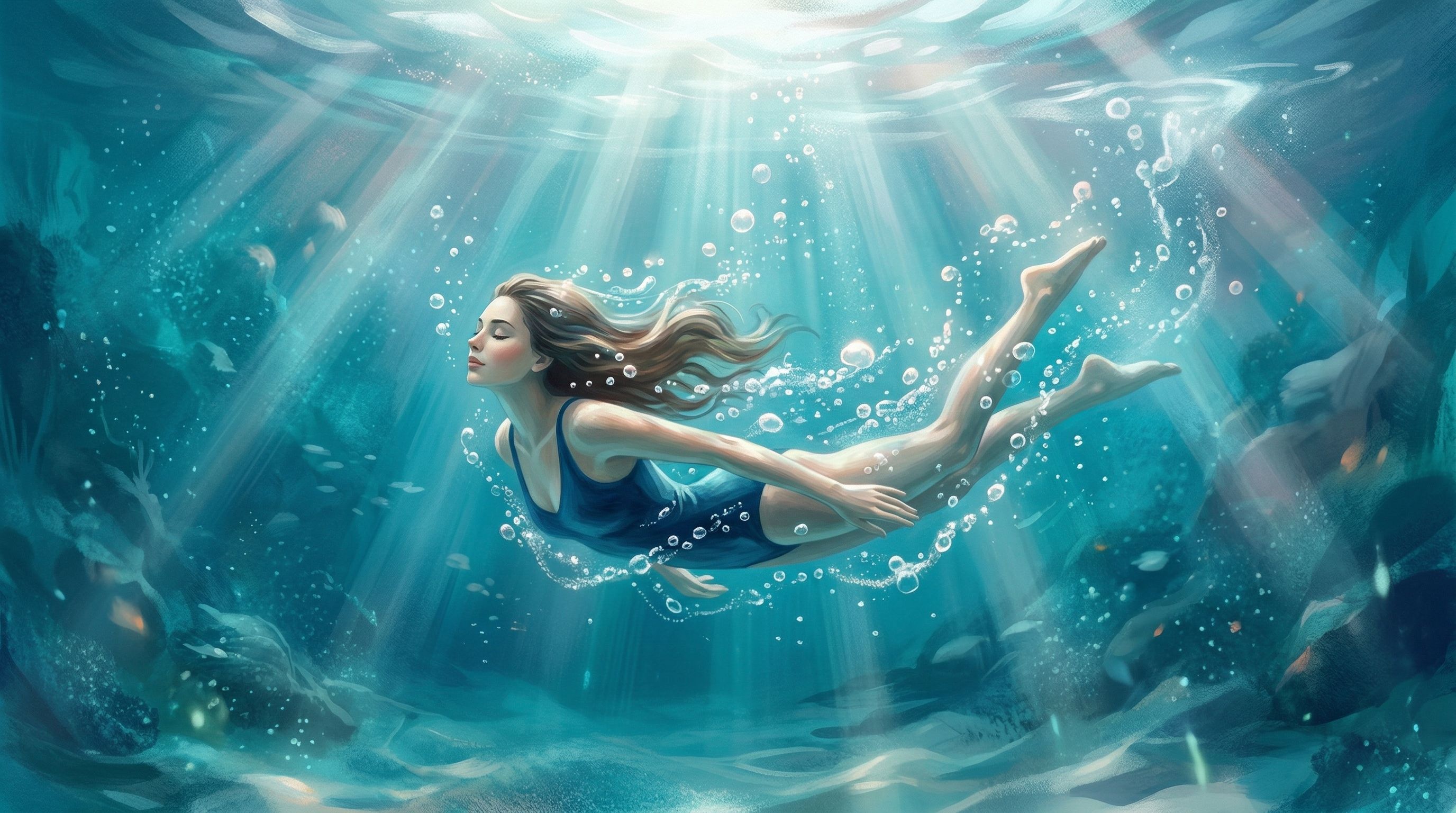
The Skin of Wood: A Fragility That Connects You to the World
What always strikes me when I visit the dreams of those who travel by canoe is the thinness of the vessel's walls. Between you and the immensity of the unconscious—that deep water, sometimes dark, sometimes crystalline—there are only a few inches of wood. Unlike a great ship that ignores the waves, the canoe embraces them. It sways, it vibrates, and it makes you feel every movement of the liquid element.
In the world of dreams, this fragility is not a flaw. It is what I call the "sensitivity of contact." If you dream that you are in a canoe, perhaps your spirit is asking you to become permeable again to what surrounds you. Have you noticed how, in your waking life, you might try to build iron shells around yourself? You may want to be invulnerable, like a battleship. But the dream returns you to your canoe. It tells you: "Look, you are vulnerable, and that is precisely what allows you to navigate with such finesse."
Sometimes, this sense of precariousness can be frightening. It is much like the feeling of observing a delicate flower in a storm; you fear it might break, yet its flexibility is what saves it. If your canoe seems too small, do not seek to build a larger boat. Instead, try to understand why you fear the water. The water represents your emotions. The canoe does not protect you from them; it allows you to dance with them.
I must admit, I am always a bit irked by interpretations that see the small size of the vessel as a sign of poverty or failure. It is quite the opposite. Navigating a canoe requires much greater mastery and self-knowledge than letting yourself be carried by the engines of an impersonal ferry.
🌙 Yume's Echo: To be fragile is not to be weak; it is to be awake to the rhythm of the world.
---
The Art of Navigation: Rowing, Drifting, or Anchoring?
In your slumbers, I invite you to observe your hands closely. Are you holding the oars? Or has the current decided the direction for you? Navigation in a dream is a profound metaphor for your willpower and your sense of agency.
If you are rowing with all your might but the canoe does not move, ask yourself: what are you fighting against in your current life? Sometimes, we exhaust ourselves trying to paddle against a current that isn't ours to fight. I once saw a dreamer exhaust himself this way for entire nights, only to realize, once I had shared his dream, that he only needed to set down the oars for the current to take him exactly where he needed to go. There is wisdom in a chosen drift.
Conversely, if you are passive and the canoe is taking on water, you might be ignoring an emotion that requires your urgent attention. A leaking canoe is not a catastrophe; it is a signal. Your unconscious is whispering that it is time to bail out what is weighing you down. Perhaps you are carrying a burden as unnecessary as a simple accessory that no longer fits who you are becoming.
It also happens that the canoe remains motionless, transformed into a true floating protective nest in the middle of a peaceful lake. This is one of the most beautiful dreams of healing I know. Here, the canoe is no longer a vehicle, but a sanctuary. It is a sign that you have found a balance, a space all your own where the storms of the outside world can no longer reach you, even if they are just beneath the hull.
---
The Solitude of the Oar and the Shared Journey
Navigating alone in a canoe can bring a sense of profound solitude. But as your Baku, I see this as a "sovereign" solitude. You are the sole master on board. No one can row for you, and no one can decide your heading. It is a vivid image of your psychic autonomy.
Some researchers in the field of dream psychology suggest that water-based dreams often correlate with our "emotional regulation." When you are alone in that boat, you are practicing the art of being with yourself without distractions.
If you share this canoe with someone else, balance becomes crucial. If one person moves too abruptly, the other risks falling. This is a metaphor for an intimate relationship—be it romantic, platonic, or professional. How are you coordinating? Are you carrying the entire weight of the navigation, or are you gliding in harmony? I have often observed that dreams of a two-person canoe reveal tensions long before they erupt in reality. The unconscious feels the pitch and roll before the waking mind perceives the tilt.
🌙 Yume's Echo: The silence between two people in a canoe is the truest test of their harmony.
---
Listening to the Language of the Water
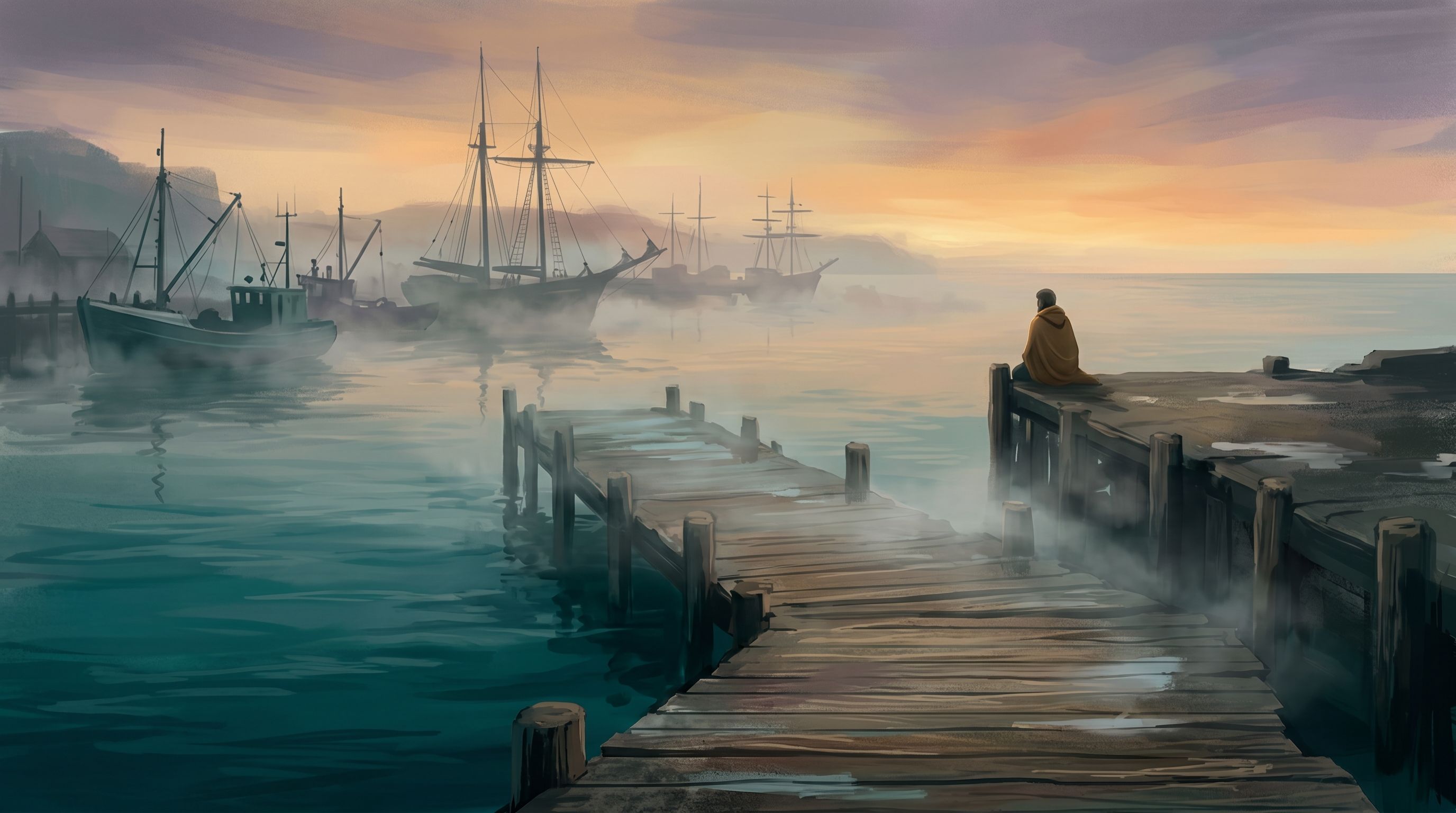
The interpretation of your voyage will always depend on the color of your dream's sky and the texture of the water. Is it a thick fog where you navigate blindly? Or a radiant sun that turns the water into a mirror?
Fog is not your enemy; it forces you to listen to your intuition rather than relying solely on your eyes. When you cannot see the shore, you must feel the pull of the water. This mirrors those moments in life where logic fails you and only your "gut feeling" can guide the oar.
If the water is crystal clear, you are likely in a phase of great transparency with yourself. You see the fish, the rocks, and the depths. If the water is murky, do not panic. It simply means there are things beneath the surface that are not yet ready to be seen. Your canoe keeps you safe while you wait for the silt to settle.
Never fear the small size of your vessel. The greatest internal voyages are not made on ocean liners, but in the silence of these small wooden vessels that remind us we are alive, fragile, and free to choose our direction. Every grain in the wood of your dream boat has its importance, reflecting the unique texture of your own history.
If you want to explore your dreams more deeply, your Baku is waiting for you. Your canoe awaits you tonight. Where will you choose to point your oars?
I once met a dreamer who kept dreaming of carrying a heavy wooden canoe on her back through a dense, dry pine forest. She was exhausted, her skin bruised by the weight, and she couldn't understand why she was "boating on land." Traditional dream interpreters would tell you this is a sign of misplaced effort. I disagree completely. There are seasons in our lives—periods of deep grief, professional transitions, or creative droughts—where our emotional water temporarily dries up. Carrying your canoe on your shoulders, or what northern travelers call a portage, is an act of profound devotion. It means you are protecting your capacity to feel, keeping your sensitive vessel intact until you find the next river. You aren't lost; you are simply transporting your instrument of flight across the dry spells of your waking life.
Why do we so often crave the cold security of steel? Some dreamers tell me they feel safer when they are passengers on a steamer, not unlike the collective journey of traveling on a massive ship that cuts blindly through the waves. But there is a quiet magic in the wood of a canoe. Wood was once alive; it remembers the forest. When you dream of this organic shell, your hands are touching something that breathes. If you pay close attention, you can feel the temperature of the river right through the hull—the sudden chill of a deep spring, the warm shallows of the shore. This tactile intimacy is your unconscious reminding you that you cannot heal what you refuse to touch. To navigate a canoe is to accept the temperature of your life, unfiltered and raw.