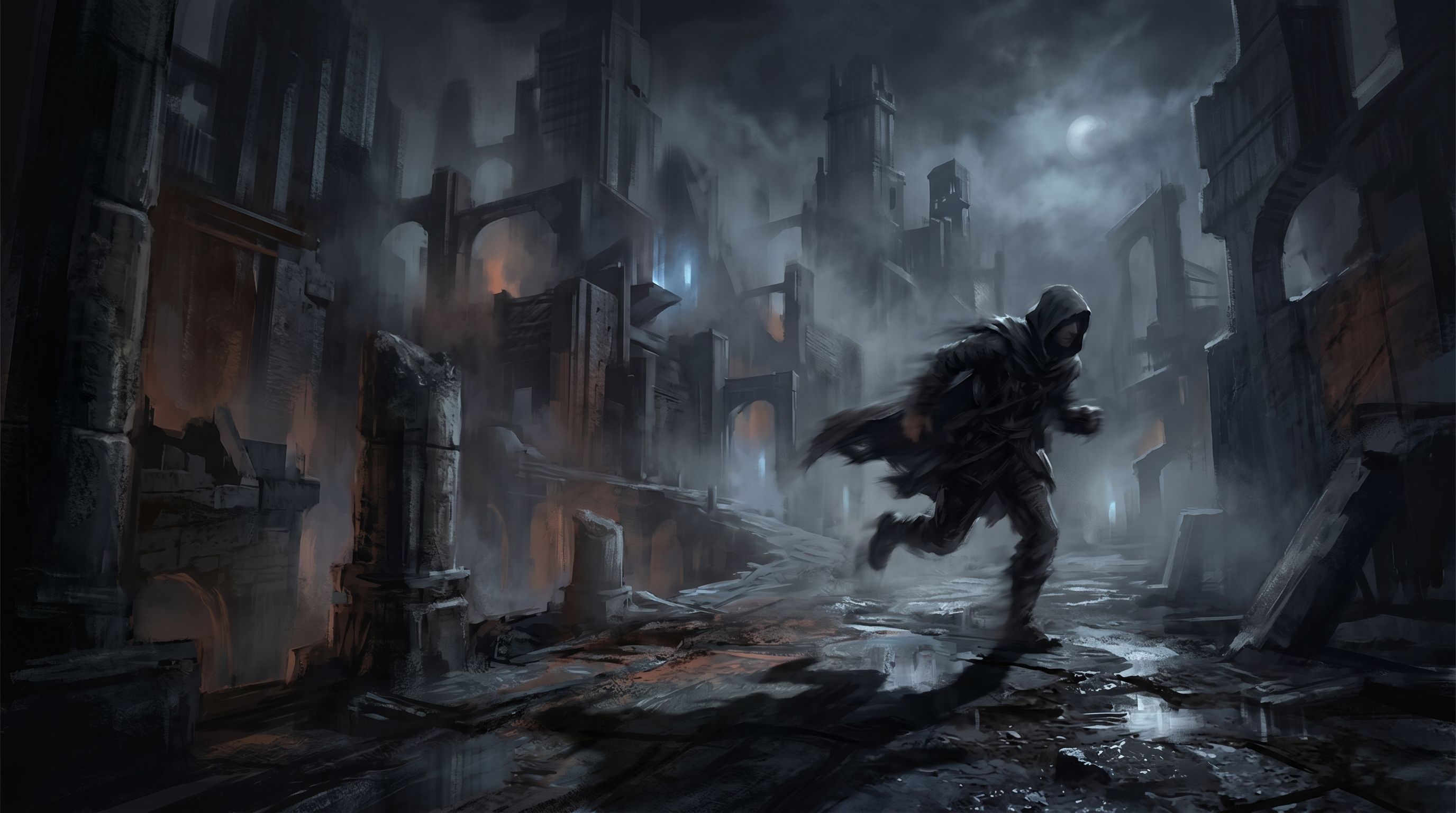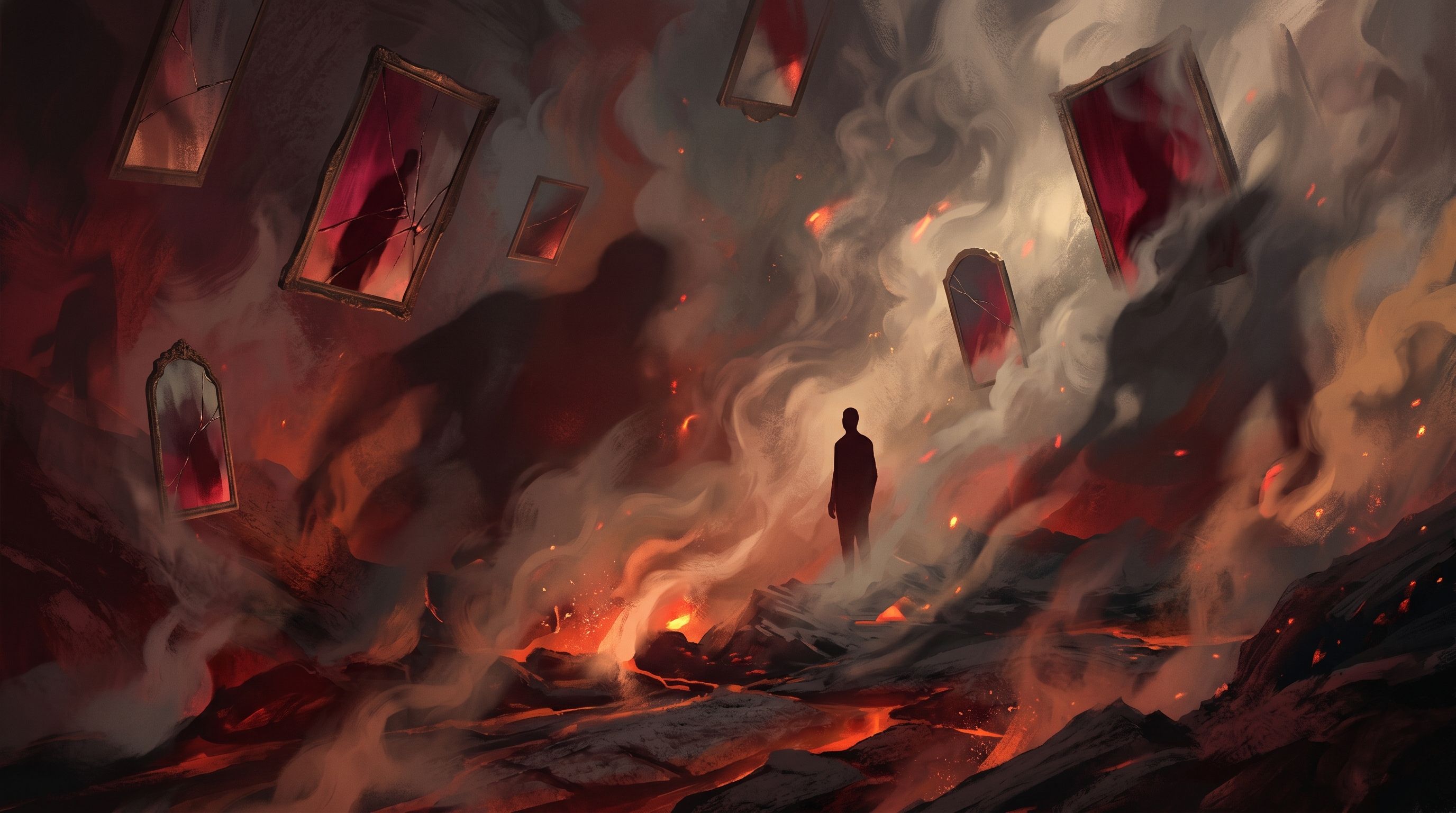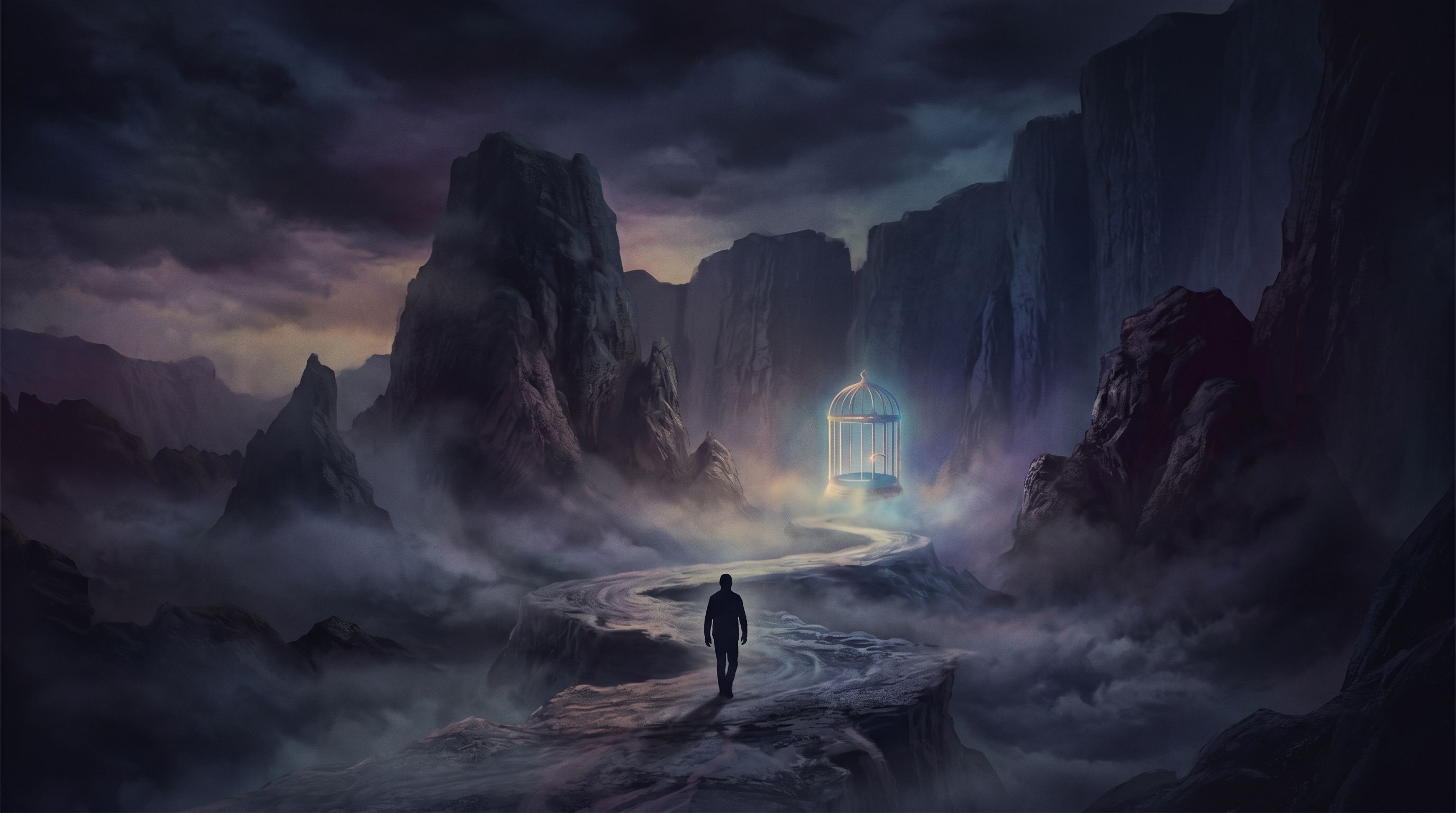
You woke up with that feeling of oppression, didn't you? As if the walls of your room had closed in during the night, or the air had become too heavy for your lungs. Dreaming of being locked up, facing a gate, or walking through long, grayish corridors is an experience that often leaves a taste of ash in the mouth. But rest assured, for in the world of shadows that I roam, prison is never a final verdict: it is a mirror your subconscious holds up to show you where you have stopped breathing freely.
---
The Walls We Build Brick by Brick
When I dive into the dreams of men to extract their bitterness, dreams of prison are the ones that require the most gentleness from me. It is not because they are frightening, no. It is because they are deep. Often, we imagine that prison comes from an external force, a tyrannical boss, or a stifling financial situation. But if you look closely at the bars in your dream, are they truly solid?
In most cases, the dream prison symbolizes our own defense mechanisms that have ended up imprisoning us. We build a wall to protect ourselves from romantic disappointment, and one fine day, we realize we can no longer go out to love again. That is where I come in, to remind you that every brick of this cell was laid by a thought, and a thought can be deconstructed.
I often see dreamers get annoyed by these visions. They ask me: "Yume, why does my mind inflict this torture on me?" I tell them it is not a punishment. It is a map. Your subconscious uses the image of the cell to tell you: "Look,
Let's start with a counter-intuitive truth: sometimes, we secretly crave those four walls. I often sit with dreamers who are exhausted by the endless choices of modern life, the relentless noise of having to be someone. In their dreams, the quiet of a stone cell isn't a punishment; it is a sanctuary. It is a sterile, quiet space where nothing is expected of you, where the heavy oak door keeps the demanding world at bay. Honestly, this psychological twist fascinates me. Your spirit might be using the imagery of confinement not to warn you of a threat, but to signal a desperate need for a pause, a womb-like retreat. If the cell in your night felt strangely peaceful, or if the gray stone felt cool against your forehead, do not fear it. It is just your mind pulling the emergency brake, begging you to simplify your waking life before the weight of it collapses on you.
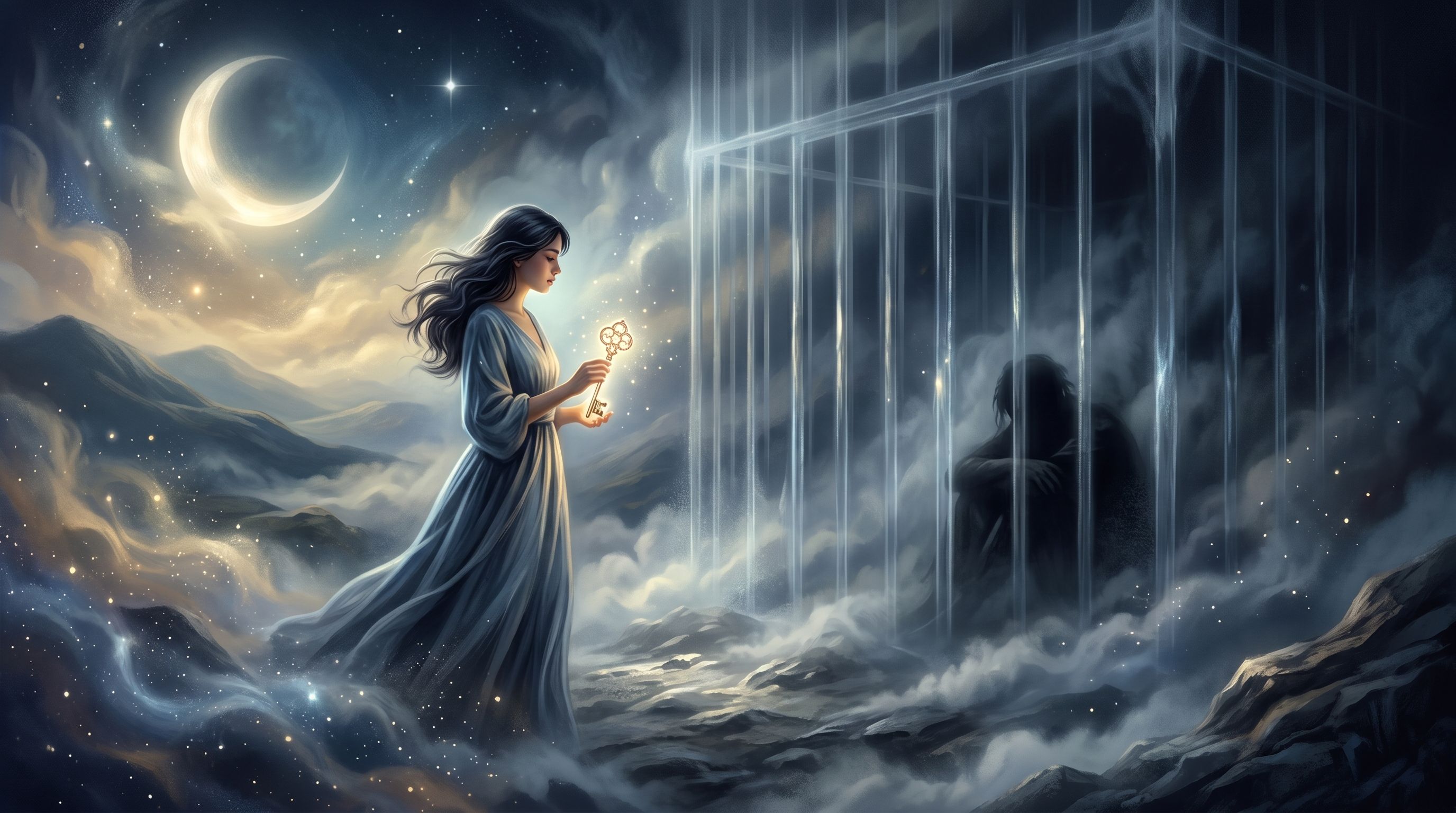
We rarely talk about what happens before the steel door slams shut. Who put you there? In the realm of sleep, we rarely see the guards; we only feel the weight of the sentence. I am always weary of those rigid interpretations that claim a prison dream always means a bad job or a bad relationship. It is often far more intimate than that. It is a self-inflicted sentence. You might have bypassed the court entirely, but your subconscious knows you are holding a trial against yourself in the dark. Perhaps you feel guilty for a choice you made, or a boundary you failed to keep. Before you ended up behind these dream-bars, did you first have to face the stern gaze of a judge in the courtrooms of your mind? When you sentence yourself to isolation, you are both the prisoner and the warden. And the key, though it feels heavy, is always in your own pocket.
There is a tactile, heavy quality to these dreams that lingers long after you wake. The cold sweat, the smell of damp mortar, the grating sound of iron scraping against iron. Sometimes, the cell isn't just stone; it is reinforced by other tools of restriction. I once watched over a dreamer who felt completely paralyzed in his sleep, finding his limbs bound with tangled, heavy rope inside a dark dungeon. He woke up trembling, convinced he was under some spiritual attack. But these materials—be it stone, iron, or rough hemp—are simply the physical vocabulary of your fatigue. They are metaphors made heavy so that you cannot ignore them. If you can feel the texture of the walls or the bite of the restraints in your dream, your body is speaking to you. It is translating your emotional exhaustion into physical weight, telling you that this current way of living has become a physical burden too heavy to carry.
I remember a dreamer, a wonderfully expressive musician, who kept dreaming of being locked in a sterile, windowless cubicle that felt like a high-security ward. He couldn't play his instruments; he was just surrounded by grey filing cabinets. It was a classic creative lock-up. When we are afraid to make mistakes, to produce something 'imperfect,' we lock our wildness away in a neat, safe cell. We trade our creative freedom for the safety of a predictable routine. I always find it a bit tragic when dreamers confine their own passion just to avoid the messiness of failure. If your dream prison looks less like a medieval dungeon and more like a bland, bureaucratic office, ask yourself where you have traded your passion for safety. The walls are only as strong as your fear of making a mess.