The invisible bars of the mind
I must share something with you that tires me a little: this habit some "experts" have of seeing prison as a purely negative symbol. I have been told of so many dreams where the cell was lined with velvet! What I see, as the eater of nightmares, is that the prisoner often represents an emotion or a talent that you have locked away.
Sometimes, it is guilt that forges the chains. You made a mistake, or you think you did, and your mind builds this cold stone setting to satisfy a need for inner justice. You punish yourself before the world does. But look closely at the guard in your dream: does he not strangely resemble your own reflection?
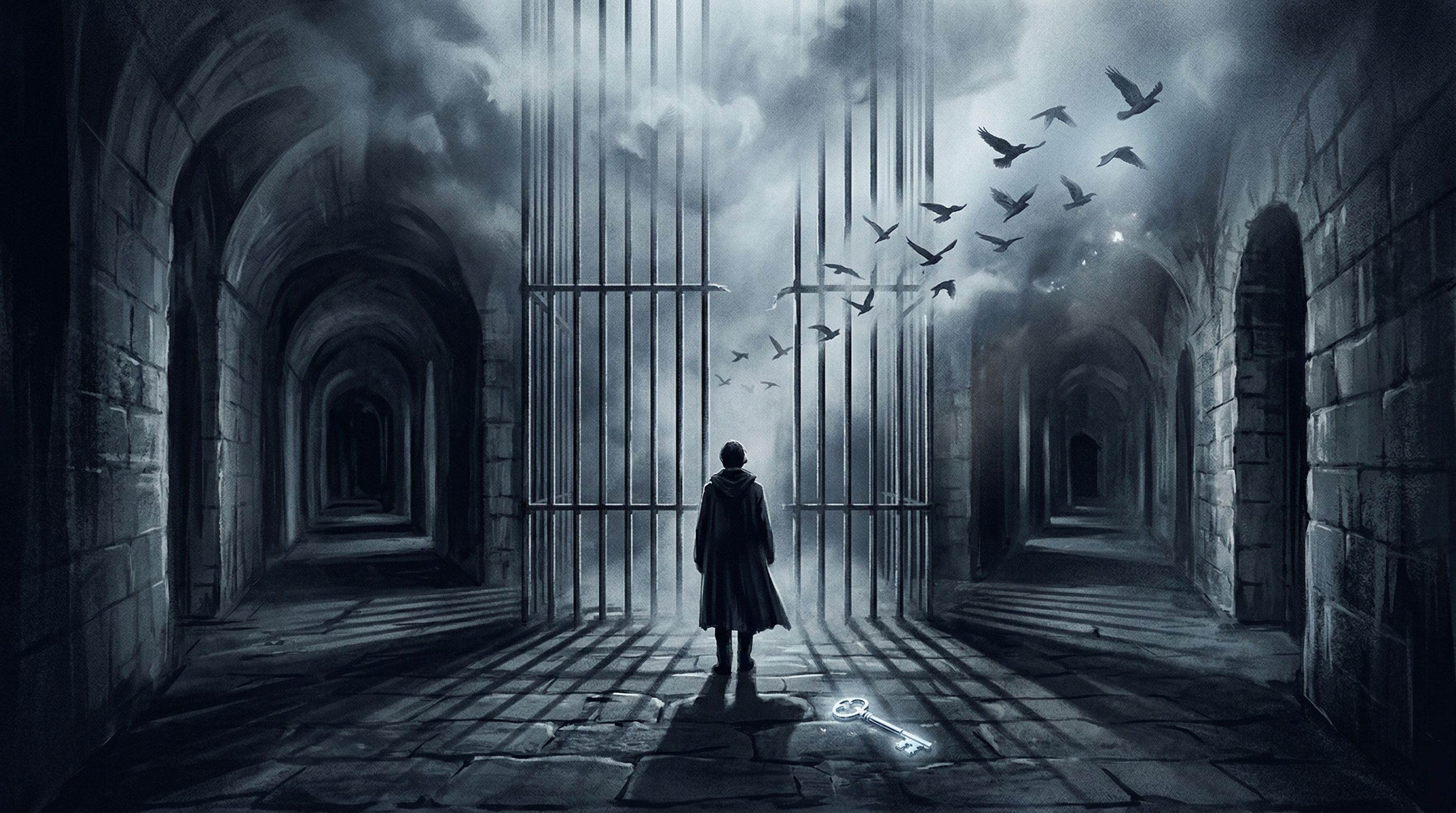
Captivity in a dream is a metaphor for a dead end. You might feel stuck in a job that no longer nourishes you, or a relationship where words no longer flow. Unlike the image of collective confinement found in a zoo, the dream prison is intensely personal. It is a face-to-face encounter with oneself. What always amazes me is the solidity of these dream walls: they are made of your fears, and yet, as soon as you decide to name them, they become as transparent as incense smoke.
When someone else is behind bars
I sometimes listen to dreamers who are not locked up themselves, but who observe a stranger or a loved one in a cell. This is a nuance that fascinates me. Often, this prisoner is a projection of a part of your character that you judge to be "dangerous" or "unacceptable."
If you see a stranger in chains, ask yourself: what quality am I afraid to express? Is it my anger? My ambition? My vulnerability? By keeping it under lock and key, you think you are protecting yourself, but you are only creating an inner tension that will eventually crack the door.
There are also those dreams of visiting a prison parlor. You speak to someone through a glass pane. This is the pure symbol of broken communication in reality. You are trying to reach a piece of the truth, but something—a social rule, a fear of judgment—stands in the way. It is not a fatality; it is a poetic diagnosis of your current relational state.
To escape or to stay: the choice of consciousness
I remember a man who dreamed every night that he was escaping from a dungeon, only to return and sit on his straw mattress before morning. He was afraid of freedom. Because freedom is responsibility. Being a prisoner, deep down, also means no longer having to choose your menu or your schedule. It is a form of passive comfort, however painful it may be.
If your dream ends with a successful escape, it is a magnificent sign. It means you have found the flaw in your defense system. You no longer need to hide behind excuses or fake obligations.
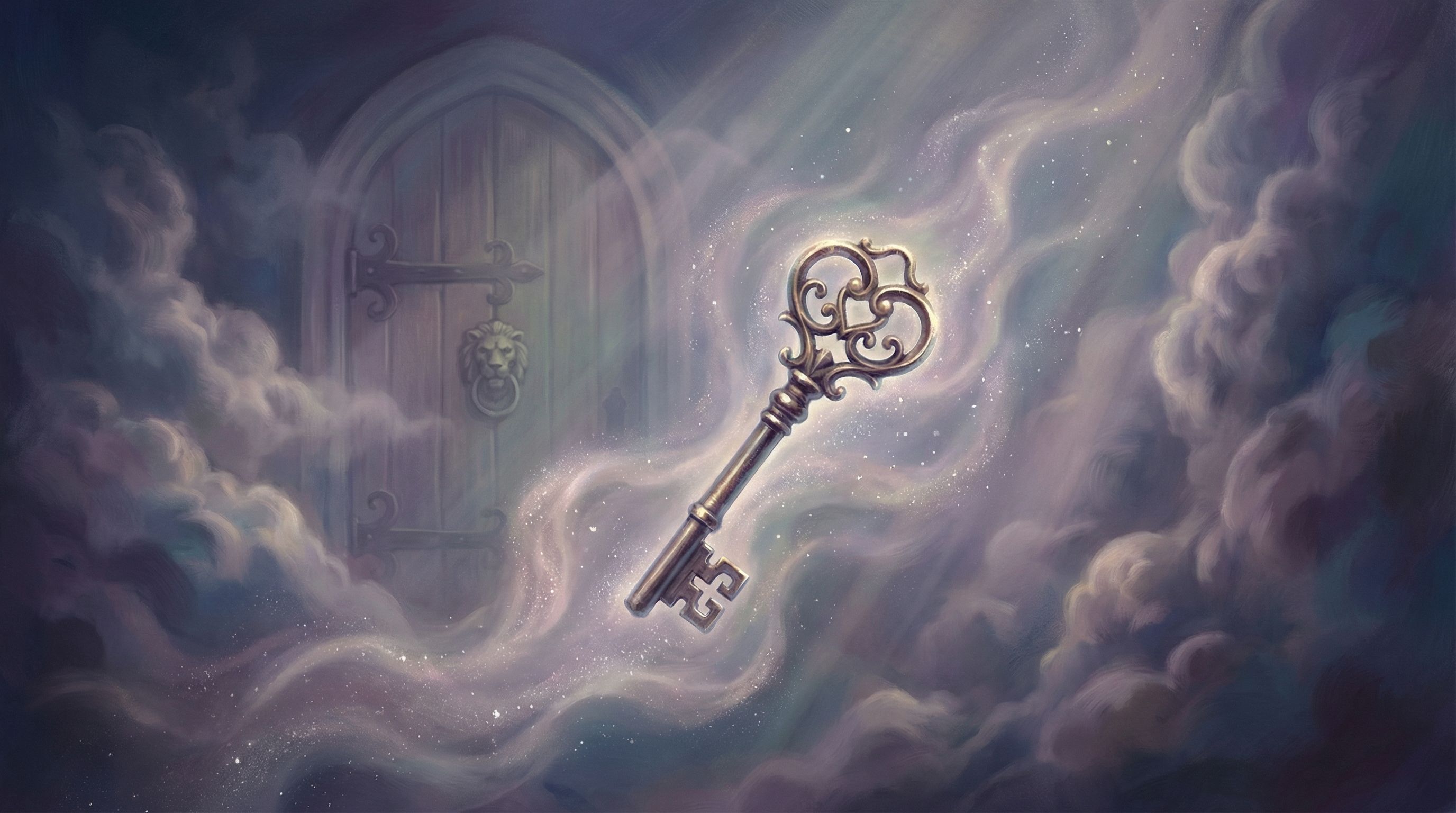
However, do not always look for an interpretation carved in stone. Symbols are fluid. One day, the cell is a punishment; the next, it is the only place where you feel safe. I have learned over the centuries that the unconscious is not a judge, but a director who uses the most dramatic sets to get your attention. If you feel captive, it is perhaps simply because you forgot that the door was never locked from the outside.
The messages I collect at night are rarely threats. They are whispers, clues left on the path of your evolution. A dream of prison is, paradoxically, the first step toward a great liberation.
Have you noticed how cold the air is in these dream cells? Often, dreamers tell me about the dampness of the stone, the heavy scent of moss, or the absolute, crushing silence of their dungeon. We are quick to panic in the quiet, but I sometimes wonder if we misinterpret this isolation. In some Eastern traditions, the small, bare room is not a punishment, but a place of deliberate retreat—a temple of the self. What if your unconscious has locked you in not to torture you, but to force you to rest? In the noise of your waking life, you are constantly running, scattering your energy to the winds. When you dream of being locked away, your mind might simply be building a temporary sanctuary, a place where you are finally forced to sit with your own breathing, away from the world's demands. It is a harsh way to find peace, but sometimes, it is the only way you will listen.
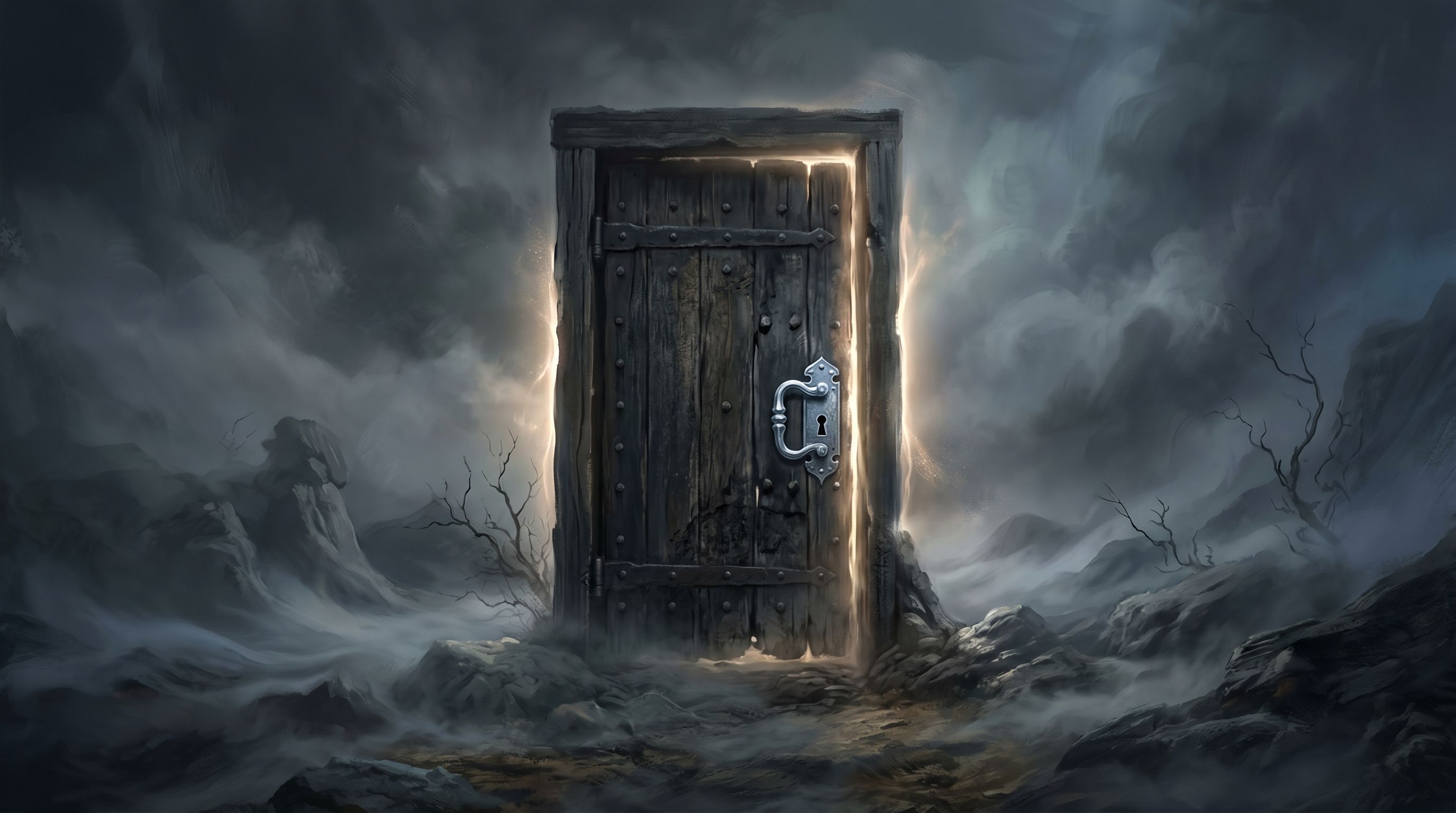
I once met a dreamer—a poet who hadn't written a single line in years—who kept dreaming of a very specific prison. There were no guards, only a massive iron door, and she sat inside with a blank canvas. She woke up terrified, thinking her creativity was dead. 'How simplistic!' I thought. It honestly tires me when people assume that being locked up in a dream means you are permanently blocked. On the contrary, that iron door was her mind's way of shutting out the noise of expectations. Her muse wasn't dead; it was incubating. When you are in a phase of transition or trying to birth something new, you might find yourself dreaming of being invisible or locked away. It is a necessary cocoon. The prisoner is not a victim of a dead end, but a seed buried deep in the dark earth, waiting for the winter to pass before it can break through the soil.
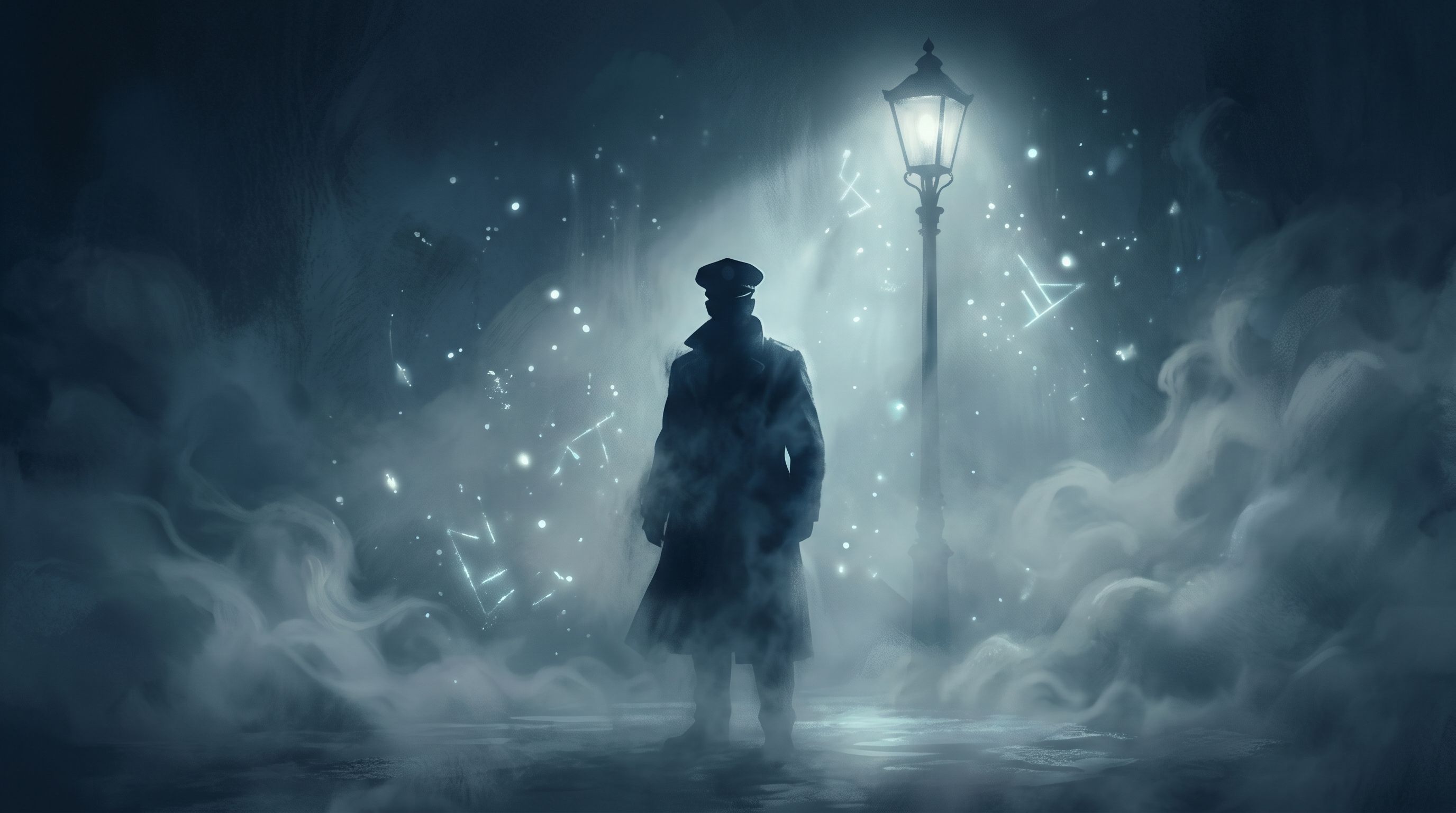
We must also talk about the one who holds the keys. If you are the prisoner, who locked the door? Often, there is a silent figure standing in the shadows just outside your cell, watching you. I am always fascinated by this character. Is it a cruel jailer, or does it feel more like an unyielding judge delivering a sentence you believe you deserve? In the theater of the night, every character is a mask you wear. When you dream of a guard, you are looking at your own internal critic—that rigid, unforgiving part of your ego that monitors your every mistake. This figure doesn't want you to suffer out of malice; it genuinely believes that by keeping your desires locked away, it is keeping you safe from failure. The tragedy is that the guard is just as trapped as the prisoner, forced to stand watch forever at the door of your own potential.
There is a beautiful concept in old alchemical texts: the 'vas hermeticum', a sealed vessel where base metals are cooked and transformed into gold. The vessel must be completely closed; if any air escapes, the transformation fails. I like to think of the dream prison in this light. Your captivity is a spiritual 'nigredo'—the dark, heavy phase of decay that must happen before rebirth. You cannot grow if you are always scattered. Sometimes, the soul requires a period of containment to concentrate its energy, to ferment, to change its very nature. If you find yourself behind bars tonight, try not to fight the walls immediately. Feel their texture. Breathe in the stillness. Perhaps this confinement is not a permanent sentence, but the precise, necessary boundary your soul needs to finally transform its oldest wounds into something luminous.
If these visions of walls and chains continue to haunt your nights, you could start noting every detail of your inner cell in Midnight Mind. By building your own notebook of symbols, you will eventually understand that it is you who draws the plans for your own escape.