AT A GLANCE
TL;DR
Your genetic heritage acts as a personal map for appetite and digestion, not a fixed destiny.
Metabolism remains highly active during sleep, focusing on cellular repair and hormonal regulation.
Sleep deprivation disrupts hunger hormones, making weight management a psychological and biological struggle.
Aligning your evening rituals with your circadian rhythm allows your body to process energy more efficiently.
How Your Genes and Nighttime Metabolism Influence Your Weight Loss Journey
The Invisible Score of Your Genes
Your body is a symphony, and you do not always possess the entire musical score. We often believe that weight management is simply a matter of sheer willpower, a battle to be won through discipline alone. However, research suggests that your DNA plays a decisive role in how this music is played. Scientists have identified specific variations in genes linked to appetite and digestion, meaning that your neighbor might process a meal entirely differently than you do.
These genes influence how your brain perceives fullness and how your digestive system handles nutrients. This is not a sentence or a flaw; it is precious information. As a Baku, I often see this struggle between your desire for control and your biological reality reflected in your dreams. You might dream of being chased or being unable to move—symbols of the friction between your conscious goals and your internal nature.
Understanding that your body has its own set of rules allows you to release the weight of guilt. Some specialists believe that this genetic regulation is inseparable from our circadian rhythms. If your genes dictate your hunger during the day, they also influence how your body draws from its energy reserves at night. It is an uninterrupted dialogue between your cells and your spirit that continues even when you are unaware of it.
---
Nighttime Metabolism: The Quiet Work of the Shadows
You might imagine sleep as a period of metabolic inactivity, a simple "turning off" of the machine. This is a misconception I often encounter. While you are exploring the vast landscapes of your unconscious, your body is busy with a monumental task: tissue restoration, hormonal regulation, and complex energy management.
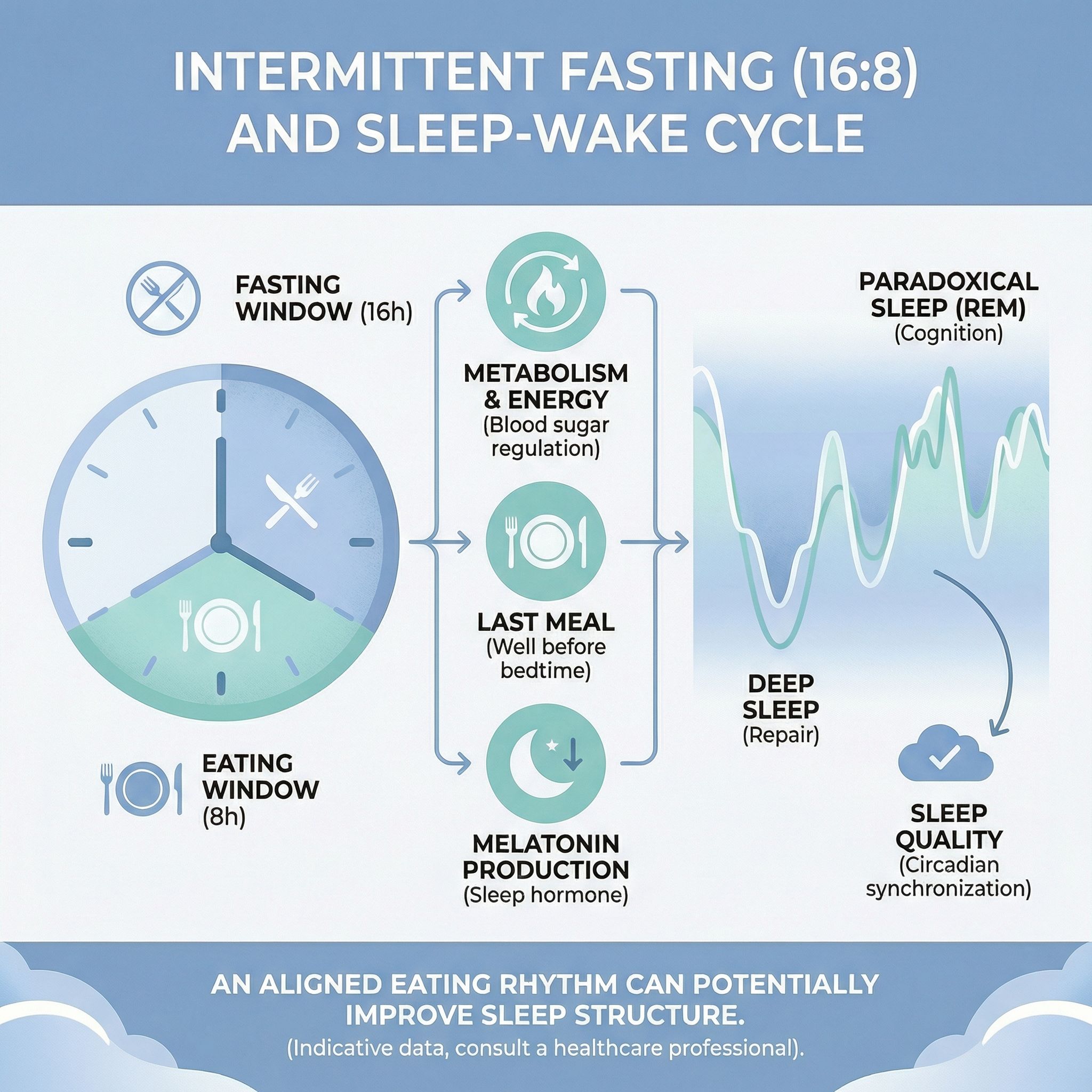
Your resting metabolism—the energy you burn just to stay alive—never truly sleeps. However, this process can be easily disrupted by a misaligned biological rhythm. For instance, the timing of your last meal can change everything. In the article Intermittent Fasting and Sleep Quality, we explore how the window of your intake influences the depth of your rest and your metabolic efficiency.
When a lack of sleep puts pressure on your appetite genes, they begin to send erroneous hunger signals the moment you wake up. You might find yourself reaching for sugar or heavy fats not because you lack "willpower," but because your biology is screaming for a quick energy fix to compensate for a restless night. By protecting your sleep, you offer your genes a stable environment to function at their best.
🌙 Yume’s Echo: Your body is not an engine to be repaired, but a garden to be listened to; even in the silence of the night, every cell whispers its needs.
---
Concrete Example: Thomas’s Metabolic Awakening
Thomas, a 28-year-old architect, felt like he was in a state of permanent failure. He followed every trend, yet his body seemed to "resist" every effort he made. He felt betrayed by his own biology. By taking an interest in chronobiology and the way his specific body handled energy, he came to understand that his metabolic signature was unique.
Instead of imposing a one-size-fits-all diet that ignored his natural sense of fullness, he began to observe his sleep patterns. He noticed a clear pattern: his sugar cravings skyrocketed specifically after restless nights where he stayed up late under blue light. By adjusting his evening ritual to encourage restorative sleep, he allowed his nighttime metabolism to do its work without interference. It was no longer a struggle against himself, but a gentle collaboration with his biology.
---
Why Your Dreams are Allies to Your Physical Health
There is a fascinating link between weight management and REM sleep—the phase where your dreams are at their most vivid. During this time, your brain consumes a surprising amount of glucose. This intense metabolic activity contributes to the overall balance of your organism, proving that even your most abstract thoughts have a physical cost and benefit.
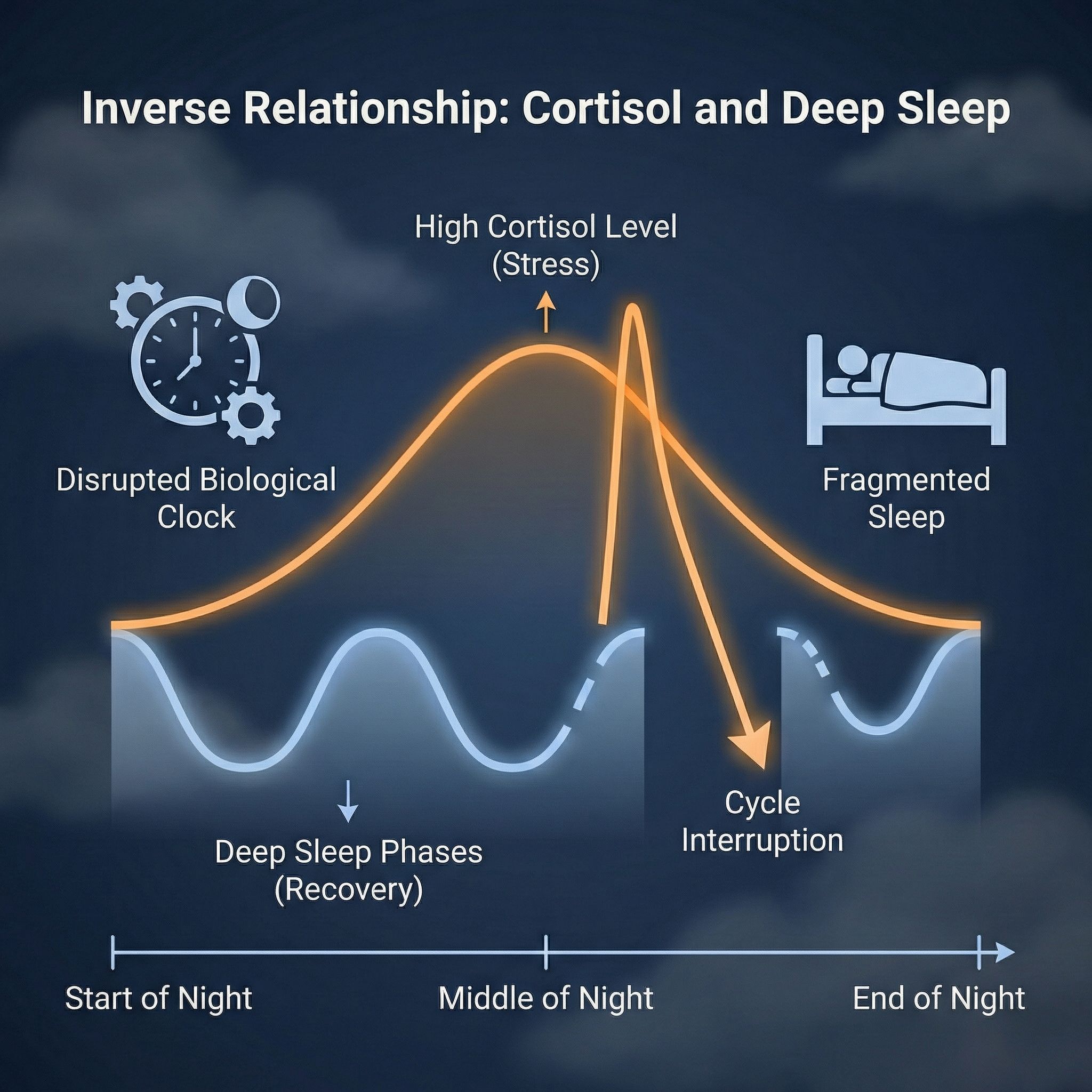
In our exploration of Why We Dream: The Fascinating Secrets of Our Nightly Mind, we look at how this activity regulates our emotions. Emotional stress is a major barrier to physical balance because it triggers the production of cortisol. This hormone, often called the "stress hormone," is known to encourage the body to store fat, particularly around the center, as a survival mechanism.
A mind soothed by dreaming allows for more serene digestion and a more fluid metabolism. Your dreams are a reflection of your hormonal state; they are the bridge between your biology and your spirit. When you process your anxieties in the dream world, you are literally lightening the load on your physical body.
---
A Practical Ritual: The Metabolic Calm Window
To harmonize your genes and your metabolism starting tonight, I suggest you try to establish what I call a metabolic calm window. This is not a strict rule, but a gift you give to your digestive system.
Try to stop eating at least two to three hours before you intend to sleep. This prevents your body’s energy from being split between the heavy labor of digestion and the delicate work of cellular regeneration. During this window, use the time for a brief moment of introspection. Ask yourself: "What is my body truly hungry for right now? Is it food, or is it gentleness, silence, and rest?"
By respecting these signals, you prepare your biological ground for deep restoration. There is no need to fight against your nature; you simply need to give it the space and the silence it requires to express itself.
---
Toward a Deeper Listening to Oneself
Science reveals our complexity, but this knowledge should never be a source of stress. Whether your genes predispose you to a slow or rapid metabolism, the essential thing is your journey toward well-being and self-compassion.
Each night is an opportunity to reset this internal dialogue. Your metabolism is not an enemy to be tamed or a machine to be hacked; it is a living part of you seeking its own equilibrium. By accepting your genetic uniqueness, you can stop comparing your progress to universal standards and begin to focus on your own biological truth.
Your dreams often say what your body does not dare to express in the waking world. By taking care of your nights, you are taking care of your life.
If you wish to explore your dreams more deeply, your Baku is waiting for you.