Why does your mind choose to stage loss?
Honestly, I find that classic dream dictionaries cruelly lack nuance. They will often tell you that "dreaming of death equals a long life." That’s a bit of a lazy shortcut, don’t you think? From my perspective as a Baku, when I nourish myself with these visions, I mostly feel an immense weariness of a soul that has carried a burden for too long.
The process of dream-mourning acts as a safety valve. Imagine your mind as an old Japanese house: sometimes, to let in fresh air, you have to accept taking down the old, dusty curtains. To dream of mourning is to accept that something is "finished." This could be a relationship, of course, but it is more often a habit, a fear, or an ambition that no longer fits who you are. It is a bit like when one dreams of an amputation: we lose a piece of ourselves, not out of cruelty, but because that piece was preventing us from moving forward.
I have often encountered dreamers who felt guilty for not being "sad enough" in their dream of loss. But there are no rules! Sometimes, the relief you feel in the dream is proof that the loss is actually a liberation. Do not judge yourself. Your subconscious uses the symbol of mourning to force you to look at what you don’t dare let go of during the day. It is a form of brutal honesty, yet it is deeply kind.
The nuances of sadness: From a loved one to a stranger
I sometimes marvel at the complexity of your inner landscapes. Mourning does not always wear the same mask. If you dream of mourning someone who has already passed away in reality, it often means your process of integration isn't finished, or that this person represents a quality you are afraid of losing.
But what about when we weep for a stranger? Or worse, someone who is very much alive?
This is where the wisdom of the dream becomes fascinating. If you dream that you are mourning a close friend who is perfectly healthy, don’t call them in a panic! Instead, ask yourself what that friend embodies for you. Is it their spontaneity? Their courage? Perhaps you feel that your own spontaneity is fading away. The dream stages the death of the "other" to show you the disappearance of a facet of yourself.
We can also experience grief over objects, much like when we cry over a broken toy that reminds us of our childhood. These small mournings are the roots of the great ones. They teach us to let water flow under the bridge without trying to catch every drop.
I must confess, I am not a fan of fixed interpretations. Every dream of mourning is a unique fingerprint. Sometimes, even I am perplexed by the macabre staging a mind can invent just to say: "I want to change jobs." But that is how you humans are made: you need tragedy to validate your transformations.
Taming the void to make room for renewal
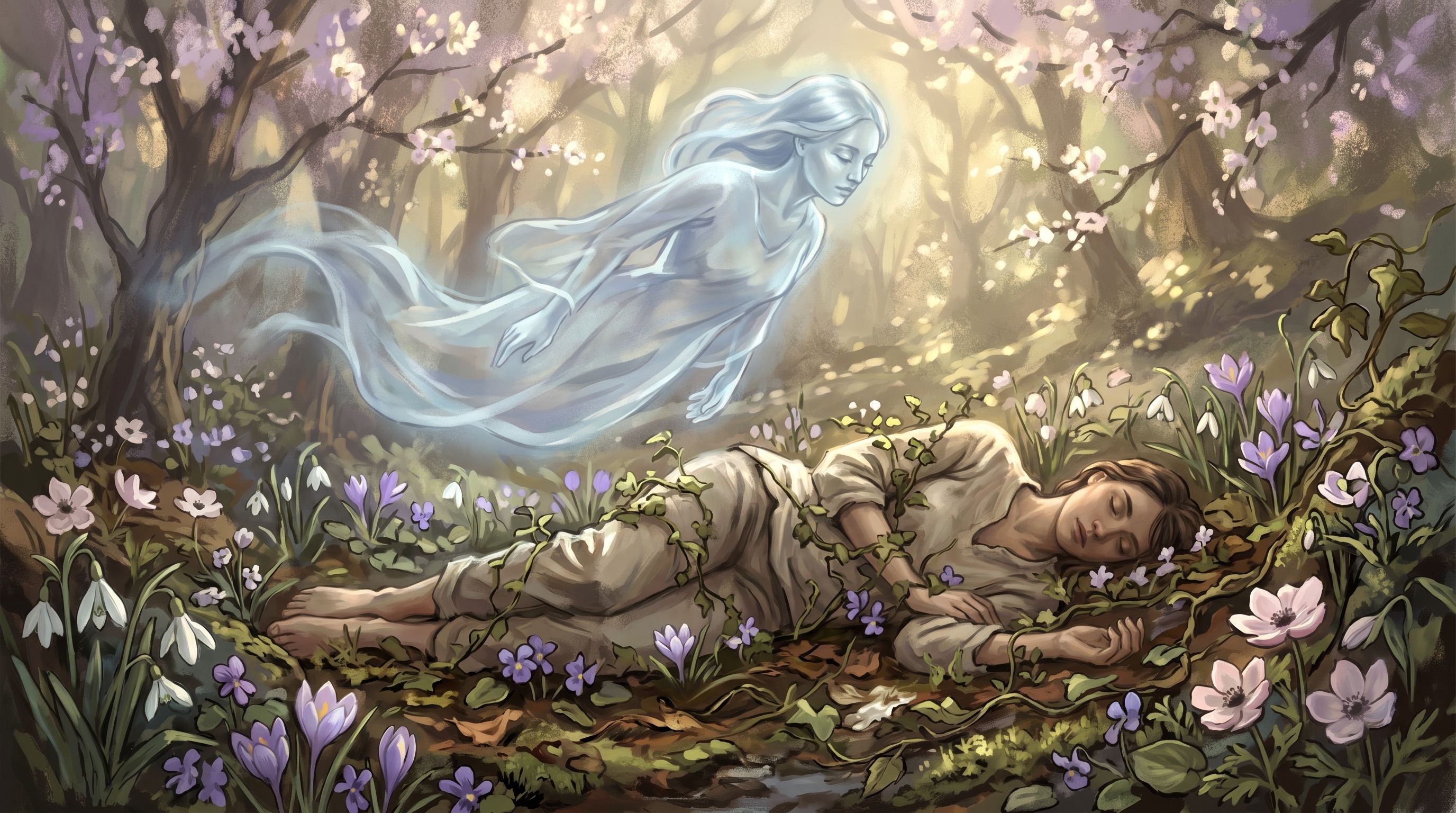
If you wake up with that sensation of emptiness, my advice is not to try and fill it immediately with noise or work. Sit with that melancholy for a moment. It is fertile. Mourning in a dream is the plowing of the field before the sowing.
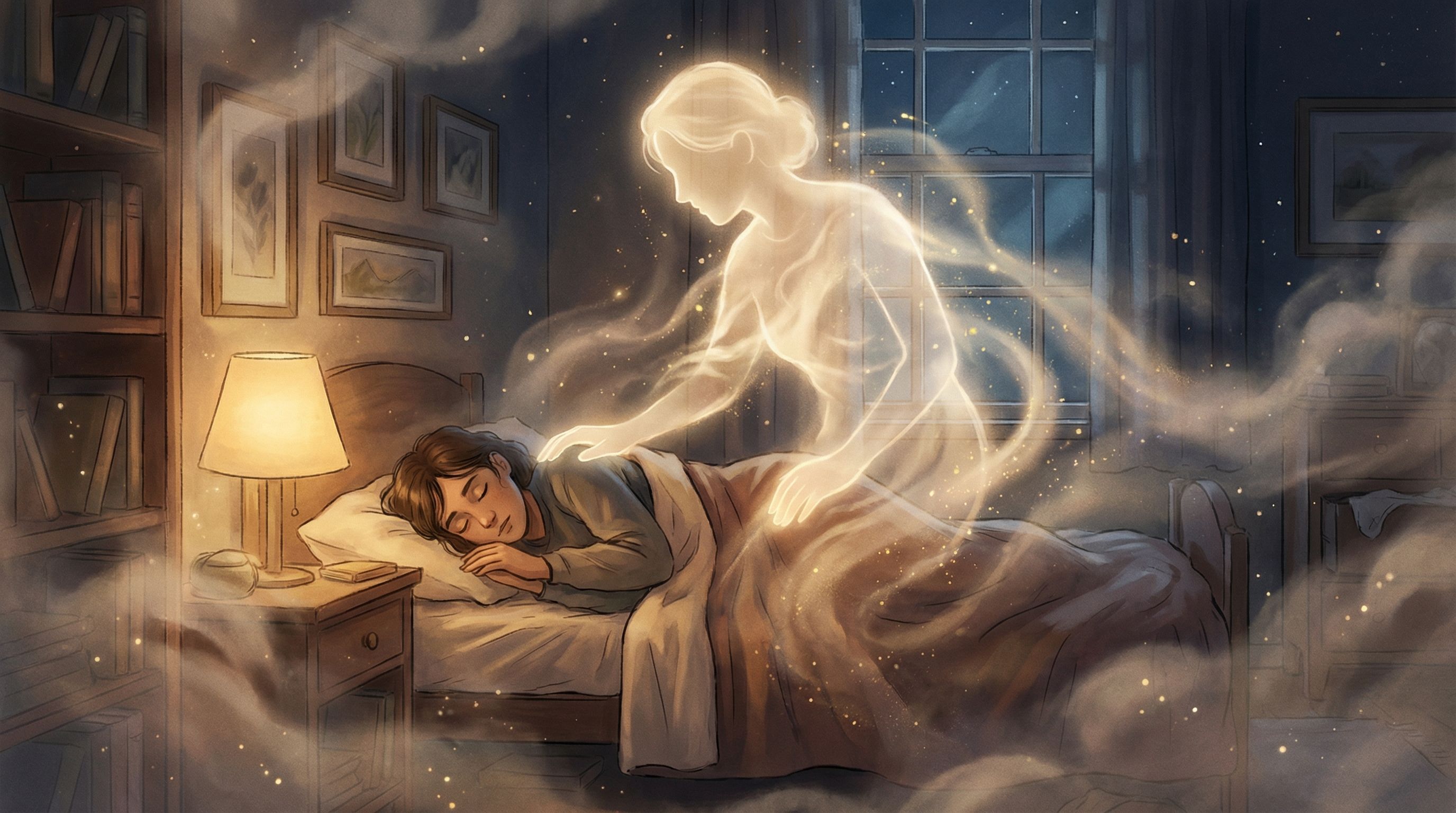
The true danger does not lie in the dream itself, but in the refusal to mourn in your waking life. If you block your emotions, if you refuse to see that something has ended, your subconscious will scream louder and louder, using increasingly dark imagery. I have seen dreamers exhaust themselves trying to "save" the dead in their nightmares, simply because they hadn't accepted a breakup from three years ago. My role, when I eat these nightmares, is to digest the pain so that I leave you only with the lesson.
See this dream as an invitation to be gentle with yourself. Life is a succession of little deaths and grand rebirths. By accepting to carry this grief tonight, you have made room for something new that waits on the threshold of your consciousness. It is an act of courage, even if it felt like vulnerability.
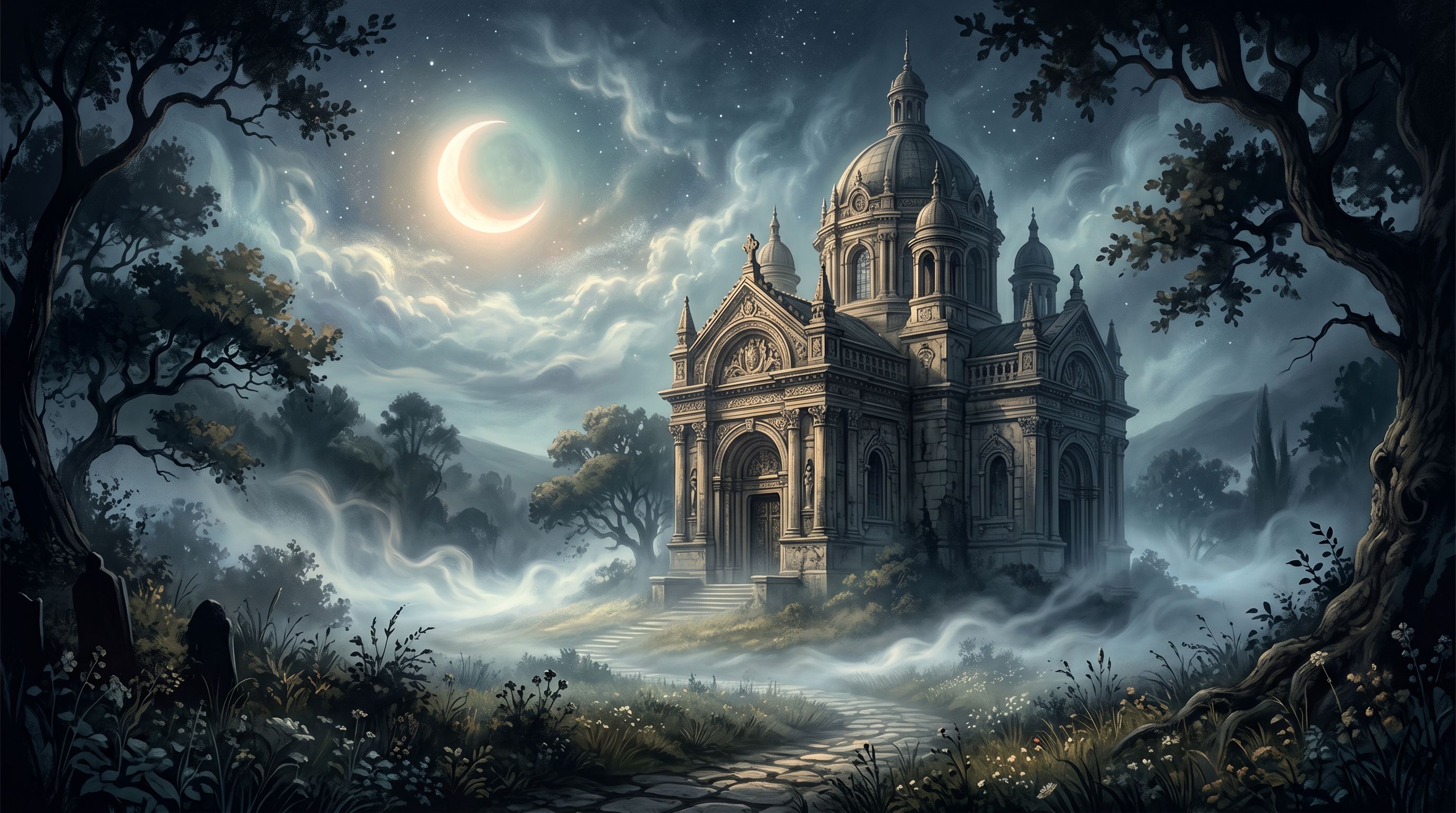
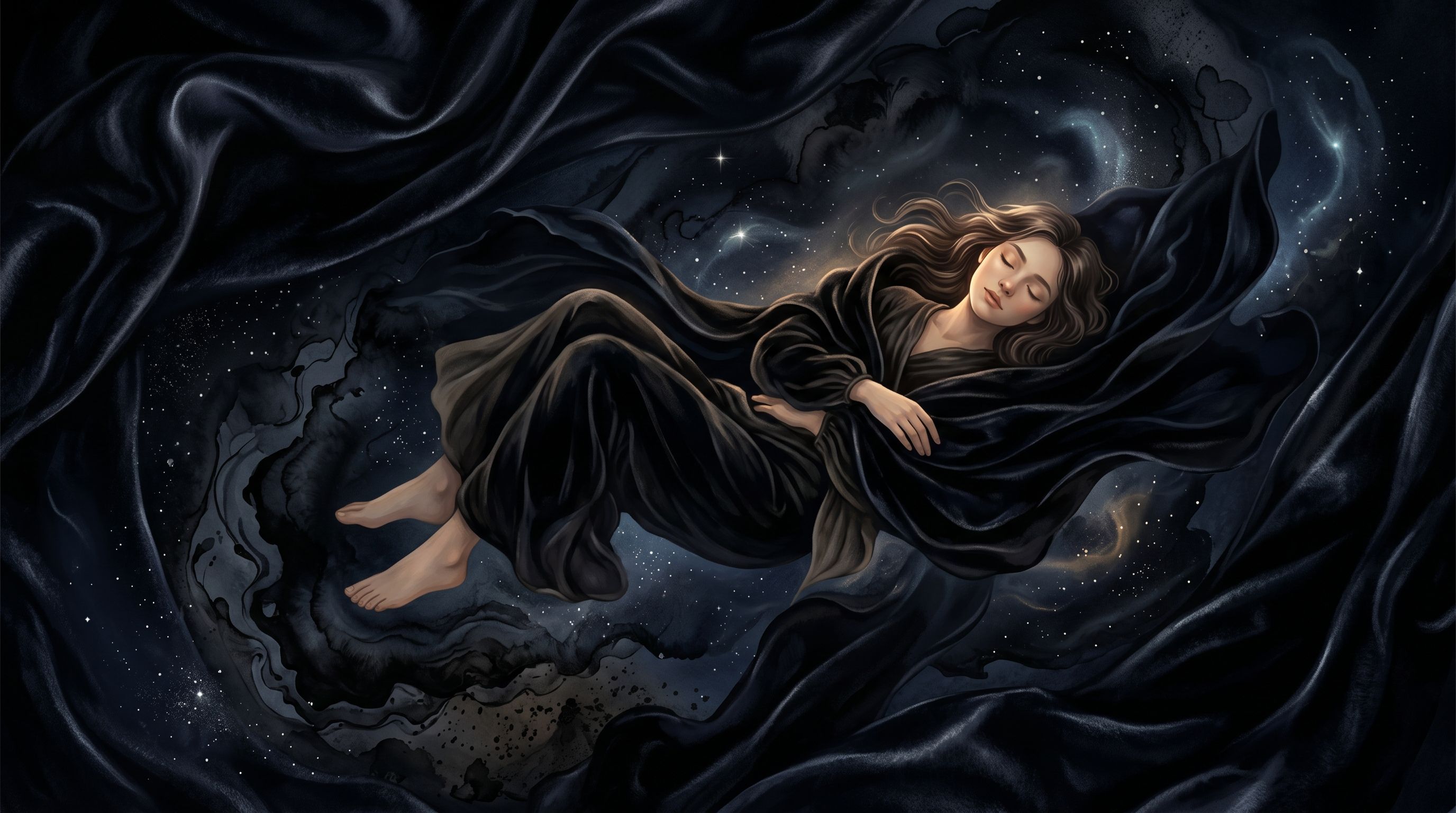
Have you ever noticed how quiet these dreams of loss tend to be? There is rarely any screaming or dramatic wailing; instead, a heavy, velvet silence wraps around the scene, muffling every footstep. Often, your sleeping mind even strips the world of its vibrancy, leaving you to wander through a stark absence of color where everything is painted in shades of ash and slate. I find this sensory dampening beautiful, honestly. It is your mind's way of reducing the background noise of daily life so you can focus entirely on the weight of what is ending. By draining the world of its distractions, your subconscious creates a quiet, sacred chamber where the work of letting go can happen without interruption. It is not a bleak punishment, but a gentle, dimming light that allows your inner eyes to adjust to the dark before a new dawn.
I once met a dreamer—a fiercely ambitious woman in her late thirties—who came to me exhausted by a recurring dream of weeping over a small, velvet box. She felt ridiculous because, when she opened it in her sleep, she wasn't mourning a person, but rather the sight of a broken toy from her kindergarten years. She woke up night after night with her cheeks wet, mourning this plastic trinket as if it were a cherished friend. We talked about it for a long time. It turned out she was preparing to close her first business, and her mind, unable to process the sheer scale of that adult failure, chose to translate her grief into the simple, raw sorrow of a child. Sometimes, your spirit cannot handle the complex syntax of adult disappointment, so it borrows the innocent, uncomplicated symbols of your past to let the tears flow freely.
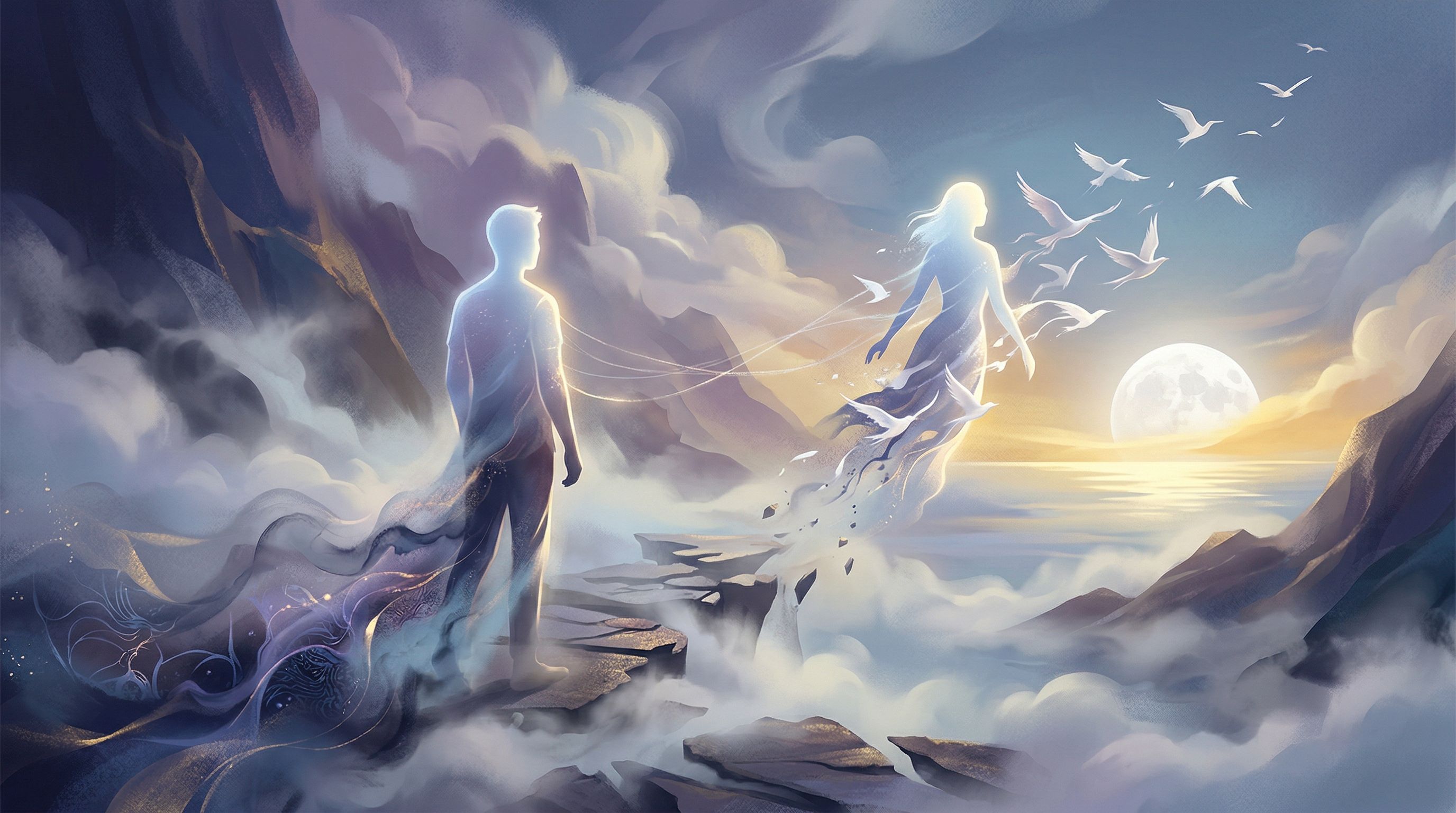
What happens when the person you are grieving in the dream is actually yourself? It is an incredibly disorienting experience to stand at the edge of a crowd and watch people weep for your own passing. Many dreamers wake from this in a cold sweat, convinced it is a dark omen. But honestly, I smile a little when I encounter these dreams, because they show such profound courage. Your ego is incredibly stubborn; it clings to its old identities, its old wounds, and its familiar coping mechanisms like a security blanket. For your mind to stage your own funeral is a radical act of psychological honesty. It means a part of you has finally recognized that the old 'you'—the one who survived by being quiet, or angry, or overly cautious—must be laid to rest so the next version of you can step into the light.
If you need to keep a trace of these fading faces or understand the evolution of your emotions through the nights, you could entrust your visions to Midnight Mind. It is a beautiful place to build your own collection of symbols and see, over time, how your mournings transform into landscapes of peace.
Do you feel a little lighter, now that we have put words to this silence? Sleep peacefully; I am watching over your next journeys.