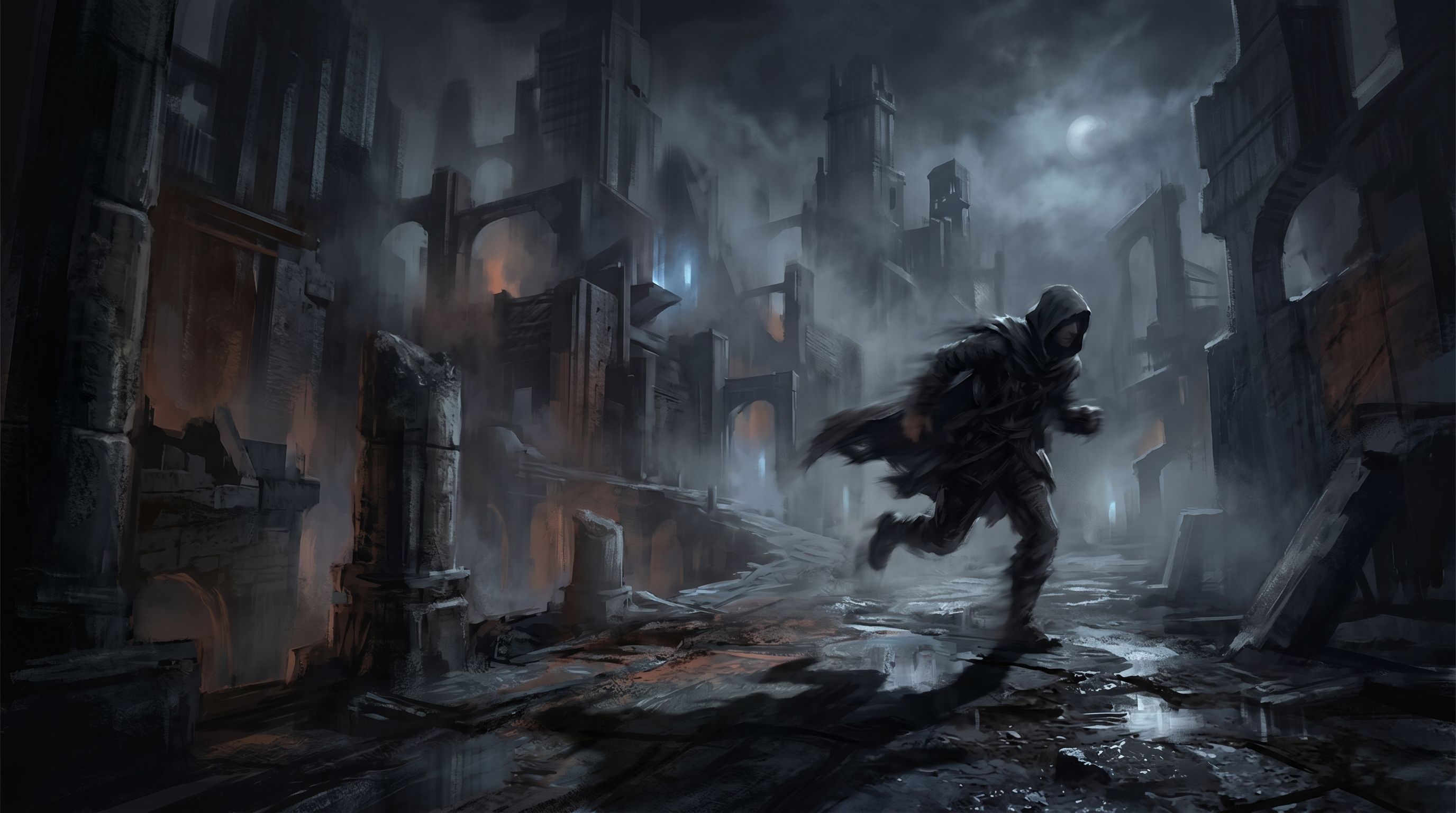
Some mornings you wake up with your heart pounding, your legs heavy from an invisible race, left with the strange feeling that your entire bed is tilting toward the edge of a cliff. Far from just bringing relief, nocturnal escapes often leave a bitter taste in your mouth or an anxious surge of adrenaline that's hard to shake off over morning coffee. What's unsettling is that hazy boundary between a totally valid craving for fresh air and outright panic. By diving into this guide, you're going to discover why your subconscious decided to tear down the walls last night—and more importantly, how to decode this visceral need to walk away from everything without having to burn your whole life to the ground.
---
Flight vs. Freedom: When Your Soul Craves the Horizon
It honestly frustrates me when lazy dream dictionaries reduce escape to a simple fear of responsibility. It's so reductive. Truthfully, this symbol has fascinated me for years because it carries infinite nuance. When you make a break for it in a dream, are you running toward something, or are you running away from something?
Let's be real: pure flight often feels like a defensive retreat, much like that paradoxical feeling you get when you feel entirely alone in the world, where silence becomes both your sanctuary and your prison. But true escape—the kind that truly stirs your subconscious—is more like throwing open the windows and sweeping out stale certainties. It's your physical body refusing to suffocate inside a lifestyle that's grown way too small for you.
Sometimes, this quest for breathing room shows up in the most surprising details, much like the crook of an elbow suddenly flexing as you fight to carve out a little more physical freedom. Your unconscious is constantly searching for that exact angle where you can bend without breaking.
---
Decoding the Scenery of Your Nighttime Chase
To figure out what your inner voice is trying to tell you through this escape, take a close look at your surroundings. Are you breaking out of a glass skyscraper, a soul-crushing corporate office, or a gilded cage you built with your own two hands?
- The roadblocks along the way: If doors keep slamming shut in your face or your legs feel like they're made of lead, it's a sign that your mind is fighting its own internal prohibitions. Freedom is right there within reach, but your own mental boundaries are putting up a fight.
- The landscape at the finish line: Do you break out into an open field, a sunlit forest, or do you tumble into a terrifying void? Where you end up reveals the true measure of your anxiety or your hope.
Remember this: escape nightmares don't predict some looming disaster—they highlight a misalignment. They measure the exact gap between the life you're currently tolerating and the one your soul is quietly demanding.
Have you ever noticed the bizarre acoustic quality of these nighttime chases? It is rarely a loud, roaring pursuit. More often, it is wrapped in a heavy, muffled silence, as if you were running underwater. You try to call out for help, to warn someone, or simply to scream your defiance, but your throat feels dry, glued shut, producing nothing but a faint hiss. This sensory paralysis is not just a glitch of your sleeping brain; it is a profound metaphor. Your subconscious is showing you exactly how silenced you feel in your waking life. When you cannot speak your boundaries during the day, your spirit has no choice but to use your legs to draw them at night. It is a silent protest, a quiet coup d'état happening right under your bedsheets while the rest of the world thinks you are peacefully asleep.
I once met a dreamer, a young mother, who confessed to me with absolute shame that she dreamed of boarding a train alone, watching her crying family fade on the platform. She felt like a monster. But I had to gently remind her that the soul has its own ecological balance. Escaping in a dream does not mean you want to abandon the people you love; it means your inner battery is flashing red. It is the psyche's desperate, clumsy way of carving out an emergency sanctuary when you have given too much of yourself away. Sometimes, the dream is just a safe, simulated playground where you can practice being selfish for an hour without anyone actually getting hurt. It is not a betrayal; it is a spiritual exhale.
Honestly, I often wonder why we always associate escaping with frantic running. In ancient Eastern traditions, true freedom is not about breaking through brick walls with your fists; it is about becoming so fluid that the walls can no longer hold you. There is a quiet Taoist wisdom in letting go of the struggle. If you find yourself escaping not by running, but by slipping through cracks, dissolving into mist, or simply drifting away like a shadow, you are tapping into a much deeper spiritual resource. You are learning that you do not always need to fight your captors or burn down the prison. Sometimes, the most powerful escape is simply refusing to participate in the game anymore, fading out of the rooms where you are no longer appreciated.
How you choose to make your exit in the dream world matters immensely. Running on foot is exhausting, a brute-force survival instinct. But what about those moments when your escape suddenly turns into flight? One minute you are cornered, and the next, you are rising above the rooftops, experiencing the effortless glide of a seagull over the ocean. When the dream shifts from a desperate ground chase to an aerial escape, it is a beautiful sign of cognitive shifting. Your mind is no longer just running away from a problem; it is elevating itself to see the bigger picture. You are rising above the noise, trading the claustrophobia of the maze for the clarity of the sky. It reminds us that sometimes, the only way out is up.
Have you ever stopped to consider who is actually chasing you? Standard psychology loves to label the pursuer as some external stressor—a demanding boss, a mountain of debt, or an overbearing partner. But honestly, I find that incredibly dull. More often than not, the shadow snapping at your heels is a discarded piece of yourself. It is the ambition you buried because it felt too greedy, or the raw, unpolished anger you’ve spent years politely hiding. When you dream of fleeing, you aren't just running from danger; you are actively engaging with the thrill of being pursued. There is a strange, almost electric ecstasy in embodying the fugitive, isn't there? In those desperate, heart-stopping seconds, you are stripped of all social niceties. You are pure, raw instinct, more awake in your midnight panic than you ever are during your meticulously planned afternoons.
In certain ancient traditions, leaving everything behind isn't viewed as a failure of character, but as a necessary spiritual migration. I’ve always loved how some Eastern philosophies view restlessness not as anxiety, but as the soul’s internal compass spinning to find its true north. When your dream self slips through the back door and heads toward the unknown, it is often a manifestation of the inner nomad waking up after years of domestic silence. It is a quiet, sacred protest against the heavy furniture of modern life—the mortgages, the expectations, the rigid schedules that slowly calcify our spirits. This dream isn't telling you to pack a real suitcase tomorrow and destroy your life. It is simply reminding you that your essence cannot be permanently caged by routine. Sometimes, the most spiritual thing you can do is let your spirit wander the wild, untamed landscapes of the night, just to prove to yourself that you still know how to walk away.
If you're in the mood to keep exploring your inner world and want a place to keep track of the messages your mind sends you night after night, come take a look around Midnight Mind. It's a gentle space to set down your bags, collect your symbols, and finally understand what your dreams are trying to tell you, far away from fear-mongering interpretations.
---