The promise of a new breath in the twilight
I often meet dreamers who worry about the slow pace of their lives. You might feel as though you are treading water in an endless night, waiting for a sign that things will change. And then, in the middle of a dream, a dawn appears.
This isn’t the midday sun that burns and exposes everything harshly; it is a tender light, hesitant yet invincible. In the secret language of your unconscious, the dawn is the signal that you have finished crossing your "desert."
This is a symbol I particularly love because it feels so honest. One can fake joy, but one cannot fake the dawn. It is there to tell you that something new is germinating within you.
Often, this dream occurs after a period of grief, a breakup, or a professional crossroads. It acts as the final period at the end of your torments. I have often noticed that this feeling of freshness strangely resembles what one experiences when a swan, where a sense of grace finally emerges from the depths.
🌙 The echo of Yume: The dawn doesn't shout its arrival; it whispers that you have survived the night and that the light is now your ally.
---
When the light is veiled: nuances and doubts
You might ask me: "Yume, what if the dawn I saw was gray or covered in clouds?" This is a beautiful question, and it is where our interpretation becomes subtle.
If your dawn is shy, if it struggles to pierce through a thick mist, it doesn't mean that hope is in vain. It simply means that you aren't quite ready to let go of your old certainties yet. You are on the threshold, hand on the doorknob, but you are still hesitating to step outside.
I occasionally see dreamers who are frustrated by a light that seems too weak. I often tell them not to rush things. The spirit has its own rhythm. The dawn is also about learning patience.
While sleep science often focuses on the mechanics of REM cycles, many specialists in dream psychology view these visual transitions as the brain's way of integrating complex emotions. If the sky in your dream is tinted with unusual colors, like a deep violet or an almost ethereal gold, it may indicate an intense spiritual opening.
You are no longer just looking for a solution to a problem; you are seeking a broader meaning for your existence. In these moments of vulnerability, your mind might even seek protection, much like the feeling of a shield to guard this new, fragile hope.
---
A concrete example: the transition of the "Gilded Horizon"
Consider the case of a dreamer who had been feeling stagnant in a career they no longer loved. For months, their dreams were set in windowless offices. Then, one night, they found themselves standing on a balcony, watching a thin line of gold break over a dark sea.
They didn't wake up with a new job offer, but they woke up with a different feeling. The "Gilded Horizon" didn't represent a specific event, but a shift in their internal weather. Within weeks, they found the courage to start a project they had feared for years. The dawn was the permission their subconscious gave them to begin again.
---
Listening to the whisper of daybreak
Honestly, I am not a fan of rigid interpretations. Your dawn is unlike any other. Perhaps it reminded you of the scent of wet grass from your childhood, or maybe it was accompanied by a cool breeze that made you shiver.
These are the details that matter. The unconscious doesn't speak in generalities; it composes custom-made poems for your soul.
My advice to you, if this dream still lingers in your heart, is not to try to analyze it too coldly. Instead, let that sensation of clarity infuse your thoughts today. The dawn is an invitation to be gentle with yourself.
The night has passed, and the nightmares I might have devoured for you have given way to this light. Welcome it like a friend returning from a long journey.
This is a precious step in your inner voyage. If you want to explore your dreams more deeply, your Baku is waiting for you. Welcome the morning, for it has been waiting for you too.
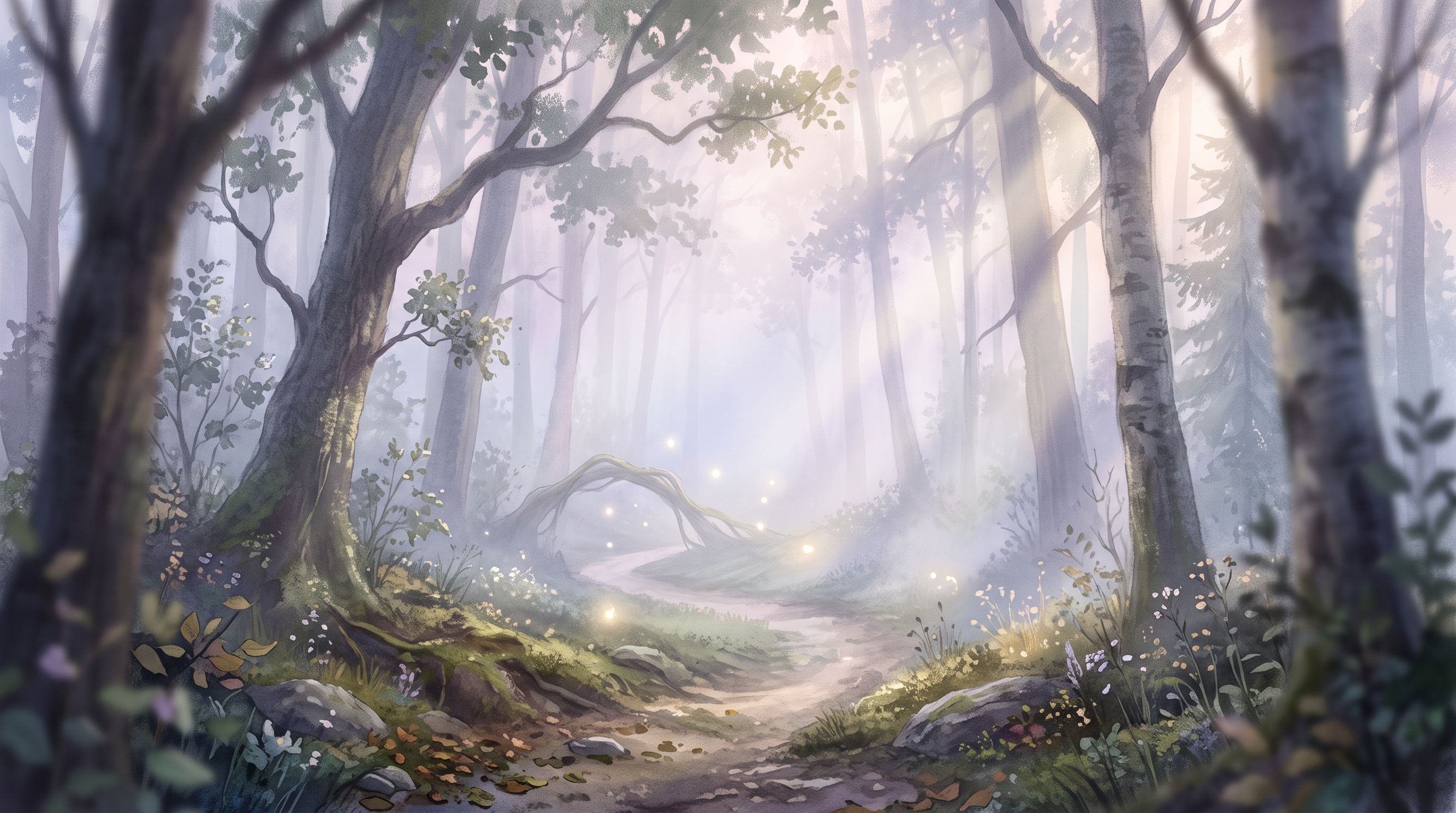
Have you ever noticed how cold the dawn feels before the first ray of light actually touches your skin? I once met a dreamer who, night after night, wandered through a frozen, silent forest. She told me she could feel the actual dampness of the dew in her throat, a physical chill that made her teeth chatter in her sleep. But then, a pale, almost invisible line of silver cracked the horizon. It didn’t warm her instantly, but the air stopped biting. That is the physical magic of this symbol. It is a biological sigh of relief. Your nervous system, which has been on high alert during your personal winter, finally receives the message that it is safe to lower its shield. It’s not about sudden heat; it’s about the cessation of the cold.
In the old stories of my homeland, dawn is not just a time of day; it is a thin veil, a borderland where the spirits of the night gently hand over the keys of the world to the guardians of the sun. It is a threshold of profound spiritual magic. When you dream of this specific twilight, you are standing in a sacred clearing where your ancestors and your deepest guides can reach you without the heavy noise of the waking day. It is an invitation to listen to what whispers to you in this quiet. Some people panic because they expect a grand revelation, a blazing fire, or a loud voice. But the sacred doesn't shout. It is much more intimate, akin to the quiet expectancy one feels when dreaming of discovery, where the prize is not a chest of gold, but a soft shift in your own perception.
I must admit, it always irritates me when popular dream dictionaries paint the dawn as a purely joyful event. Let's be honest: sometimes, the dawn is terrifying. The dark, for all its terrors, offers a strange, velvet protection. In the night, you are allowed to hide, to weep unseen, to remain dormant. When the light begins to seep through the cracks of your dreamscape, it demands something of you. It whispers that the time for hiding is coming to an end. This exposure can feel less like a promise and more like a gentle eviction. You might feel a sudden urge to pull the blankets of your unconscious back over your head. It is a psychological labor, a painful but necessary transition that feels remarkably similar to the vulnerability of dreaming of birth—where you are forced out of the comfortable dark into an unfamiliar world.
Why are we always in such a hurry to reach high noon? Our modern world is obsessed with the midday sun—with peak productivity, clear answers, and blinding certainty. But your soul doesn't operate on a corporate clock. If your dream lingers in that soft, gray, half-awake state of dawn, let it. There is immense wisdom in this unfinished light. Honestly, I often doubt the sanity of those who suggest you must immediately act upon waking from a dawn dream. Sometimes, the dream is simply asking you to sit on the damp grass of your own mind and watch the colors change. You don't need to build a house on this new horizon just yet; you only need to look at it and acknowledge that the darkness didn't have the final word.