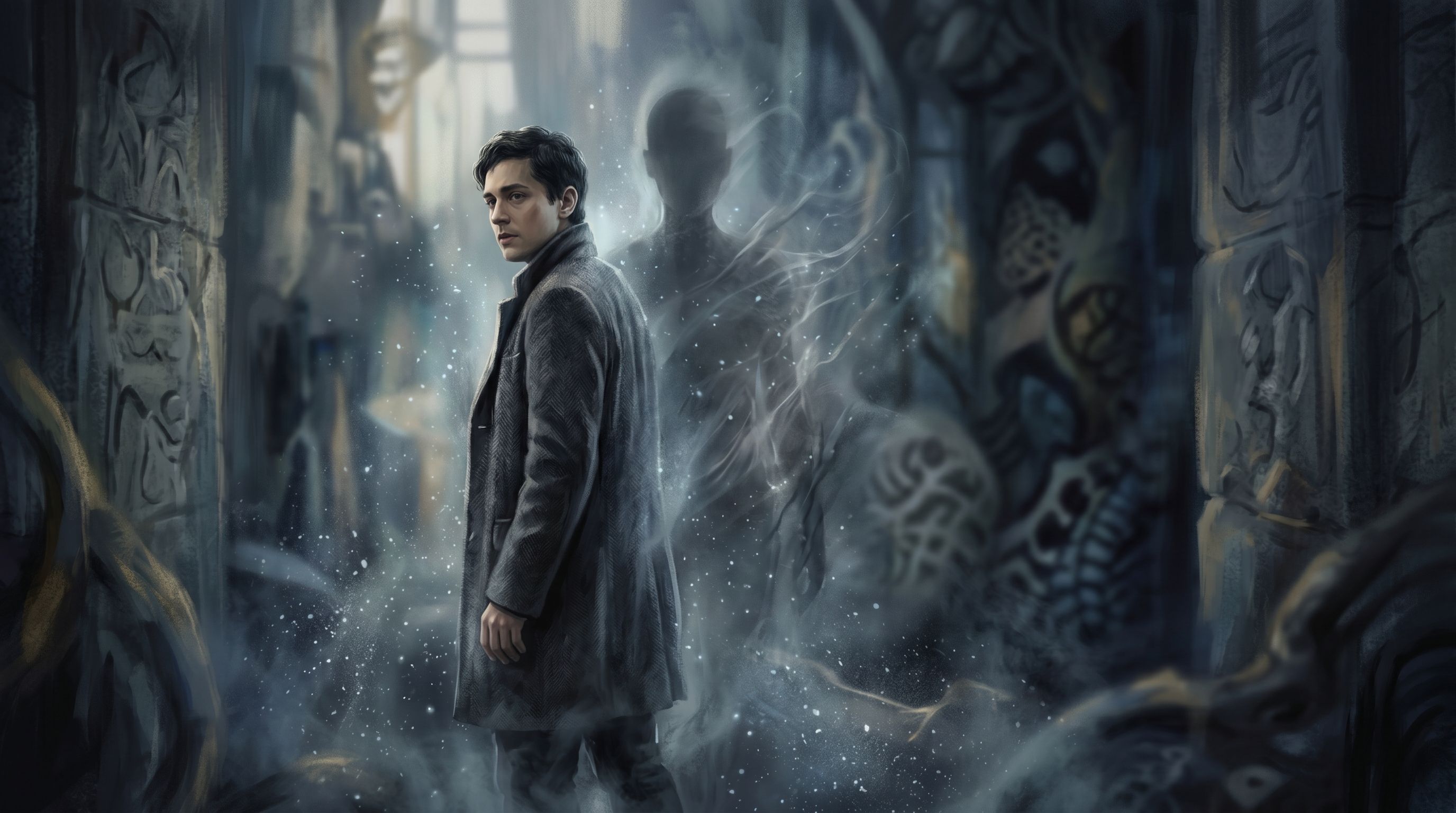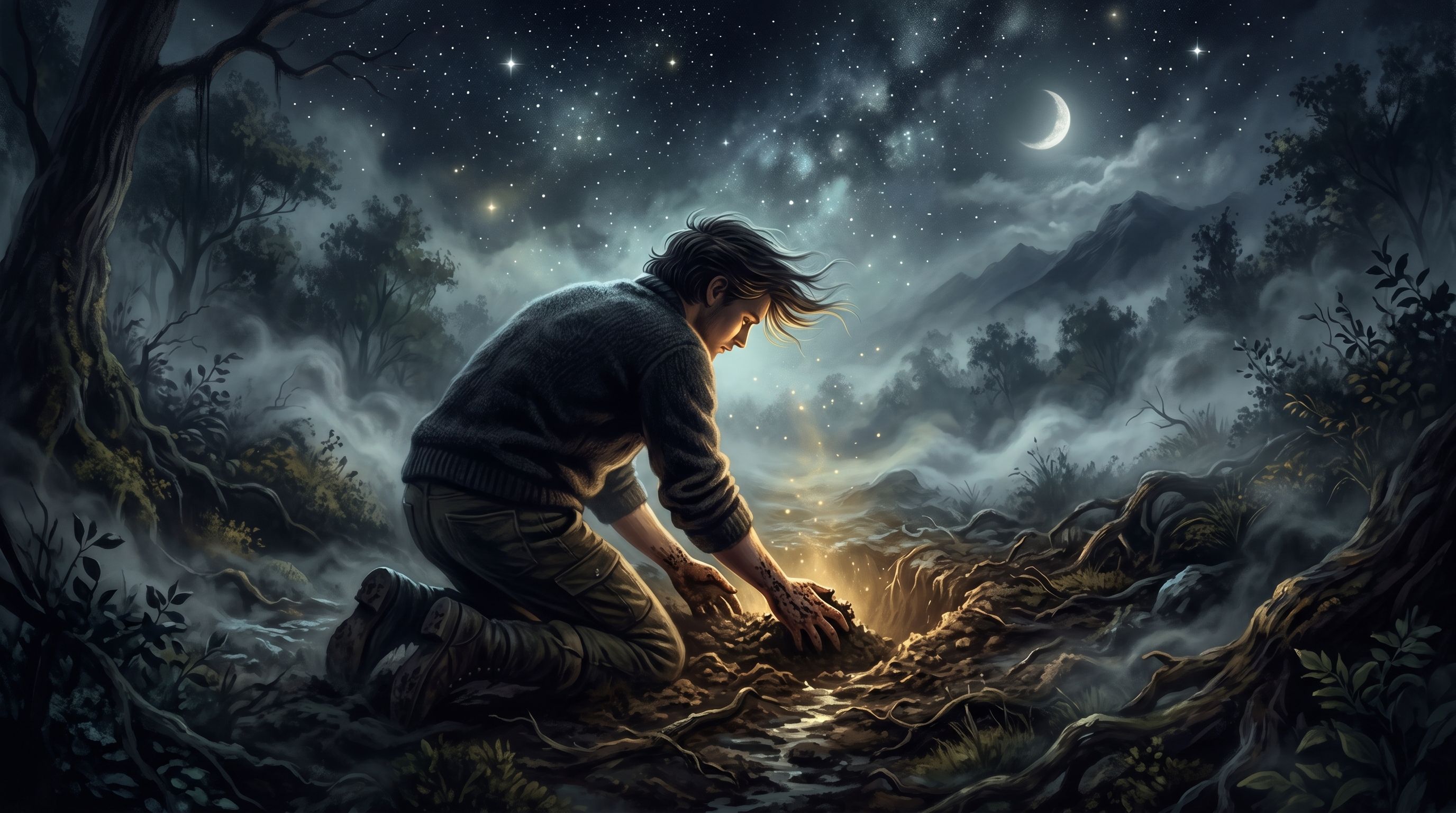
There is something profoundly dizzying about receiving property, debts, or simply a family name you never asked for. Frankly, it gets a bit exhausting to see generic dream dictionaries reduce an inheritance to a sudden financial windfall or a panicky fear of losing a loved one. The reality of the unconscious mind is infinitely more subtle. When you wake up with the distinct sensation of having inherited something, your entire relationship with your past and with generational transmission has just stepped into your sleep. It stirs up invisible layers of your family and personal history to help you understand what you are carrying without even realizing it.
---
What We Hand Down in Silence
Honestly, the symbol of the inheritance has fascinated me for years. As a Baku, I watch thousands of dreams pass by, and this particular theme frequently pops up at major turning points in life—usually when adulthood starts weighing a bit heavier on our shoulders or when a major life decision demands our attention. When you dream that someone is handing you a sprawling estate, a rundown fixer-upper, or even a simple, dust-covered notebook, your mind isn't just replaying a visit to a probate attorney. It is manipulating heavy-duty symbols. Much like finding yourself in a silent classroom where you suddenly feel scrutinized, a dream about an inheritance places you front and center in a life passage exam.
So, what has actually been handed down to you? Rigid family values? Invisible mental labor? Unspoken traumas or, conversely, an unshakeable inner resilience? Sometimes, an inheritance in a dream takes the shape of an object that is impossibly heavy and entirely unportable. You wake up utterly exhausted, as if you’ve just marched for miles carrying a duffel bag that is far too big for your shoulders. This is a classic sign that you are carrying expectations that don't belong to you. Your parents, your lineage, your social background—they’ve all plowed specific furrows in the earth. Your unconscious mind is simply asking you: are you going to keep plowing that same sterile soil, or do you finally dare to plant something entirely your own?
---
The Weight of Ghosts and the Beauty of Sorting Through the Attic
It also happens that an inheritance looks like an empty house or an attic bursting at the seams with dusty bric-a-brac. I once listened to a traveler's dream where they inherited a vast estate, only to find every single door locked tight. Naturally, they felt completely panicked. I simply reminded them that attics can be cleared out, and old houses can always be renovated. It gives you much the same feeling as when memories seem to freeze solid in stone—you get the sinking impression that the past is an immovable, monolithic block. Yet, your dream is shouting the exact opposite at you.
Refusing an inheritance in a dream isn't an act of cowardice. It is frequently an instinctual survival response. It’s your psyche's way of telling your unconscious: "I'll take what elevates me, and I'll leave the rest with the ancestors." Conversely, if you find yourself frantically chasing after a missing will or waiting for someone to finally grant you the right to receive validation, pause and interrogate your waking life. What are you truly lacking right now? Is it actual money, or is it emotional validation? Is it a material asset, or is it simply the internal permission to finally be yourself?
---
When the Invisible Finds a Voice
The most powerful messages aren't always printed on official legal stationery. Sometimes, an inheritance is transmitted through the voice of a loved one who comes back to life for the span of a single night—much in the way that a frozen photograph suddenly starts whispering our buried truths. These dreams aren't meant to be threats; they are bridges. They come to repair, to soothe, or simply to place words where there used to be nothing but silence and unspoken tension.
Never fear those nights when the past comes knocking at your bedroom door. Instead, take a close look at what it leaves sitting on your nightstand when you wake up. An inheritance—whether luminous or utterly burdensome—is never a life sentence. It is raw material.
Have you ever woken up with the taste of dust on your tongue after dreaming of a heavy, brass key? I often smile when dreamers tell me they inherited nothing but junk—a broken clock, a drawer of mismatched buttons, or a cracked porcelain cup. Waking minds scoff at these trifles, but your sleeping self knows better. There is a deep, quiet magic in inheriting the incomplete. A broken watch isn't a sign of misfortune; it is an invitation to step outside of linear time, a prompt to mend a rhythm that your family got wrong generations ago. When you touch these worn-out objects in your sleep, you are touching the raw texture of lived lives. It is far more intimate than a pristine bank account. It demands that you slow down, look at the cracks, and decide if you want to glue the pieces back together or gently lay them to rest in the soil.
I’ve noticed that we rarely inherit from strangers in the dream world. More often than not, the benefactor is a quiet, towering figure from your childhood, perhaps even someone who passed long before you could truly understand them. When you find yourself dreaming of a grandparent handing you a small, velvet box, your unconscious is tapping into a deeper, collective well. In many Eastern traditions, we don't view the past as a straight line behind us, but as a circle surrounding us. That grandparent isn't just a memory; they are the gatekeeper of your psychological blueprint. They represent the qualities that skipped a generation—the quiet artistic streak your parents ignored, or the wild, stubborn streak that got labeled as "difficult." By handing you this dream-gift, they are bypass-routing the immediate family tension to offer you a raw, unfiltered piece of your own origin story.
I once listened to a dreamer who was utterly miserable because, in her dream, she had inherited a massive, silent grand piano, despite never having played a single note in her life. She felt an overwhelming, crushing guilt in her chest just looking at it. This is what psychologists sometimes call the burden of the unlived life of the parents. When we inherit an instrument we cannot play, or a book written in a language we do not speak, the dream is highlighting the friction between who we are and who we were expected to become. It is a somatic alarm. If you wake up with a tight jaw or sore shoulders after such a night, your body is physically reacting to the weight of these phantom obligations. You do not have to learn to play the piano just because it was left in your living room. Sometimes, the greatest act of love you can offer your lineage is to leave the keyboard silent and walk out into the sun.
If you feel like extending this journey and want to better understand how your dreams are weaving themselves into your personal history, come drop your dream luggage over at Midnight Mind. You'll be able to explore your own personal collection of symbols, decode the messages we're preparing for you, and finally make peace with everything you carry.
---