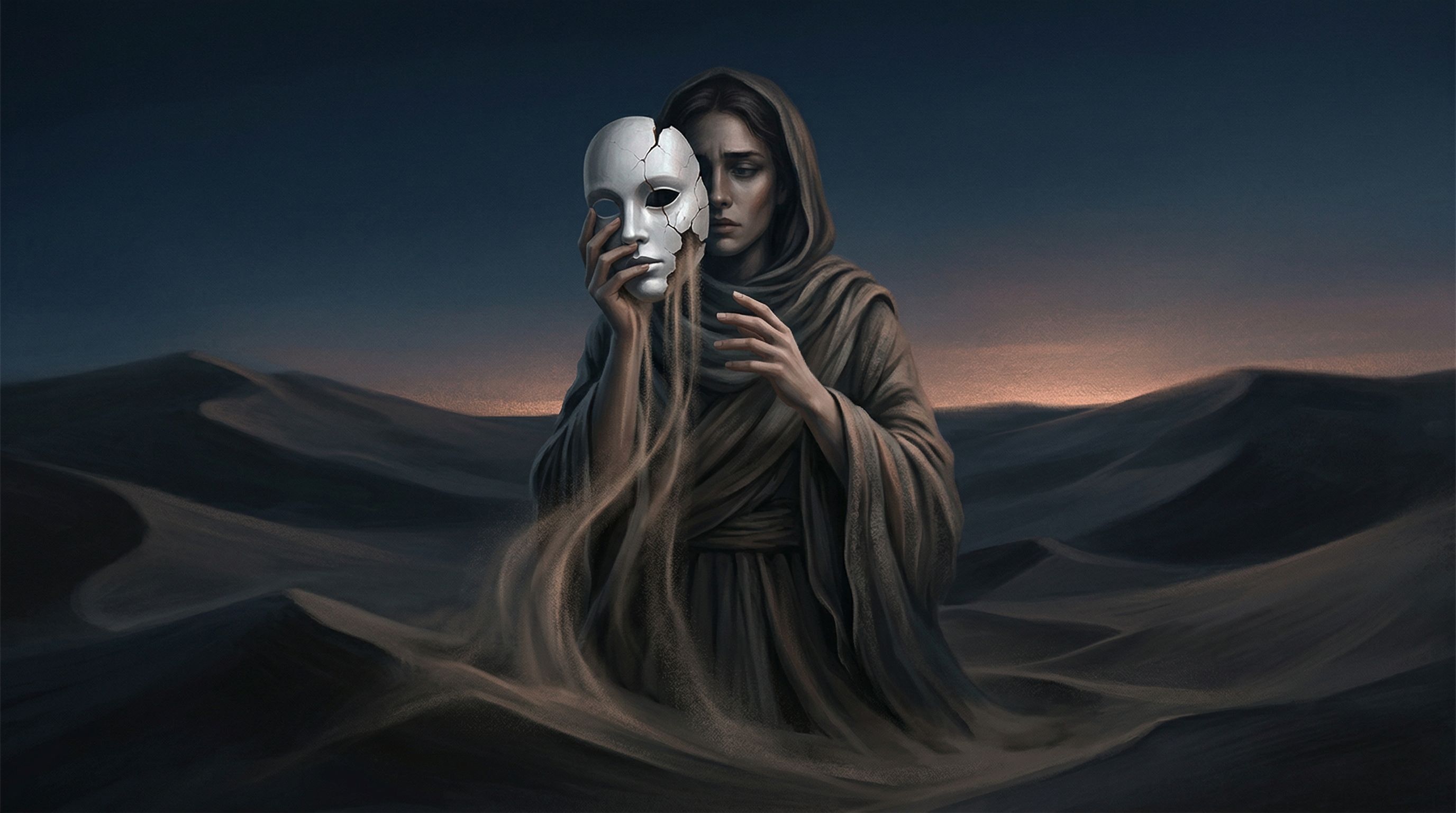
The mirror of your habits and the weight of imitation
In the gardens of the mind, animals never appear by chance. As I explained in my article on Animals in Dreams: Instincts and Desires, every creature carries a vibration of our own wild nature. The parrot, however, has a fascinating and sometimes frustrating quirk: it possesses the gift of speech, but not necessarily the gift of thought.
Honestly, this symbol fascinates me because of its ambiguity. When you see a parrot in a dream, ask yourself: Who is doing the talking in my life right now? Is it me, or am I just repeating the opinions of a colleague, the expectations of my parents, or the pressures of society? The parrot is the king of imitation. It points its beak at the areas of our lives where we have stopped being original and have become mere photocopies.
I often encounter dreamers who are exhausted by squawking parrots. This is usually a sign of an environment saturated with "hearsay." If the bird seems aggressive, you might feel like a victim of gossip or unkind words. But don't see this as a threat! It is simply your unconscious saying: "Look how empty these words are; they only have power if you repeat them yourself." Sometimes, this discomfort stems from a struggle to express your own truth—a feeling often shared when one begins Dreaming of Teeth, where the mouth becomes the stage for our communication anxieties.
The color and the cage: The poetry of a liberated voice
I have a particular affection for parrots that appear in strange settings, like a dull office or a closed bedroom. Why? Because their brilliant plumage stands in radical contrast to the grayness of daily life. A parrot isn't just an imitator; it is a burst of life.
If the bird in your dream is magnificent but remains silent, or if it is trapped in a cage, my Baku intuition tells me that it is your own creativity that is being stifled. Perhaps you have a brilliant idea or a colorful vision of the world, but you’re afraid it will be seen as "too much" or "eccentric." So, you choose to blend into the background, even if it means only letting out a quiet whistle.
I’m not a fan of dream dictionaries that tell you a green parrot means "hope" and a red one means "anger." That is far too simplistic for the complexity of your soul. The color of the parrot represents the dominant emotion of your speech. A blue bird might evoke a cold, purely intellectual way of communicating, while a multi-colored bird suggests a lack of focus: you may be talking about everything, but perhaps nothing in depth.
In all honesty, interpretation remains a delicate art. A parrot landing on your shoulder could be a spiritual guide whispering forgotten truths, just as it could represent a burden—someone in your life who "drains" your energy by constantly venting their problems to you. To know for sure, listen to the feeling you had upon waking. Were you amused? Annoyed? Rejuvenated? That is where the key lies, not in the bird's feathers.
Finding your own voice
Dreams are not punishments. If your mind has chosen the image of the parrot, it is to invite you to do some soul-searching. In the noise of your daily life, which voices truly belong to you? The parrot is a guardian at the threshold between noise and meaning. It reminds us that speech is sacred and should not be wasted on the mechanical repetition of patterns that no longer serve us.
My advice, should you encounter this bird in your nights again, is not to try and silence it. Listen to it closely. What is it repeating? If it’s a criticism you often direct at yourself, recognize that it is merely an echo—an imitation of something old, and not your present truth. By transforming the "inner parrot" into a conscious ally, you reclaim power over your words.
The next time a chatty bird disturbs your sleep, grab a pen and jot down what it said, even if it seems nonsensical. It is within these fragments of imitation that the path to your authenticity is often hidden.
I once met a young woman who was haunted by a golden-winged parakeet that spoke in the precise, sharp tone of her partner. Every time she tried to make a decision in her waking life, the bird would screech its disapproval in her sleep. This is the subtle trap of intimacy: we absorb the voices of those we love until we can no longer distinguish our own desires from theirs. When you are dreaming of a boyfriend or a close partner, the mind sometimes projects their influence onto a mimicking animal to show you how much space they are occupying in your head. It isn't a sign of betrayal, but rather a gentle warning from your spirit. You are letting someone else's script run your inner theater, and it is time to reclaim your own voice.
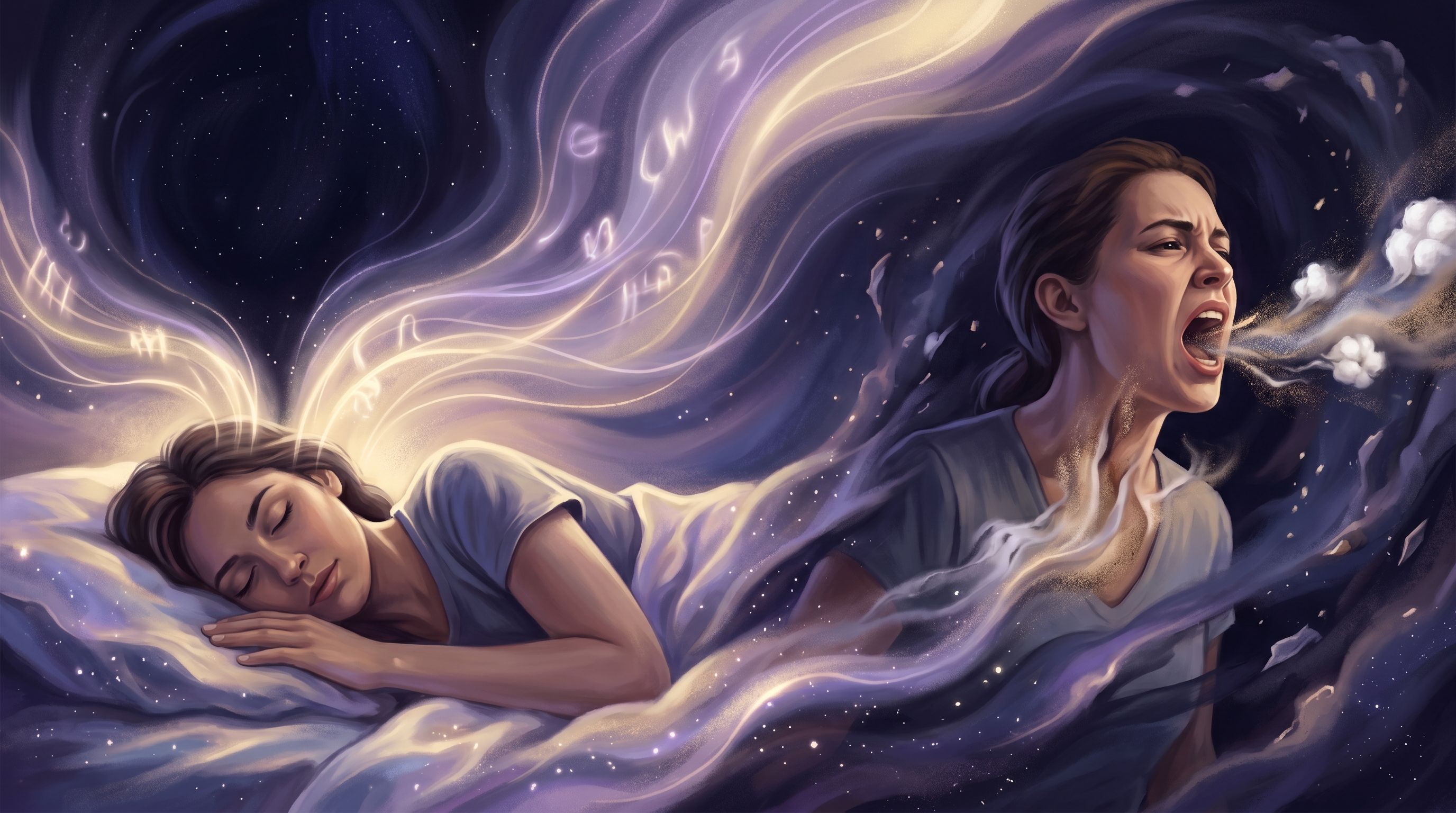
Sometimes, the dream isn't just about hearing the bird; it’s about the strange, visceral sensation of becoming it. Have you ever felt your throat tighten in a dream, trying to scream or explain yourself, only to have a high-pitched chirp escape your lips? It’s an unsettling feeling that goes straight to the body. It reminds me of the deep, somatic panic that comes when dreaming of the tongue swelling or dissolving. When your dream-self mimics a parrot's voice, your physical body is reacting to a waking throat that has been choked by silence. Honestly, I often doubt those who say these dreams are just minor anxieties. To me, a choked voice in sleep is a quiet tragedy—a sign that you have swallowed your own truths for so long that your vocal cords are starting to forget the shape of your own name.
Let’s look at this through a different window, one that isn't so quick to judge repetition as a flaw. In ancient traditions, repeating a phrase wasn't seen as empty mimicry, but as a sacred chant—a way to preserve memory before writing existed. What if the parrot in your dream is not mocking you, but trying to keep a vital truth alive? Perhaps there is a promise you made to yourself years ago, a childhood dream or a core value, that you have forgotten in the rush of adulthood. The bird repeats it because it is the only way to prevent it from fading into the gray mist of oblivion. Before you dismiss the repetitive noise in your sleep as mere gossip or social anxiety, quiet your mind and listen to the rhythm of the words. It might just be your soul's oldest guardian, desperately chanting your own forgotten truth back to you.
If you feel that the echoes of your dreams are becoming a labyrinth too complex to navigate, I helped design Midnight Mind, an app where you can keep a journal of the people and creatures you encounter to finally understand the symphony playing within you.