A Mirror of Your Deepest Voids
I’ll be honest with you: I get a little frustrated when I read in those old, dusty dream dictionaries that seeing a beggar foretells a loss of money. It is such a narrow, purely earthly vision. As a Baku, I see dreams as landscapes of energy, not as stock market reports. When your mind brings forth this figure of destitution, it isn't talking about your bank account. It is showing you, with a sometimes brutal honesty, the state of your inner garden.
The beggar in your dream is often a reflection of yourself. Not the "you" who succeeds, who smiles in photos, or who manages responsibilities—but the "you" who hungers for love, recognition, or rest. We spend our days wearing masks of strength, much like a traveler walking in worn-out shoes without ever complaining about the blisters. The beggar, however, has no mask left. They are the pure expression of need.
If, in your dream, you turn away from them with disgust, ask yourself: what vulnerability are you trying to flee within yourself? Is it your exhaustion that you refuse to see? Is it your need for tenderness that you judge as "weak"? This beggar is a messenger from the shadows. They come to tell you that as long as you do not feed this starving part of your being, it will continue to haunt your nights. To feed them, within the dream, is to begin to forgive yourself for being simply human.
---
Humility as a Hidden Gateway to Wisdom
There is a singular beauty in the symbol of the beggar that few dreamers perceive at first. It is the symbol of radical humility. In many of the legends I have devoured over the centuries, deities love to disguise themselves as wanderers to test the hearts of men. They don't seek gold; they seek kindness.
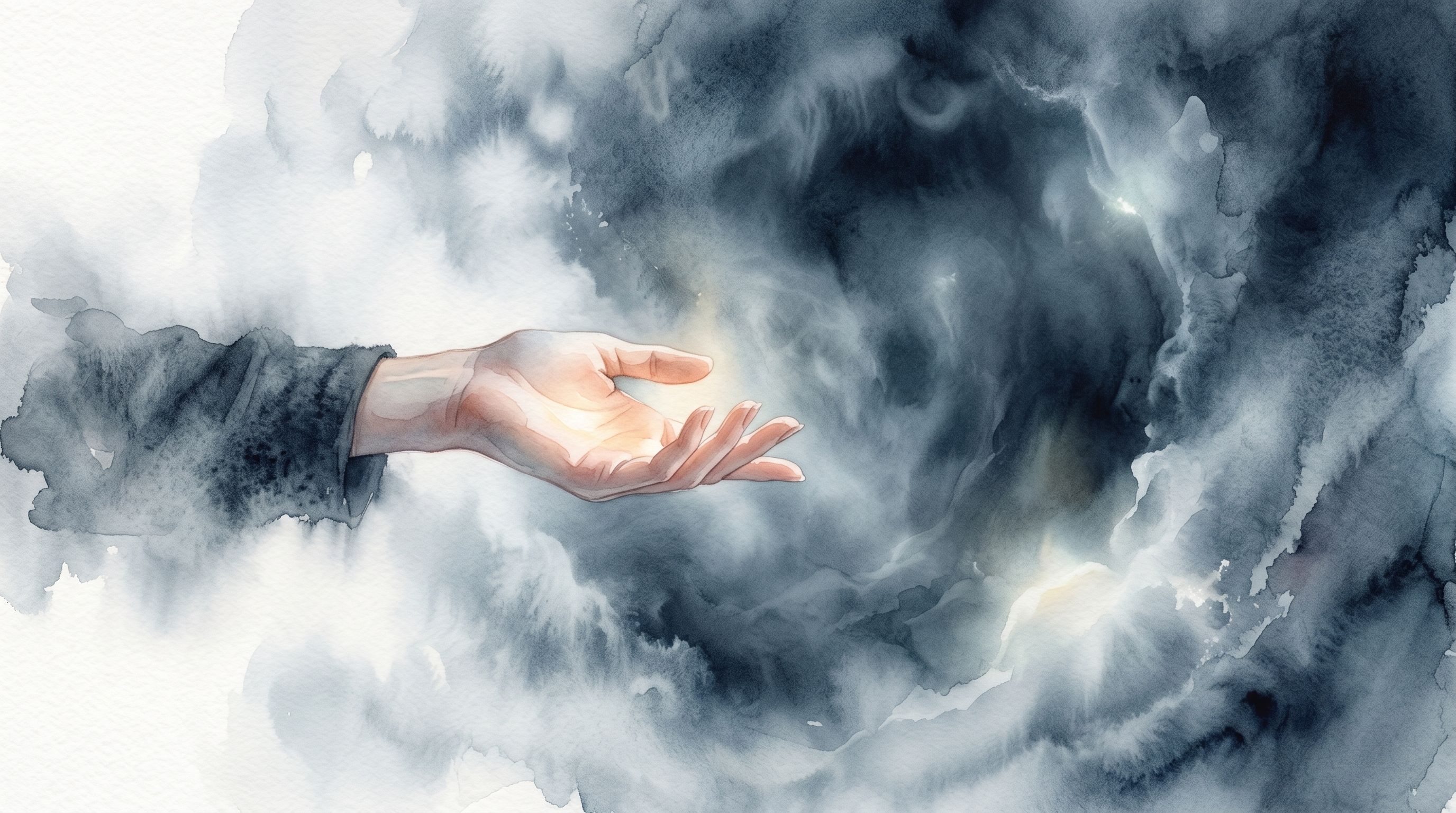
Dreaming that you are the one begging can be a terrifying experience. You feel small, invisible, and dependent on the goodwill of others. But if you observe the sensation closely, there is also a strange relief: that of having nothing left to lose. This is what I call the "fertile void." Sometimes, your subconscious strips you of everything in your dreams to show you that your value does not lie in what you own or in your social status.
🌙 Yume's Echo : "The soul only asks for what the ego has forgotten to give. Sometimes, being 'poor' in a dream is the only way to realize how heavy your 'wealth' has become."
This is a lesson I find fascinating, even if it is difficult to digest. The dream asks you: "Who are you when you have nothing left to offer but an outstretched hand?" It is an invitation to return to a form of simplicity, to reconnect with the essential. If you are going through a period of intense stress where you feel you must always "produce," this dream comes as a counterweight. It whispers that there is no shame in being in a state of receiving.
---
The Psychology of the "Shadow" and Scarcity
From a psychological perspective, some specialists suggest that the beggar represents the "Shadow" archetype. This concept, popularized by Carl Jung, refers to the parts of our personality that we reject or hide because they don't fit our ideal self-image. The beggar is the ultimate outcast. By appearing in your sleep, they are asking for integration, not exile.
When you dream of poverty, you might be experiencing what researchers call a "scarcity mindset." This isn't just about money; it's a cognitive state where you feel there isn't "enough" of something—time, love, talent, or security. This mental strain can manifest as a figure who has nothing.
By acknowledging the beggar, you are essentially telling your subconscious: "I see my lack, and I am no longer afraid of it." This shift in perspective is often the first step toward psychological resilience. Instead of fearing the void, you begin to see it as a space that can be filled with new, more authentic experiences, much like finding hidden seashells on a shore you thought was empty.
---
Nuances of the Encounter: To Give or to Receive?
The interpretation changes subtly depending on the dynamics of the exchange. I have often heard dreamers tell me they gave a gold coin to a beggar, only to see the coin transform into something else entirely.
- If you give with joy: This shows great inner wealth. You are ready to integrate your weaknesses and transform your insecurity into compassion. You are healing a part of yourself by offering it attention.
- If you give out of guilt: You may be trying to "redeem" a certain behavior or silence an anxiety without truly understanding it. The gesture is there, but the heart still hesitates to truly open itself to vulnerability.
- If the beggar is aggressive: This means your repressed needs are starting to scream. What you ignore eventually begins to growl. It is time to pause and seriously ask yourself: "What is it that I am cruelly lacking right now?"
- If you are the beggar: You are being called to practice the art of receiving. Many of us are excellent at giving but feel unworthy of help. This dream breaks that imbalance.
---
A Concrete Example: The Corporate Wanderer
Consider the case of a young architect I once "visited" in spirit. He constantly dreamt of a beggar sitting at the door of his office. He felt ashamed and would try to hide the man from his clients. In reality, this architect was suffering from extreme burnout.
The beggar wasn't a bad omen for his career; the beggar was his own creativity and health, sitting neglected at the door of his ambition. Once he recognized that he was "starving" himself of rest and play, the dreams stopped. He didn't lose his job; he regained his life.
This is the power of the beggar: they force us to look at the "poverty" we create when we chase the wrong kind of "wealth."
---
Integrating the Message
Sincerely, this symbol touches my heart deeply. It reminds us that we are all, at one time or another, beggars of light or affection. Do not fear this silhouette on the path of your nights. They are not there to take what you have, but to help you find who you truly are, far beyond appearances.
Take a moment, upon waking, to breathe in that sensation of being stripped bare. It is often there, in that silence and nakedness of the soul, that the greatest transformations are born. Dreams are not predictions; they are compasses pointed toward your heart.
If you feel the need to explore these shadows further or if the beggar's face felt like a mirror you aren't yet ready to hold, your Baku is always here to help you navigate the mist. If you want to explore your dreams more in depth, your Baku is waiting for you.
I once met a dreamer—a brilliant architect from Osaka—who was plagued by a recurring nightmare of an old man begging outside his office. Night after night, the dreamer would try to hand him crisp, thick yen notes, but the old man would merely let them blow away in the wind, staring back with empty, accusing eyes. It was a beautiful, frustrating paradox. The architect thought he was being generous, but his subconscious was screaming that you cannot pay off your soul's exhaustion with the currency of the ego. The neglected part of you doesn't want your achievements, your busywork, or your polite excuses. It wants your raw, unfiltered presence. If you find yourself offering something shallow in your dream only to have it rejected, ask yourself what superficial band-aids you are trying to apply to a deeper, spiritual wound.
Have you noticed how, in the quietest corners of your mind, the beggar often holds more power than a king? We fear their gaze because they have bypassed the game of social status entirely; they see right through our expensive clothes and curated smiles. In this sense, the wanderer becomes a silent arbiter of your true alignment, holding a weight of evaluation similar to dreaming of a judge who demands absolute truth. When you stand before this destitute figure in your sleep, you are stripped of your credentials. They do not care about your promotions or your social standing. They ask the only question that matters to the spirit: Are you kind when no one is watching? If the encounter leaves you cold or trembling, it is rarely out of fear of physical poverty. It is the shivering of an ego that realizes its carefully constructed empire cannot buy a single moment of genuine peace.