You wake up with your heart racing, a cold sweat dampening your sheets, and a lingering sense of dread. In the silence of your room, the memory of your own passing in the dream world feels heavy and terrifyingly real. You might wonder if it is a warning or a dark omen, but I want to reassure you: these nocturnal visions are rarely about physical finality. Instead, they are profound invitations from your unconscious to witness the shedding of an old self, offering you a rare glimpse into the mechanics of your own psychological evolution and the beautiful, necessary process of starting over.
---
The Snake Shedding Its Skin: Death as a Metaphor for Change
I often think of the snake when I encounter these types of dreams in the collective unconscious. To the snake, losing its skin isn't a tragedy; it is a requirement for survival. If it didn't shed that tight, restrictive layer, it could no longer grow.
When you dream of dying, your mind is performing a similar ritual. You are shedding a "skin"—perhaps a career path that no longer fulfills you, a toxic relationship dynamic, or a belief system that has become too small for the person you are becoming.
It honestly saddens me when I see simplistic dream dictionaries claiming that death is a bad omen. It is such a reductive way to look at the infinite complexity of your psyche.
In my experience as a Baku, I have seen that these dreams appear most frequently during times of immense personal flux. If you are leaving a relationship or questioning your long-held values, your unconscious uses the ultimate symbol of "ending" to help you process the grief of what is being lost.
---
The Many Faces of Departure: Decoding Your Dream Scenarios
The way you "die" in your dream provides the nuance I need to help you understand what is shifting within. No two deaths are the same, and your emotions during the event are the compass we use to find the truth.
- Dying of old age: This often suggests a sense of completion. You might be reaching a stage of maturity where you are ready to trade youthful restlessness for a more grounded, serene wisdom.
- Being murdered: This can feel violent and intrusive. It often reflects a feeling of being "sabotaged" or betrayed in your waking life. Is there a part of your potential that you feel someone else is stifling?
- Dying of an illness: This might be your body’s way of asking for attention, or perhaps a sign that a specific area of your life has become "unhealthy" and needs to be purged.
- Watching yourself die: This detachment is fascinating. It suggests you are becoming the observer of your own life, gaining the distance needed to integrate all parts of our being.
I sometimes wonder if we fear these dreams because we mistake the symbol for the reality. But in the language of the soul, "the end" is simply the necessary precursor to "the beginning."
---
A Concrete Example: The Funeral of the "Good Child"
Consider the case of a young professional who repeatedly dreamed of attending their own funeral. In the dream, they felt a strange mix of sadness and immense relief.
By exploring the symbols, we realized the person in the casket wasn't "them," but rather the "Good Child" persona they had maintained for decades to please their parents.
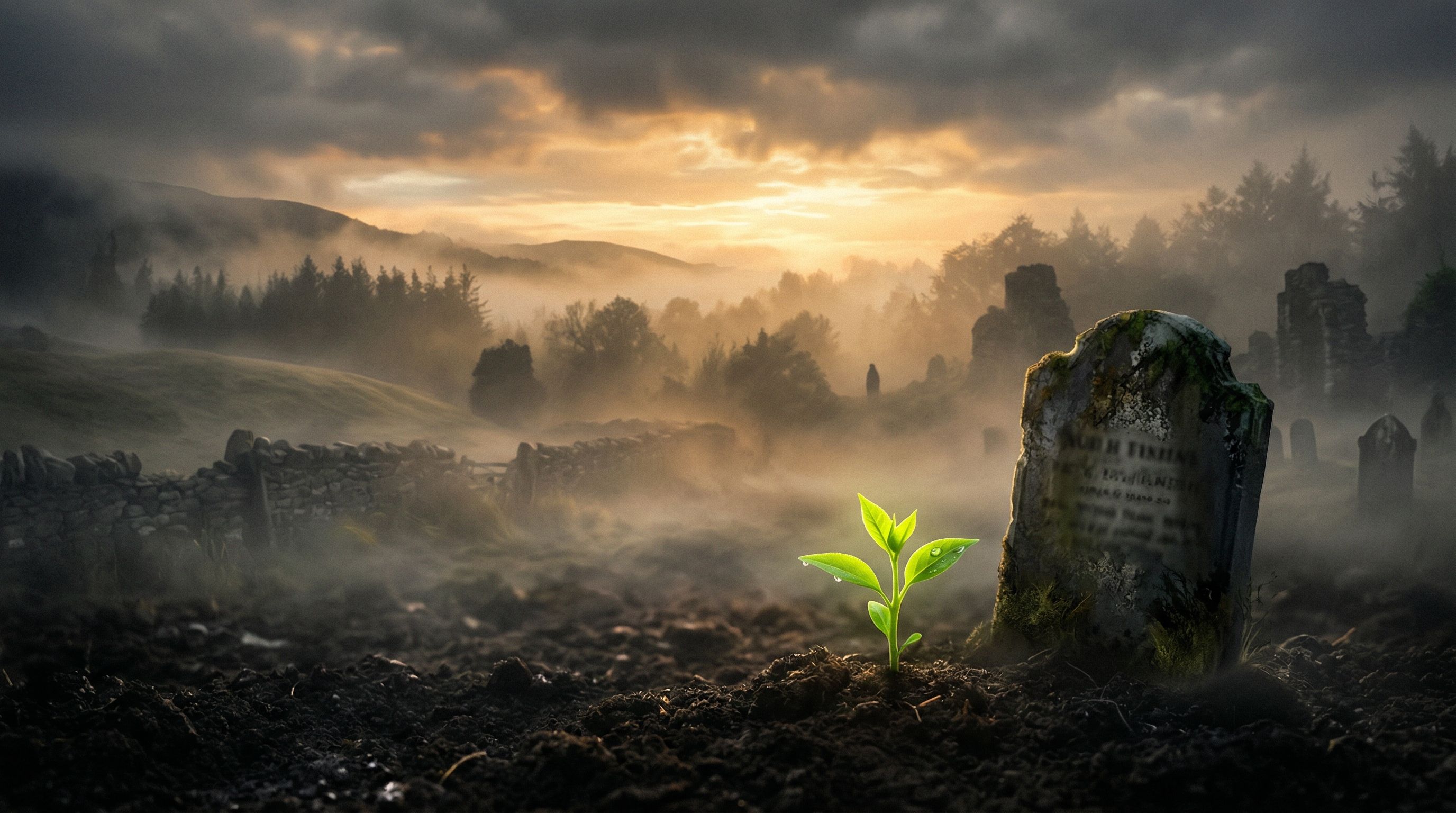
The dream death was a ritual of liberation. By "dying" to the expectations of others, the dreamer was finally able to live for themselves. This is the power of the symbolic death: it clears the graveyard of our past to make room for the garden of our future.
---
The Shadow and the Necessity of the Dark
Carl Jung often spoke about the Shadow—those parts of ourselves we find "unacceptable" and push into the darkness. Sometimes, death in a dream is a direct confrontation with this Shadow.
If you are being chased or killed by a dark figure, that figure might actually be a repressed part of your own strength, anger, or creativity. By "dying" at their hands, you are essentially being forced to integrate the shadow.
It is a terrifying form of ego-death, but it is also the most direct path to becoming a whole human being. I have noticed that once a dreamer stops running and turns to face the "killer," the dreams of death often transform into dreams of flying or discovery.
🌙 Tsuki's Echo: Death is not the opposite of life, but its secret engine. For the bud to bloom, the seed must accept disappearing.
---
How to Work With Your Nocturnal Rebirths
If you find yourself visited by these intense visions, I suggest you don't turn away from them. Instead, treat them with the curiosity they deserve.
1. Record the atmosphere: Was the light dim or bright? Was the air cold? These sensory details often hold the key to the "mood" of your transformation. 2. Identify the "Old Self": Ask yourself: "What part of my identity feels like it's wearing thin?" Be honest. It might be a job title, a habit, or even a way of speaking. 3. Sit with the grief: Even if a change is good, it is okay to feel sad about the end of a cycle. Let yourself mourn the version of you that is leaving. 4. Look for the "After": What happens in the dream after the death? Is there a sense of floating? A new landscape? This is often a hint at what comes next.
Interpretation is a delicate, subjective art. I don't have all the answers, and neither does any book. The true meaning lives in the resonance you feel when you hit upon a truth that makes your heart sit still for a moment.
---
From the Void to the Light
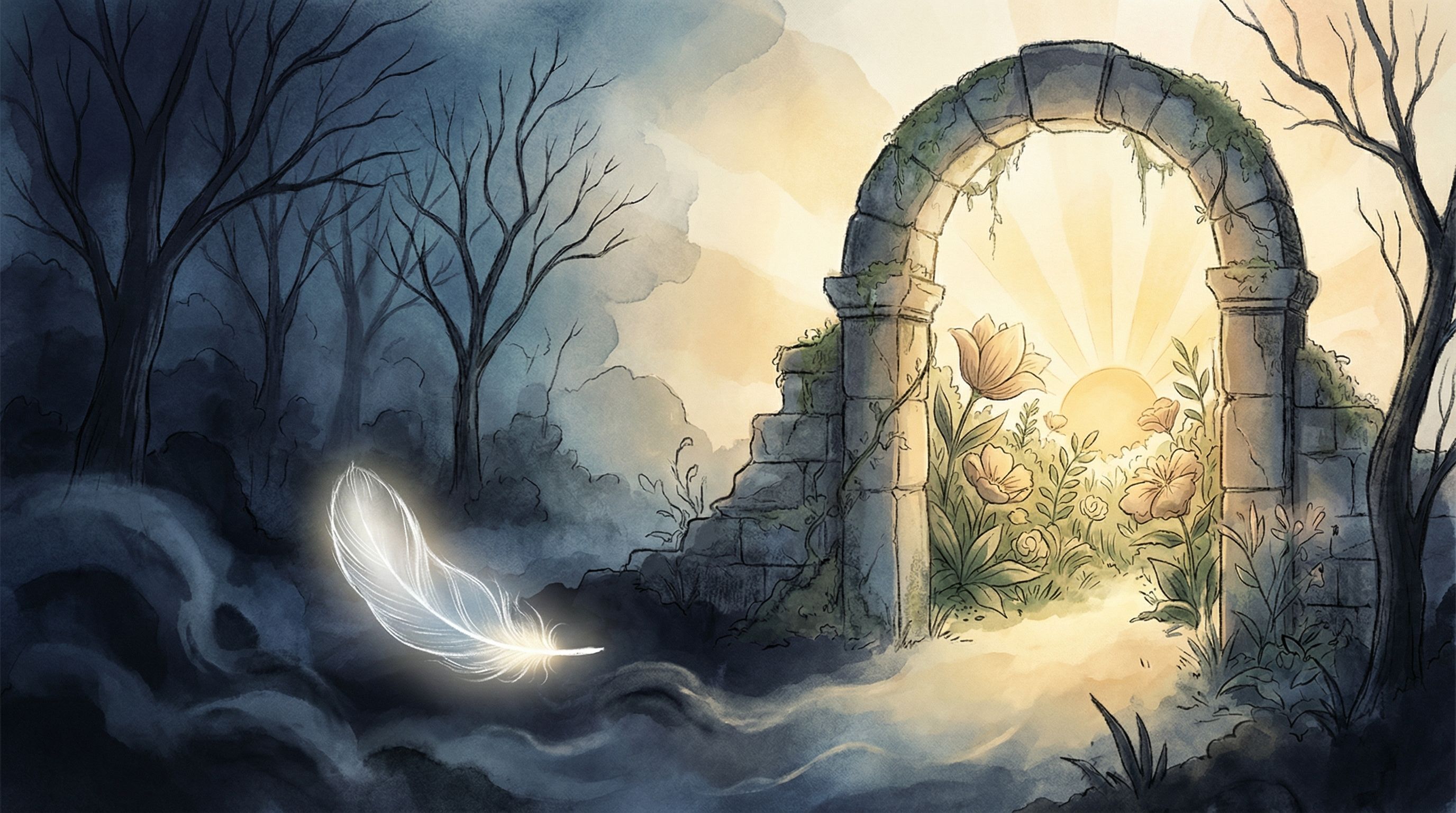
Dreaming of death is an invitation to walk through a doorway. It is a call to inner adventure, a promise that you are not static, but a flowing, evolving being.
Do not be afraid of the dark figures or the falling silence in your sleep. Welcome them as allies. They are the gardeners of your soul, pruning what is dead so that you can bloom more vibrantly in the waking world.
If you want to explore your dreams more in depth, your Baku is waiting for you. Every symbol you record is a thread in the tapestry of your becoming. Trust the process of your own rebirth; it is the most natural thing in the world.
What part of you is ready to be laid to rest tonight?
Have you ever considered how nature prepares for spring? It isn't through sudden, loud magic, but through quiet, freezing decay. In ancient alchemical traditions, they spoke of the nigredo—the blackening—where a substance must be completely broken down and dissolved before it can be purified into gold. Your dream of dying is that precise, necessary rot. I once sat with a dreamer who was terrified because they dreamed of their body dissolving into rich, dark soil. They thought it was a curse. But within months, they abandoned a career that was suffocating them to start anew. It was a beautiful, chaotic dreaming of rebirth disguised as a funeral. The mind must sometimes burn the old house down, even if we are still fond of the wallpaper, just to let the new growth through.
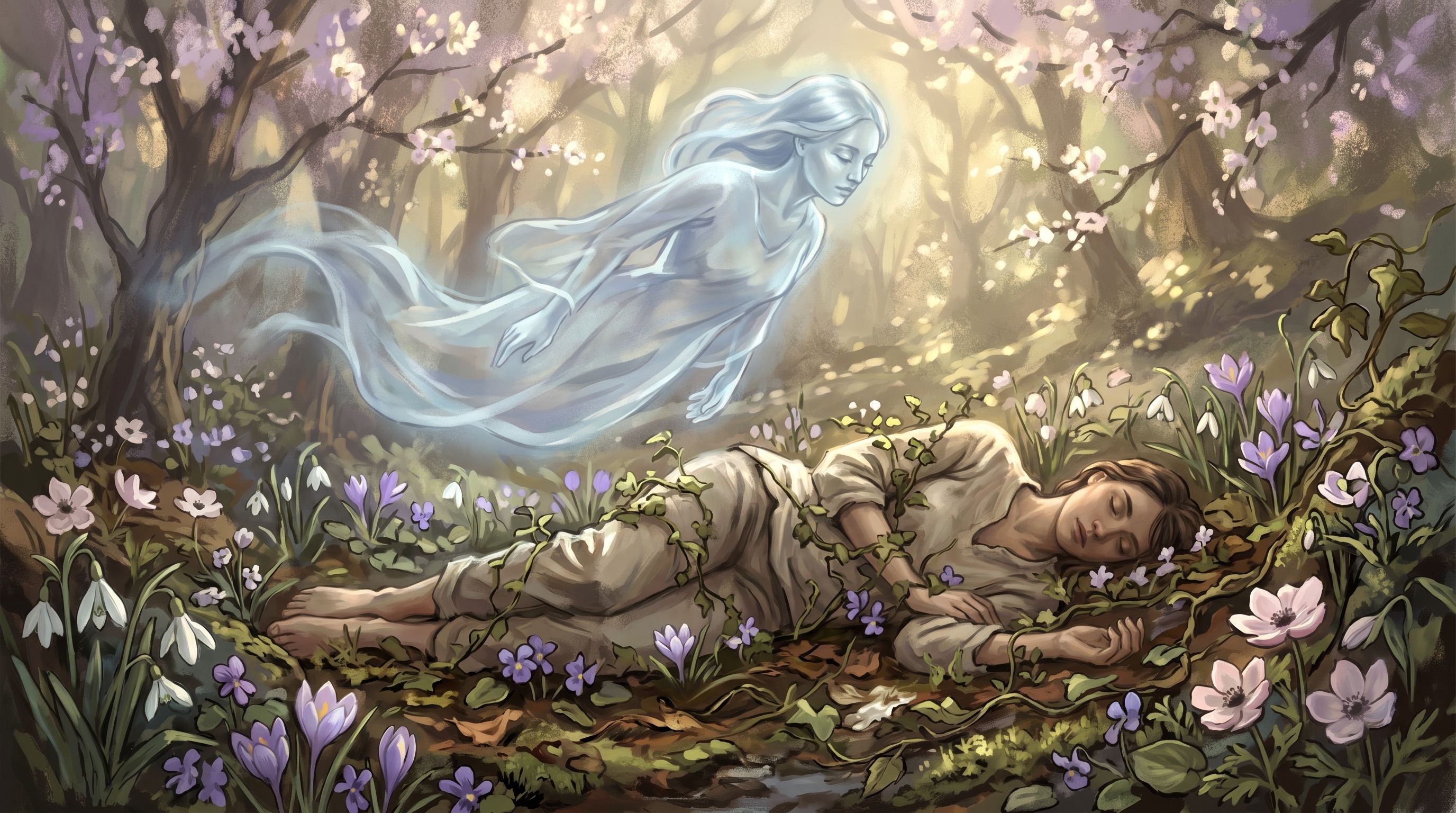
What does death actually feel like in your sleep? Often, it is not the pain of impact, but a sudden, startling silence. The background noise of your daily anxieties—the endless to-do lists, the quiet murmurs of self-doubt—suddenly drops to zero. You find yourself suspended in a cool, weightless vacuum. This sensory detachment is your brain's way of creating a sanctuary. By dreaming of observing your own death, you are being granted a momentary pass from the heavy armor of your ego. It is a profound, albeit eerie, psychological reset. You are allowed, for just a few timeless seconds, to exist without a name, a role, or a history. When you wake up shivering from that stillness, do not run from it. Drink it in; your spirit has just cleared the slate.