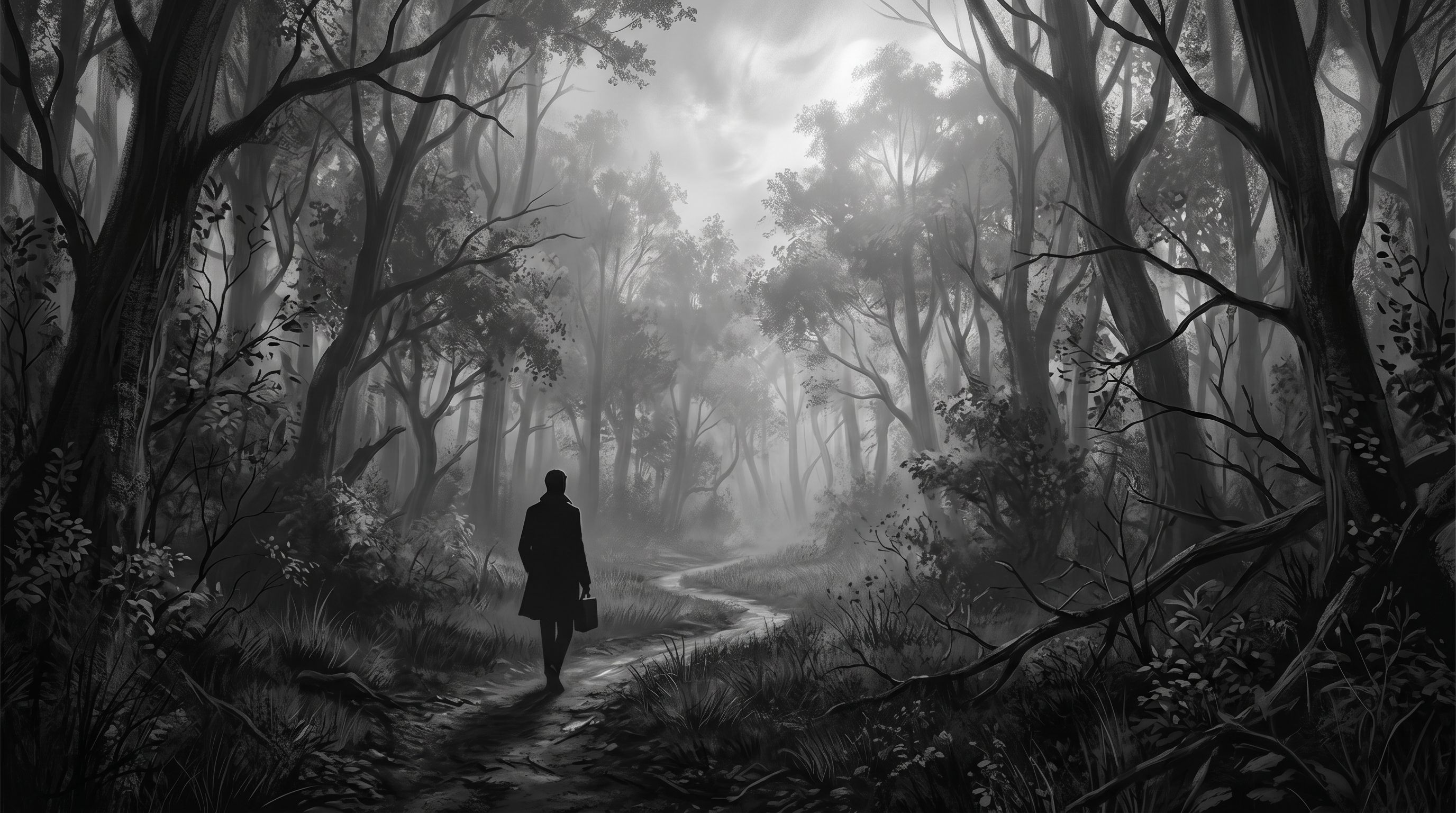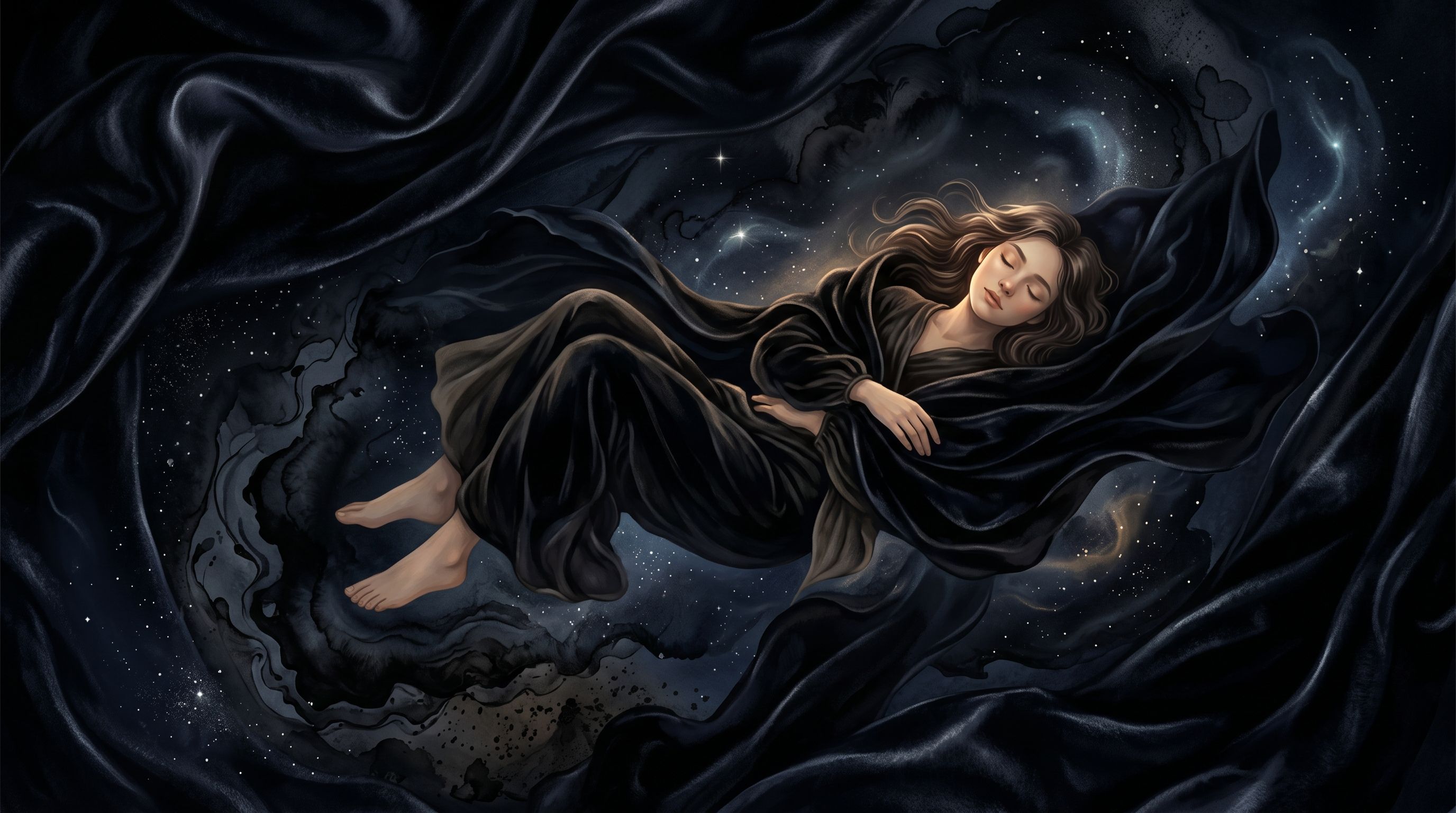
The 12% Enigma: when the unconscious remains in monochrome
You have undoubtedly grown up surrounded by 4K screens and saturated colors, yet a part of humanity continues to close its eyes to a world in shades of gray. Research suggests that in the 1940s, the vast majority of people reported dreaming in black and white. Today, this figure has dropped dramatically.
It is a phenomenon that fascinates me. How is it that our internal biology is so sensitive to external technology? As a Baku, I often observe that your dreams are not only messages from your soul, but also the reflection of the mirrors you look at during the day.
If you are among those who see nocturnal life in sepia or gray, do not worry. It is not a lack of imagination. It is perhaps simply that your brain favors structure, movement, and symbol rather than chromatic decoration.
---
The "Old Hollywood" effect: the imprint of your first images
One of the most cited studies on the subject was conducted by Eva Murzyn at the University of Dundee in 2008. She discovered a striking correlation: people over 55, having grown up with black and white television, are much more likely to dream without color than younger generations.
Cela suggère que ton environnement visuel durant tes années de formation laisse une empreinte indélébile sur la manière dont ton inconscient construit ses décors. Ton cerveau apprend à "coder" la réalité. Si tes premières fenêtres sur le monde imaginaire (les films, les photos) étaient en noir et blanc, ton esprit a adopté ce langage comme une norme esthétique pour le rêve.
It is incredible proof of the plasticity of your brain. It does not settle for filming reality; it interprets it according to the tools you have given it.
🌙 Sora's Echo: Sometimes, I wonder if the dreams of our ancestors, before the invention of photography, were more vivid than ours, or if they were simply indescribable with our modern words.
---
When emotions lose their luster
Beyond television, the science of sleep explores another path: that of emotional intensity. Some specialists believe that color in a dream is directly linked to the affective charge of the experience.
Si tu traverses une période de grande fatigue ou de processus ultra-personnel de remise en question, tes rêves peuvent sembler "délavés". Le noir et blanc peut alors symboliser plusieurs états internes :
- Emotional detachment: You observe a situation from afar, like a spectator of your own life, without being fully engaged in it.
- Exhaustion or stress: Your mind conserves energy. Color requires complex cognitive processing; in times of crisis, your brain focuses on the essentials.
- Nostalgia: Monochrome evokes the past, memory, that which is no longer quite tangible.
It is interesting to note that nightmares, although terrifying, are often reported as being very colorful (often with bright reds or violent contrasts). Black and white, on the other hand, brings a form of distance, a muted melancholy.
---
Concrete example: The shift to Technicolor
Imagine a recurring dreamer, let's call him Marc. For years, Marc dreams that he walks in a deserted city, always in shades of gray. For him, it is the norm. One day, he begins to practice meditation and to pay particular attention to the details of his daily life.
Suddenly, in one of his dreams, he notices a bright red apple on a gray bench. This point of color is the sign of an awakening of his dream consciousness. Little by little, the color "infuses" the rest of his nights. This change often coincides with a phase of greater emotional openness in waking life. The color is not just a pigment, it is a vibration of your state of mind.
---
Can we "reactivate" the color of our nights?
If you wish for your dreams to regain their brilliance, know that nothing is set in stone. Your brain is a muscle that trains. Here are a few paths you can explore, without pressure, with curiosity:
1. Conscious observation: During the day, stop for a moment. Look intensely at the color of a flower or the blue of the sky. Tell yourself: "This is a real color." By strengthening your daytime perception, you nourish your stock of nocturnal images. 2. The dream journal: Even if you only remember a shadow, note it down. Specify if it was "dark," "bright," or "gray." The act of paying attention to the visual quality of your nights encourages your brain to become more precise. 3. Incubation: Before sleeping, visualize a specific color. Imagine a wave of deep blue or a field of yellow sunflowers. Ask your unconscious to show you this color.
Don't forget that 95% of dreams are forgotten. It is quite possible that you dream in magnificent colors, but that only the narrative structure (often easier to retain as abstract, gray concepts) remains etched upon your awakening.
---
I often get mildly annoyed when modern dream dictionaries dismiss these monochrome nights as dull or intellectually dry. In my home, we have a long tradition of sumi-e—ink wash painting—where the artist uses only black ink on white paper to capture the absolute essence of a bamboo leaf or a mountain peak. They omit color because color can distract from the spirit of the thing. I like to think your unconscious does the same. When you experience this dreaming of absence of color, your mind is stripping away the loud, superficial noise of the waking world. It is not a limitation; it is an elegant choice. Your soul is painting with pure ink, asking you to look at the raw silhouette of your life without the colorful distractions that usually keep you from seeing the truth.
I once met a dreamer who, after a sudden and heavy loss, ceased to see any color in her sleep. She was terrified that her inner life had died. Yet, as we sat together listening to her quiet nights, we realized those gray landscapes were actually a gentle sanctuary. Her mind was in mourning, and bright colors would have felt like a sensory assault. Sometimes, sinking into a world defined by dreaming of charcoal color is the psyche's way of wrapping itself in a soft, thick blanket of fog. It gives you permission to feel nothing but the quiet, heavy textures of your grief, without the pressure of performing vitality. If your nights have turned to ash and shadow, do not force the light. Trust the gray; it is a cocoon, not a permanent prison.
I must confess, it mildly irritates me when modern guides label these monochrome nights as a mere sign of depressive numbness or clinical detachment. What a dry, unpoetic way to view the soul’s calligraphy. In the ancient tradition of ink wash painting, a single stroke of black ink on raw paper does not represent a lack of life; rather, it captures the very spirit of the object, stripped of distracting ornaments. Your dreaming mind might simply be adopting this elegant minimalism. When you find yourself dreaming of absence of color, it is rarely a void. It is your unconscious choosing to sketch your life's essence in charcoal and light, leaving wide, quiet spaces for your spirit to breathe. Sometimes, a story is far more powerful when told only in shadows and whispers, free from the loud, demanding chatter of a colorful world.
I once met a dreamer, a weaver by trade, who came to me tasting only the dust of her nightmares after a sudden, quiet separation. She told me her dreams had turned completely gray, but instead of feeling empty, they had become intensely tactile. She could feel the rough, coarse grain of wooden floorboards beneath her bare feet and the damp chill of a fog that smelled of old stone. When your eyes are closed to the dazzling spectrum of the day, your other senses in the dreamscape often awaken with startling clarity. It makes me wonder if we rely too heavily on sight. Perhaps your mind is pulling back the colorful curtain so you can truly listen to the rustle of the wind, or find solace in dreaming of charcoal color landscapes. These quiet, textured nights are not dead zones; they are sanctuary gardens where the soul rests and listens.