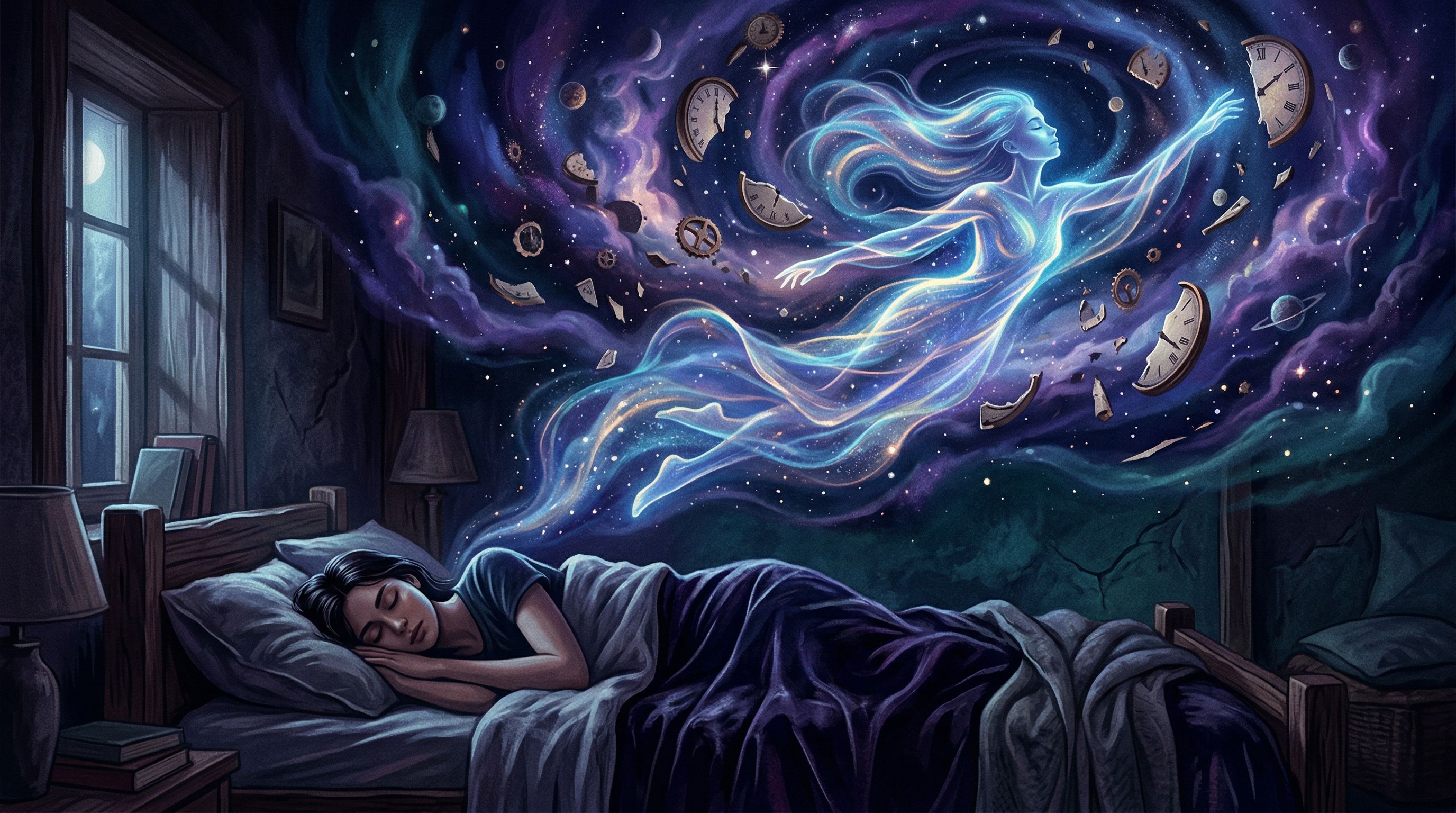
The Taboo of Fragmented Nights: Aimee’s Story
The story of Aimee Oliver illustrates a reality that is too often kept in the shadows. After giving birth, her nights weren't just paced by her baby’s needs, but by a bladder that had become unpredictable. For her, it wasn't a simple inconvenience; it was a loss of dignity that eventually led her to seek surgical intervention.
If you are going through this, please know that you are not alone. Childbirth is a seismic event for the pelvic floor. This muscular hammock, the guardian of your continence, has been put to a great test. When these muscles weaken, sleep becomes a state of high alert. Instead of drifting into restorative rest, you remain in a state of hyper-vigilance, fearing a leak at the slightest movement.
As a Baku, I often see dreamers whose rest is choppy, unsettled by an ache of worry nestled deep in their bellies. This physical anxiety acts as a barrier, preventing you from reaching the deepest, most nourishing layers of your subconscious.
When the Body Fragments the Mind: The Impact on Your Cycles
Sleep is not a single, solid block, but a dance performed in several acts. Incontinence causes a harmful fragmentation of these movements. Whether through nocturia (the frequent need to urinate at night) or micro-awakenings caused by apprehension, your REM sleep cycles are broken.
Yet, it is during this specific phase that you process your emotions and consolidate your memories. Deprived of this continuity, you may feel irritability, anxiety, or a permanent "brain fog." The quality of your rest is intrinsically linked to a sense of safety. If your body feels like it is "betraying" you, your primal brain stays on guard. To rediscover deep sleep, it is essential to send signals of safety to your nervous system—sometimes simply by using appropriate protection that removes the mental burden of the "fear of a stain."
🌙 Yume’s Echo: Your body performed a miracle by creating life; today, it deserves the same patience and tenderness you offer your newborn.
The Language of Water: What Your Dreams Are Expressing
In my wanderings through the world of dreams, I have noticed that physical disorders often transmute into symbols. If you suffer from incontinence, your nights may be populated by floods, overwhelming waves, or a desperate search for a private place.
Water represents your emotions. A physical leak can be perceived by the subconscious as an emotional leak: the feeling of losing control over your life or your identity. This is not a punishment, but a call from your spirit to tend to this part of your being.
If these nocturnal visions become heavy, you can consult this article on Nightmares: What Is Really Hiding Behind Your Restless Nights to understand how your brain processes these physiological stresses.
A Concrete Example: Clara’s Ritual
Clara, 28, could no longer sleep without a light on, fearing she wouldn’t reach the bathroom in time. To break this cycle of stress, she established a "grounding ritual."
Every evening, she practiced five minutes of belly breathing, visualizing her pelvic floor as a strong, protective vessel. She integrated Kegel exercises (pelvic floor rehab) not as a chore, but as a dedicated moment of self-care. By changing her perception of her body—moving from "broken" to "healing"—she allowed her nervous system to relax, gradually regaining longer, deeper sleep cycles.
Tips to Reclaim Your Nights
There is no immediate miracle cure, but there are paths of gentleness to restore your rest:
Fluid Management: Drink the majority of your water before 6:00 PM or 7:00 PM to limit nighttime pressure, without letting yourself become dehydrated.
Double Voiding: Go to the bathroom at the start of your bedtime routine, and then one last time right before you close your eyes.
Pelvic Floor Rehabilitation: This is the crucial step. Consult a specialized physical therapist or healthcare provider. This is the reconstruction of your physical foundation.
Compassionate Acceptance: If a leak occurs, breathe and remind yourself that this is a transitional phase. Shame feeds on silence; speaking about it is the beginning of healing.
Ancient traditions often viewed the postpartum period as a sacred time of retreat. To explore this vision further, you can read Ancestral Wisdom: What Forgotten Traditions Teach Us About the Night.
Listening to the Body’s Silence
Postpartum incontinence is often experienced as an affront to one's femininity. Yet, it is a testament to an incredible transformation. Your body is simply learning to find its balance again after accomplishing the extraordinary.
Your sleep is the mirror of your inner peace. By caring for your body with kindness, you prepare the ground for your dreams to become that space of freedom they were always meant to be. Are you ready to see your body as an ally in reconstruction rather than an obstacle?
Honestly, the way our sleeping brain translates raw physical sensations has always fascinated me. It is never a simple, clinical report. When your bladder experiences pressure or a micro-leak in the physical world, your subconscious doesn't just wake you up; it paints a story. It drafts a sudden rainstorm, an overflowing vase, or a locked door you cannot open. This sensory translation shows how deeply the body in dreams reshapes our self-image. You are not just a mind experiencing a somatic glitch; your whole being is participating in a poetic, albeit stressful, translation of your current physical vulnerability. To look at these watery dreams and simply label them as 'anxiety' misses the beautiful, complex dialogue happening between your weary muscles and your nocturnal imagination.
In the ancient traditions of the East, where I have spent centuries watching over restless minds, the bladder and kidneys are far more than mere plumbing. They are the guardians of the Water element, the sacred reservoir of your vital essence—what we call Jing—and the seat of our deepest, primal fears. When you give birth, you part with an immense amount of this ancestral energy. It is a profound depletion. If you find yourself dreaming of dry, cracked riverbeds or, conversely, uncontrollable torrents, it is your spirit crying out that its energetic well is running dry. It annoys me when modern wellness books dismiss this as purely mechanical; your body is telling you that the emotional dam has been breached because your vital reserves are exhausted. You cannot pour from an empty cup, nor can you hold back the tide when your foundation needs rebuilding.
I once met a dreamer, a new mother, who kept returning to a dream where she was desperately trying to carry water across a crowded room in a fragile, unbaked clay bowl. Every step she took, the water seeped through the porous clay, leaving a trail behind her while the onlookers watched in silence. She felt such profound shame in her sleep. But dreams are not punishments; they are mirrors of our waking struggles. She was trying so hard to be the 'perfect' mother, to hold all her fears, her exhaustion, and her changing identity together without spilling a single drop. If you are experiencing these fragmented nights, I ask you to consider: what if the leak is not a failure, but a necessary release? Sometimes, letting the water fall is the only way to remind yourself that you are human, and that you cannot carry the weight of the ocean alone.
If you wish to explore your dreams more deeply, your Baku is waiting for you on Midnight Mind.