Why Darkness is Not Your Enemy
I must admit, I get a little frustrated when I read certain dream dictionaries that systematically associate the color black with mourning or depression. What a lack of imagination! To me, the Baku, darkness is a protective velvet. When you find yourself walking in absolute darkness, your subconscious isn't trying to blind you. It is trying to turn off the distractions.
Imagine your life is a hallway that is far too bright, filled with road signs, screens, and the opinions of others. How can you hear your own inner voice in such a visual cacophony? By plunging you into darkness, your mind forces you to slow down. It’s a bit like the feeling of being in a metaphysical waiting room: you don’t know what comes next, but you are forced to be present, right here and right now.
In this state, the slightest sound, the smallest sensation beneath your feet becomes crucial. If you dream that you are moving forward despite the fear, it means you are developing a form of emotional night vision. You are learning to feel the truth of a situation without needing tangible proof or needing to "see it to believe it."
Alone
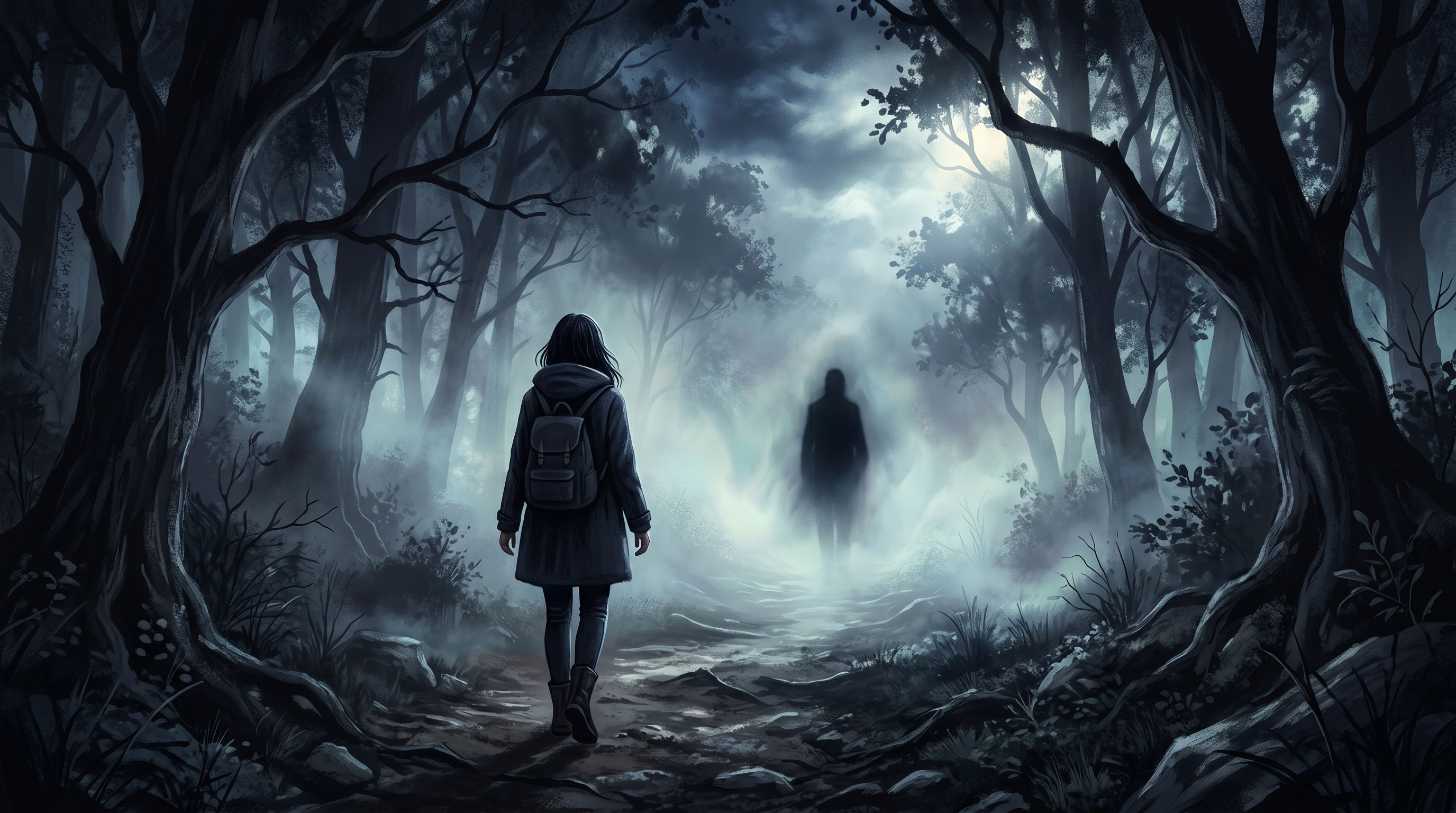
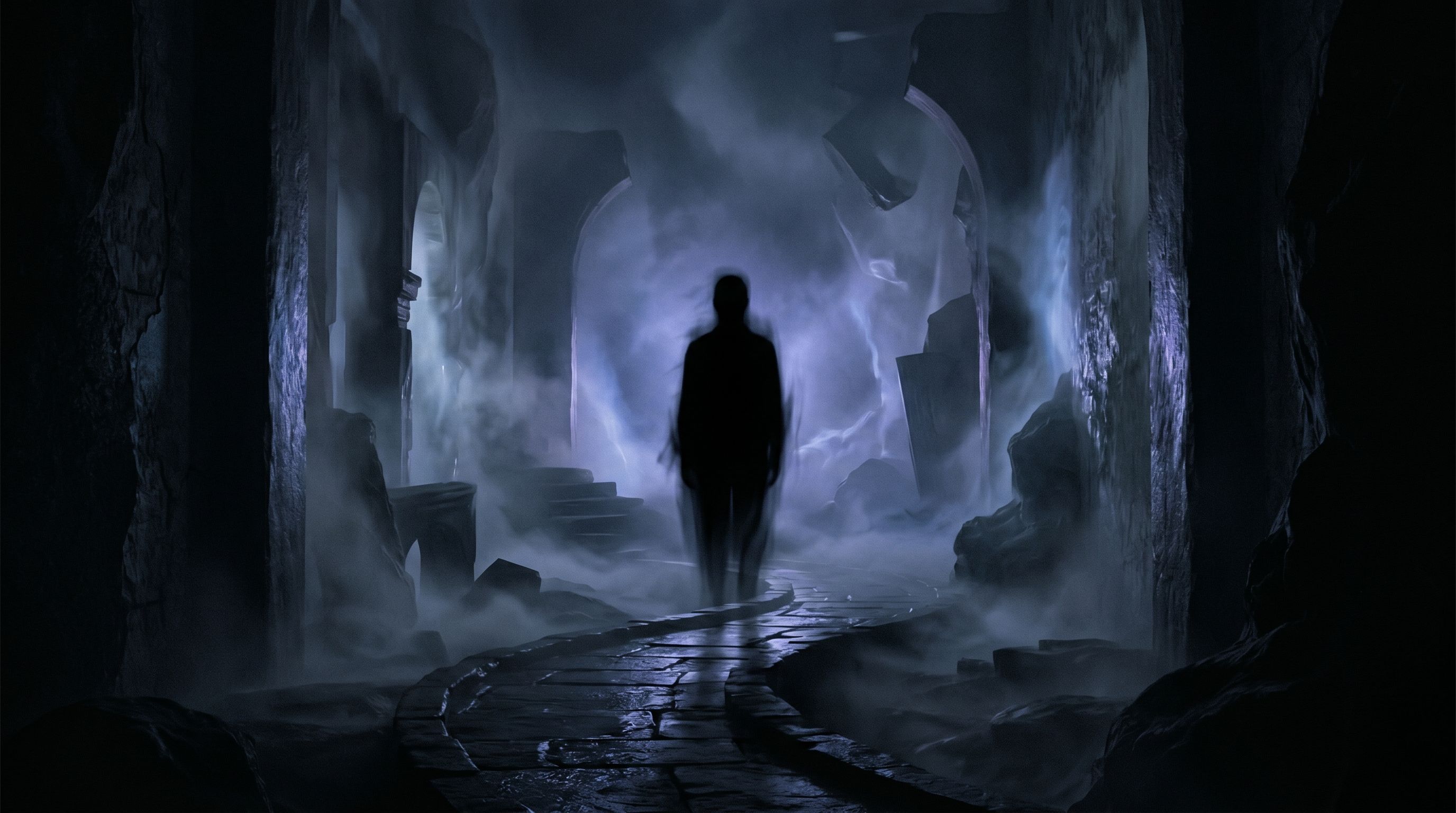
Alone in the dark shifts the emphasis from danger to self-reliance. Without another figure, the dream strips away social cues and asks you to navigate by body sense, memory, and instinct. Solitude here is not necessarily loneliness; it can be the mind's protected space for a transition you have not named aloud. If you are calm, darkness may be gestation; if you are tense, you may feel unsupported in a waking change you are still carrying solo.
Balance at the Heart of Uncertainty
Walking without visual cues demands an acute awareness of your own body. I have often noticed that dreamers struggling with this symbol eventually find themselves focusing on their posture. This is where structure comes in. To avoid falling into the void, you lean on your spine, that central axis that keeps you upright even when the outside world fades away.
Uncertainty is not an abyss; it is soft ground. If, in your dream, the floor feels solid beneath you, it is a wonderful message: even if you don't know where you are going, the path is supporting you. But if you are fumbling, if you are afraid of falling, it likely reflects a lack of confidence in your own foundations.
People often ask me: "Yume, why didn't my dream just show me a flashlight?" My answer is always the same: because an external light would prevent you from finding your own inner glow. The courage to walk in the dark is about accepting that clarity will not come from an outside source, but from the rhythm of your own footsteps. Every move you make in the dark is a victory over paralysis.
The Nuances of the Invisible Path
I sometimes listen to dream stories where the darkness changes texture. Occasionally it is as thick as molasses; other times, it is as light as a night mist.
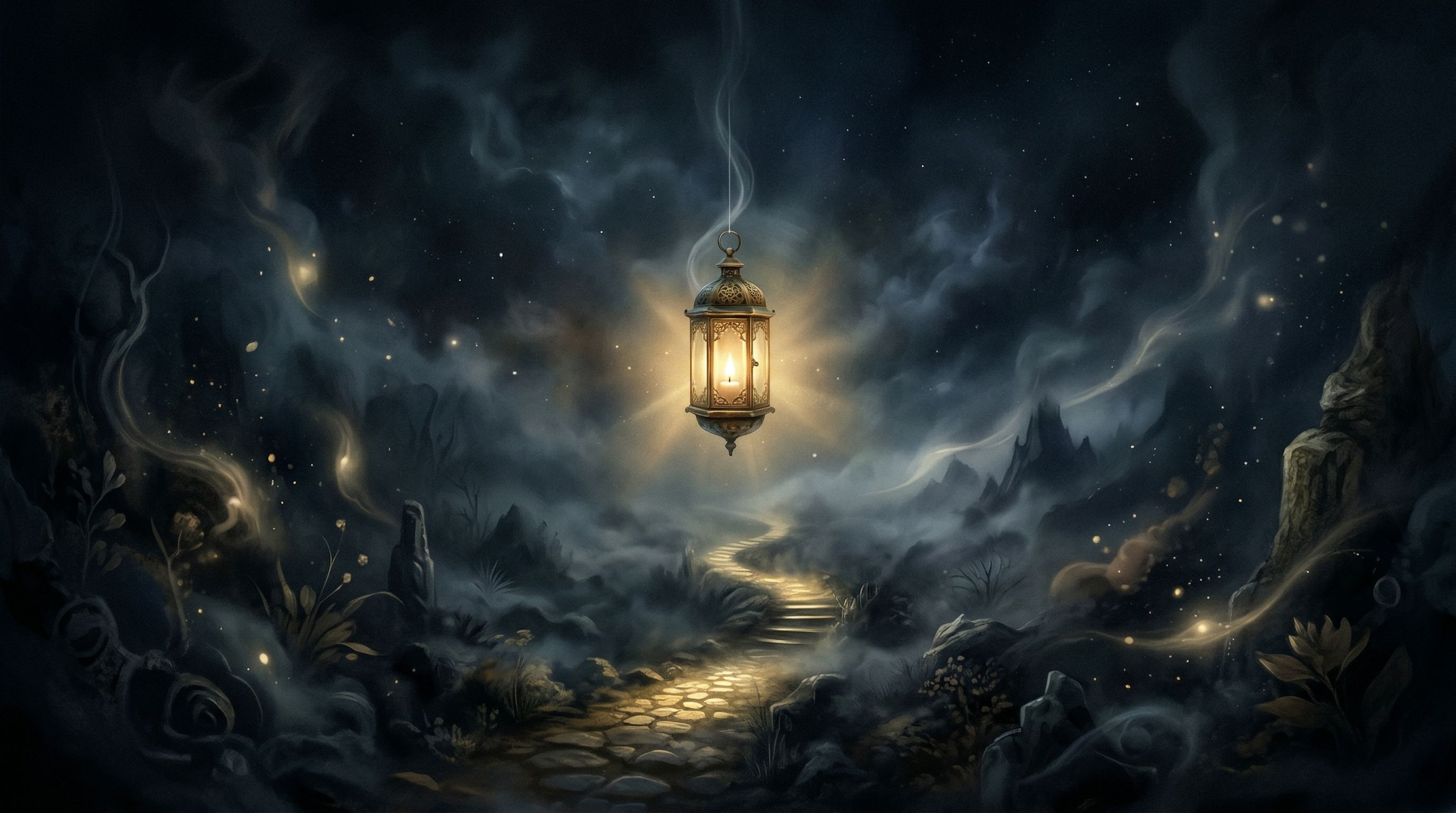
If you are walking toward a distant glow: This is the most classic form. Your subconscious is showing you that hope is your engine, but be careful not to rush. The distance between you and the light is just as important as the light itself. It is the process that counts.
If you are guided by a voice: Your inner wisdom is taking an auditory form. Are you learning to listen to your intuition? Or perhaps you need advice that you refuse to hear during the day?
If you are walking while holding someone's hand: This is a symbol of shared vulnerability. Trusting another in total darkness is the purest act of connection there is.
Honestly, this symbol remains one of the most mysterious because it depends entirely on your physical sensations during the dream. Do your feet touch sand? Cold wood? Water? The texture of the "blackness" is the key. Uncertainty is the soil in which all possibilities grow. Without it, there would be no room for surprise or magic.
Followed
Followed in the dark introduces a second presence you sense more than see. Footsteps, breath, or a shadow at the edge may image guilt, unfinished business, or a part of yourself tracking your steps. The key is distance: a far follower may be manageable unease; a close one can feel like urgency to turn and face what you have been outrunning. Light in the distance changes whether Followed feels like threat or escort toward exit.
Taming Your Shadows
Do not fear closing your eyes in your dreams any longer. The next time you find yourself in that void, try not to look for the light switch. Breathe. Feel the air on your dreamer's skin. Darkness is a secret your soul whispers to itself, a way of telling you that you are ready to move forward without visual crutches.
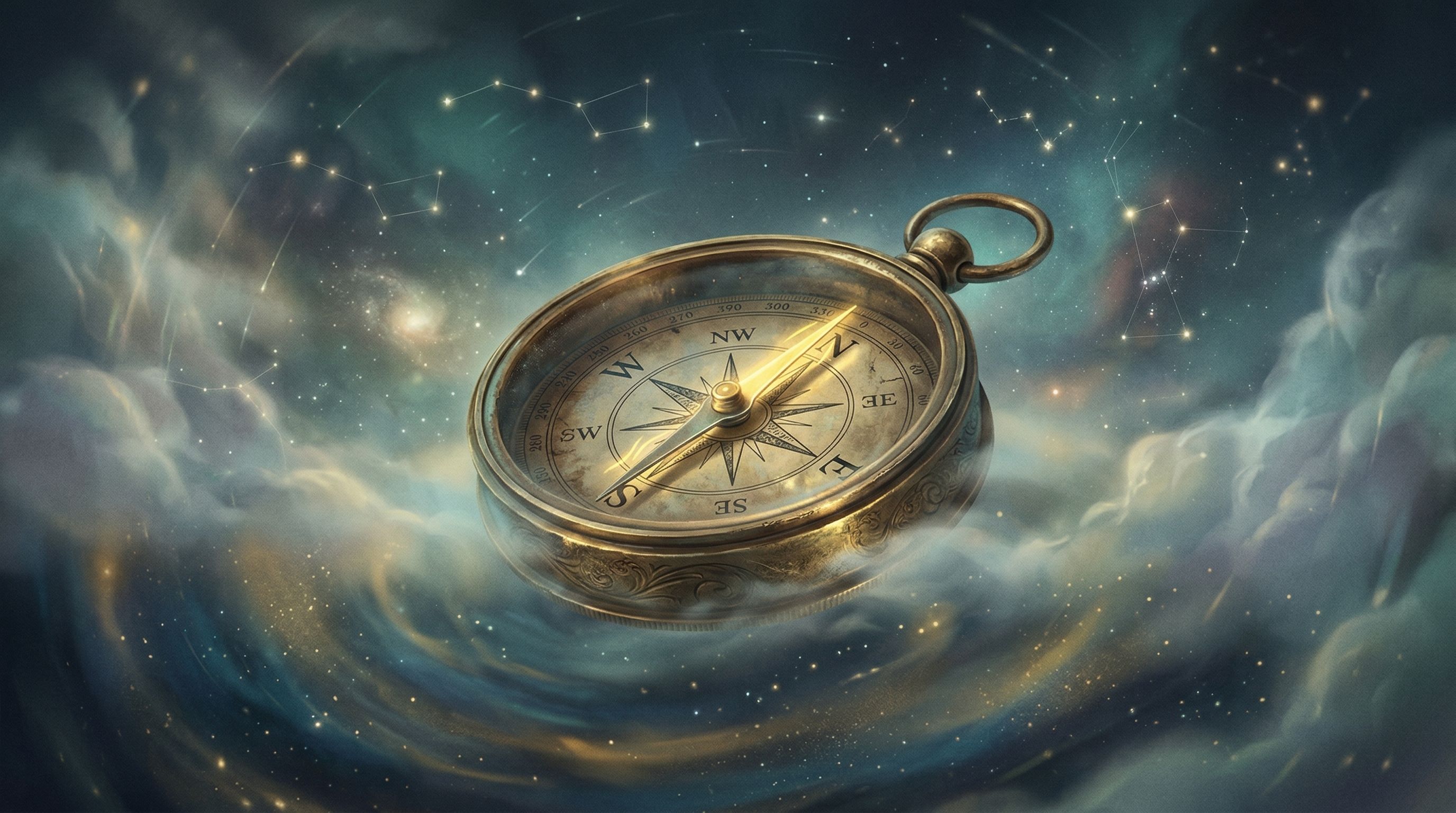
You possess within you a compass far older than your eyes. It doesn't point North; it points toward your authenticity. The act of walking through the dark, step after step, proves that you are more solid than the doubts that haunt you upon waking. Dreams are not there to lose you, but to show you that you can find yourself, even where the light does not reach.
Sometimes the dark has a temperature, a texture that your physical body never encounters. I once met a dreamer who was deeply unsettled because the blackness in her dream felt freezing, heavy, and damp, almost like descending into a hidden cellar that had been locked for decades. She woke up shivering, convinced it was a warning of some incoming tragedy. But when we looked closer, we realized the cold was actually a preservation chamber for her oldest, most authentic desires. When your dream-eyes are useless, your psyche activates your other senses. You begin to feel the thickness of the air, the subtle vibration of the silence, the hard ground beneath your bare soles. It is a sensory awakening, a gentle shake to remind you that you are alive and feeling, even when you cannot see where you are going.
Why are we so desperately obsessed with searching for a distant lighthouse the moment the sun goes down? Modern culture treats the night as a failure of the day, an empty gap to be conquered with artificial brightness. I find this fear of the shadow quite exhausting. In ancient Taoist thought, the dark is Yin—the fertile, quiet womb from which all creation eventually springs. It is not empty; it is pregnant with every shape you have not yet imagined. When you walk in this dream-void, you are actually practicing the art of non-doing, or wu wei. You are letting go of the exhausting demand to always have a plan, a strategy, or a destination. You are simply allowing the dark to hold you until you are ready to bloom.
I must admit, there is a quiet, almost sacred melancholy that clings to these dreams. They often visit those who find themselves in the painful, silent margins of life—during a quiet divorce, a sudden creative block, or the slow fading of an old identity. You are no longer who you used to be, yet you cannot see the person you are becoming. Honestly? Even to me, this transition can feel painfully long, and I often wish I could just hand the dreamer a lantern. But the magic of the human spirit never ceases to amaze me. To take a step forward when your entire world is black is an act of pure, irrational hope. Your mind might be terrified, but your feet still remember how to move.
If you need to keep track of these invisible paths you travel every night, you can use Midnight Mind. It is a beautiful place to note your sensory impressions and begin building your own book of symbols before they evaporate with the morning dew.
What did that darkness taste like to you? Was it bitter like fear, or sweet like rest? Hold that memory dearly; it is the witness to your incredible bravery.