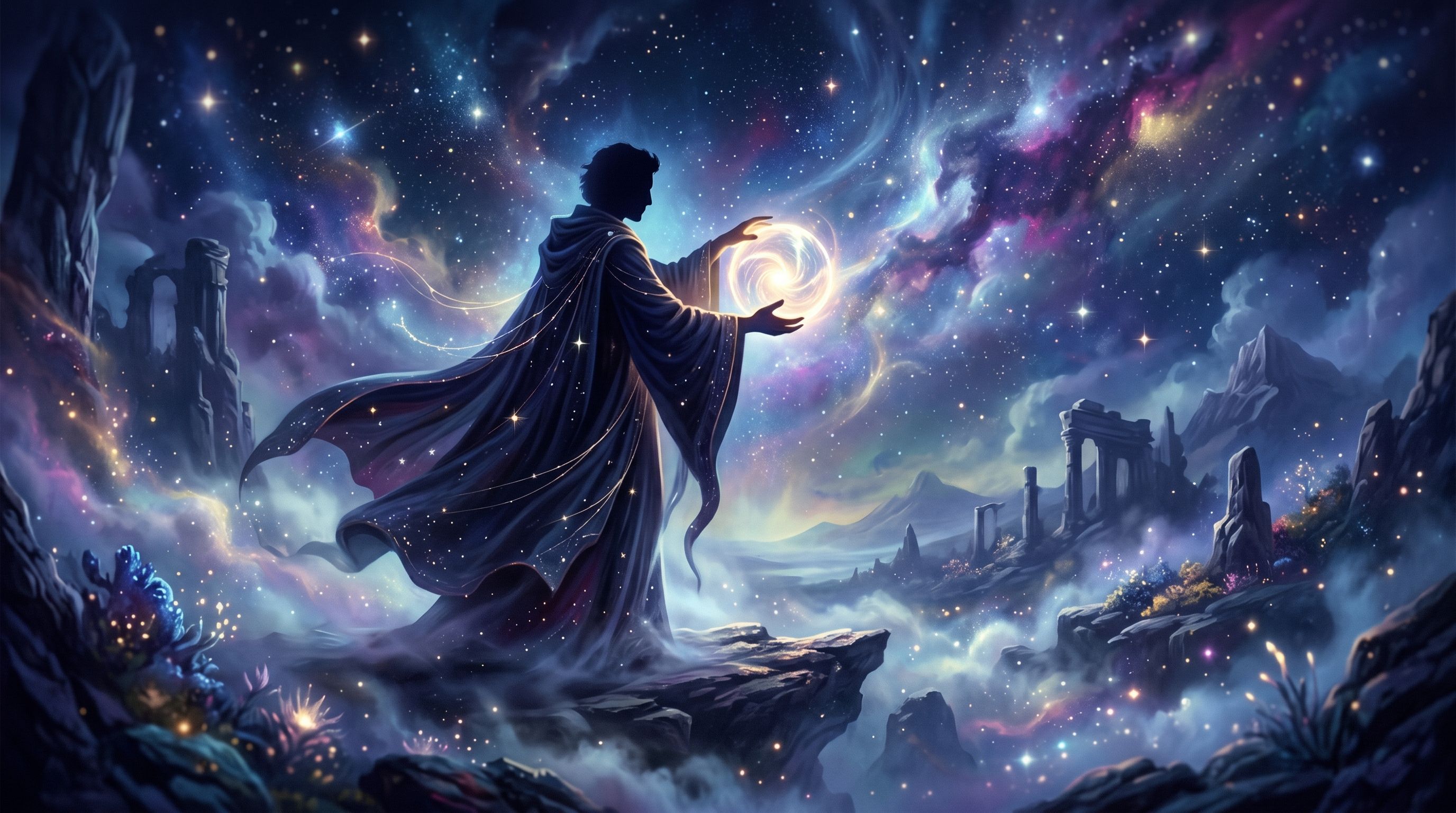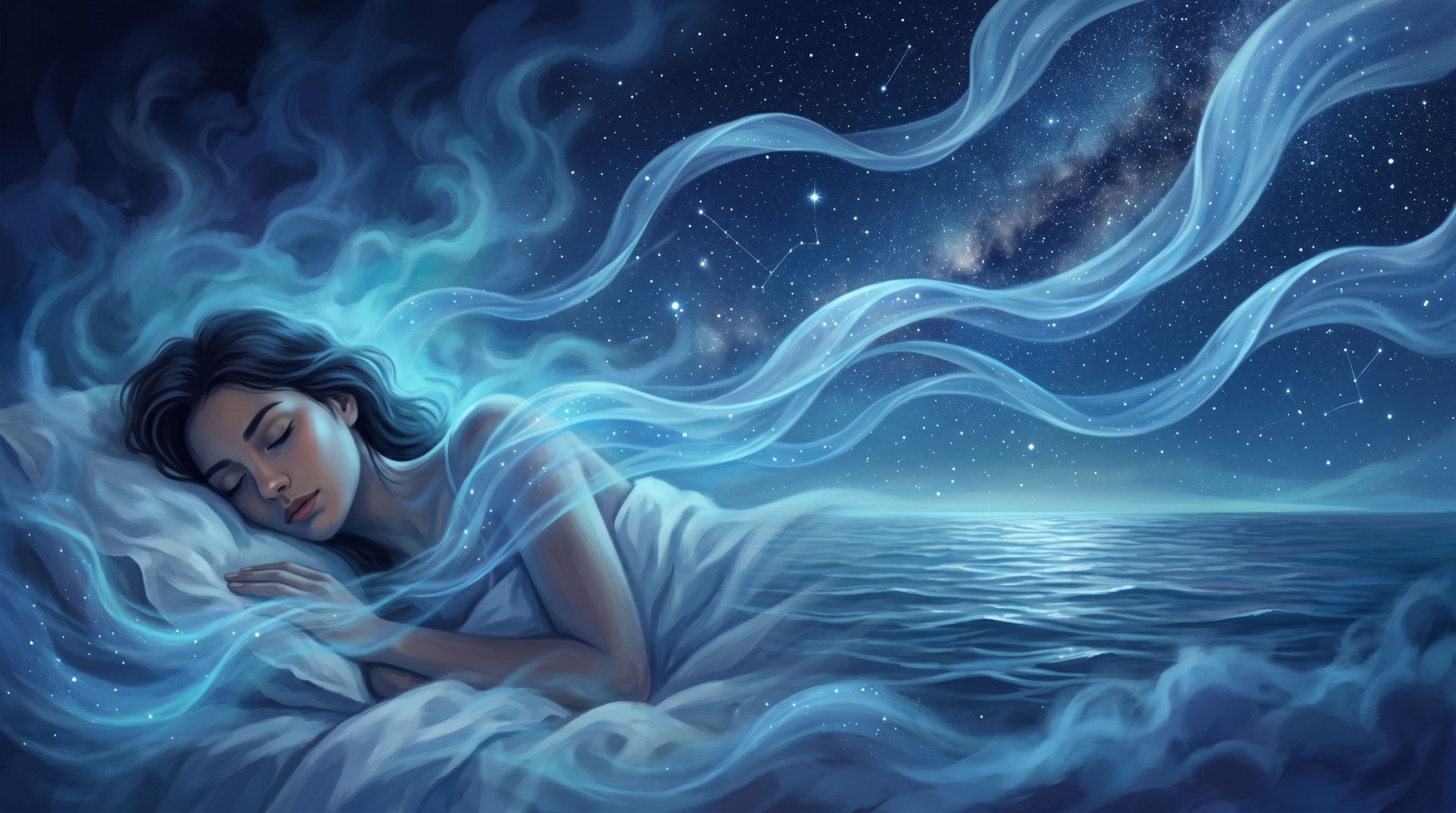
I often find, as I approach a sleeper's spirit, that I smell sage and plum even before tasting the nightmare. It is a sign that purple has invaded the nocturnal landscape. This color is never there by chance; it is that strange nuance, on the edge of night and dawn, which comes to shake our earthly certainties. If you saw purple in your sleep, it is not a simple decoration of your unconscious; it is an invitation to look at what is hidden behind the curtain of material reality. In this exchange, I will try to show you why this color, although sometimes intimidating in its intensity, is actually one of the most beautiful caresses your spirit can offer itself.
---
The velvet of the soul: beyond simple pigment
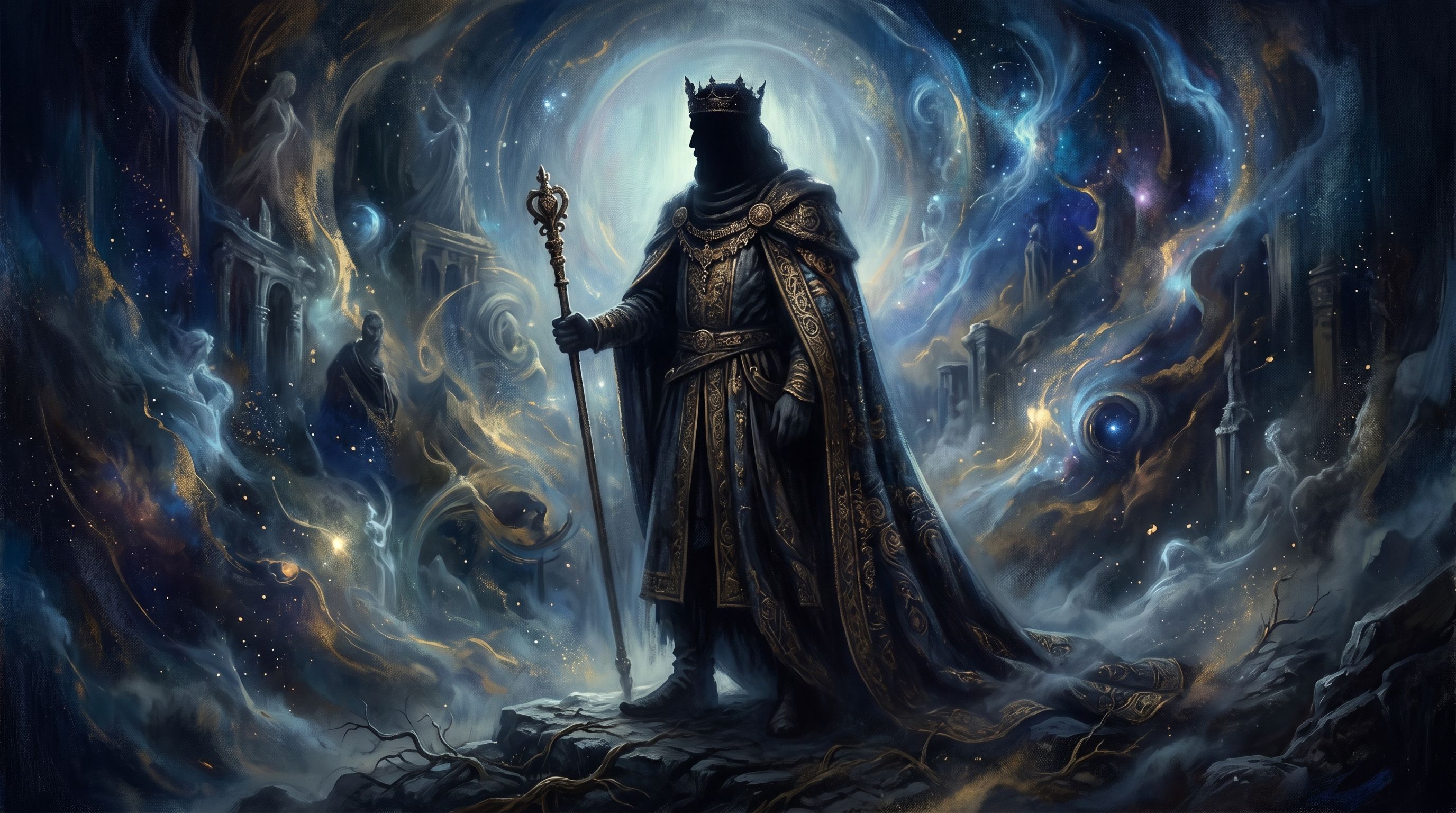
I must confess something to you: I have a weakness for dreams tinged with purple. For me, the Baku, they have a particular flavor, a mixture of wild honey and morning mist. It is not an "easy" color. Red is loud, blue is calm, but purple... purple is silent and deep. It tires me to read, in certain dusty old grimoires, that purple is only the color of "royalty" or "power." It is so reductive! We are not talking here about a gold crown, but about sovereignty over one's own inner world.
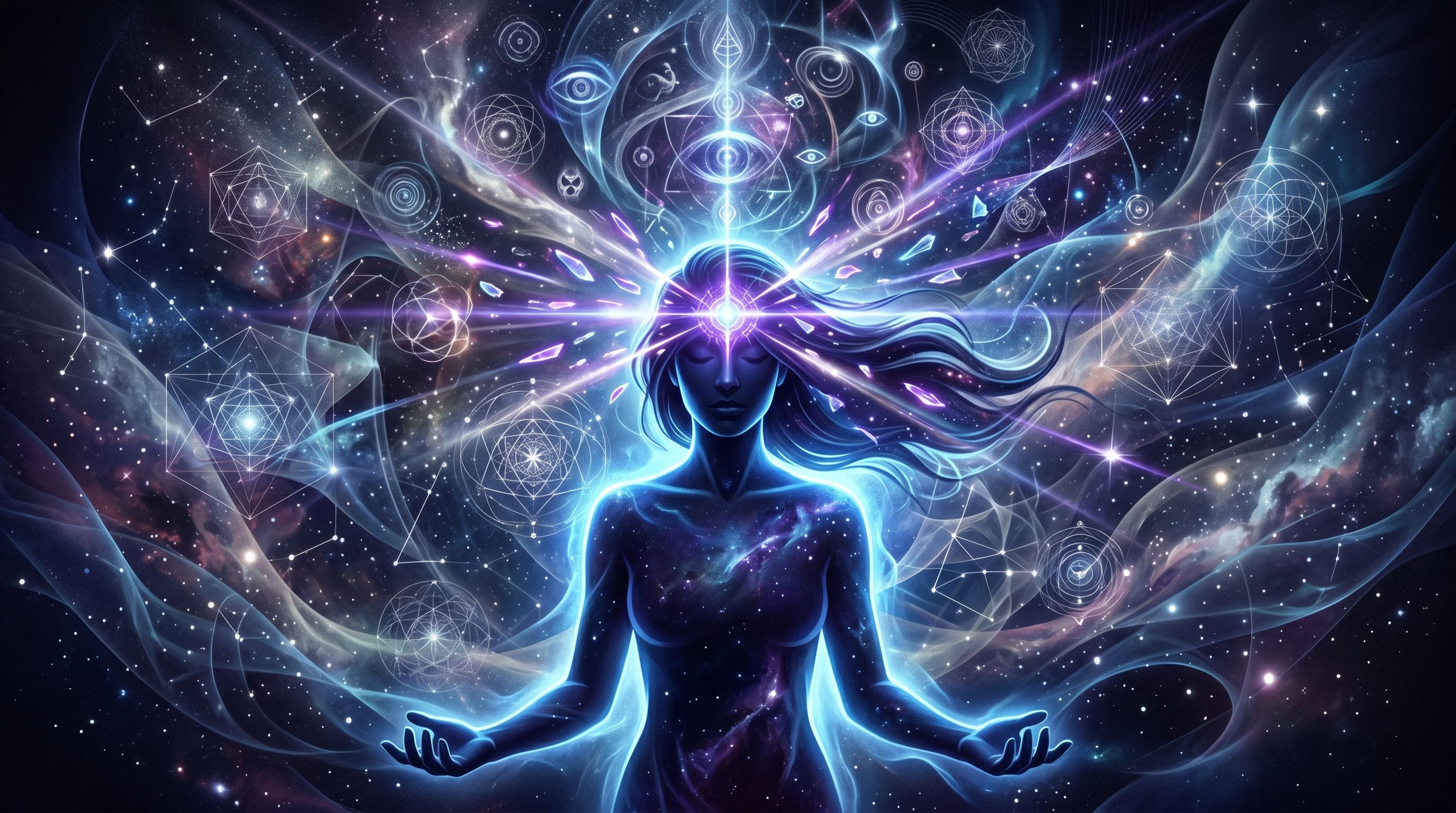
When purple appears, it is often your unconscious whispering that you are ready to understand things that have eluded you until now. It is the color of the third eye,
...the color of the third eye, but have you ever felt the weight of purple on your skin during a dream? It is rarely just a visual detail; it carries a distinct temperature. I often hear dreamers describe it as a heavy, cool velvet draping over their shoulders, or a lukewarm mist that tastes slightly of iron and lavender. It represents a threshold where your physical senses begin to blur into pure intuition. Unlike red, which burns, or blue, which can freeze, purple holds a strange, comforting equilibrium. It is the temperature of twilight—neither day nor night. When your dreamscape wraps you in this shade, it is asking your body to relax its grip on physical logic. Your muscles soften, your breathing slows, and you are invited to feel your way through the darkness rather than trying to see through it.
I remember a dreamer who came to me weeks after a painful separation. In her waking life, she felt entirely empty, but her nights were painted in intense, almost suffocating shades of violet. She dreamed of painting her childhood bedroom with a thick, purple wax. She was terrified that this meant she was losing her mind. I had to gently reassure her: this wasn't madness, but a protective cocoon. Purple is the color of the chrysalis. When the old self is dissolving, before the new structure is even a blueprint, the unconscious wraps us in this twilight hue to keep us safe from the harsh light of external demands. It is a quiet sanctuary where you are allowed to simply exist in transition, untouched by the pressure to 'heal' quickly.
Yet, I must admit I worry when a dreamer becomes too enamored with this color. There is a delicate trap hidden within its folds. Sometimes, we paint our dreams in purple to escape the raw, muddy reality of our earthly struggles. It is much easier to float in the cosmic dust of a nebula than it is to face the messy, red-hot anger of a daily argument or the cold gray of a career rut. When your dream is drenched in violet, ask yourself honestly: are you seeking genuine wisdom, or are you merely using spirituality as a shield? The psyche needs grounding. Purple is a bridge, yes, but a bridge is meant to be crossed, not lived upon. Do not let the beautiful mist make you forget the soil beneath your feet.
From a deeper, older perspective, purple is the ultimate alchemical marriage. In ancient eastern traditions, it is the shade where the fiery passion of red—the active, outward-moving Yang—perfectly fuses with the deep, receptive calm of blue, the cool, inward-moving Yin. To see it in your sleep is to witness a profound inner reconciliation. Perhaps you have been torn between action and surrender, between speaking out and staying silent. Purple arrives as a silent mediator, proving that these opposing forces can not only coexist but create something entirely sublime. It is the quiet peace that comes when the inner conflict finally tires itself out, leaving behind a sacred space where your soul can finally catch its breath. It is a reminder that you do not need to choose a side to be whole.