The creating hand: between control and surrender
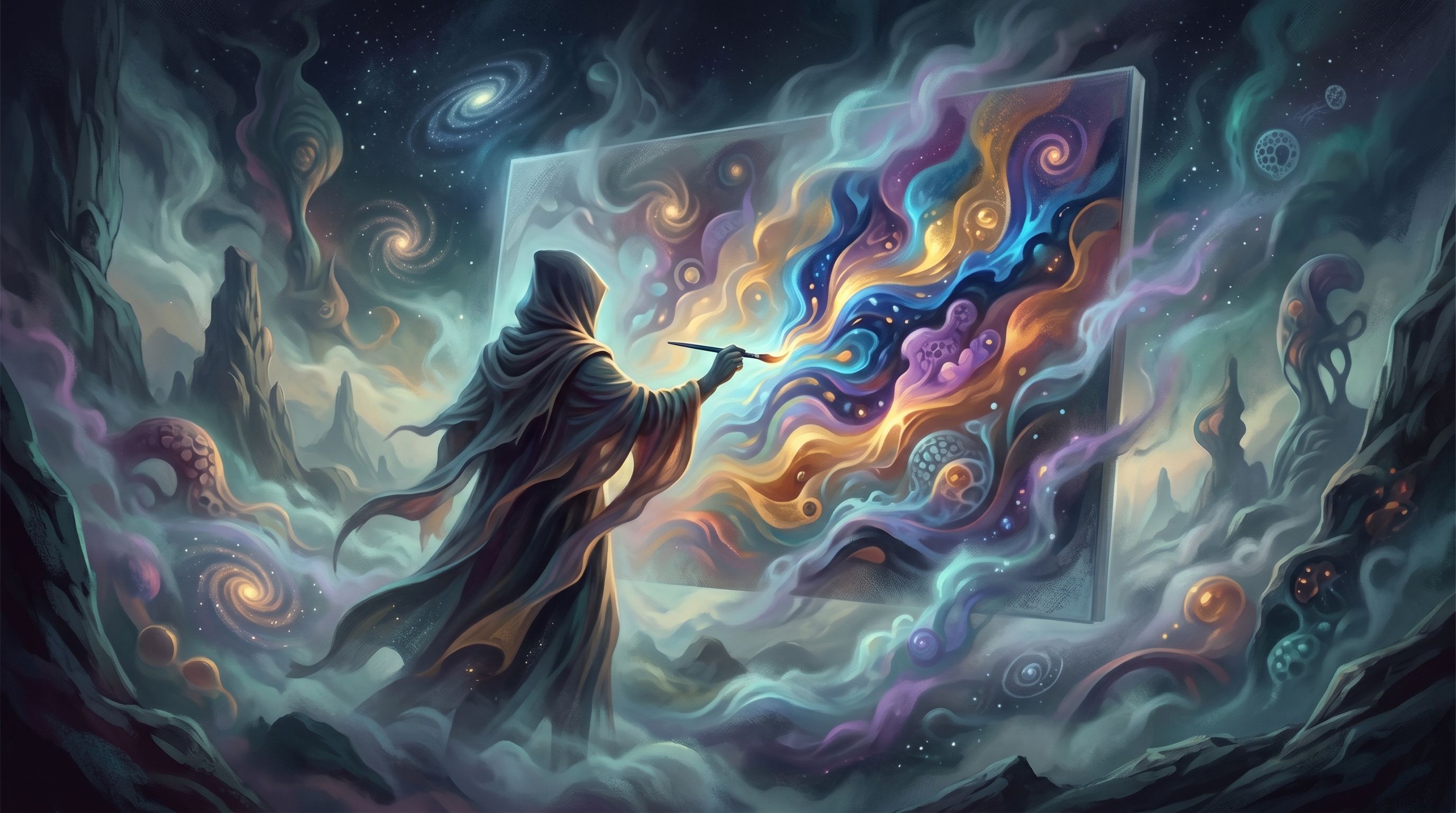
Sincerely, this symbol has fascinated me for years. In the world of dreams, painting is never a passive activity. It is the quintessential act of creation. When you see yourself painting, your mind is showing you that you are the artisan of your own life, even if, upon waking, you feel as though you are merely at the mercy of events.
I once met a dreamer who was frantically painting black clouds onto a blue sky. She thought it was a bad omen. In reality, she was simply releasing a sadness she forbade herself from feeling during the day. It’s a bit like when one dreams of carrying something new—it’s about giving shape to an idea or an emotion that is asking to be born.
If, in your dream, the paint runs or you lose control of your work, do not worry. It is often a sign that your emotions are overflowing and that they need this wild space to exist. We spend so much time trying to stay "clean" and organized. The dream of painting is there to remind us that life is made of stains, splashes, and unexpected blends.
Some specialists in dream psychology suggest that these creative dreams are a form of emotional regulation. By "painting" your fears or joys, your brain is processing the intensity of your experiences in a safe, metaphorical space. It is within this apparent chaos that your most sincere truth is found.
---
Concealing or revealing: the layers of the subconscious
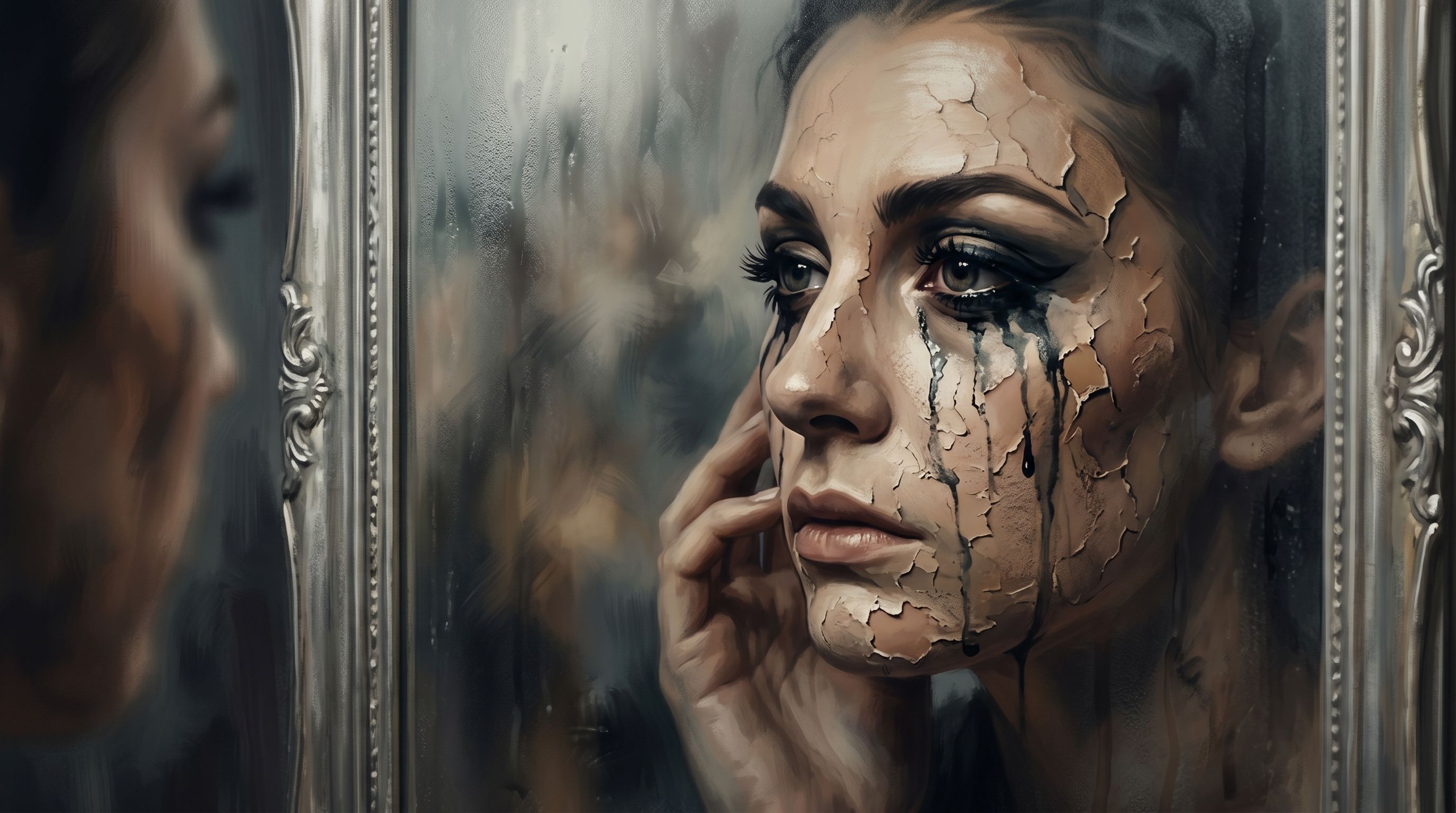
There is an aspect of painting that sometimes leaves me pensive, even a little melancholic. It is that habit we have of wanting to "repaint" over what displeases us. If you see yourself painting an old fence, a crumbling wall, or even your own face, ask yourself: what are you trying to hide beneath this layer of varnish?
Here we touch upon a theme close to wearing a mask. Paint can be a smokescreen. We beautify the facade so we don’t have to deal with the structural cracks. I am not a fan of interpretations that say a beautiful color necessarily means happiness. Sometimes, a white that is too brilliant, too perfect, hides an immense loneliness or a fear of the void.
On the other hand, scraping off old paint in a dream is a magnificent sign of courage. It means you are ready to strip away old patterns—the preconceived notions imposed upon you—to rediscover the raw material of your being. It is a work of spiritual restoration.
🌙 Yume's Echo: Sometimes, the most beautiful work of art isn't the one that is finished, but the one that accepts remaining a sketch, just as we are all works in progress.
It is often at this moment that I step in to absorb the doubts that rise to the surface like suffocating dust. When you stop trying to cover up the past and start looking at the bare wall, you are finally ready to paint something that belongs truly to you.
---
The palette of feelings: a matter of nuances
I am often asked: "Yume, what does red mean? What does blue mean?" Honestly? I hate giving a fixed answer. The red of a fire is not the red of a rose. In your dream, it is the emotion associated with the color that matters, not the color itself.
If the paint is golden, perhaps you are touching a part of yourself that you are finally beginning to value. If it is gray and dull, it isn't a threat; it’s just a signal that you need rest, that your inner landscape lacks contrast at the moment. Creation is not a straight line. It has its seasons of drought and its seasons of flood.
I have noticed that dreamers who see themselves mixing colors on a palette are often in a phase of great wisdom. They no longer see the world in black and white. They understand that to obtain the green of hope, one must accept the blue of melancholy and the yellow of joy. It is a delicate alchemy.
If you feel lost before your inner canvas, perhaps it is simply that you are still searching for the right dose of each ingredient. Some research suggests that our brains use color in dreams to tag the "emotional weight" of memories. A vibrant color might indicate a memory that is still very much alive and demanding your attention.
---
Concrete Example: Navigating the Canvas
Imagine you are in a gallery, but the walls are bare. You start painting a dark forest with thick, heavy strokes of indigo. At first, it feels suffocating, like you are trapping yourself in the shadows. But as you continue, you realize you are actually painting a path through the trees.
This shift from "being lost" to "creating the way out" is a classic use case of the painting dream. It shows a transition from feeling overwhelmed by a situation—perhaps a tense family reunion—to taking active control of how you perceive and navigate that environment. You aren't just a visitor in the forest anymore; you are its architect.
---
The texture of your inner world
Have you noticed the consistency of the paint in your dream? This detail is often overlooked, yet it carries profound meaning.
- Fluid, watery paint: This often reflects a state of emotional flow. Things are moving, perhaps too fast, but they are not stuck.
- Thick, impasto paint: This suggests a need to leave a mark, to be felt and seen. You are adding substance to your life.
- Dried or cracked paint: This might point to old ideas or feelings that have become brittle. It may be time to moisten them with new perspectives.
Never forget that in the realm of sleep, you are simultaneously the paint, the painter, and the viewer. There is no such thing as a "bad" painting. There are only attempts at being yourself. If the dream left you with a strange impression, like a stain on your clothes that you cannot clean, perhaps it is because this emotion asks to be worn proudly rather than erased.
If you need to keep a record of these nocturnal tints, you might try noting every color that struck you in your journal. If you want to explore your dreams more deeply, your Baku is waiting for you.
That painting you started tonight—what do you want to add to it tomorrow night? Come and tell me about it; I will be there to watch over your brushes.
Have you noticed how much we obsess over what we add to the canvas, completely ignoring the spaces we leave untouched? It makes me a bit weary to see people analyze dreams of painting only by counting the brushstrokes. In traditional ink wash painting, the negative space—what we call Ma—is just as alive as the ink itself. It is the silence that allows the music to be heard. If your dream-canvas is mostly blank, or if you find yourself hesitant to fill it, do not mistake this for lack of inspiration. Your mind might simply be begging for breathing room, a sanctuary of nothingness in a life that is otherwise far too crowded. Much like encountering an enigmatic painter in the corridors of your sleep, this void is not an absence; it is a profound presence waiting for its rightful time to speak.
I often wonder why we are so afraid of getting our hands dirty, even in our own sleep. I once listened to a dreamer who felt immense shame because, in his dream, he had abandoned his brushes and was smear-painting a wall with his bare palms, using thick, muddy clay. He woke up feeling childish and messy. But to me, that is where the magic begins. Painting with your fingers, feeling the cold, wet texture of the medium directly against your skin, is a primal act of reclamation. It bypasses the analytical mind entirely. While the meticulous weaver structures destiny thread by thread, finger-painting is a glorious rebellion against order. It means you are tired of being polite, tired of keeping a safe distance from your own life. You want to touch your reality, raw and unvarnished, even if it leaves stains on your fingers.