The frame of time: Why your mind freezes the motion
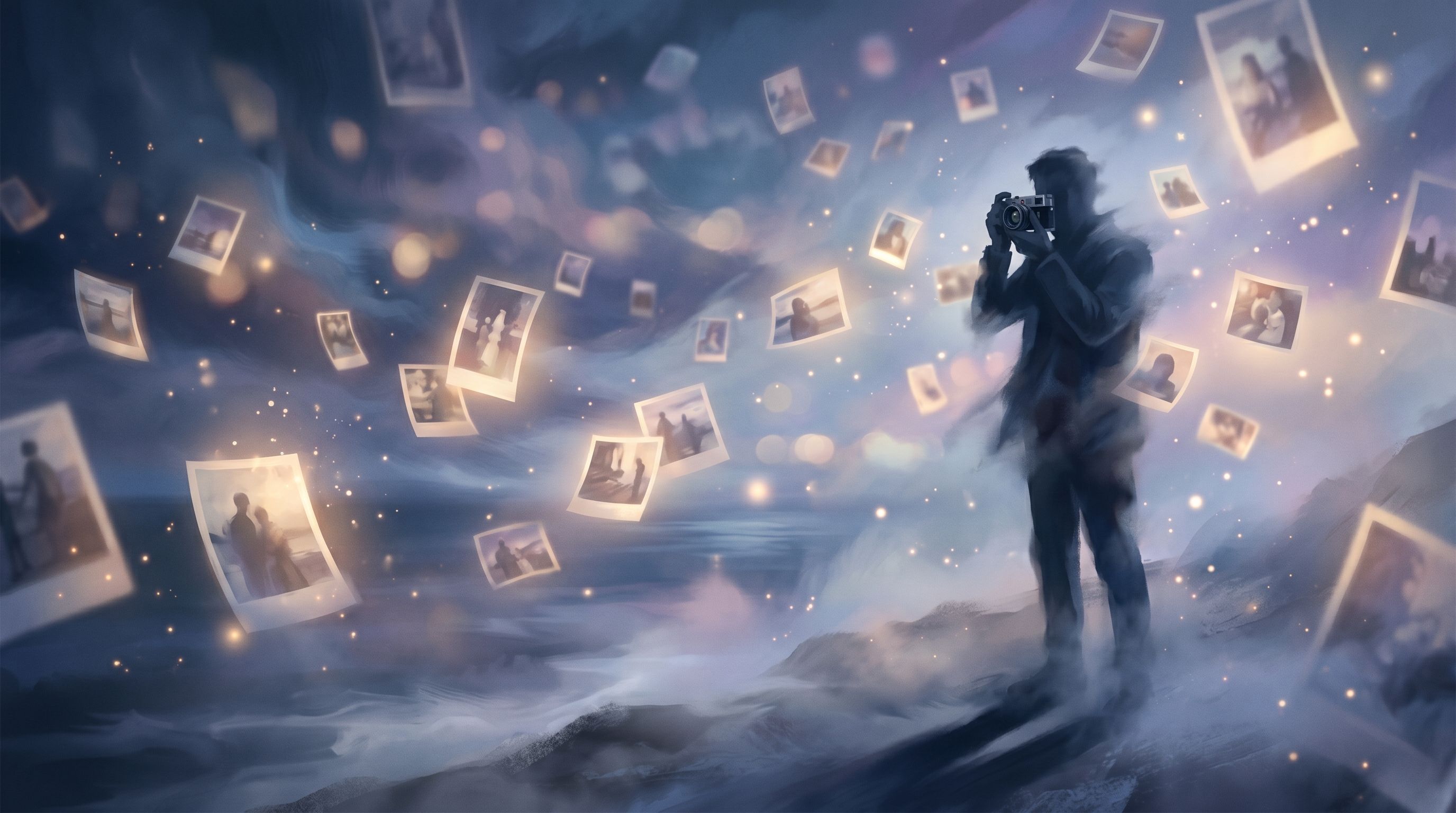
In the shifting forest of your dreams, everything is usually in constant motion. Trees might walk, and faces often melt into one another. So, when a photo appears, it is a significant event. It is as if your mind is shouting "Pause!"
I see this as your subconscious attempting to bring order to the chaos of your inner world. Sometimes, your present life is so loud and demanding that it cannot be properly analyzed in real-time. Your mind takes a snapshot, turning a fleeting feeling into a visual memory so that you can study it later, in the quiet of your sleep.
Some specialists in dream psychology suggest that this "freezing" mechanism is a way for the brain to categorize information that it deems vital for your survival or emotional growth. It’s not just a picture; it’s a file being placed on your desk for review.
---
Blurry faces and the symbolism of torn snapshots
Sometimes, the photo you hold in your dream is damaged. Perhaps that is what woke you with a lingering feeling of anxiety? A torn photo is a powerful symbol of rupture.
In my observations as a Baku, I’ve noticed that a ripped image often echoes an old wound or a bond that was severed before you were ready. This isn't "bad" in itself; it is simply an observation. Your mind is showing you that a specific scar is still there, visible on the dream-paper, waiting to be acknowledged.
And those blurry faces... they are fascinating to interpret. When you hold a photo and cannot identify the person, it is often because you are not yet ready to face a certain facet of yourself.
Much like the complex layers found when an elephant, where memory and social weight play a major role, the blur on a photo indicates a truth hiding behind a mask. Is it a memory you have voluntarily altered to suffer less? Or a person whose influence over you has become uncertain?
I don’t believe in cold dictionaries that say "Blurry photo equals betrayal." To me, the blur is a protective mist. Your subconscious is saying: "You aren't quite ready to see this detail yet, but I want you to know it exists."
🌙 Yume’s Echo: A photograph is the only way to look at the sun of your past without burning your eyes.
---
Looking into the lens: The face-to-face with yourself
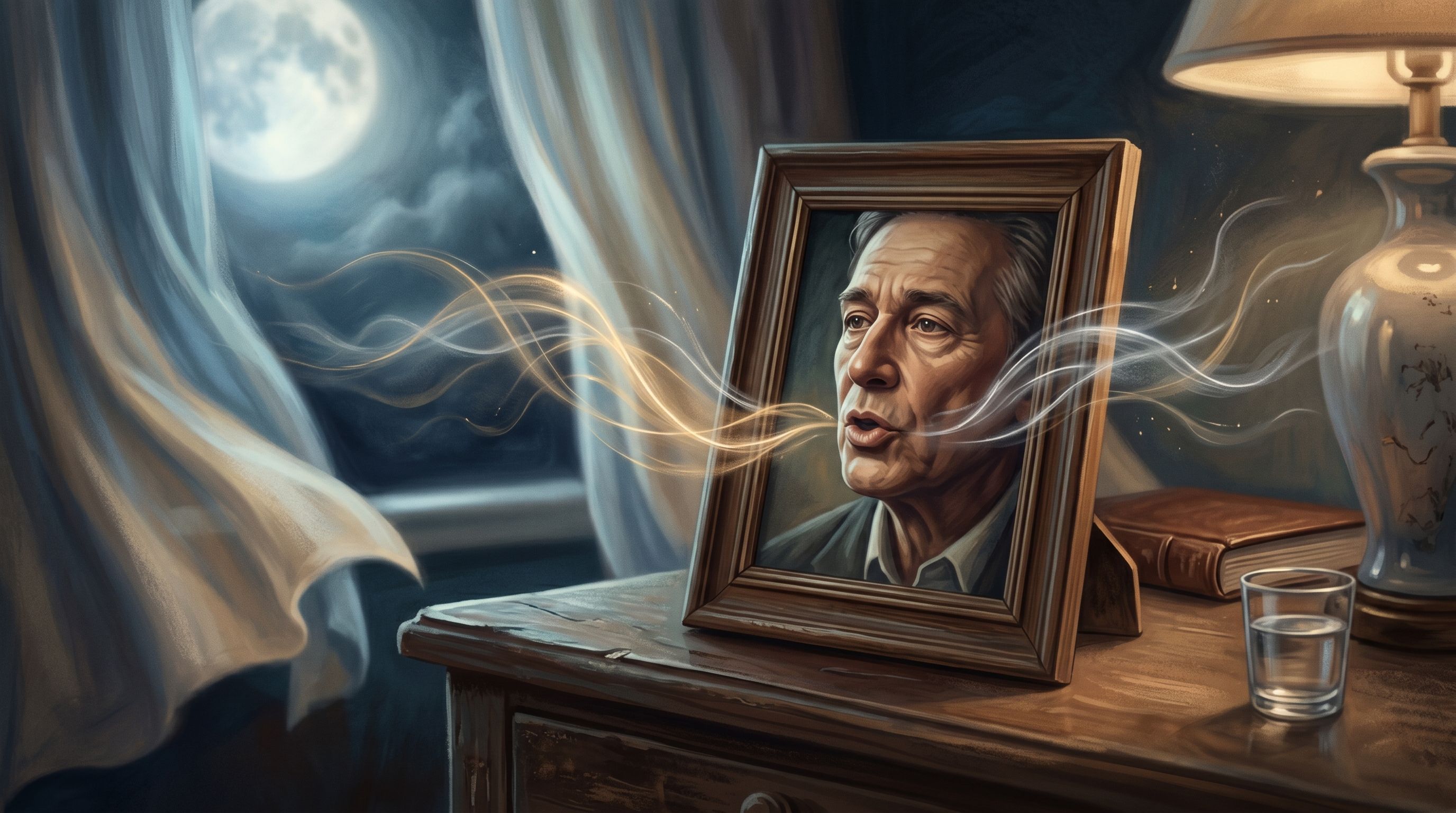
The most unsettling dream remains the one where you discover a photo of yourself, but you do not recognize the person staring back. Perhaps you are younger? Or older? Or dressed in a way you would never choose in your waking life?
This is where the wisdom of your nights becomes truly magnificent. This image is a mirror that doesn't move. It questions you about your identity and the passage of time. We often forget who we were five or ten years ago, losing touch with our previous selves.
Dreaming of a photo of yourself as a child is often a sign that a part of your innocence or spontaneity is missing from your current routine. It isn't a sign of sadness; it's a gentle call to reconnect with that version of you.
If, in the dream, you are the one taking the photo, you are acting as the observer. You are trying to maintain control over a situation by putting distance between yourself and the emotion. It is a very common psychic survival technique. You don't want to live the moment; you want to "capture" it.
Ask yourself: in your daily life, is there something you are observing from afar without daring to take part? Much like the protective instincts we see when dogs, your mind might be trying to guard you from a situation it perceives as overwhelming.
---
Concrete Example: The Singed Polaroid
Imagine you dream of finding a polaroid of yourself standing in a garden you don’t recognize. You are smiling, but the edges of the photo are singed by fire. In the waking world, you might be going through a major life transition—perhaps a career change or a breakup—that feels like it’s "burning" your old identity.
The dream isn't a warning of danger, but a visual representation of your transition. By freezing this moment in a photo, your mind allows you to acknowledge the beauty of who you were while accepting that the "frame" of your life is changing. It’s a way for your psyche to mourn and celebrate simultaneously, giving you the closure you need to move forward.
---
Embracing the gallery of your mind
Honestly, I find these dreams to be precious gifts. They are like files stored in an inner library, waiting for the right moment to be opened. Once you have understood why a specific photo appeared, I can come to "eat" the worry it generated, leaving you only with the clarity of understanding.
Every image you encounter in your nights is a piece of a puzzle you began assembling long ago. If these snapshots haunt you or leave you with lingering questions, know that you have the power to change your focus and adjust the lens through which you view your life.
If you feel like your album of nocturnal memories is becoming too heavy to carry alone, your Baku is always here to help you sort through the images. It is a beautiful way to collect your symbols and keep your most precious insights in a safe place, finally understanding what they were trying to tell you all along.
Have you ever felt the texture of the photo in your dream? Sometimes it isn’t just a visual; it is the dry, brittle feel of aged paper between your fingers, or the distinct, slightly chemical smell of old darkroom ink. I find that when we dream of finding these physical keepsakes, perhaps while rummaging through the quiet dust of an attic, our mind is trying to ground a slippery emotion. We live in such a digital, weightless world now. Your unconscious, in its ancient wisdom, longs for something you can actually hold. It presents you with a physical artifact because it wants you to understand that your past experiences aren't just fleeting thoughts—they have weight, texture, and they take up real, physical space inside your soul.
I once met a dreamer who was desperately trying to reinvent her life after a painful divorce. She kept dreaming of a photo album filled with pictures of a coastline she had never visited, yet she felt a deep, aching nostalgia for it. It puzzled her, and honestly, it puzzled me too for a while. We often assume photos only represent what has already happened, but what if they show what is yet to come? Your mind can use a photo to project a future memory, a premonition of peace. It is as if your inner guide has already gone ahead, taken a snapshot of the quiet harbor waiting for you, and sent it back to your sleeping self as a promise. Don't limit your dreams to archives of what you have lost; sometimes they are brochures for where you are going.
It always slightly irritates me when modern guides treat dream photos like mere filing cabinets of the brain. In the old stories of my homeland, there was a quiet reverence—and sometimes a lingering fear—that capturing an image meant capturing a fragment of the soul. When you see a photo of someone close to you in a dream, you aren't just looking at a cold memory; you are interacting with their energetic imprint. The dream-photo is an emotional bridge. If the person in the picture looks away or seems trapped behind the glass, it might show a silent distance growing between you in waking life. Your spirit senses this shift before your conscious mind does, reminding us that we leave pieces of our warmth in the people we love, and sometimes, we must go back in our sleep to gently retrieve them.