The weight of the unspoken: Why your past takes shape
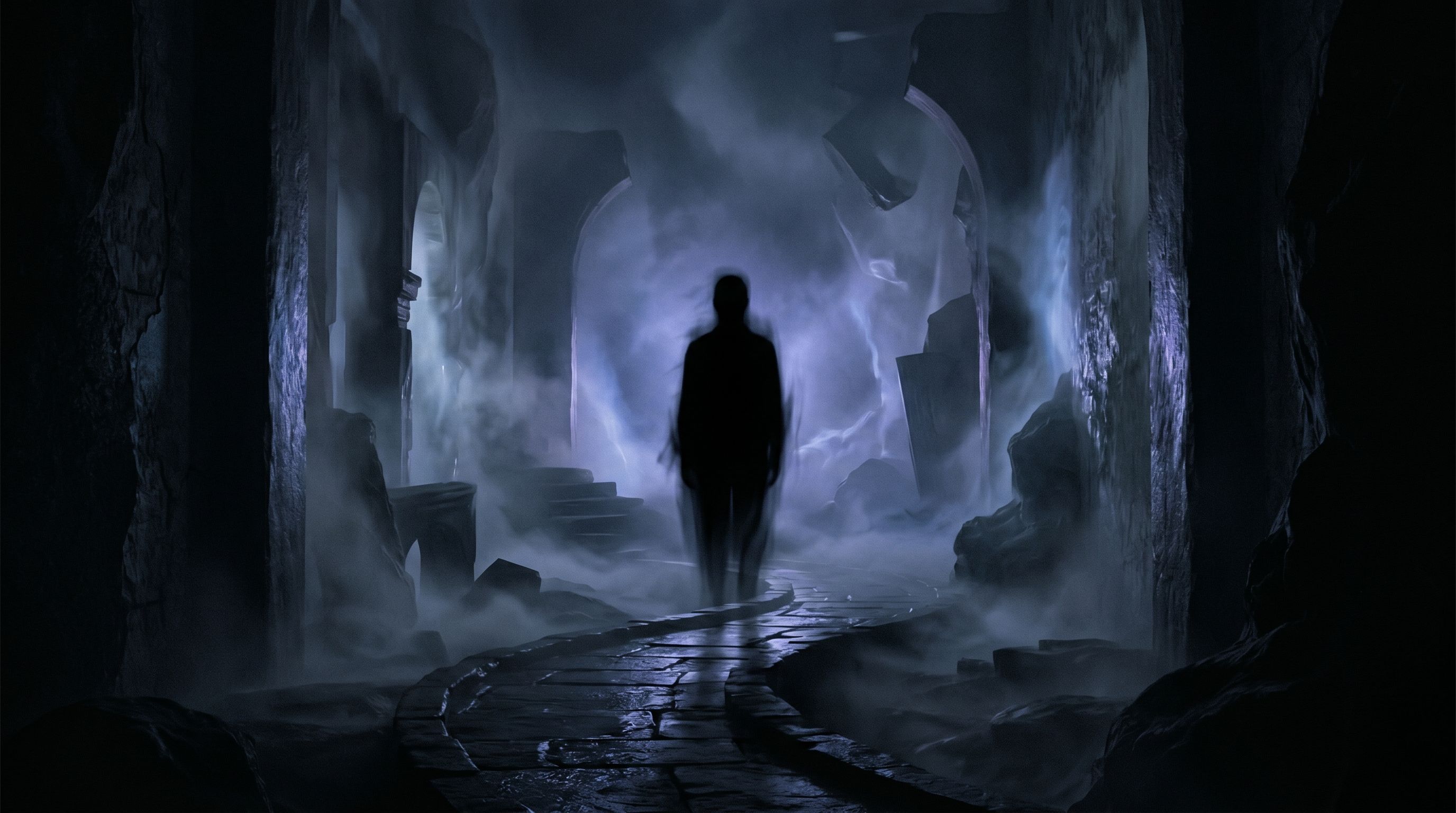
As I travel through the dreamscapes of those who entrust their nights to me, I often cross paths with these vaporous silhouettes. To be honest, I find the word "haunting" far too harsh. We associate it with horror movies and the sound of clanking chains, whereas in the subconscious, it is a much more subtle concept. A ghost is, above all, stagnant energy.
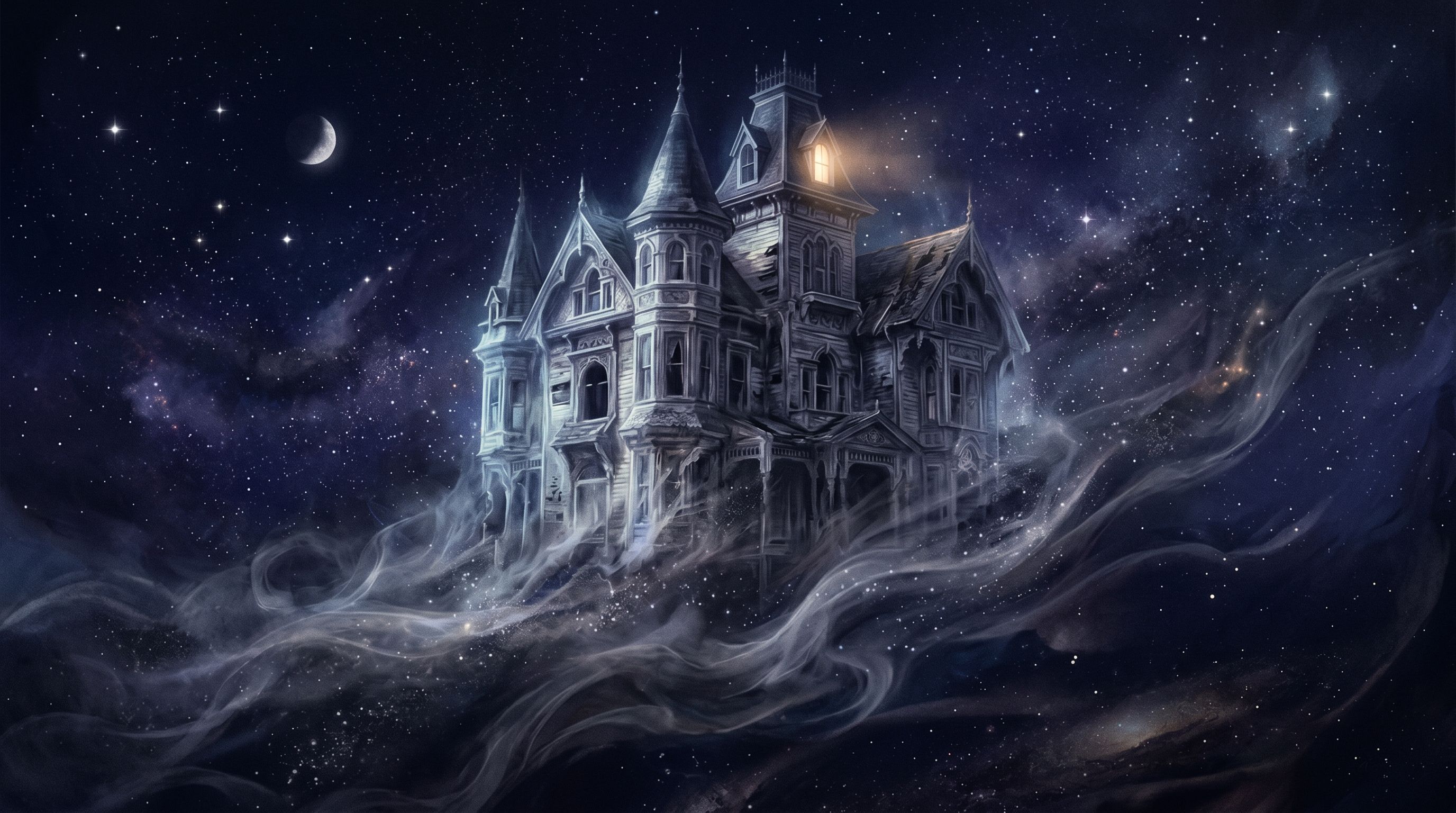
Imagine a room where the windows haven't been opened for years; eventually, the dust begins to take on a human shape. Dreaming of an entity that follows you or remains motionless in a corner of the room often indicates that you are carrying a burden linked to your past. Perhaps it’s a decision you regret, or words you never dared to speak.
The dream isn't trying to frighten you; it is simply showing you that this "thing" is there, by your side, taking up space. It’s a bit like standing on the edge of a cliff and feeling the wind of everything you’ve left behind. The ghost is there to tell you: "Look at me, acknowledge that I existed, and let me go." It isn't an intrusion; it’s a plea for liberation.
---
The faces of the invisible: Who is visiting you?
The interpretation changes radically depending on the identity of this nocturnal visitor. I am always a bit skeptical when I hear that a ghost signifies "betrayal" or "bad luck." The human psyche is far more poetic than that.
If the ghost is a stranger, it is often what psychologists might call a "shadow self." This is an emotion you haven't accepted within yourself—anger, sadness, or even an ambition you deem excessive. It appears to you in a spectral form because you refuse to give it a concrete place in your waking life. It is an emotion that becomes as slippery as an eel because it has no body through which to express itself. It can feel as paralyzing as meeting the gaze of Medusa, turning your progress to stone until you look closer.
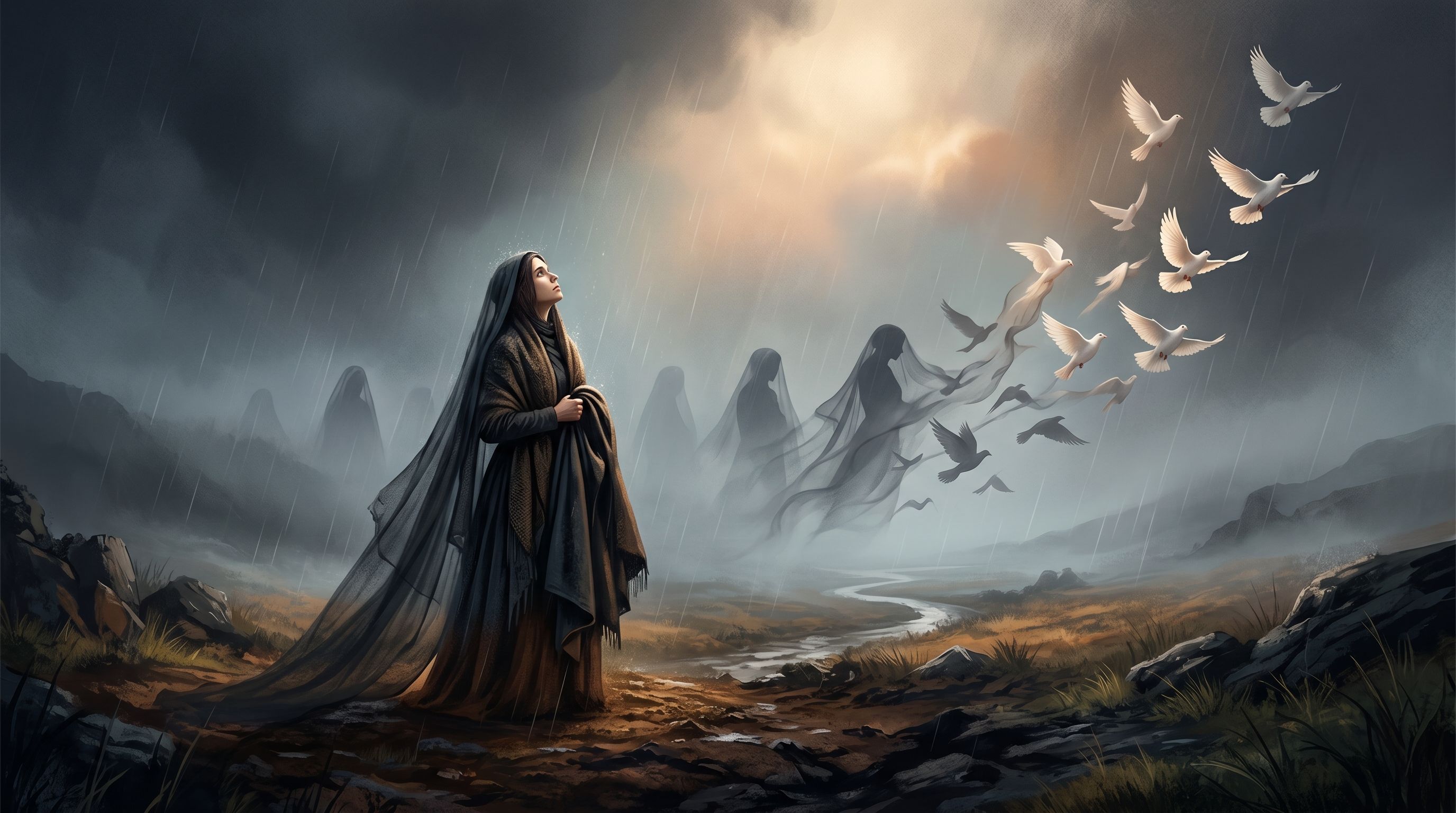
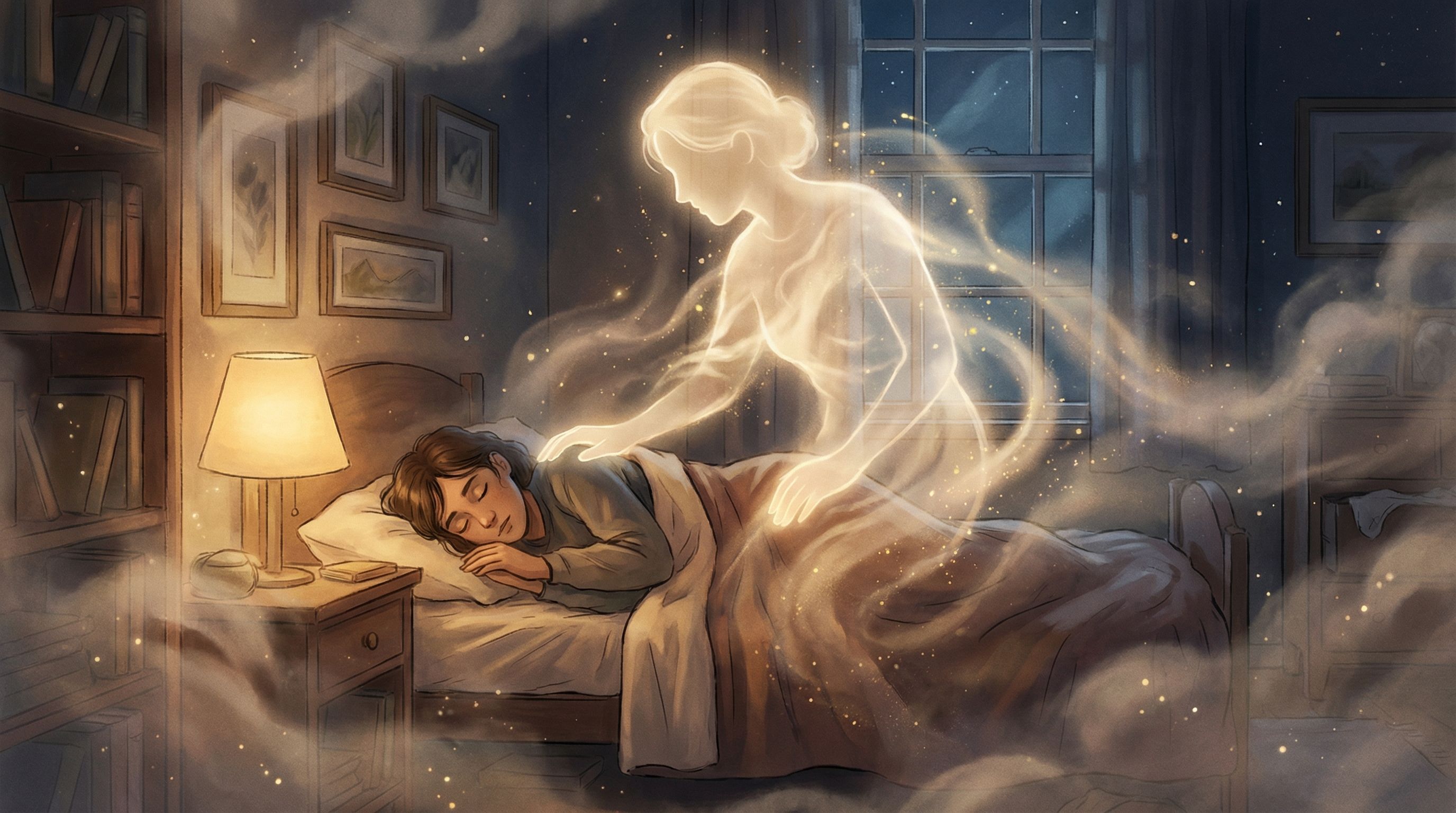
On the other hand, if you recognize the features of a departed loved one, the dream changes color. This is no longer a haunting; it is a visit. Your mind uses the image of this person to transmit a wisdom you already possess but cannot quite formulate on your own. Or perhaps, it is a sign that the grieving process needs one more step: a final "thank you" or a final "forgive me."
🌙 The echo of Yume : A ghost is just a memory that hasn't found its home yet. It wanders because it is waiting for you to open the door.
---
Concrete Example: The Girl in the Hallway
I once spoke with a dreamer who was terrified by the recurring image of a small girl standing in her childhood hallway. The girl never spoke; she just watched. Through our reflection, the dreamer realized this wasn't a "spirit," but a manifestation of her own childhood creativity—the part of her that loved to paint and dream before she chose a "serious" corporate career.
The ghost was "haunting" her because that part of her soul was starving for attention. Once she picked up a brush again, the little girl stopped appearing in her dreams. The haunting was actually a rescue mission from her own subconscious.
---
The science behind the shiver
While the mystical side of dreams is beautiful, your brain also has its own reasons for creating these apparitions. Some specialists in sleep science suggest that ghost sightings in dreams—or during the transition between sleep and wakefulness—can be linked to sleep paralysis.
During this state, your body is immobilized to prevent you from acting out your dreams, but your mind is partially awake. If the amygdala (the brain's fear center) is overactive, it can create a "sensed presence" to explain the feeling of being unable to move. It is a natural, biological glitch, not a supernatural event. Understanding this can help you feel more grounded when you wake up from a particularly vivid encounter.
---
Taming your inner specters
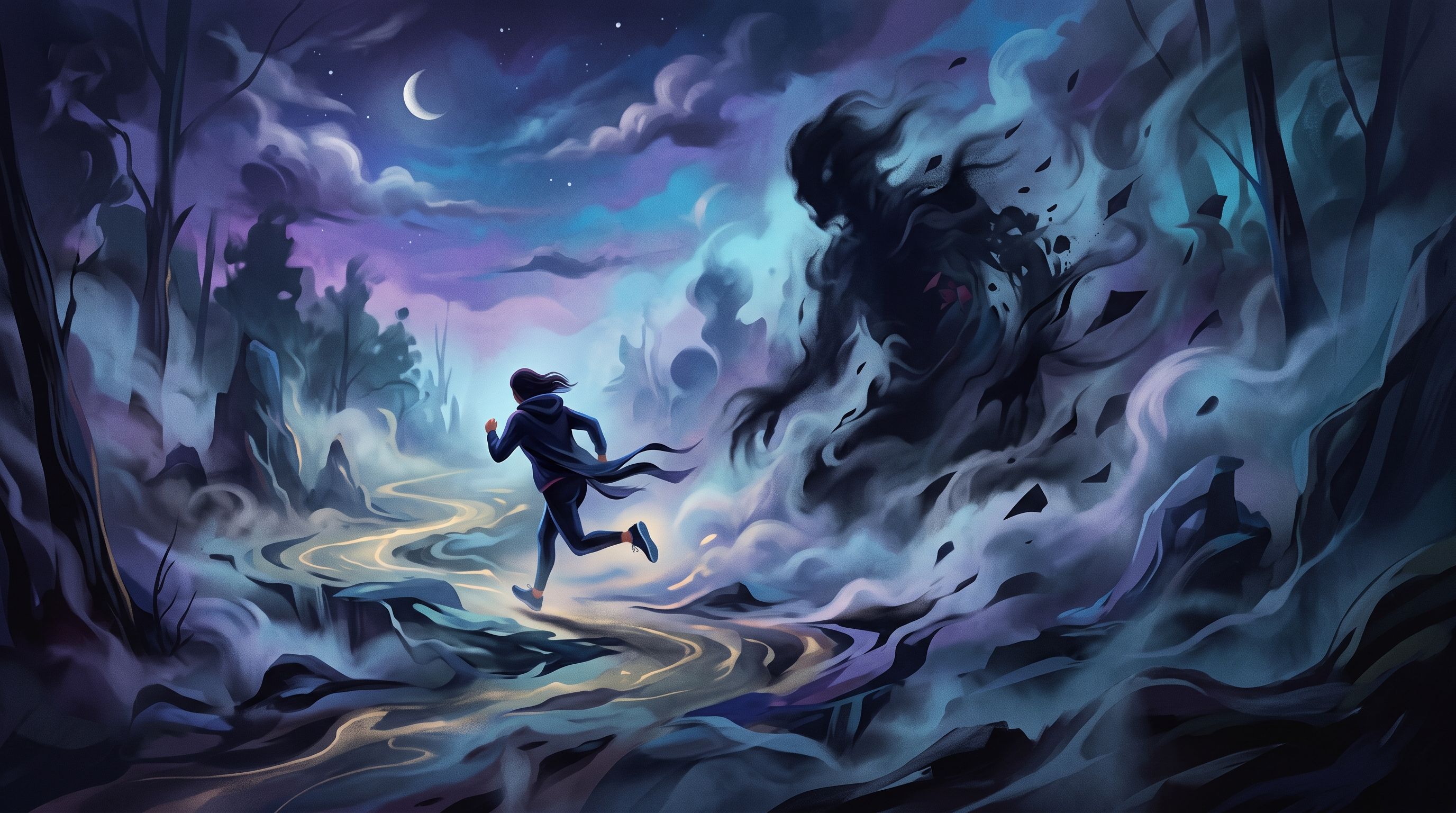
If there is one thing I have learned from devouring nightmares for centuries, it is that fear feeds the shadows. The more you flee from the ghost in your dream, the more terrifying it becomes. If you stop, turn around, and ask: "What do you want to tell me?", the atmosphere changes instantly.
Do not fear the sensation of coldness or oppression. It is merely a sign that you are touching upon something important—a truth you have long kept silent. Dreams of ghosts are opportunities for spiritual cleansing. This is the ideal time to sort through your memories, to forgive those who are no longer here, and above all, to forgive yourself.
We don’t get rid of a ghost by chasing it away; we release it by loving it enough to let it go. Once the message has been delivered, the silhouette evaporates and leaves behind a new clarity, much like a summer rain that cleanses the air of all its impurities.
If you want to explore these shadows more deeply and keep a record of your nocturnal visitors, your Baku is waiting for you. Sleep peacefully, dear dreamer. The shadows are only reflections of the light you haven't yet dared to look at.
Have you ever met the ghost of someone who is still very much alive? It is a strange, unsettling grief that leaves a cold weight in the chest. I once listened to a dreamer who kept seeing her living sister as a silent, pale apparition. They hadn’t spoken in years after a bitter argument. When this happens, your unconscious isn't predicting their demise; it is mourning the relationship as it used to be. It is the ghost of a connection, the shadow of a shared laughter that has evaporated into the past. You are dreaming of a version of them that no longer exists in your waking life, a spectral double created by your grief. Instead of fearing this phantom, look at it as a quiet invitation to accept the change. Sometimes, the hardest ghosts to lay to rest are the ones who are still walking the earth.
There is a physical sensation that often accompanies these dreams—a sudden, biting drop in temperature, or a heavy stillness in the air that makes your dream-self hold its breath. Many dream dictionaries will tell you this coldness represents fear or the "chill of death," but frankly, I find that incredibly lazy. To me, that sudden drop in temperature is the sensation of time slowing down. The unconscious is freezing the scene so you can finally stop running and look. These entities rarely wander in wide-open fields; they prefer confined, forgotten spaces. They linger in the corners of your mind, much like the dusty relics you might find when dreaming of an attic where old memories are left to gather dust. The chill you feel is just the draft from a door you’ve kept locked for far too long, waiting for you to let the warmth of your attention back in.
In the old tales of my homeland, we speak of hungry ghosts—restless spirits with tiny throats who can never swallow enough to satisfy their deep, burning hunger. They are not malicious; they are simply starving for peace. When a spectral figure appears in your sleep, begging for your attention, try not to reach for a metaphoric sword to banish it. I get tired of modern psychology always framing the subconscious as a battlefield where you must conquer your fears. What if, instead of fighting, you offered this phantom a moment of quiet hospitality? Ask it what it needs. Sometimes, simply acknowledging the pain or the regret it represents is enough to feed its hunger. Once fed with your compassion, the terrifying specter often softens, dissolving back into the quiet stream of your memory, finally at rest.