The Earth Is Not a Tomb, It Is an Incubator
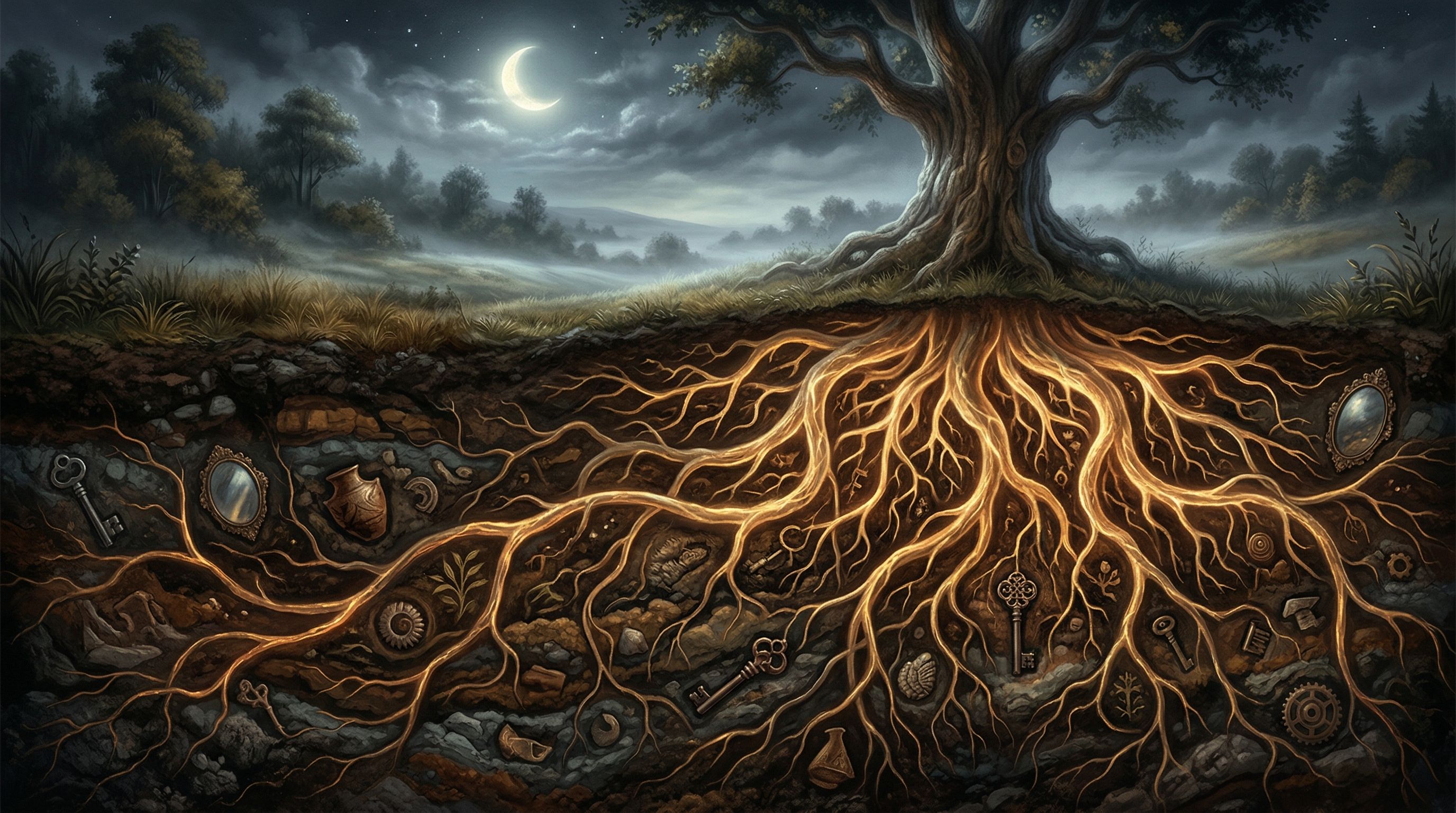
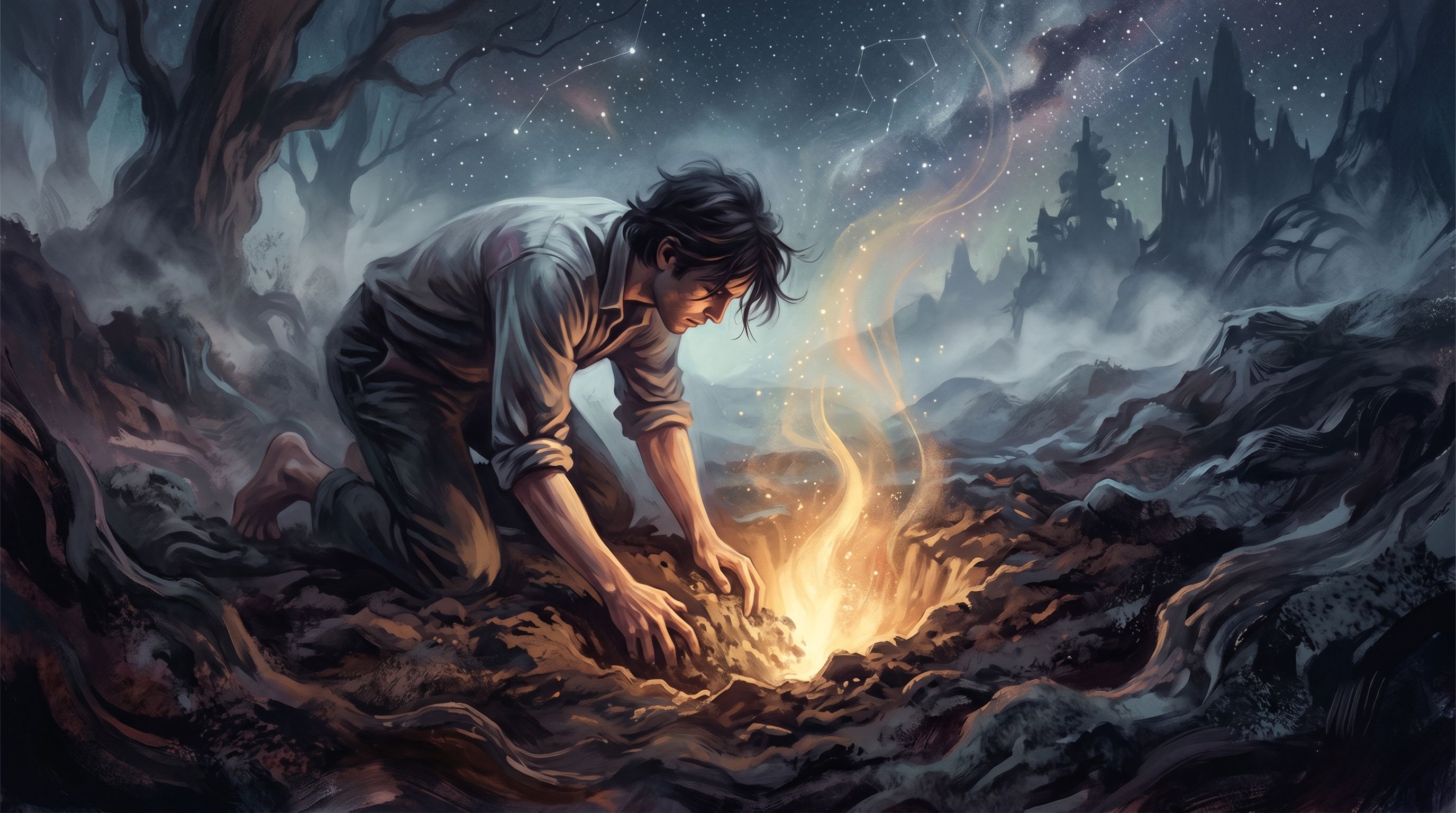
We often make the mistake of believing that burying something in a dream means wanting it to die. To be honest, I find that interpretation a bit lazy. In the language of your subconscious, the earth is a womb as much as it is a grave. When you choose to hide an object, a memory, or even a figure beneath the surface, you aren't necessarily trying to erase it. You might be entrusting it to something greater than yourself.
I remember a dreamer who spent her nights frantically burying silver keys in her garden. She would wake up anxious, thinking she was losing her opportunities. In reality, she was simply trying to protect her own boundaries. She wasn't ready to open certain doors yet, and her mind was telling her: "Leave your responsibilities here; the earth will keep them warm until you are strong enough."
This is a nuance that many people overlook: the act of placing something in the ground can be an immense relief. Just as you might find comfort in the ritual of a cup of coffee to start your day, your mind uses the ritual of burial to organize your internal world.
There is a fundamental difference between burying to hide and burying to cultivate. If, in your dream, you feel a feverish urgency, it is likely a secret you are trying to muzzle. But if the gesture is slow, almost ritualistic, then you are marking an end. It is a symbolic mourning.
We bury old versions of ourselves, relationships that no longer nourish us, or ambitions that have left us breathless. It is a bit like finding yourself in the silence of a dead-end hallway: there comes a moment when, rather than looking for a door, you decide to set down your bag and cover it with earth so you can move forward more lightly.
---
What Your Hands Hide, Your Heart Already Knows
Look closely at what you are burying in your dream. The nature of the object radically changes the whisper of your soul. Burying a valuable object suggests you fear losing your essence, or that you judge your talents to be too fragile for the outside world.
Conversely, burying something frightening or "ugly" shows a desire to deny a part of your shadow. Perhaps you are trying to hide the lingering resentment toward an old enemy or a mistake you made years ago.
But be careful, I must be honest with you: what we bury always ends up nourishing the soil. Nothing truly disappears in the subconscious; everything transforms. If you try to stifle anger or a wound, it won't evaporate. It will ferment.
🌙 Yume's Echo: The soil of your mind is alive; what you try to stifle today could well become the root of what will haunt you tomorrow.
Some specialists in dream psychology suggest that the act of burying is a way for the brain to process "unfinished business." During REM sleep, your mind attempts to categorize memories. If a memory is too painful or complex, it "buries" it in a symbolic layer of the dream to be dealt with later.
Personally, what fascinates me in these dreams is the texture of the earth. Is it dry and sterile, or rich and full of life?
- Arid earth indicates that you are trying to end something abruptly, without leaving room for forgiveness or growth.
- Fertile earth suggests that even if you are saying goodbye to a project or a person, you intuitively know that something new will grow from it.
---
Concrete Example: The Case of the Buried Clock
I once spoke with a young man who dreamt he was burying a large, ticking grandfather clock in the middle of a forest. He felt a profound sense of panic as he shoveled the dirt.
In our discussion, he realized that the clock represented his fear of aging and his perceived "lack of time" to achieve his career goals. By burying the clock, his subconscious wasn't trying to stop time, but rather to stop the anxiety associated with it. He was trying to ground himself in the present moment, literally putting the "pressure of time" into the ground so he could breathe again.
Once he understood this, the dreams stopped, replaced by visions of open fields.
---
What If Unearthing Was the True Goal?
Sometimes the dream happens in reverse. You are scratching at the soil, not to hide, but to find. This is perhaps my favorite part of my work as a Baku: helping dreamers exhume what they have forgotten. Often, what you buried out of fear ten years ago has become, with time, your greatest strength.
I often remain skeptical of interpretations that claim burying is a sign of depression. That is far too reductive! Sometimes it is an act of pure wisdom. You cannot carry everything, all the time, under the scorching sun of consciousness. The subconscious is like a vast, botanical safe. Sometimes, you need to let your emotions lie "fallow."
If you have had this dream recently, do not ask yourself "What is wrong with me?", but rather "What do I need to unburden myself of so I can breathe again?". The answer is never in the gesture itself, but in the emotion that accompanies it.
- Guilt means you are running away from a truth.
- Peace means you are healing and moving on.
- Exhaustion means you are carrying a burden that was never yours to bury.
Dream interpretation is not a cold science; it is a dialogue with your own mystery. I have seen people bury magnificent things simply because they didn't yet have the language to express them. It is a process of maturation, like an experiment conducted in the secrecy of an inner laboratory where we test the resilience of our desires.
Take a moment upon waking to thank your dream hands. They have done the hard work for you. They have tidied up what was cluttering your mind. Now that the ground is level, you can finally walk on new earth, your mind a little freer, your heart a little lighter.
Your secrets sometimes need a gardener to be understood. If you feel the need to keep track of what you laid in the earth last night, your Baku is waiting to help you tend to that inner garden.
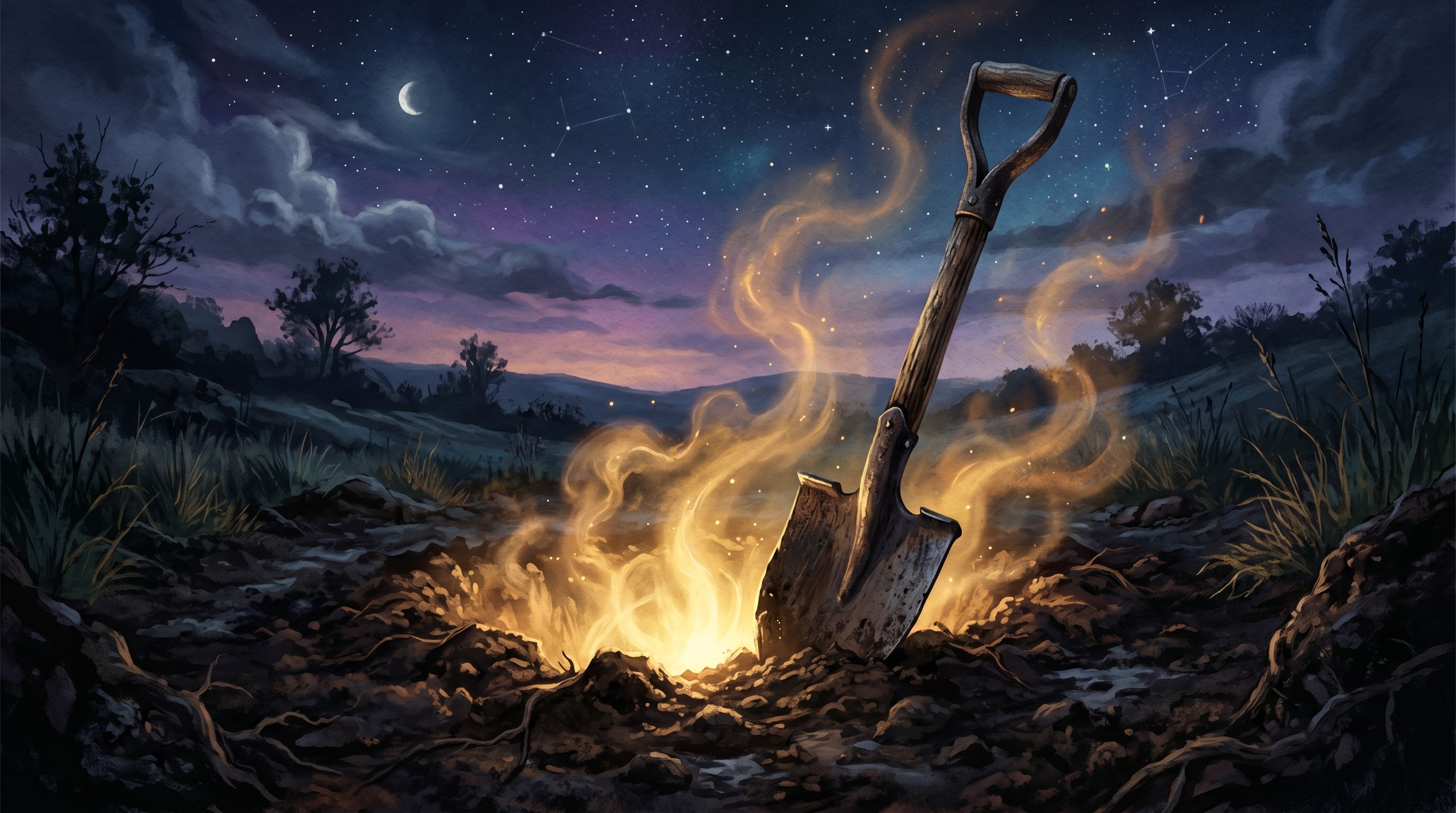
I often wonder why we ignore the somatic weight of these nights. It is one thing to intellectualize a symbol, but quite another to feel the damp, cold pressure of dirt under your fingernails as you dig. When you wake up with your hands still aching from the imaginary effort, your body is trying to ground a very real emotional fatigue. Sifting through earth in the dream world is heavy, slow work; it demands your full physical presence. If you found yourself sinking into the ground during this labor, almost being covered in mud, it suggests you aren't just letting go—you are submerging yourself in the raw, messy process of transition. Your physical exhaustion in the dream is a reflection of the mental energy it takes to keep your boundaries intact during waking hours.
What about those times when the burial is followed by a sudden, cold wave of panic: Where did I put it? You walk away, turn around, and the forest has shifted; the trees look identical, and the ground has closed seamlessly over your secret. I find this specific twist deeply poignant. It reveals a fear of self-forgetting. You wanted to protect a delicate piece of your history—perhaps a childhood hope or a soft vulnerability—by hiding it away, but now you worry you have hidden it so well that even you can no longer access it. It is like locking a precious heirloom inside a chest and throwing away the key. Your unconscious is warning you that while compartmentalizing can keep you safe in the short term, total dissociation risks erasing parts of who you are.