The dance of masks and the mirror of others
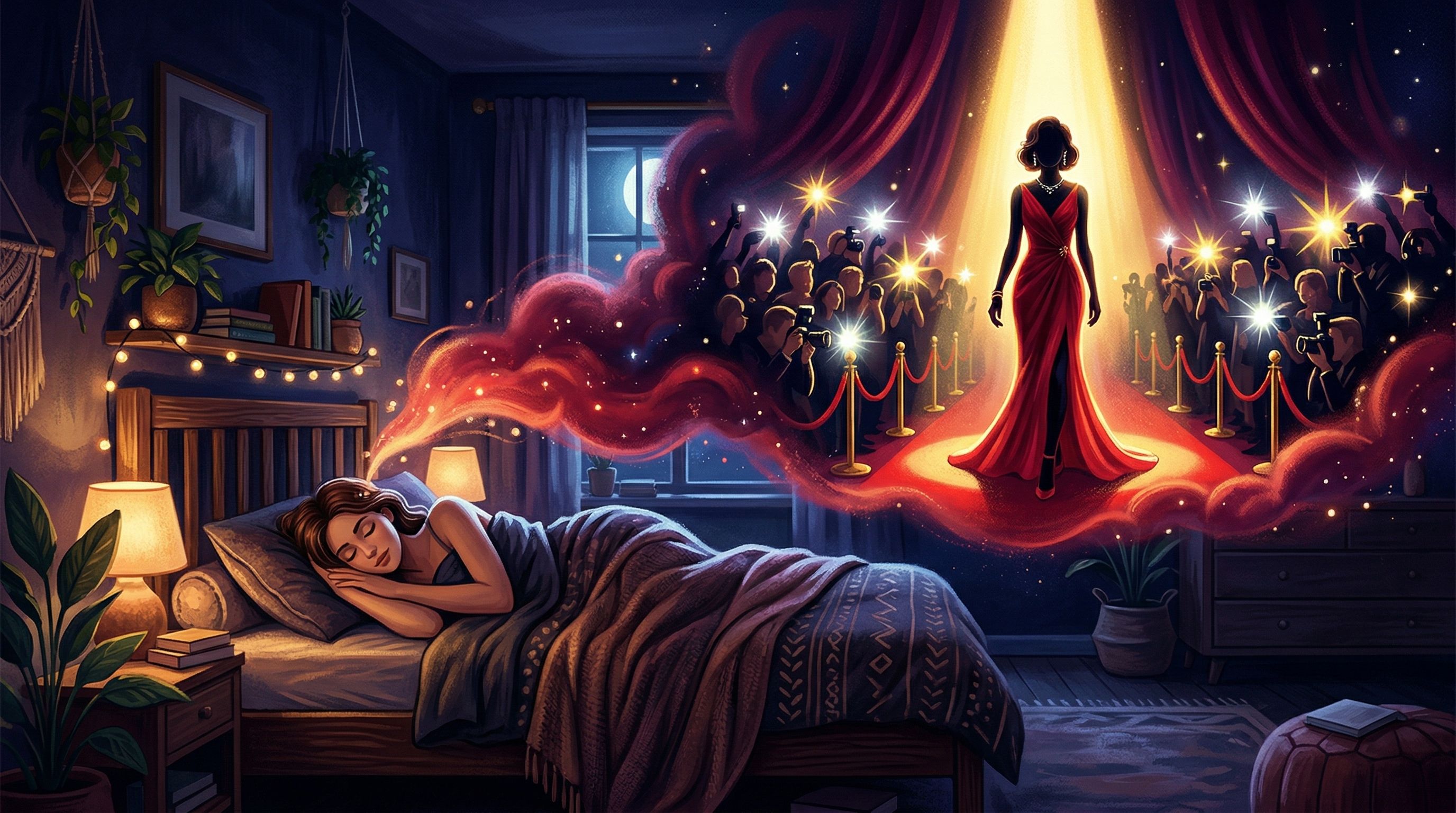
What fascinates me about the symbol of the nightclub is this staging of the self. When you dream that you are on a dance floor, you are never truly dancing alone, even if no one is by your side. You are in a space of judgment and admiration. Dreamers often tell me they feel watched, or on the contrary, desperately invisible in the middle of the crowd.
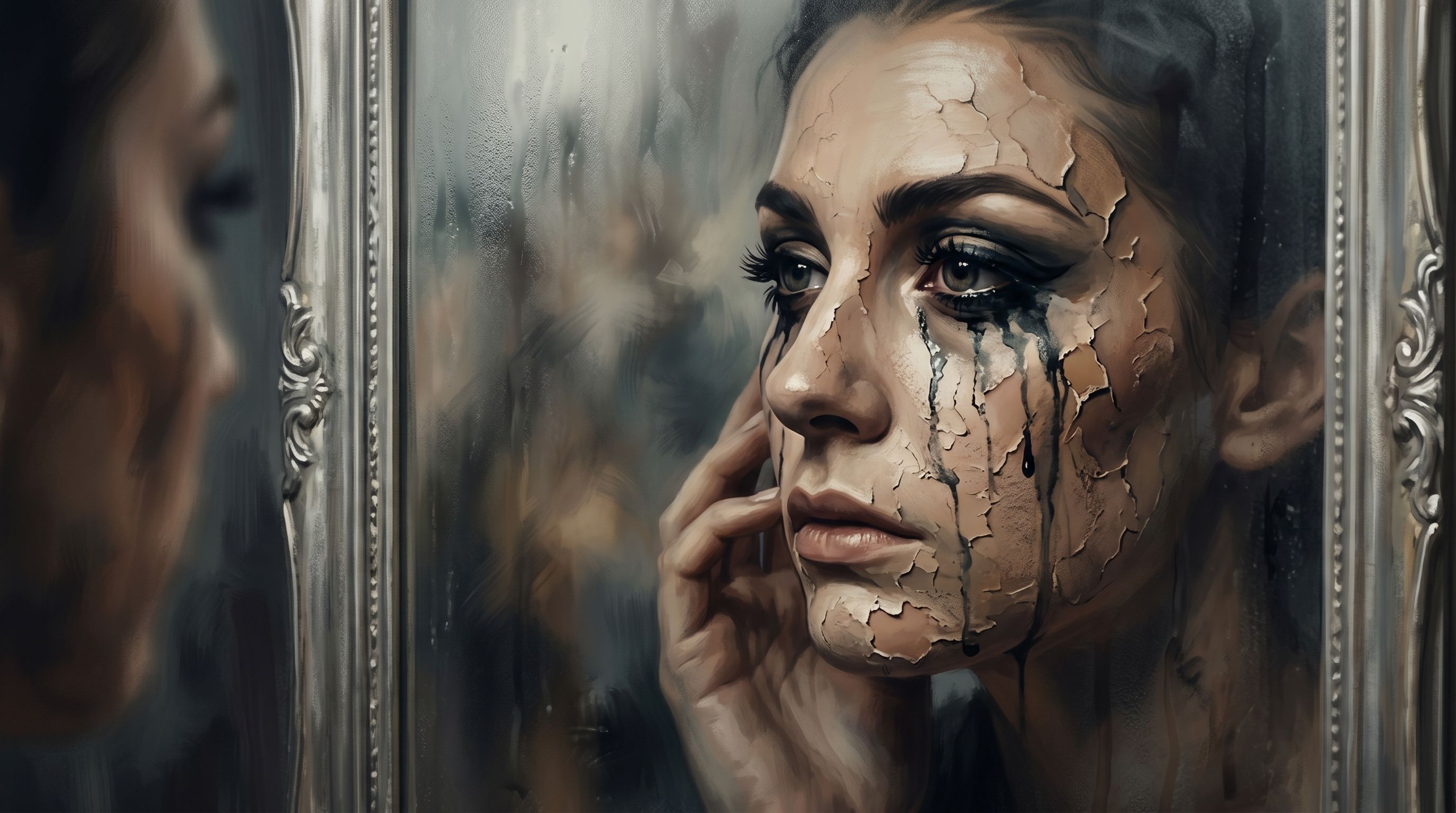
I once encountered the dream of a woman who saw herself dancing with infinite grace, but as soon as she passed a mirror in the club, she saw only a blurry shadow. This is where the dream becomes interesting: the nightclub is the theater of your social identity. Are you playing a role? Do you feel the need to change your appearance to feel accepted by the tribe?
The nightclub is the place where we lay down the weapons of logic to let the body speak. If the dream is joyful, it’s a wonderful celebration of your vitality. But if the atmosphere is oppressive, if the music is so loud it becomes painful, perhaps you feel attacked by the expectations of the outside world. You might be trying to fit into a mold that doesn't suit you, much like trying to purify yourself of doubts without ever succeeding because the water has been replaced by champagne or sweat.
Social intoxication: between desire and dissolution
Intoxication in a nightclub dream is rarely related to alcohol. It’s what I call "social intoxication." It’s that dizziness we feel when we want to merge with the mass, when we have this burning desire to belong to something bigger than ourselves. But be careful: by wanting to blend into the background, you risk losing yourself in it.
I have a rather strong opinion on dream dictionaries that claim the nightclub is necessarily a sign of futility. I find that very reductive, almost dismissive of the richness of the subconscious. For me, the Baku who tastes your emotions, the nightclub is often a sign of a quest for the sacred. Yes, the sacred! The repetitive rhythms, the dim light, the trance... it’s a modern form of shamanic ritual. Your mind may be looking for an emergency exit from a daily life that is too rigid, too orderly.
If you are looking for someone in the crowd without ever finding them, it’s not necessarily that person you miss. It might be a part of yourself, a spontaneity that you have stifled under your responsibilities. The desire expressed in these places is not always carnal; it is often the cry of a soul that simply wants to be recognized, touched—not by hands, but by the presence of another.
Honestly, the interpretation is never carved into the marble of the bass lines. If you feel lost in these dark corridors, ask yourself: what music is playing in my waking life right now? Is it a melody I love, or is it background noise that I am forced to endure?
Dreams are invitations, not judgments. If the nightclub left you with a bitter taste or a feeling of exhaustion, it’s simply your subconscious suggesting you turn down the volume of the outside world a bit to listen to your own inner rhythm. There is no threat in that, just a little tap on the shoulder to remind you that you are the DJ of your own existence.
Have you noticed how, in these neon-lit mazes, the most crucial revelations rarely happen on the dance floor itself? Your dreaming mind often drags you away from the heavy bass, leading you toward the cold, fluorescent reality of the restrooms. I find these quiet, tiled thresholds far more telling than the strobe lights. It is a strange spatial paradox: we seek the crowd, yet we end up retreating to a bathroom just to stare at our own reflection or wash our hands in silence. In my view, this shift in scenery is a beautiful defense mechanism of your soul. It is your subconscious whispering that you cannot sustain the performance forever. Behind the heavy door, away from the synthetic smoke, you are finally allowed to drop the smile, check your emotional makeup, and ask yourself if you actually want to go back out there, or if you are simply waiting for someone to come in and find you.
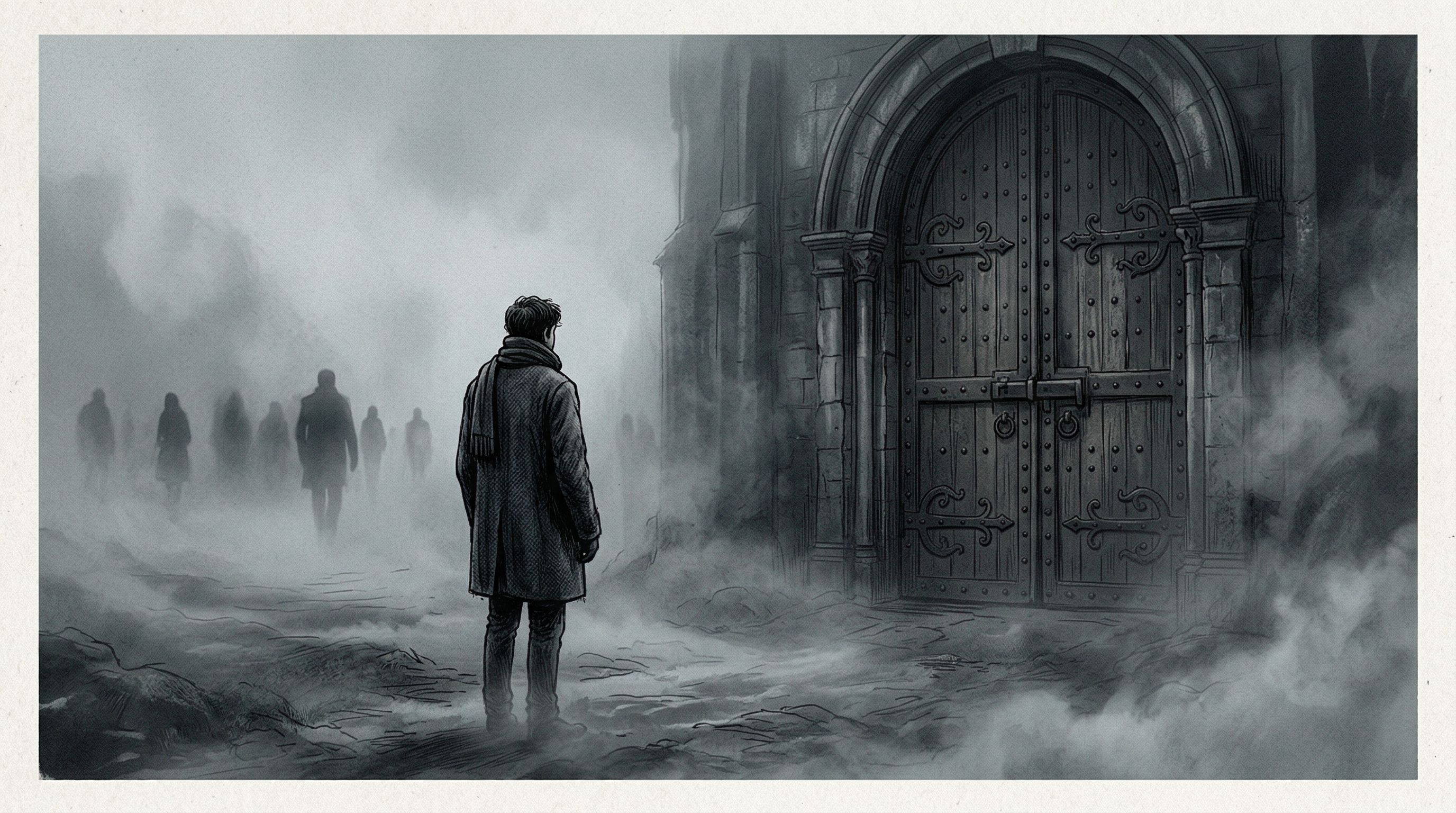
Sometimes, the rhythm turns sour, and the faces around you lose their humanity. I once listened to a dreamer who described the dancers' faces melting into identical, mocking masks. It is a terrifying shift when a place of potential connection morphs into a cage, leaving you with the crushing sensation of facing a hostile crowd under the neon glare. When this happens, we aren't talking about a simple desire to party anymore. This is a vivid manifestation of social anxiety or a deep-seated fear of ostracization. You might be navigating a phase in your waking life where you feel profoundly misunderstood by your peers, colleagues, or even family. The dream amplifies this isolation, dressing it up in the loud, unforgiving colors of a nightlife nightmare, to show you exactly how exhausting it is to constantly defend your boundaries when you feel surrounded.
There is also a raw, sensory current that pulses beneath the floorboards of these dream venues. It is a space where the skin remembers what the waking mind tries to forget. People often wake up feeling embarrassed by the intense, friction-filled encounters they experience in these crowded, dark corners. I am always saddened when dreamers dismiss these encounters as mere vulgarity; in truth, they are closely linked to experiencing erotic dreams in a broader sense. The nightclub acts as a safe, chaotic sandbox where your shadow self can play. Here, under the cover of artificial fog and heavy beats, you are permitted to desire without consequences, to touch and be touched without the heavy weight of daytime morality. It is not necessarily about the specific person you danced with; it is about reclaiming your own wild, untamed magnetism that you so carefully tuck away during your morning commute.
Honestly, it fascinates me how often older dreamers find themselves standing in these youthful, deafening sanctuaries, feeling entirely out of place. They tell me about this heavy, bittersweet nostalgia—the sudden realization that they no longer know the steps to the dance, or that their clothes belong to a completely different era. If you experience this, please do not view it as a simple fear of aging. It is a beautiful, albeit melancholic, dialogue between your present self and the ghost of who you used to be. Your subconscious is holding up a mirror, asking you if you have traded all your spontaneous, late-night fire for the safety of a predictable life. It is not a call to run back to your twenties, but a gentle reminder that the fire you carried then does not have to die just because your schedule has changed. You can still dance, even if the venue is different.
If you still have that sensation of tingling feet or a heart beating a little too fast after this nocturnal journey, you could note the faces you encountered in this imaginary club on Midnight Mind; building your own notebook of dream silhouettes might help you understand who, in that crowd, truly deserves your attention.