The Market: The Great Theater of Your Inner Exchanges
In the realm of dreams, I often see the market as much more than a place of commerce. It is the agora of your soul, a vibrant space where every interaction represents a part of your life. While some might interpret a market as a simple sign of financial luck, I believe it is far more profound. It is a mirror of how you circulate your energy.
When you dream of a market, you are witnessing a process of exchange. This isn't always about money; it’s about what you are willing to give up to get what you want. Are you trading your peace for productivity? Your authenticity for acceptance?
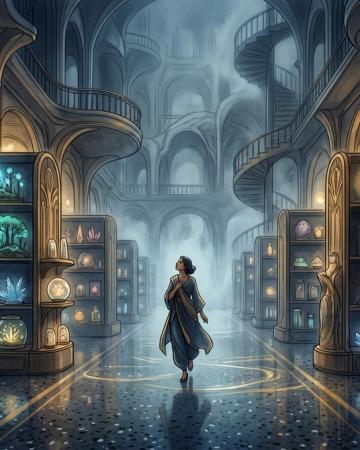
If the market you visit is vibrant and full of life, it often reflects a sense of vitality. You feel that the world is full of possibilities. It is a stark contrast to the sterile environment of a supermarket. In the market of your dreams, there is human contact, the unexpected, and a raw connection to the "goods" of existence.
Decoding the Stalls: What Are You Truly Searching For?
As I wander through your dreams, I often pause to look at what is actually being sold. The items on the stalls are never random. They are symbols of your internal resources.
If you see mountains of fresh food or vibrant roses, it suggests a period of emotional or creative fertility. You feel that you have "enough" to nourish your projects and your relationships. Your spirit is in a state of abundance.
However, an empty market can be a poignant sight. Stalls covered in gray tarps or abandoned squares often reflect a feeling of scarcity. You might feel that your talents are being ignored or that you are running low on emotional reserves. It is not a permanent state, but a gentle nudge from your subconscious to start taking care of yourself.
🌙 Yume's Echo: I often wonder if we are the buyers or the goods in the markets of our sleep. Perhaps we are simply the space where the exchange happens.
The Merchant’s Perspective
Sometimes, you aren't the shopper; you are the one behind the stall. This is a fascinating shift in perspective. What are you offering to the world?
If people are passing you by without looking, you might be experiencing a fear of being invisible or undervalued. If the crowd is pressing in, eager for what you have, you are likely realizing that you have an immense amount of value to share—perhaps more than you previously acknowledged.
Finding Your Way Through the Crowd
The market is also a place of noise and sensory input. The shouting vendors and the jostling crowd can represent the social pressure you feel in your waking life.
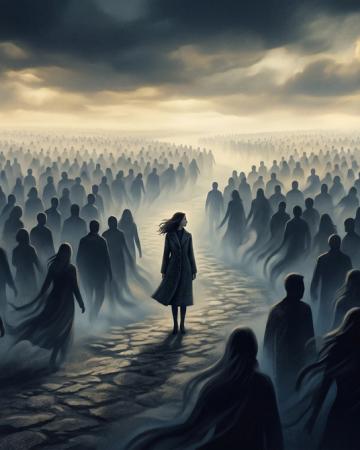
If you feel lost or panicked in the crowd, it often suggests that the opinions of others are taking up too much space in your mind. You are caught in the middle of everyone else's exchanges and have lost sight of your own path. It is a feeling similar to the overwhelming energy of a large family reunion, where individual identity can sometimes feel blurred.
On the other hand, if you walk through the crowd with ease, it shows a healthy level of social integration. You accept that life involves negotiation and small compromises. You are comfortable with the natural chaos of human interaction.
Concrete Example: The Choice Paralysis
Imagine you are standing before a stall that sells "Time." One jar holds "Time for Career," another "Time for Art," and a third "Time for Rest." You only have one coin. You stand there for hours, unable to choose, while the sun begins to set on the market.
This dream isn't about the jars themselves. It is a reflection of decision fatigue. Your subconscious is showing you that by trying to choose perfectly, you are letting the "day" (your energy) slip away. It is an invitation to stop seeking the perfect trade and to simply start participating in the flow of life again.
A Gentle Path Toward Introspection
I don't believe in fixed definitions like "a market means wealth." Dreams are more fluid than that. The market is a reminder that life is a constant flow. Nothing stays on the shelf forever; everything moves, transforms, and is eventually exchanged.
The next time you return from a dream market, try to remember the one object that caught your eye. Don't look for a complex meaning. Simply ask yourself: "How does this object make me feel?"
If it was a sharp tool, perhaps you need to make a clear-cut decision. If it was a soft fabric, maybe you are craving more gentleness in your daily routine. Your dreams are patient; they use these settings to show you exactly where you stand with your desires.
If you want to explore your dreams more deeply, your Baku is waiting for you. Stay curious about your inner landscapes—they are richer than any market of silk or spices.
Have you noticed how smell operates in these dream markets? Sometimes, it is the sharp tang of bruised mint, or the heavy, metallic scent of raw meat that wakes you up with a gasp. I am always slightly irritated when dream dictionaries ignore these textures, treating the market as a flat, mental concept. It is deeply physical. If you find yourself touching rotting wood on a stall or smelling spices you cannot name, your body is speaking to you. It is trying to ground you. Unlike the cold, plastic aisles you might encounter when dreaming of a supermarket, the old market of the night is damp, warm, and chaotic. Your unconscious uses this sensory overload to pull you out of your head and back into your skin. It asks you to feel the weight of what you are carrying, quite literally, before you decide to buy more.
I once met a dreamer who wandered through a winding, desert bazaar night after night. She wasn't looking for fruit or silk; she was searching for a merchant who sold old, forgotten keys. She told me she felt an intense, quiet melancholy every time she woke up from this place. We eventually realized she was trying to buy back her own childhood spontaneity—something she had traded away years ago to please a demanding parent or boss. It made me reflect on how often we visit these nocturnal stalls to negotiate with our own shadow. Sometimes, the merchant across the wooden table is a face you recognize, and other times, they are shrouded in mist. Do not fear these encounters. They are not threats, but invitations to reclaim the parts of yourself you thought were lost in the bargain of growing up.
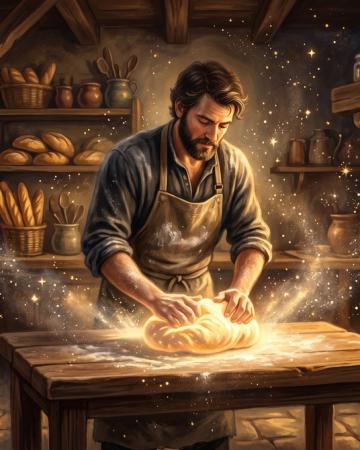
What happens when the currency of your dream market isn't money at all, but something intensely personal? I have seen dreamers pay for a simple loaf of bread with a lock of hair, a childhood secret, or even their own voice. Honestly? These exchanges still puzzle me sometimes. They defy our waking logic entirely. But perhaps that is the point. When the dream demands such a strange price, it is asking you to evaluate what your life choices are truly costing you. Are you paying for your current security with your creative wildness? It is a delicate, sometimes painful negotiation. Yet, there is a beautiful wisdom in this bizarre bartering. It forces you to ask: what is truly sacred to you, and what are you willing to let go of to survive?