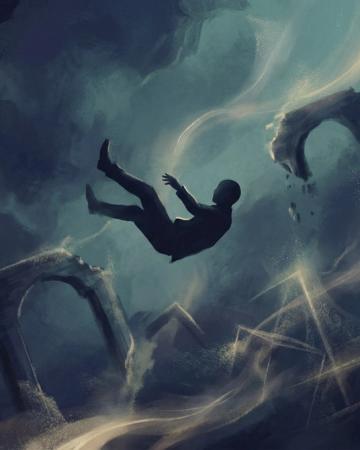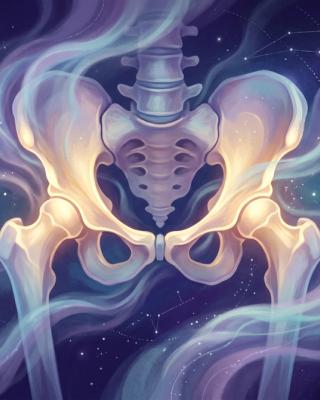

You hear it before you feel it: a sharp snap, your leg folding under you, the sudden knowledge that something gave way. Sometimes the pain follows. Sometimes there is only the sound, then you jolt awake with your heart pounding. People worry that a broken bone in a dream is a warning about a real injury, and I want to set that aside right away: nothing suggests it is. I read it as the picture of a support giving out, and the rest of this page helps you work out which one.
What does a dream of a fracture mean?
Most often, dreaming of a fracture is about a support giving way: a load carried too long, a pace you can't keep up, a role or a relationship that no longer holds the way it used to.
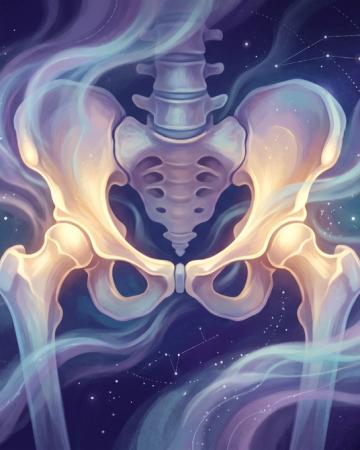
In the language of dreams, bones are what hold you upright. When one breaks, tiredness can no longer hide behind a smile. The body stops, cold. You may wake up surprised, because your daytime life looks steady. Still, a life that looks steady can rest on an effort nobody sees, and the dream shows exactly that effort.
Try asking yourself over your morning coffee: what am I carrying right now that I haven't told anyone about? The answer comes fast, and rarely the one you expected.
One note, since this touches the body: if you were really injured, or a bone hurts when you wake up, a dream is the wrong place to look. See a doctor. A dream is no substitute for medical advice.
Does it matter if it's your leg, your arm, or your ribs?
Yes, it steers the reading without locking it in. Each bone stands for something the body does, and the dream borrows that meaning.
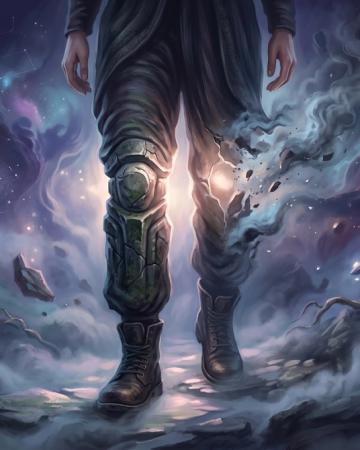
- A broken leg or ankle. These move you forward. A leg that gives out raises the question of direction: is this path yours, or are you following it on momentum?
- A broken arm or hand. These act, grasp, and help. An arm that breaks just as you reach for something often means losing your grip on a project, or feeling powerless to support someone you care about.
- Broken ribs. They guard your heart and your breath. A cracked rib often follows an emotional blow that got past your usual defenses, and you feel exposed, standing in the wind without a coat.
- A broken back. The back carries. When it gives out, ask what you took on for someone else, and whether it was ever yours to carry. Sometimes it is the straw that broke the camel's back: one more thing, and the whole load comes down.
- Several bones at once. The whole scene collapses: a role, an identity, a set of certainties that no longer hold together.
These are tendencies, and every dreamer draws a different map. Honestly, a fracture with no context is a symbol I read by feel. The emotion in the dream tells me more than the bone that breaks. Were you terrified at the sight of it, or did you feel a strange relief? When relief wins, the break has often ended a duller pain, the pain of holding on at all costs.
Why does the snap wake you more than the pain?
Because the sound is often the one sharp thing in the dream, and a sudden noise pulls you out of sleep far more surely than an image does.
Many fracture dreams have no pain at all. What's left is the crack, the bone giving way, the silence after. That sound reads like a sudden realization. Something was already cracking in your life (a schedule, your patience, the way you hold yourself upright), and the dream lets you hear it instead of showing it to you.
Ask yourself what is creaking right now, down to the small things: a back that complains at night, a conversation you keep putting off, one yes too many. The sound in the dream points less at some big event than at the place where you're forcing it.
Sometimes a real noise from the bedroom (furniture settling, a door) slips into the dream and takes the shape of a breaking bone. If the crack woke you, glance at what moved in the room before you look any further.
What does a break that doesn't hurt mean?
It often says you're holding something at arm's length: you see the damage without feeling it. How you feel on waking tells two readings apart.
Picture yourself looking at your arm bent the wrong way, like an object that belongs to someone else. Nothing hurts. You just watch. If you wake up empty or detached from yourself, the first reading is more likely: you're functioning, you're moving forward, but you feel very little, and the dream stages what you're avoiding. If you wake up calm, almost relieved, the second fits better: the break was needed, and the lack of pain says you're going through it without bracing against it.
I wouldn't treat the missing pain as an alarm. Keeping a hard stretch at a distance is sometimes the only way to get through it. But if the numbness follows you into your days, or you haven't felt much of anything for weeks, tell someone close to you, or see a doctor or a therapist. The dream only points to that distance, and it is easier to cross with company.
What if the broken bone isn't yours, or you can see it?
The dream then moves the question from your own strength to your role with other people, or to how much of your exhaustion you let show.
When you're the one putting a splint on a loved one's arm, the scene often shows that you sense their fragility before they speak of it, and that you've taken on the job of holding it. What's left to ask is where your support ends. You can accompany someone's healing without standing in for their strength, and that is the question this dream raises.
When someone else breaks your bone, look at who in your life asks more of you than you can give. The face of that person in the dream matters more than the act.
When the bone pierces the skin, the dream is about a vulnerability that can no longer be hidden. The front you maintain (calm, strength, "I'm fine") isn't holding, and your fatigue shows. It's a harsh image, but it opens a door: you can only accept help if you let it be seen that you need it.
What does a dream about a cast, a hospital, or a bone knitting back mean?
It's about convalescence: a stretch where you allow yourself to stop being solid, and something repairs itself quietly.
A bone knits back together, provided it stays still for a while. Rest is part of the treatment, and that is often what the cast in the dream says to someone who couldn't stop any other way. If you see yourself in a hospital, notice who looks after you: letting yourself be cared for is a step many of us skip when we're awake. The bones themselves, in a dream, come back to the idea of a frame you go easy on until it can carry you again.
I like the image of kintsugi, the Japanese technique that mends broken pottery with lacquer dusted with gold: the crack stays visible, and it is the crack that gets highlighted. A dream of a fracture mends nothing, but it asks the same question: what would you do with your crack if you stopped hiding it? Among Siberian shamans, passing through a broken skeleton even comes before a rebirth, as you'll read below.
For tonight, one small act: name the heaviest thing you carry and choose what you can set down this week, even temporarily. Write the dream down this morning too, with the place of the break and what you felt. If you'd like to read it with its own details, you can bring it to Midnight Mind and see whether the bone that gives way differs from one night to another.