The Archetype of the Serpent: A Mirror of Your Collective Unconscious
The serpent is perhaps one of the oldest and most ambivalent symbols in human history. In the collective unconscious, it embodies opposing forces: life and death, poison and remedy, the earthly and the divine. It is a creature that lives close to the ground, yet it possesses a gaze that seems to pierce through the veil of reality.
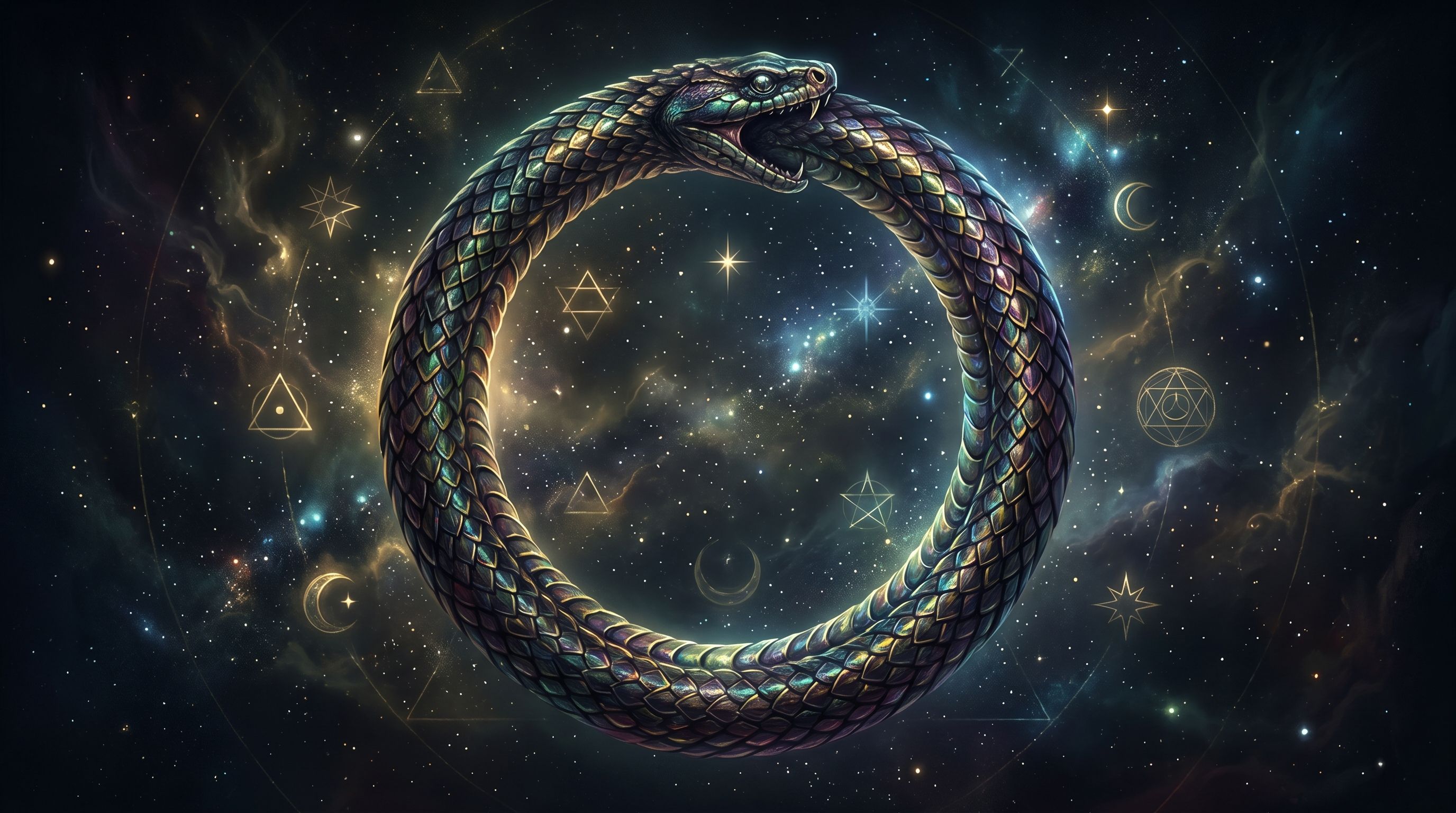
When it appears in your nights, it connects you to an archaic wisdom that transcends your personal experience. It is the Ouroboros, the serpent biting its own tail, illustrating the eternal cycle of time and regeneration. It reminds you that every end is a beginning, and every death—symbolic or otherwise—is a prerequisite for rebirth.
Is it a predator threatening you, or a guide opening the way? The answer is not found in a generic dream dictionary, but in the nuance of your own feeling. If you feel a sense of sacred awe, you might be touching upon a spiritual awakening. If you feel terror, you might be resisting a change that is already underway.
---
Kundalini: The Vital Energy Awakening Within You
In various Eastern traditions, the serpent represents Kundalini, a primal spiritual energy coiled at the base of the spine. When this energy begins to stir, it often manifests in dreams as a serpent undulating or rising upward. This is not a mere coincidence; it is a visual metaphor for your own vitality seeking expression.
If you have been repressing your desires, your creativity, or your true nature, the serpent may appear aggressive. It isn't trying to attack you; it is trying to break the internal barriers you have built. It is the force of life itself demanding to be acknowledged.
🌙 Tsuki's Echo: I often see serpents crossing the dreams of those who are on the verge of a major life shift. They are not the obstacle; they are the very movement of the change you are afraid to embrace.
By keeping a dream journal, you can track the evolution of this creature. Does it become calmer over time? Does it change color? These shifts reflect your own progress in integrating this powerful internal energy.
---
Concrete Example: The Incandescent Serpent
Imagine a dreamer who is repeatedly pursued by a serpent made of fire. In the dream, the heat is stifling, and the fear is paralyzing. However, in one session of introspection, the dreamer decides to stop running and face the flame. They realize the serpent isn't trying to burn them, but to warm a part of their soul that has grown cold.
In waking life, this person had stifled a long-standing passion for music due to the fear of being judged by their peers. The serpent was the repressed creativity that had become "threatening" simply because it was ignored. Once the dreamer accepted this part of themselves, the serpent in their dreams transformed into a golden light, guiding them through a dark forest. This illustrates how the "monster" in our dreams is often just a neglected gift.
---
Healing or Poison: The Paradox of the Caduceus
The serpent is inextricably linked to the art of healing. The caduceus, with its two serpents entwined around a staff, serves as a reminder that healing comes from the balance of opposites. In the ancient world, the "pharmakon" was both the poison that could kill and the medicine that could save.
In your dreams, a serpent's bite might represent a necessary confrontation with an emotional wound. It is a sharp, painful wake-up call. Sometimes, to heal, you must first be "poisoned" by the truth of your situation. You must face the aspects of your life that are no longer serving you.
This brings us to the concept of the Shadow. Carl Jung described the Shadow as the hidden part of our personality—the traits we find unacceptable. The serpent, as a creature of the dark and the hidden, is a perfect messenger for the Shadow. It asks you: "Are you brave enough to look at what you have buried beneath the surface?"
---
Practical Steps to Decode Your Serpent Dreams
To understand what your unconscious is whispering through the image of the serpent, I invite you to explore these avenues of reflection:
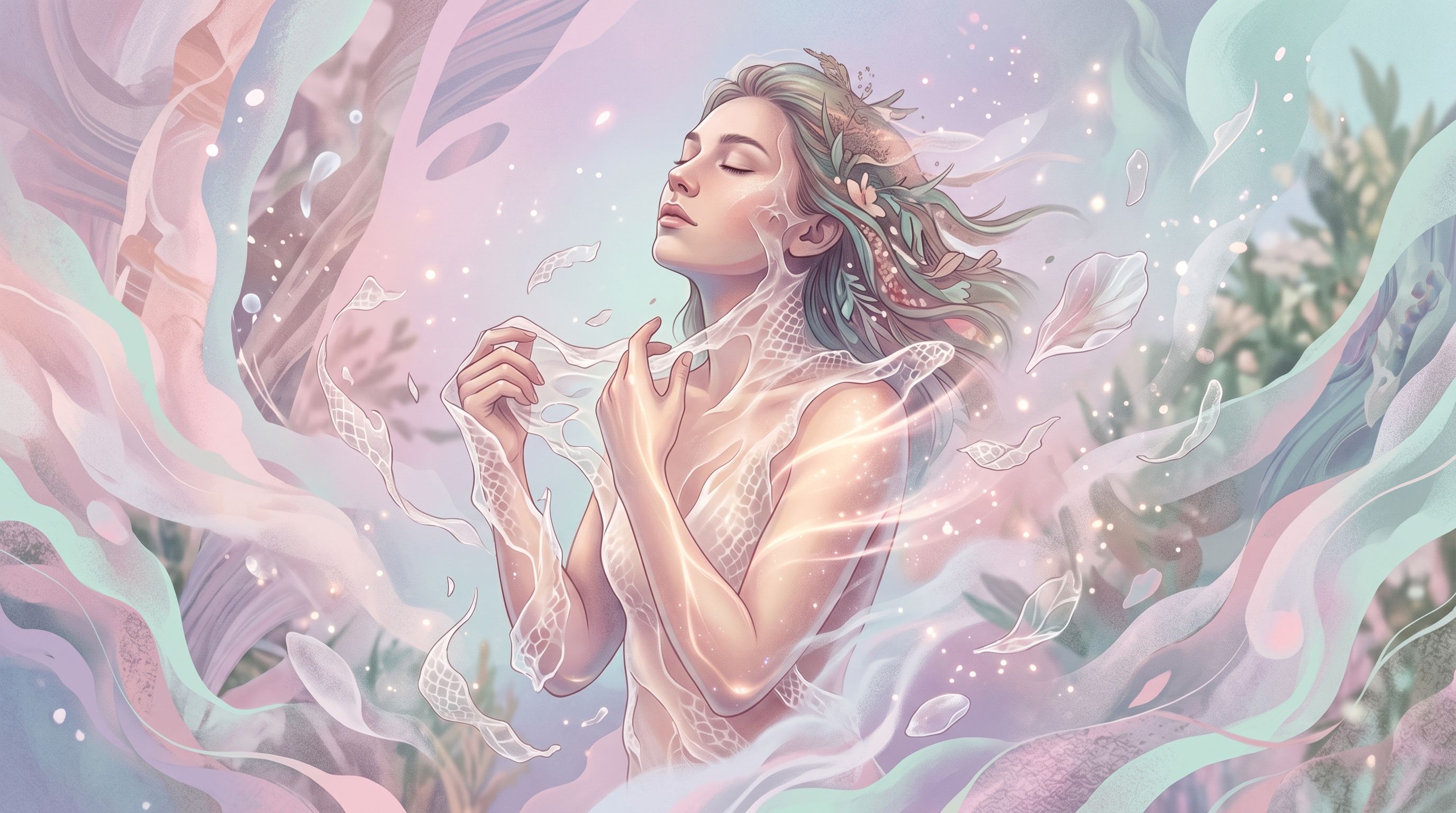
1. Observe the Environment: Where is the serpent? If it is in your house, it relates to your private life or your body. If it is in the wild, it relates to the vast, unexplored territories of your mind. 2. Identify the Action: Is the serpent shedding its skin? This is a powerful sign that you are ready to shed old habits or beliefs. Is it biting you? It may be a call to pay attention to a specific area of your life that you are neglecting. 3. Check Your Personal History: Do you have a specific phobia of snakes, or do you find them fascinating? Your personal associations act as a filter that colors the archetypal meaning. 4. The Color of the Scales: A green serpent might relate to growth and nature, while a black one might point toward the deep unconscious or the "nigredo" phase of transformation.
Don't look for a single, final truth. Your unconscious speaks a language that belongs only to you, and the serpent is merely one of its most eloquent poets.
---
I once met a dreamer who was terrified of a silent, heavy python resting across her chest. She felt suffocated, convinced it was an omen of doom. But when we look closer at these cold-blooded visitors, they often arrive when you have drifted too far into the clouds of your own anxiety, forgetting the weight of your own bones. The serpent doesn't have legs; it is intimately bound to the dirt, feeling every tremor of the earth. In many ancient traditions, calling upon this reptile was like seeking guidance from a shaman—not to escape reality, but to sink deep into it. If a serpent crawls over you in your sleep, perhaps it is merely dragging you back to the earth, whispering that it is safe to rest your heavy mind in the mud of the present.
Honestly, it tires me when dream dictionaries claim that every snake represents a hidden enemy or a betrayal waiting in the shadows. That is such a cheap way to look at the rich tapestry of your mind. What if the snake is staring at you, hooded and magnificent? Facing a venomous creature like a cobra in the theater of your sleep is rarely about external danger. It is about the hypnotic power of your own fears. The cobra flares its hood to look larger, to intimidate, just as your anxieties blow themselves out of proportion to keep you from moving forward. When you look into its golden, unblinking eyes, you aren't looking at a threat; you are looking at your own power, currently dressed in the frightening skin of a monster because you have refused to claim it.
I once sat with a dreamer who woke up weeping, not from fear, but from the freezing sensation of scales sliding slowly across her bare ankles. It is this sensory coldness that many popular dream dictionaries completely ignore, and frankly, it irritates me. They rush to label the reptile as "evil" or "treacherous" without feeling the temperature of the encounter. That chill isn't a threat; it is the absolute neutrality of nature. When you feel that cold, reptilian touch, your dream-self is being stripped of warm, comfortable illusions. It is a sudden, cooling pause in the heat of an emotional crisis, reminding you of the necessity to detachedly observe your wounds. Just like touching an old scar, the cold touch of the serpent marks the precise boundary where old pain stops burning and begins to harden into protective wisdom. It asks you to look at your life without the distorting lens of panic.
Sometimes, the shape of the serpent matters more than its abstract concept. Have you ever stared into the hood of an upright cobra in the quiet of your sleep? There is a profound difference between a snake gliding through grass and the sudden, hypnotic freeze of facing a cobra ready to strike. Truly, this specific posture has fascinated me for years. It is a mirror of your own boundaries. In many ancient traditions, this upright stance was seen as the bridge between the underworld and the heavens—a living lightning rod. If you are experiencing this, you are likely standing on the threshold of reclaiming your personal authority. It is not about being bitten; it is about holding the gaze of what terrifies you until you realize that the poison and the power are born from the very same source within you. Why flee from a majesty that is ultimately your own?