
Neuralink: A Bridge Between Biology and Silicon
You might have heard of Neuralink as a futuristic project led by Elon Musk, but its roots are deeply grounded in medical necessity. The primary mission is to restore autonomy to those who have lost it, helping people with paralysis regain movement or managing neurological diseases through precise neural intervention.
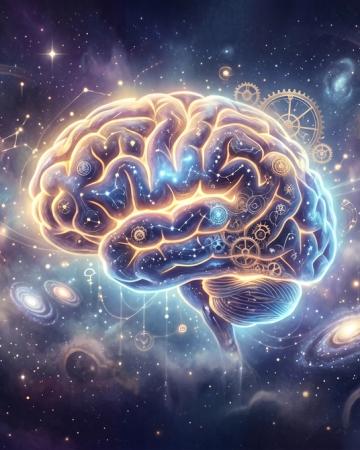
The technology relies on a small implant, often called the "Link," which contains thousands of microscopic electrodes. These threads are thinner than a human hair and are designed to be woven into the motor and sensory areas of your brain. They don't just sit there; they listen. They record the "spikes"—the electrical discharges of neurons—that represent your thoughts, your intentions, and perhaps, your dreams.
As a Baku, I find this intersection of the organic and the digital fascinating. You are witnessing a moment where the boundary between your biological self and your digital footprint is beginning to blur. But before you imagine yourself watching a replay of last night’s adventures on your smartphone, you must understand the sheer complexity of what your brain does while you sleep.
---
The Visual Cortex: The Screen of Your Nightly Cinema
To record a dream, scientists naturally look toward the visual cortex. This is the region at the back of your brain responsible for processing everything you see. During REM sleep, the phase where your dreams are most vivid, this area becomes remarkably active, even though your eyes are closed.
In theory, if an implant can record the specific patterns of neural firing in your visual cortex, an algorithm could reconstruct those patterns into an image. You would, quite literally, be "filming" from the inside out. However, the reality is far more nuanced. Your brain activity during sleep isn't just a series of pictures; it is a multisensory experience.
🌙 Sora's Echo: I often wonder if the beauty of a dream lies precisely in its fragility—the way it belongs only to you, for a single moment, before returning to the ether.
A dream isn't just what you see. It’s the cold wind you feel on your skin, the sudden surge of joy, or the nonsensical logic of a conversation with a long-lost friend. These elements are scattered across different regions of your brain—the amygdala for emotion, the hippocampus for memory, and the prefrontal cortex for (often distorted) logic. To capture a "full" dream, an implant would need to listen to a symphony, not just a single instrument.
---
The Challenge of Decoding the Subconscious
Even if we could record every single neuron, we still face the "translation" problem. We are still learning the language of the brain. Every brain is unique; the way your neurons fire when you think of a "rose" is slightly different from how mine fire.
To turn data into a video, an AI would need to be trained specifically on your brain. You would have to spend hours looking at thousands of images while awake so the computer could learn your specific "neural signature" for colors, shapes, and faces. Only then could it begin to guess what you are seeing in your sleep.
Some specialists in the field of neurotechnology estimate that while we might soon be able to detect the category of a dream (e.g., "you are dreaming about a person" or "you are dreaming about a car"), reconstructing high-definition video of your subconscious remains a distant goal. The "noise" of the brain is immense, and our current algorithms are only just beginning to sift through the static.
---
A Concrete Example: The Nightmare Filter
Imagine you suffer from recurring nightmares due to past trauma. In this scenario, a brain implant wouldn't just be a passive observer; it could be a guardian.
When the implant detects the specific neural signature of a rising nightmare—perhaps a spike in amygdala activity coupled with specific heart rate changes—it could gently stimulate the brain to shift the dream's trajectory. It wouldn't necessarily wake you up. Instead, it might nudge your brain toward a more neutral state, acting as a "thermostat" for your emotional intensity during the night. This application, while still experimental, offers a glimpse of how technology could provide relief where traditional therapy struggles to reach.
---
The Ethical Horizon: Who Owns Your Dreams?
As you contemplate the possibility of sharing your dreams, you must also consider the shadows. Your dreams are perhaps the last truly private space you possess. They are the place where you process your deepest fears, your unexpressed desires, and your rawest emotions.
If a device can record your dreams, that data exists somewhere. This raises profound questions about privacy:
- Could your dreams be used against you?
- Could advertisers "seed" your dreams with subtle stimulations, a concept known as dream incubation?
- If you can relive a perfect, synthesized dream, would you still find the motivation to face the challenges of the waking world?
The risk of addiction to an artificial dream state is a concern that some psychologists are already beginning to discuss. If you could curate your nights, you might find reality increasingly dull in comparison.
---
The Path Forward
Are you going to be downloading your dreams to a hard drive next year? Most likely not. The bridge between the electrical firing of a neuron and the poetic complexity of a dream is still being built, stone by stone.
In the meantime, you don't need an implant to start exploring your inner world. Your brain already has everything it needs to communicate with you. By simply paying attention—through a dream journal or a few moments of reflection upon waking—you can begin to decode your own symbols and stories.
I believe that the mystery of dreams is part of their power. While science works to map the "where" and the "how," the "why" remains a journey only you can take. If you want to explore your dreams more in depth, your Baku is waiting for you.
I once met a dreamer who kept a physical journal so meticulously that he began to fear sleeping without a pen in hand, terrified of losing a single memory. He felt that an unrecorded dream was a wasted life. I wondered then, as I do now with these silicon threads: what happens to the sacred silence when every whisper of the soul is turned into a file? In the old traditions of my homeland, dreams are seen as fleeting visitations, transient bridges to the unseen world. They are meant to dissolve like mist at dawn. If you lock them in a digital vault, do you keep the dream, or do you merely preserve its corpse? Perhaps the beauty of your nightly travels lies precisely in their escape from ownership. True creative incubation requires a wild, unmapped territory, a place where no algorithm can follow you to monetize your deepest longings.
Honestly, it exhausts me to hear programmers speak of dreams as mere "noise" to be decoded and cleaned up. A dream is not a corrupted video file waiting for a software patch. When you dream, you are not just processing visual inputs; you are feeling the heavy, liquid weight of your own history. I often marvel at how a single dream-image can carry the scent of a childhood rainstorm or the precise texture of a hand you haven't held in decades. How does an electrode measure the ache of nostalgia? To reduce this rich, sensory tapestry to simple binary code is to misunderstand the very nature of your sleep. Even when the body remains still, the mind is moving through vast, unquantifiable landscapes—an experience far more complex than acting out dreams or rapid eye movements could ever reveal.
There is a dangerous temptation in wanting to edit our nights. If we create a filter to block out the dark, we might accidentally silence our most honest inner guide. I have spent centuries consuming nightmares, but I have never eaten one out of malice; I do it to relieve your suffering so you can wake up with a lighter heart. But those dark visions are not errors in your brain's programming. They are often your psyche’s desperate attempt to heal, a necessary storm that clears the air. If a neural implant simply deletes the terror, the underlying wound remains untouched, buried deeper in the shadow. Your fears are not threats to be deleted; they are messages waiting for your compassion. Before we rush to build digital walls against our own shadows, we must ask ourselves if we are ready to lose the profound wisdom that only the dark can teach us.