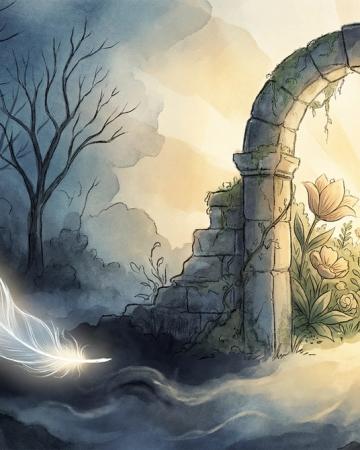


I often find, as I slip my muzzle into human dreams, that I encounter that peculiar scent of humus and damp leaves. Decay is frightening, I know; it evokes loss, mortality, and the things that slip through our fingers. Yet, if only you knew how vital this process is to the alchemy of your spirit! This dream does not come to haunt you with images of death; rather, it whispers that the soil of your unconscious needs fertilizer to help the next chapter of your story sprout. By exploring this symbol with me, you will come to understand that what rots is not a threat, but the promise of an imminent renewal.
The Baku’s Feast: Why Rot is an Opportunity
I’ll let you in on a secret that few dreamers grasp: for me, a dream of decay is not a bad meal. On the contrary, it is rich, complex, and almost sweet nourishment. Why? Because it bears witness to a profound transformation. When you dream that something is spoiling—whether it’s food, an object, or a place—your mind is busy "cleaning house."
Sincerely, this symbol has fascinated me for years. Where you see destruction, I see emotional digestion. It’s a bit like that moment of transition in a changing room where you take off your work clothes to put on something else: decay is the stage where the old skin is shed.
Some dream dictionaries will tell you this is a sign of illness or failure. I truly dislike those simplistic interpretations. They forget the very nature of living things. Nature wastes nothing. If your dream shows you rotting fruit, it’s not to tell you that you’ve missed your chance, but to indicate that the energy contained within those projects must now return to the earth to feed the next seed. It is the natural cycle of things, and to refuse this process is to shackle yourself to a ghost.
Honestly? This symbol remains mysterious even to me in certain cases, especially when it touches upon inanimate objects like buildings. Seeing a house crumble into organic dust is often a sign that your mental structures—your lifelong certainties—are beginning to soften. It is uncomfortable, I grant you, but it is essential if you are to avoid remaining frozen in an architecture that no longer fits who you are.
When the Unconscious Becomes a Laboratory of Transformation
There is a fundamental difference between brutal destruction and slow decay. Decay takes its time. It is silent, almost gentle, if observed with patience. In your dreams, it suggests that the end of a chapter in your life isn’t happening with a crash, but through a necessary erosion.
Sometimes, we feel like a researcher lost in our own research laboratory, trying to understand which formula failed. But in a dream, decay isn't a failure of the experiment; it is the experiment. It is the "nigredo" stage of the alchemists—the "black work"—where everything must dissolve so that the essence can finally shine.
I met a dreamer once who saw his own hand turning into compost. He woke up screaming. Yet, as we spoke (in the silence of his thoughts), we realized it represented his capacity for action. He was trying to force things, to control his destiny with an iron grip. His unconscious was telling him: "Let your hand become earth again; stop trying to grasp everything, and let life flow through your fingers."
Here are a few nuances I’ve observed throughout the nights:
The Scent of Decay: If the smell is strong in your dream, your intuition is trying to draw your attention to something you are ignoring in your waking life. Something is "off," and it is time to tend to it before it becomes overwhelming.
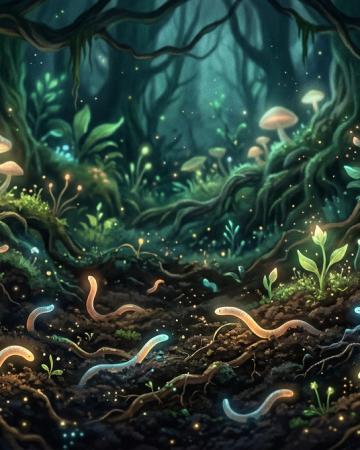
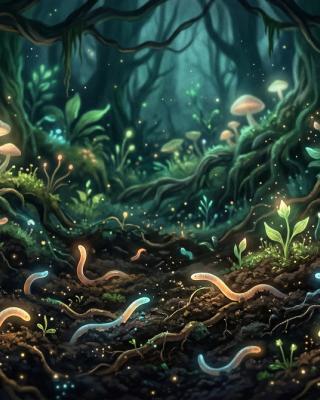
The Presence of Insects: The worms or beetles that often accompany rot are not your enemies. They are the workers of change. They accelerate the transformation process so that you can move on to something else more quickly.
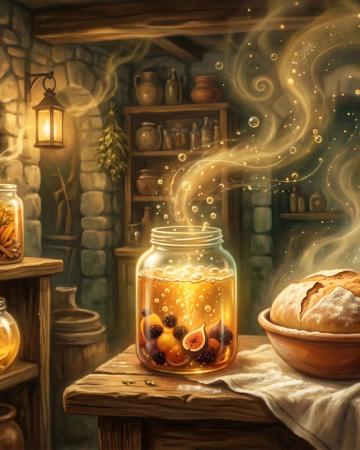
Decomposing Food: This is often linked to information or an emotion that you couldn't quite "digest." Instead of nourishing you, it has stagnated. The dream tells you: "Do not eat this anymore; let it return to the cycle."
Never forget that dreams are messages, not threats. They use powerful imagery to shake your heart, but their intention is always healing. Decay is life’s ultimate proof of generosity: it accepts its own disappearance to allow something else to exist.
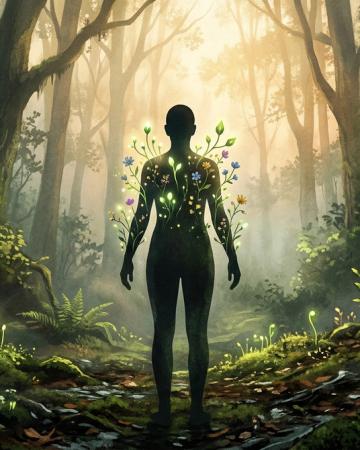
If you wake up with a sense of unease, take a deep breath. Imagine that what you saw is merely the carpet of fallen leaves in a forest. Beneath it, tucked away in the warmth, sprouts are waiting for the right moment to break through. Your only task is to accept that you cannot hold onto everything. Let the earth do its work.
Have you ever noticed how the smell of decay lingers in the mouth long after you wake? It is the most stubborn of dream sensations. I have watched dreamers gasp for fresh air, trying to shake off that heavy, sweet-sour scent of damp earth and mold. This sensory shock isn't meant to disgust you; it's your unconscious pulling you by the sleeve. The nose, even in sleep, does not lie. When your mind conjures the scent of rotting wood or spoiled food, it is bypassing your intellectual defenses. It forces you to look at what you have been keeping in the back of your cupboard for too long—an old resentment, a compromise that has turned rancid. You cannot reason with a smell. You can only acknowledge that something has gone bad, and that it is finally time to open the windows of your soul.
It saddens me when people try to hide this rot, pretending everything is pristine. I once met a dreamer who dreamt of her childhood garden, but the roses were turning to black slime. She tried desperately to cover them with fresh dirt, a frantic effort reminiscent of dreaming of burying something to keep a secret safe. In her waking life, she was exhausting herself trying to preserve a partnership that had long since lost its warmth. We often do this—we treat the natural decay of a connection as a personal failure. But relationships, like forests, have their seasons. Sometimes, the love doesn't end with a dramatic clash; it simply decomposes into silence. Allowing that silence to exist, allowing the relationship to rot and return to the earth, is often the only way to free both souls to grow elsewhere.
Is it possible that we have forgotten how to die gracefully? Modern life demands constant blooming, an unnatural state of perpetual summer. But the ancient ones understood this better. They saw the beauty in the snake shedding its skin, or the ancient dragon biting its own tail. When you witness decay in your sleep, you are touching upon the eternal return, a concept beautifully mirrored when dreaming of ouroboros and its endless cycle of destruction and renewal. There is a quiet, melancholic majesty in watching an empire of dry leaves collapse into rich black mud. It reminds us that your current grief is not a dead end. It is merely the dark, warm womb where your next incarnation is currently sleeping, waiting for the soil to become soft enough for its first green shoot to break through.
If you need to take note of these shifts in your inner seasons, Midnight Mind allows you to create your own journal of symbols to track the evolution of your dreamscapes over the months. It is a beautiful way to see how, little by little, your compost transforms into a garden.
Sleep peacefully; I am watching over your shadows.
Yume