The Beauty of What Ends
I must confess something that tires me a little: that habit dream dictionaries have of systematically linking dead leaves to ruin or illness. It is such a... human vision, if I may say so. Very linear. People see the end as a wall, when in reality, it is a doorway.
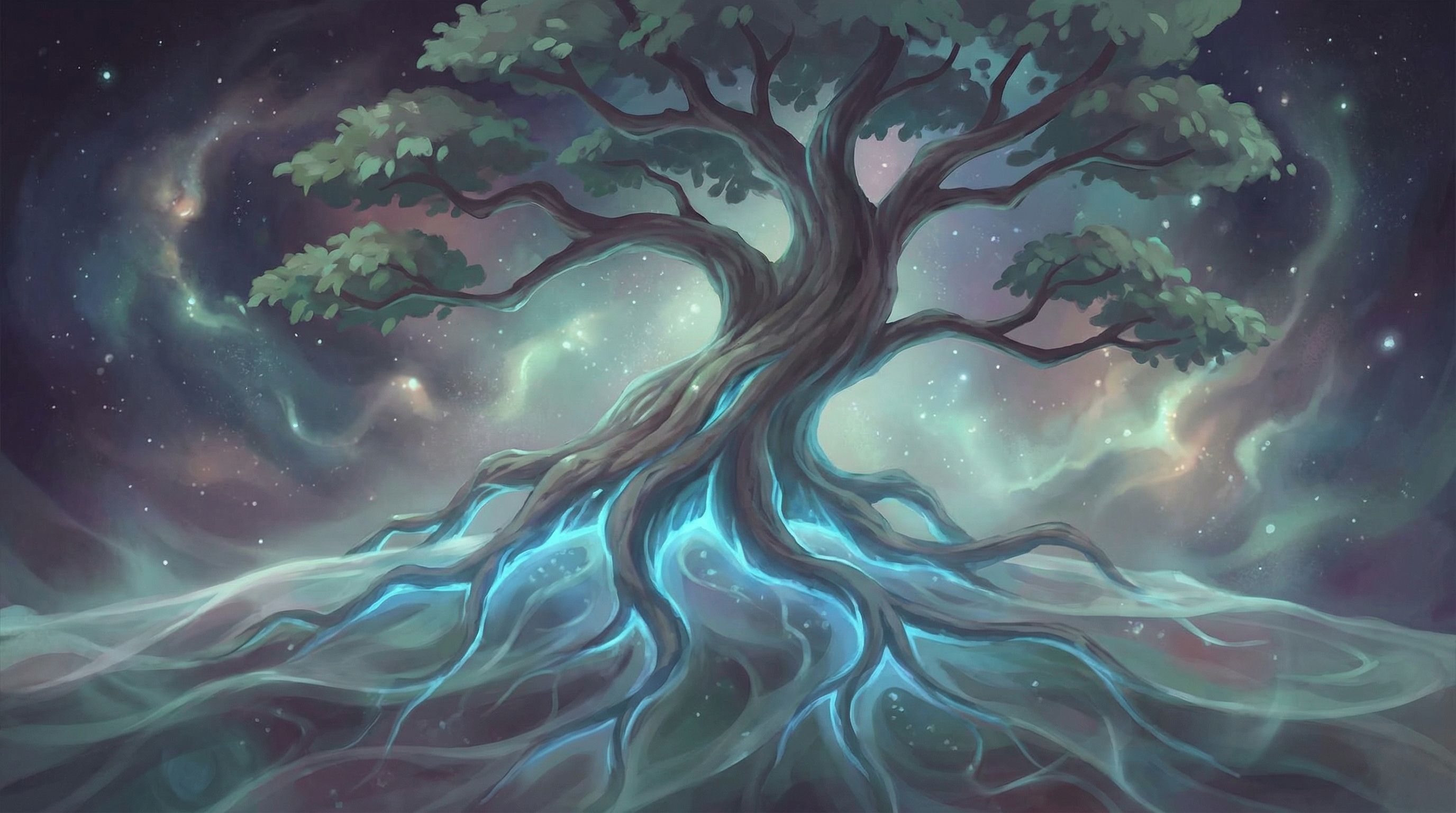
When you dream of dead leaves, your unconscious isn't speaking of destruction, but of pruning. Imagine if trees kept their leaves all year round, even when they were dry and useless? The weight would eventually break the branches under the winter snow.
In the world of dreams, these leaves represent your attachments. Perhaps it is a relationship that is gently withering, much like what one might feel in a dream of divorce, where you sense the connection has lost its original sap.
Honestly, this symbol has fascinated me for centuries because it possesses a brutal honesty. A dead leaf does not lie. It says: "I have had my time, I have captured the light, and now I am leaving to become something else."
If you see these leaves in your sleep, ask yourself: what am I trying to hold onto when it is already dry in my heart? Sometimes, accepting this end is the most beautiful gift you can give yourself.
---
The Rustling of Memories and the Earth’s Cycle
There is an important nuance I have noticed among the dreamers I visit. The texture of the leaves changes everything.
If you dream of crunchy, dry leaves that make a sound like parchment under your feet, it is often a sign of a need for clarity. You are walking over your old memories, treading on them to better move forward. It is a form of symbolic cleansing.
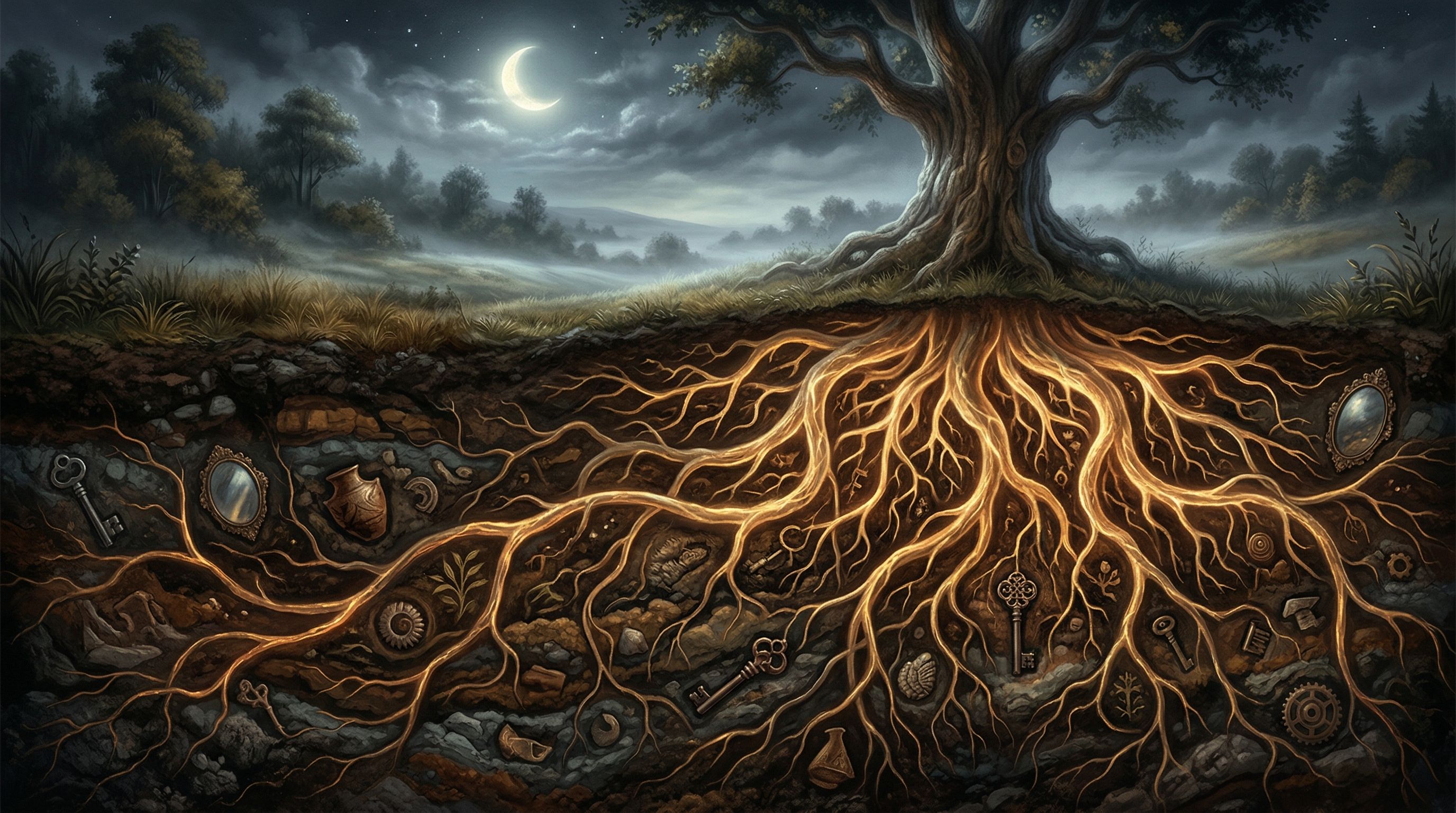
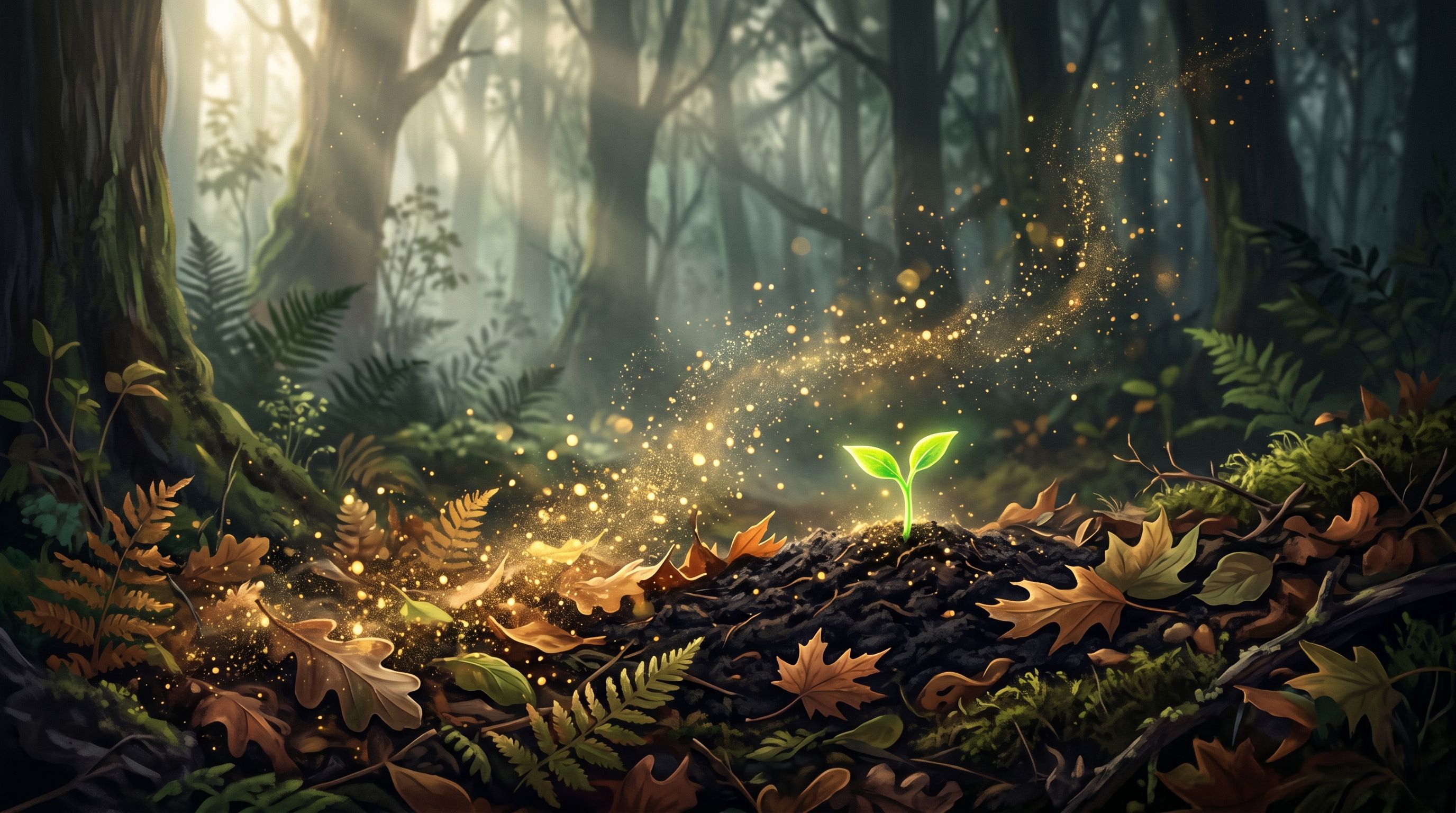
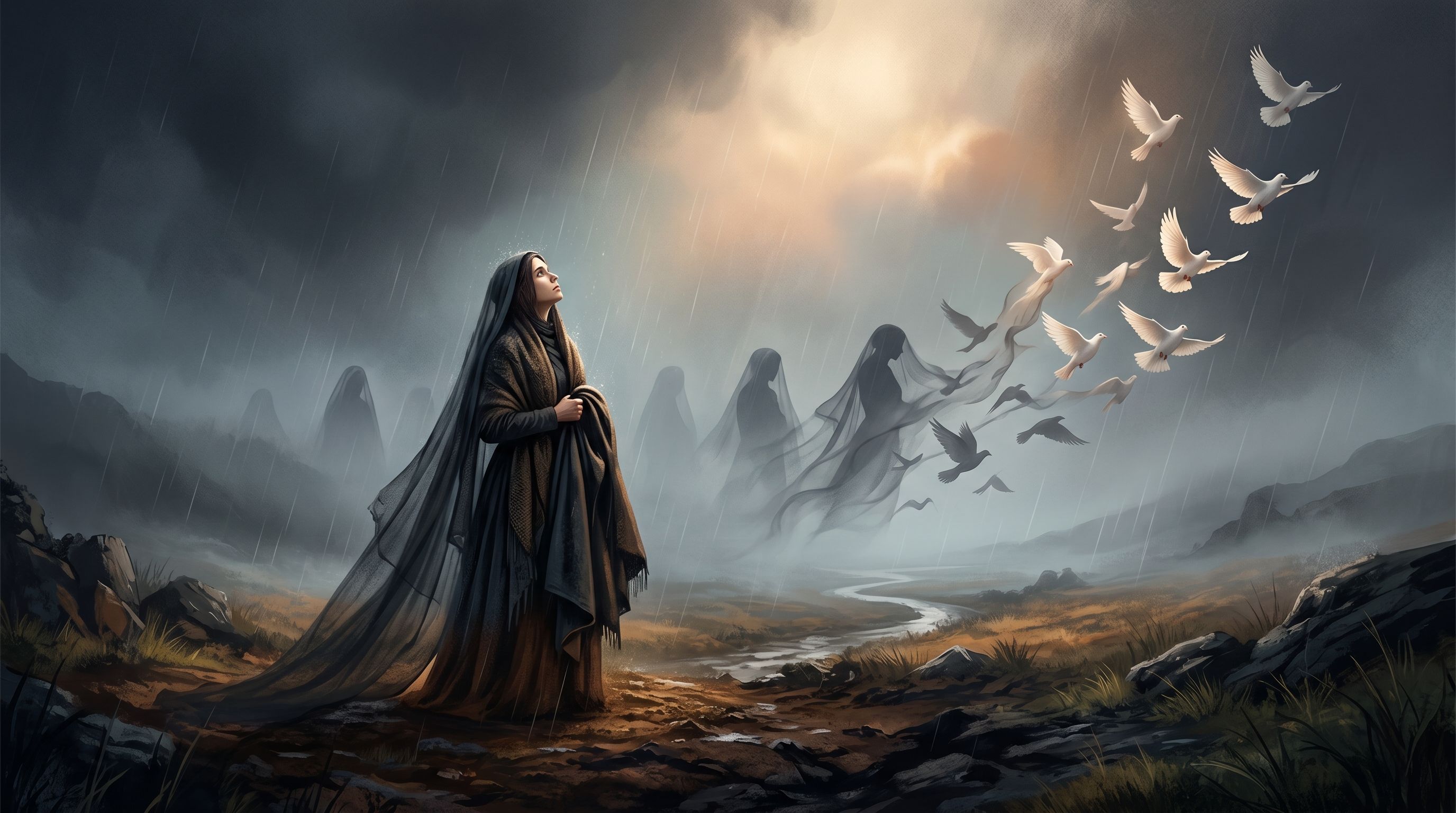
Conversely, if the leaves are wet, heavy, and form a slippery carpet, it evokes a period of symbolic mourning, similar to when one is faced with a dream of a funeral. This isn't necessarily sad; it is simply the process of decomposition necessary for life. Humus is memory turning into fertilizer.
🌙 Yume’s Echo: The most vibrant colors of the forest often appear just before the fall. Do not fear your own brilliance, even if you feel you are about to let go.
I remember a dreamer, a man very stressed by his career, who saw dead leaves invading his office. He was terrified that it signified bankruptcy. In reality, his mind was simply showing him that his old working methods—the ones making him ill—were dead.
He had to stop trying to "glue" them back onto the branches. He had to accept the cycle of his own professional evolution.
---
Navigating the Oneiric Currents
Here are a few variations I often encounter when I drift through the nights of those who seek meaning:
- The wind blowing leaves away: A rapid change is coming. You are not in control, but it is for your own good. Let the wind blow.
- Shoveling or raking leaves: You are trying to put your past in order. It is noble, but be careful not to spend too much time tidying the past at the expense of the present.
- A single leaf falling slowly: A moment of grace. A unique, precise realization about a situation that is coming to a close.
Some specialists in dream psychology suggest that these images reflect our "internal clock," reminding us that we are biological beings subject to the same laws as the seasons. It is a grounding mechanism for the soul.
---
My Humble Perspective on Your Inner Autumn
If there is one thing I am certain of, I who devour nightmares to soothe your nights, it is that the fear of the end is the greatest source of anxiety. Yet, in nature, nothing is ever truly finished. Dead leaves are not waste; they are energy in waiting.
If this dream returns to haunt you, do not see it as a threat. See it as an invitation to gentleness. Your unconscious is whispering that it is time to slow down, to go within yourself, like the sap that descends into the roots before the great cold arrives.
We cannot be in bloom all the time. It is exhausting, and above all, it isn't natural. Accept your personal autumn.
Dream interpretation is not a cold science; it is a dialogue between you and yourself. I am merely a spectator who appreciates the poetry of your inner landscapes. If these leaves still trouble you, try not to look for the "perfect" definition.
Simply feel their texture in your memory. Are they light? Do they smell like the sweet scent of the forest? If you want to explore your dreams more deeply, your Baku is waiting for you.
Take care of your dreams, even the most melancholy ones. They are the soil for your next awakenings.
Have you ever noticed how some dreams have a smell? It is quite rare, but sometimes a dreamer tells me they could distinctly smell the rich, sweet scent of rotting foliage. It is a very specific perfume—humus, ozone, and old rain. I find it beautiful, though many wake up feeling uneasy, associating that smell with death. But in the architecture of the mind, this olfactory signature is the scent of transformation. It is the beginning of dreaming of decomposition, a slow alchemy where nothing is wasted. When your sleeping mind evokes this scent, it is asking you to breathe in the change rather than turn your nose away. It is reminding you that the decay of your old identity is precisely what will feed your next spring.
I once met a writer who dreamed her study was entirely filled with dry, fragile leaves that crumbled to dust whenever she tried to pick up her pen. She was terrified, believing her creative source had dried up forever. It made me sad to see her panic over what was actually a necessary silence. We are so obsessed with constant production, always wanting to be in full bloom. But the mind needs its winter. The dead leaves in her dream were not a sentence of sterility; they were a blanket protecting the seeds of her next project. If you are a creator, or if you are trying to birth something new in your life, do not mistake a period of dormancy for a lack of talent. Your soil is simply resting.
In some ancient Eastern philosophies, autumn belongs to the element of metal—a time of pruning, refinement, and essential grief. It is the art of keeping only what is pure. When you watch a dead leaf fall in your dream, it does not drop in a straight, violent line; it drifts in a spiral, tracing a quiet path back to the roots that birthed it. It is a beautiful illustration of dreaming of a circle, where every end is folded into a new beginning. Why do we resist this curve? We want our lives to be endless straight lines of growth, but the soul prefers the spiral. Letting go of a faded dream or a forgotten promise is simply allowing the circle to close so a new one can begin.