
The Chessboard: A Geographical Map of Your Dilemmas
When I descend into the garden of dreams to taste the thoughts of dreamers, the scent of a chess dream is always a bit dry, almost woody, like old cedar. I am often asked if it is a sign of imminent conflict. People want to see a war in it. But I am not a fan of these warlike and simplistic interpretations that swarm in old, dusty manuals. To me, the chessboard is not a battlefield; it is a map.
Look closely at the structure of the game in your dream. Was it orderly, or were the pieces floating in an absurd way? Sometimes, we need this geometric structure to reassure ourselves. If you feel lost in your waking reality, your mind may create this board to tell you: "Look, everything can be segmented, analyzed, and organized." It is a bit like using a microscope to observe the fibers of your anxieties: the chess dream forces you into precision.
However, be careful not to lock yourself in. I once knew a dreamer who, every night, tried to win a game against a faceless shadow. He exhausted himself trying to anticipate everything. I suggested to him one day to flip the board. The chess dream often asks you: are you the one playing, or are you a piece being moved? If you feel like a pawn, perhaps you feel you are subject to the decisions of others. But do not forget: even the smallest pawn has the potential to become a Queen if it crosses the board with perseverance.
The Ballet of Pieces and the Dance of Power
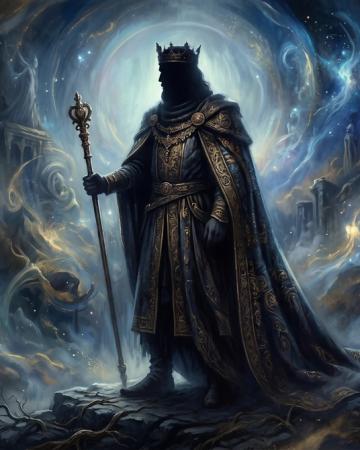
The choice of pieces that appear in your dream says a lot about your relationship with power. If you see yourself manipulating the Queen with ease, it speaks of your ability to act on several fronts and your freedom of movement. But if you are desperately protecting a cornered King, it is likely your ego or a social position you are trying to safeguard at all costs in your everyday life.
There is a spiritual dimension to this game that we too often forget. Chess is a quest for balance. Sometimes, the dream ends in a "stalemate"—a draw where no one can move anymore. This is a beautiful message, though frustrating for the logical mind. It means the solution is not in victory over the other, but in the acceptance of temporary stillness. You do not always need to "win" to move forward. Sometimes, it is enough to change perspective, much like when you change shoes to approach new terrain: strategy is not an end in itself, it is a tool.
Sincerely, this symbol has fascinated me for centuries because it shows the beauty of human intelligence seeking to organize itself. But I must confess something: the most soothing dreams are not those where you win the game, but those where you realize the game is only a game. If you feel oppressed by nighttime strategy, remember that it is your mind that invented the rules. You have the right to transform knights into birds and rooks into trees if your heart desires.
The subconscious is not your opponent. It is the playing partner who, through these black and white squares, simply shows you where you are on your own journey. Do not fear failure and do not be obsessed with checkmate. The simple fact of sitting before the board is already proof of your wisdom.
Have you ever tried to lift a chess piece in your dream, only to find it heavy as a mountain? Sometimes, the mind doesn't just show us the game; it makes us feel the sheer, crushing weight of the materials. I once met a young woman who dreamed of moving a rook carved from black granite, so heavy her fingers bled. She was navigating a painful career transition, feeling the immense pressure of every decision. When the pieces in your night-play feel unmovable, it is rarely about your lack of skill. It is your body translating the exhaustion of carrying too much responsibility. You might feel a similar burden if you are currently wearing a heavy crown in your waking life, managing others while ignoring your own fatigue. The dream is whispering: stop pulling. If the piece is too heavy, perhaps it is time to leave it on its square and walk away.
It gently annoys me when people treat chess solely as a battle of annihilation. We are so conditioned by modern concepts of victory that we forget other ways of seeing. In older Eastern games of strategy, the goal is not to trap a single piece, but to share the space, to map out harmony on a shared grid. If you find yourself obsessed with capturing your opponent's pieces in your sleep, ask yourself what you are trying to eliminate in your waking hours. Is it an inconvenient emotion? A rival at work? A part of yourself you find messy? Trying to clear the board of everything that frightens you only leaves you with a cold, empty desert. True wisdom lies in learning to play alongside the shadows, recognizing that the black squares are just as necessary to the pattern as the white ones.
There is a particular sadness to dreams where the chess pieces are made of fragile materials—glass, salt, or even melting ice. I remember a dreamer who was going through a quiet, agonizing separation. He dreamt of playing chess with his partner, but every time he captured a piece, it dissolved into cold water between his fingers. It was a beautiful, devastating metaphor for the silent treatment and the calculated coldness that can creep into our most intimate spaces. When we treat our relationships like games of strategy, planning three steps ahead to avoid being hurt, we inevitably freeze the warmth out of them. If your dream-board is melting or cracking, it is a gentle plea from your soul to abandon the tactics. Vulnerability cannot survive on a grid; it needs the messy, unstructured wildness of honest conversation.
What happens when you look across the board and find that your opponent is... you? This double-sided game is a profound psychological paradox that leaves many waking dreamers deeply unsettled. You make a move, then slide into the opposite chair to counter it, trapped in an endless loop of self-sabotage. Honestly, this symbol remains beautifully complex even to a spirit like me. It shows a mind divided, where your conscious desires are constantly being checked by your own subconscious fears. You are building a fortress with one hand and demolishing a wall with the other. If you are locked in this solitary duel, stop trying to outsmart yourself. The only way to win a game against your own shadow is to shake hands, close the box, and realize that both sides of the board belong to the very same soul.
If you need to clarify a complex position on the chessboard of your nights, you can entrust your moves to Midnight Mind. Our AI and we, the Bakus, will be happy to analyze your nightly games and help you build your own book of symbols to better understand the tactics of your soul.
Has this great game of strategy left you with a taste of mystery upon waking? Come decode every move in your personal dream journal...