The roller coaster of your inner landscapes
I’ll be honest with you: I find classic dream dictionaries a bit dull when they settle for saying an amusement park means "a need for a vacation." It is so much more subtle than that. When I visit the dreams of dreamers, I often see these giant metal structures as extensions of their own nervous systems.
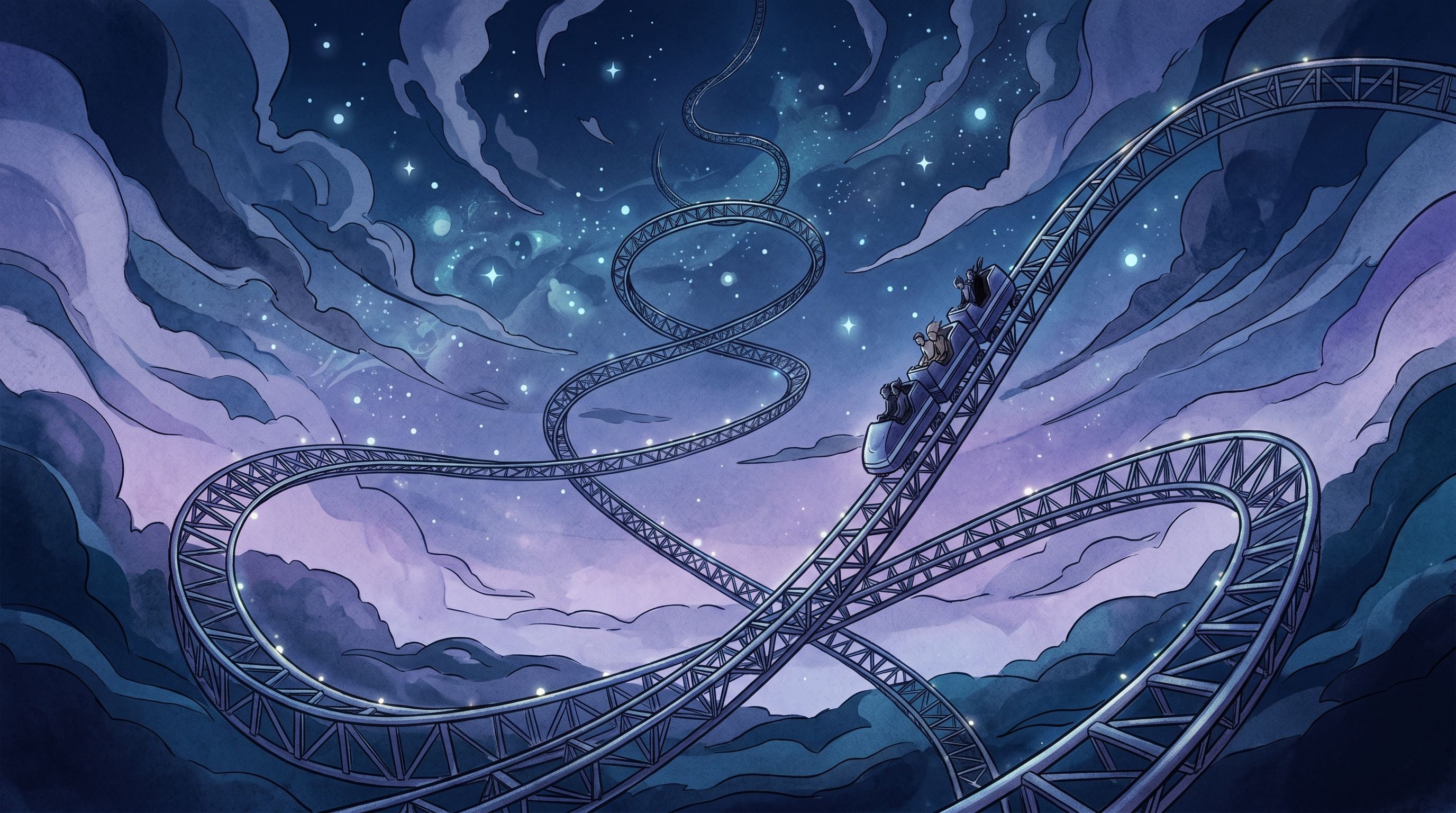
If you find yourself on a roller coaster, ask yourself: did you choose to get on, or did you find yourself strapped into the seat by force of circumstance? That is where the wisdom of the dream lies. This dream often occurs when your waking life feels like a succession of highs and lows that you no longer control. Sometimes, it is as necessary as an emotional overflow to release the pressure you put on yourself during the day. The dream allows you to experience this fear of falling in an environment "secured" by your imagination.
What fascinates me is the symbolism of waiting. If you spend your dream standing in line, your unconscious might be whispering that you are wasting your energy waiting for external validation or an "exciting" event that is slow to arrive. We all seek that thrill, that spark, but by constantly staring at the horizon of the next ride, we forget to feel the ground beneath our feet.
Between distorting mirrors and sugary nostalgia
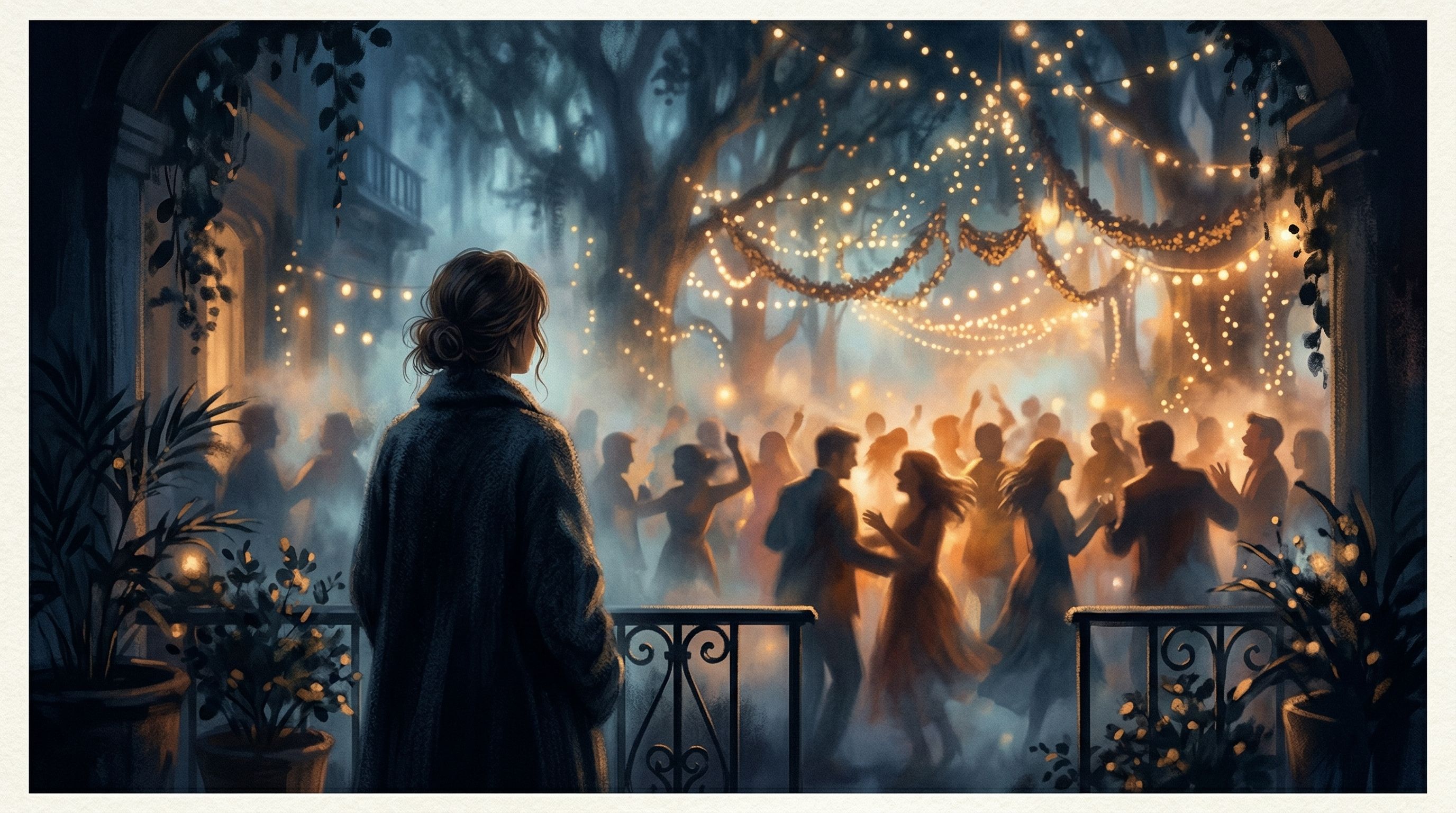
There is another aspect of amusement parks that touches me deeply: the funhouses and games of skill. They speak of our identity. How do you see yourself? How do you want others to see you? In a park, everything is artificial, colorful, and amplified. It is a place where we wear a mask of joy, even when we feel vertigo.
If you wander alone through a deserted park, it isn't necessarily a nightmare, even if it feels a bit melancholy. It is often a sign that you need to find a form of inner stability, far from the noise and expectations of others. The contrast between the festive decor and your inner silence is a powerful message. Your mind is asking you to sort through things: what is "real" in your life right now, and what is merely cardboard scenery?
I met a dreamer once who always saw broken rides. She thought it was a sign of catastrophe. I explained to her that it wasn't: it was simply her mind telling her she no longer needed those old defense mechanisms, that those old games no longer amused her, and it was time to step down and walk in the grass. Dreams are never threats; they are readjustments of our internal compass.
Parks are also the playground of your "inner child." The one who just wants to scream with joy, eat forbidden things, and not think about the alarm clock. If the dream is joyful, don't overthink it: your unconscious is offering you a recess. Take it. It is a gift from your mind to balance the grayness of daily life.
Listening to the silence after the party
My advice, when you wake up from such a journey, is not to rush into a fixed interpretation. Breathe. Feel if your body is still tense from the speed or if it feels light. The amusement park is a metaphor for impermanence: we go up, we go down, we spin, and in the end, the lights go out.
Learning to observe these cycles without being swept away by nausea—that is true wisdom. If you feel lost in the labyrinth of your nights, know that every symbol is a key. You don't have to understand the entire mechanism of the ride to enjoy the journey, but looking gently at your own turmoils changes everything.
Sometimes, the most telling part of these dreams isn't the height of the rides, but the sticky, overwhelming sensory details. Do you smell the burnt sugar of cotton candy or the hot metallic tang of machine grease? I often notice that dreamers who wake up with a headache or tense shoulders have spent their night surrounded by these artificial scents. It is a somatic protest. Your body is saturated with "synthetic" sweetness—perhaps you are trying too hard to sweeten a bitter reality in your waking life, forcing yourself to find pleasure in situations that actually exhaust your nervous system. When the air in your dream feels thick and the neon lights are too bright, your psyche is begging for simplicity, for cold water, clean air, and a break from the constant stimulation of a demanding routine.
Have you ever found yourself at a carnival game booth in these dreams, desperately trying to throw a ring over a bottle or hit a target, only to fail repeatedly? Honestly, I get so weary of dream analysts who claim this simply means "you feel like a loser." How crude. To me, these rigged games are beautiful, tragic mirrors of your professional or personal struggles. You are pouring your precious energy into a game where the rules are quietly stacked against you. It is much like trying to win a hand when dreaming of playing cards—you are playing by a system you didn't design, chasing a stuffed prize that won't actually bring you warmth. Your dream is not mocking your failure; it is gently asking you to stop throwing your coins at a rigged booth and walk away with your dignity intact.
I must admit, I have a particular fondness for those dreamers who bypass the grand roller coasters entirely and head straight for the water rides or the towering slides. There is a profound difference between being strapped into a mechanical beast and letting yourself go on a simple slope. If your dream features a sudden descent down a flume or a giant ramp, it speaks of your relationship with surrender. Sliding requires you to trust gravity, to let go of the handrails, much like the vulnerability we experience when dreaming of a slide in a park or schoolyard. If the water at the bottom is murky, you might be resisting an emotional release. But if you let yourself slide freely, even if you splash awkwardly at the end, your spirit is practicing the necessary art of letting go without panic.
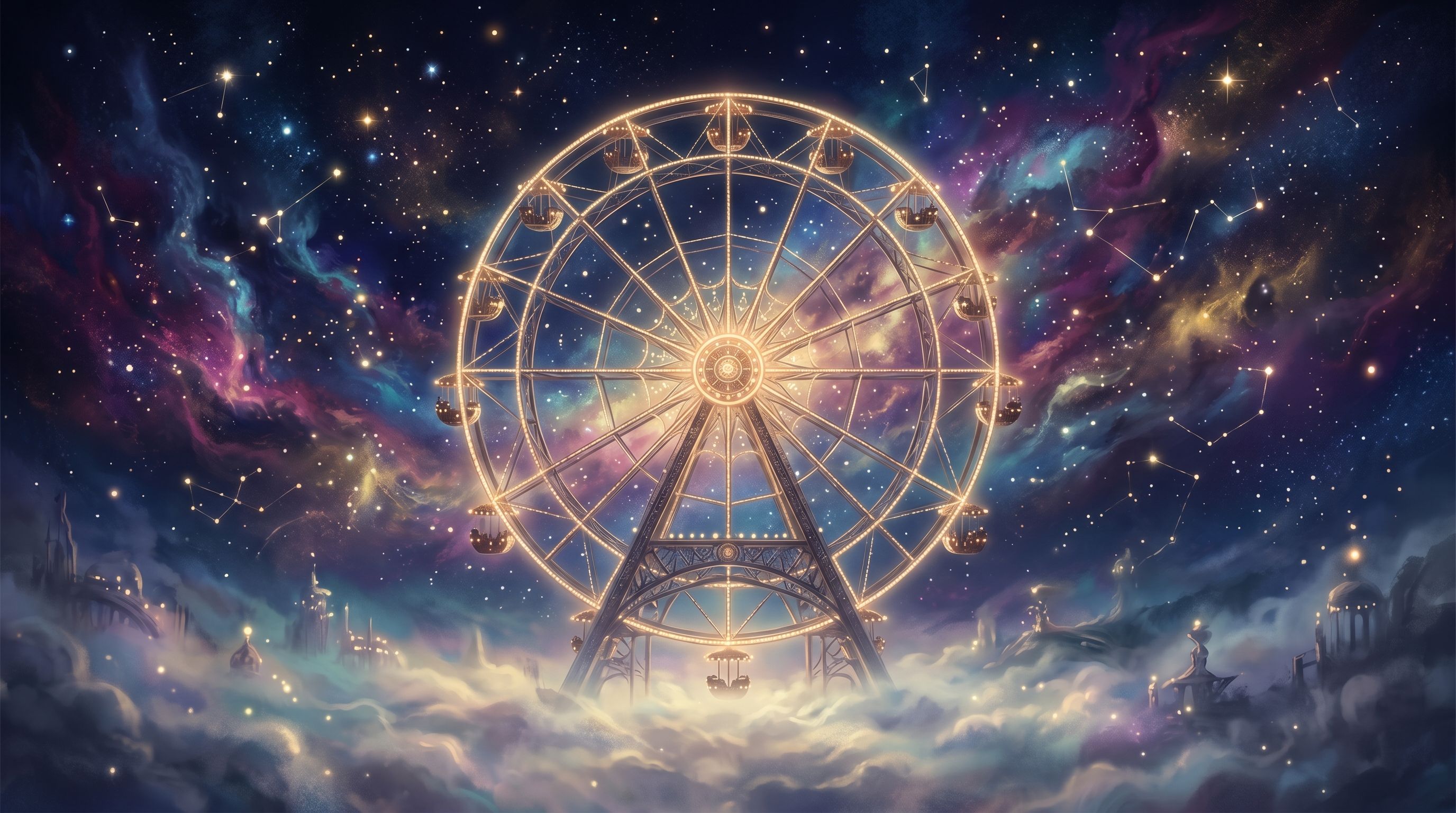
I once met a dreamer, an elderly man who had spent his entire life building a successful business, who dreamed of being trapped in a brightly lit amusement park where the exit gates were replaced by mirrors. He was terrified, running from the carousel to the ferris wheel, unable to find the way out. We talked about it for a long time. In many ancient traditions, this endless loop of artificial amusement is seen as a hall of illusions—what some might call the wheel of distractions that keeps us from looking inward. When the park in your dream has no exit, it is not a trap; it is an invitation to stop running. The moment you sit down on the gravel, stop looking for the next ride, and accept the quiet around you, the gates usually appear. The illusion only holds power as long as you demand to be entertained by it.
If this nocturnal ride has left a taste of mystery on your tongue, you might want to keep a record of these sensations. In the Midnight Mind app, we have created a space for you to collect these symbols, much like keeping a ride ticket as a souvenir, to better understand the patterns repeating in your inner theater. Because deep down, your unconscious is the greatest of directors, and it only asks to be understood.