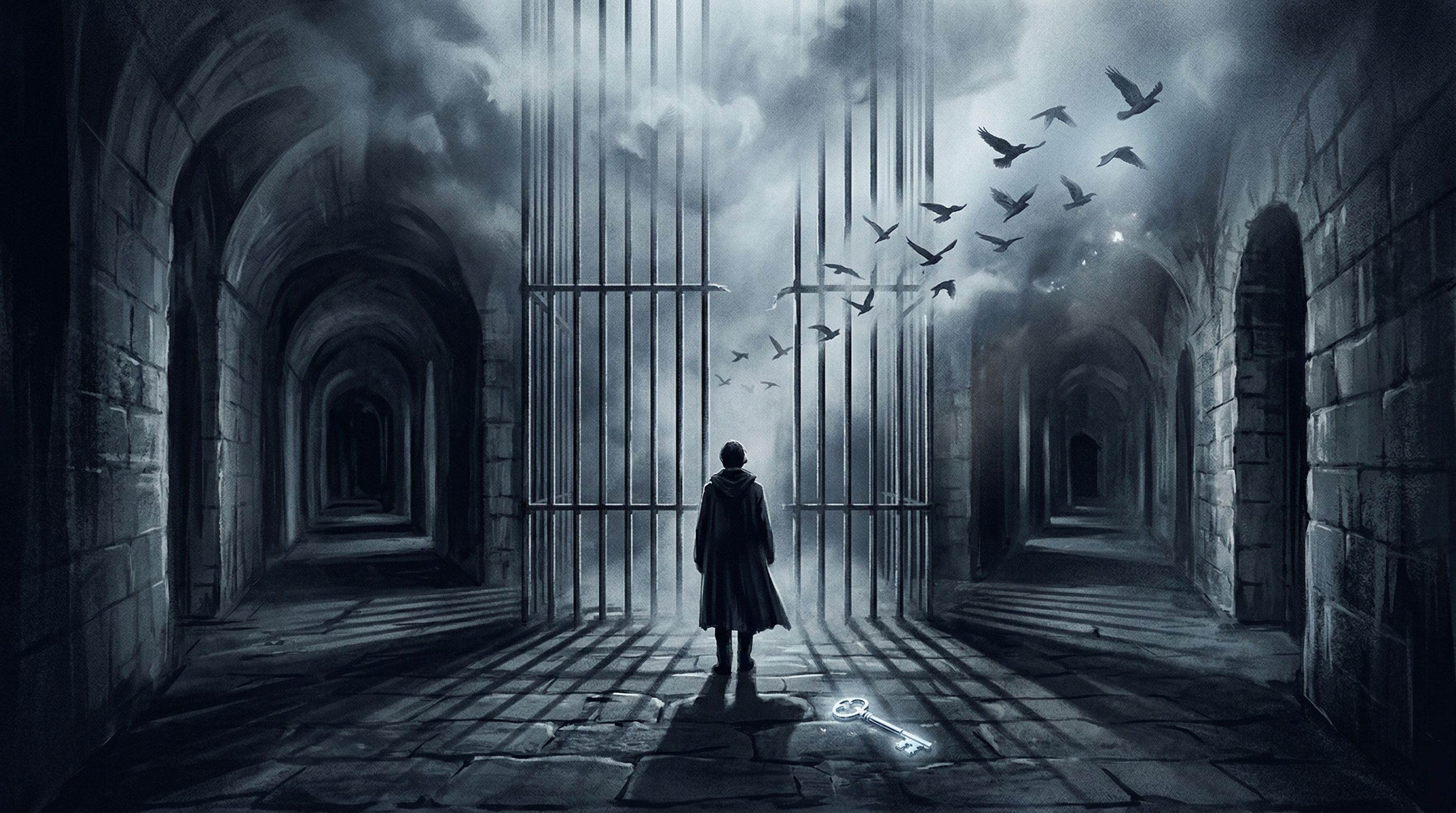
The Art of Setting Your Own Ambushes
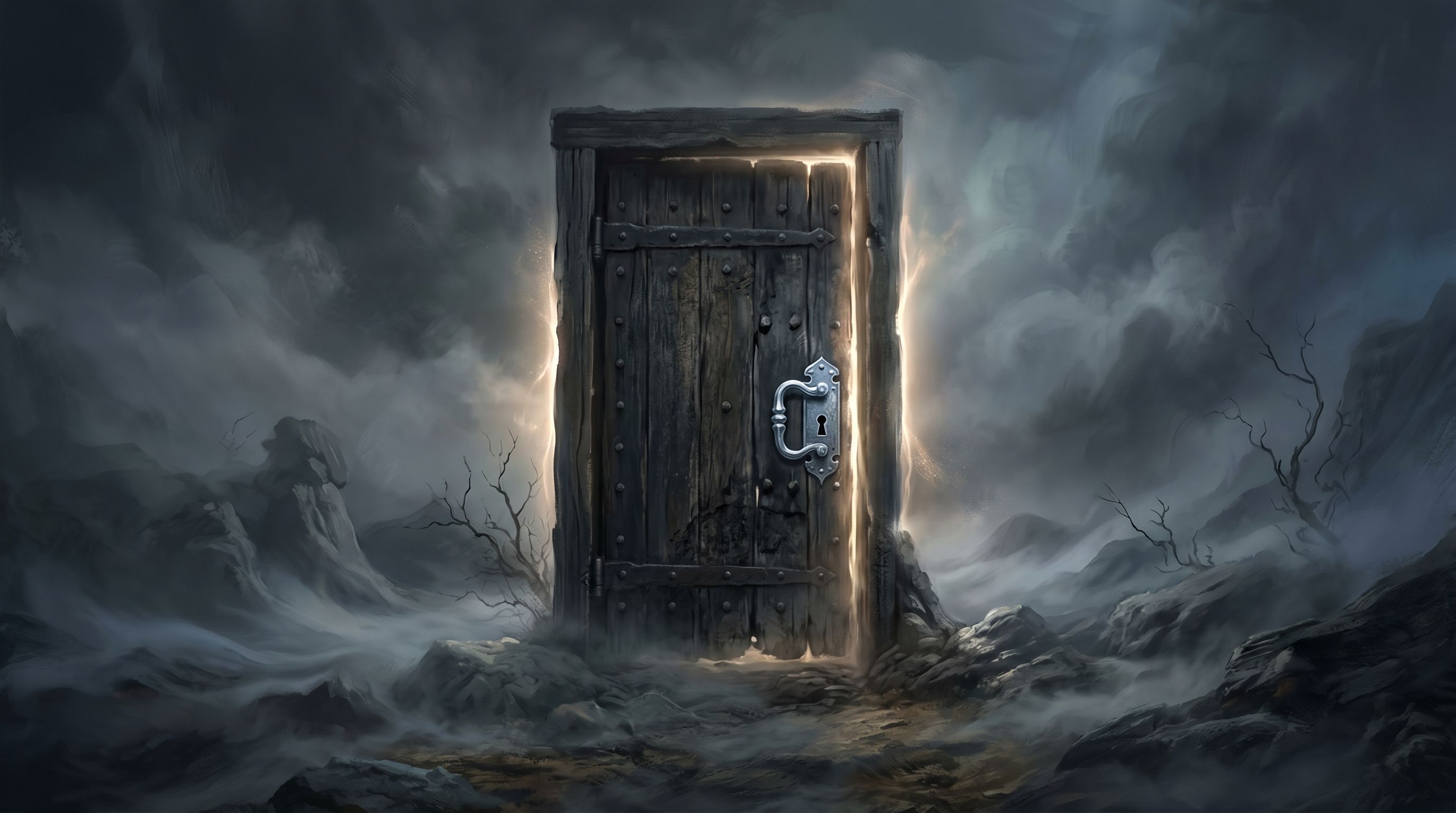
I often listen to the stories of dreamers who panic at the thought that a trap in their dream heralds a real danger in their daily life. Honestly, it saddens me to see how much simplistic dream dictionaries have anchored this fear. For me, the Baku who nibbles on these images to extract their essence, a trap is rarely the work of a malicious third party. It’s far more fascinating than that: it is often a creation of your own mind to force you to take a pause.
Imagine you are chasing an ideal, a bit like a pirate obsessed with an invisible treasure. By focusing so hard on the horizon, you no longer see the brambles at your feet. The trap dream is the moment your subconscious says: "Stop. Look at where you are." It’s not a punishment; it’s a safety measure.
Some specialists in sleep psychology suggest that these dreams occur when your brain is trying to simulate a "worst-case scenario" to help you prepare for social or professional hurdles. But beyond the biological function, there is a poetic truth: you cannot be trapped by something you haven't already walked toward.
---
The Texture of Your Shackles
It’s important to note that the texture of the trap matters immensely. Is it a cold steel wolf trap? A sticky spider web reminiscent of a net cast over your ambitions? Or perhaps a golden cage? Each material tells a story about your feelings.
Steel evokes the rigidity of your own moral rules or a harsh judgment you hold against yourself. A web, perhaps as slippery as an eel, suggests emotional ties you can’t seem to untangle. I am sometimes perplexed by the complexity of the traps you invent; your creativity for limiting yourself is just as vast as your creativity for setting yourself free.
If the trap feels like a physical injury, perhaps similar to the sting of a burn, it might indicate that the situation you are "trapped" in is currently causing you active distress. Your mind uses these visceral sensations to make sure you don't ignore the message when you wake up.
🌙 Yume's Echo: Sometimes, the cage isn't there to keep you in, but to keep the world out until you are ready to face it.
---
A Concrete Case: The Architect's Net
I remember a dreamer who visited me, haunted by a recurring vision of being caught in a thick, black net that fell from the sky every time he reached his front door. In his waking life, he was a successful architect, yet he felt a constant, gnawing anxiety.
As we looked closer at the net together, he realized the threads weren't made of rope, but of the "yeses" he gave to projects he didn't actually care about. The trap was his inability to set boundaries. By acknowledging this, the net in his dreams began to fray, eventually turning into a silk scarf he could simply step over. The "danger" was never the net; it was his own silence.
---
When Danger Becomes a Spiritual Guide
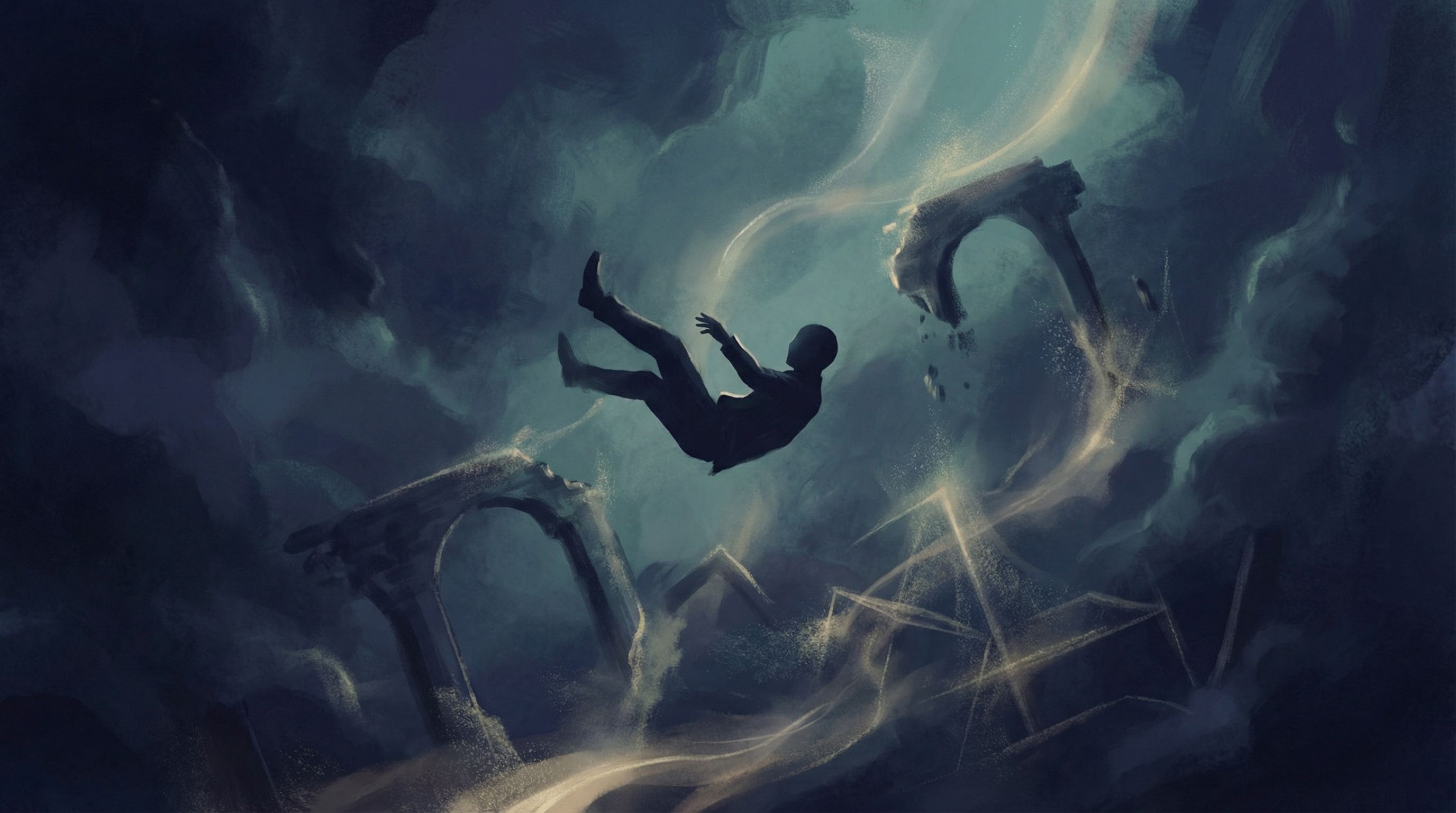
I am often asked: "Yume, if I dream that I fall into a pit, isn't that a sign of danger?" My answer is always the same: danger in a dream is symbolic. It represents the risk of staying exactly as you are, without evolving. The true peril is not the trap itself, but the stillness it creates.
To be trapped, one must have been in motion. Those who never try anything never encounter an ambush. If you dream of traps, it means you are an explorer of your own life. You are testing the limits of your inner territory. The feeling of unease you feel upon waking is simply the friction between your desire to grow and the old structures still holding you back.
There is a nuance I would like to share, a reflection I often have while observing the wake of dreams: sometimes, the trap is there to protect us from a path that is no longer ours. It’s a sort of roadblock for the soul.
If you feel stuck, ask yourself: "If I could walk through this wall, where would I really go? Do I truly want to?" Sometimes, we complain about being trapped in a job or a routine, but deep down, this trap is a comfortable excuse to avoid facing the vast void of freedom. It’s a somewhat sharp thought, I admit, but honesty is necessary for light to enter your nights.
---
How to Dissolve the Bars
Never forget that in the world of dreams, the laws of physics are your allies. If you are in a cage, you can become the air passing between the bars. If you are in a hole, you can decide that gravity reverses itself. The trap only has power over you if you agree to play by its rules.
My advice, little dreamer, is not to try to flee the trap the moment you encounter it in your nights. Sit down inside it. Look at how it is built. Did you forge the lock yourself? Did an old fear weave its ropes? By understanding the structure of your shackles, you dissolve them. That is where the true alchemy of sleep resides.
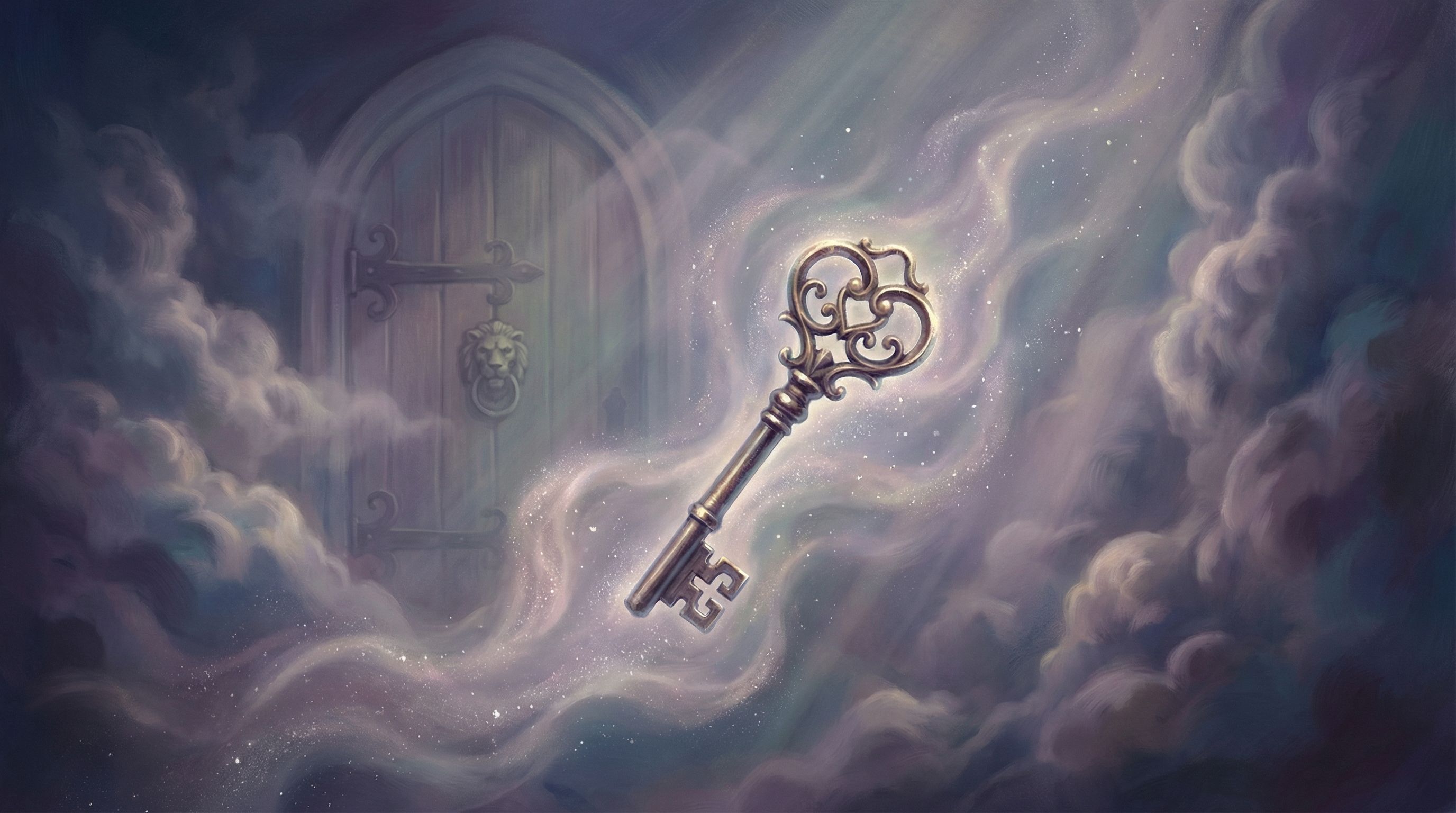
If you feel these mechanisms are repeating—that the same walls seem to rise every night in different forms—it may be helpful to record these invisible architectures. If you want to explore your dreams more deeply, your Baku is waiting for you to help map out your future escapes. Come leave your doubts in your journal, and together we will see how to transform those bars into ladders.
Have you ever noticed the absolute silence that descends the moment the trap snaps shut in your dream? It is a peculiar, heavy quietness, almost like being underwater. I find this sensory detail far more revealing than the trap's design itself. In my centuries of tasting dreams, I have watched countless dreamers thrash wildly against invisible walls, exhausting their spirits before they even wake. They treat the snare as an enemy to defeat. But what if you simply stopped moving? In Chinese philosophy, there is a deep wisdom in Wu Wei—the art of effortless action, of non-forcing. When you cease fighting the threads, you notice the trap isn't holding you down; it is holding you still so you can finally listen to the quiet truths you drown out during the day.
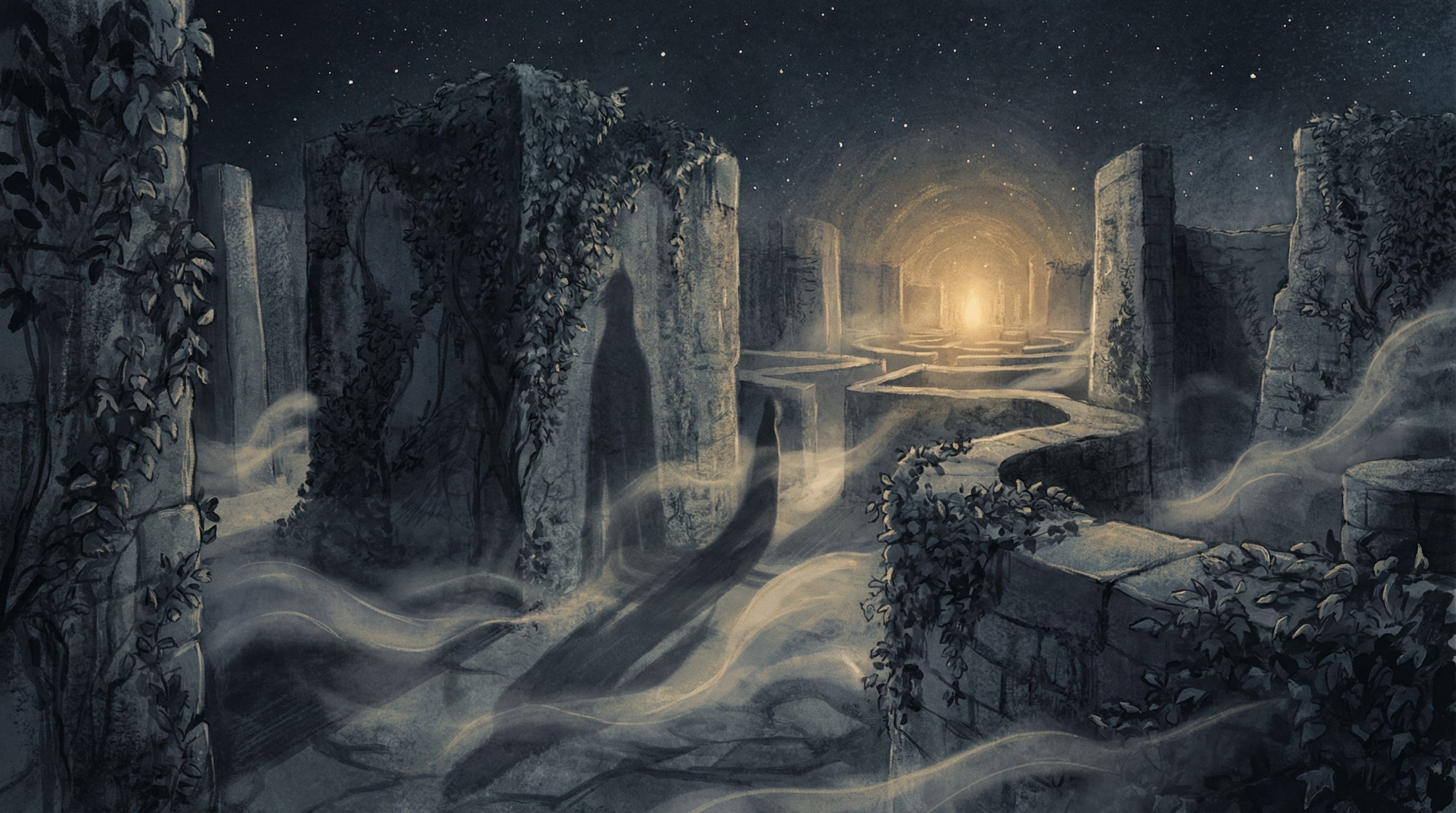
I often smile—with a touch of sadness—when dreamers tell me they dreamed of a trap they easily spotted and avoided, believing they outsmarted their own psyche. Honestly, your unconscious is never that clumsy. If you see the snare clearly, it is because it wanted to be seen. The real danger is often the false sense of security that follows. It is like wandering through what you believe is a solved labyrinth, only to realize the clean, open path was itself the design to keep you walking in circles. Your mind doesn't build traps to mock you; it builds them because you are trying to bypass a necessary initiation. When you see a trap in your sleep, do not pride yourself on stepping over it. Stop and ask yourself why the path was made so suspiciously easy in the first place.
I once met a dreamer, a gentle gardener by trade, who was tormented by dreams of iron cages falling from the sky, triggered by some unseen hunter. He woke up exhausted, feeling targeted by life itself. We sat with his fear, looking past the cold bars. I asked him to describe the one setting the traps. It took him weeks of dreaming to realize the hunter was not a monster, but a shadow of himself—specifically, a silent assassin dressed in his own clothes, representing his ruthlessly self-critical side. He was trapping his own spontaneous, creative impulses because they felt too risky, too messy. The dream-trap was his own self-preservation gone rogue. When you dream of being caught, please remember to look up at the sky: the hand that pulled the lever might wear your own ring.