The shelter of the ephemeral: Why your mind chooses canvas over stone
What fascinates me about the symbol of the tent is its deeply temporary nature. Look closely around you in your dream: why aren't you in a house? In the waking world, we often tend to think that safety lies in the solid, in concrete, in things that last for centuries. But the spirit knows that sometimes, stability is a trap.
If you dream of a tent, perhaps you need to find a balance that doesn’t depend on your material possessions. It’s a bit like when we observe this inner scale: we must know how much weight to give our need for security versus our need for freedom. The tent tells you: "You don't need roots here, for you are a traveler."
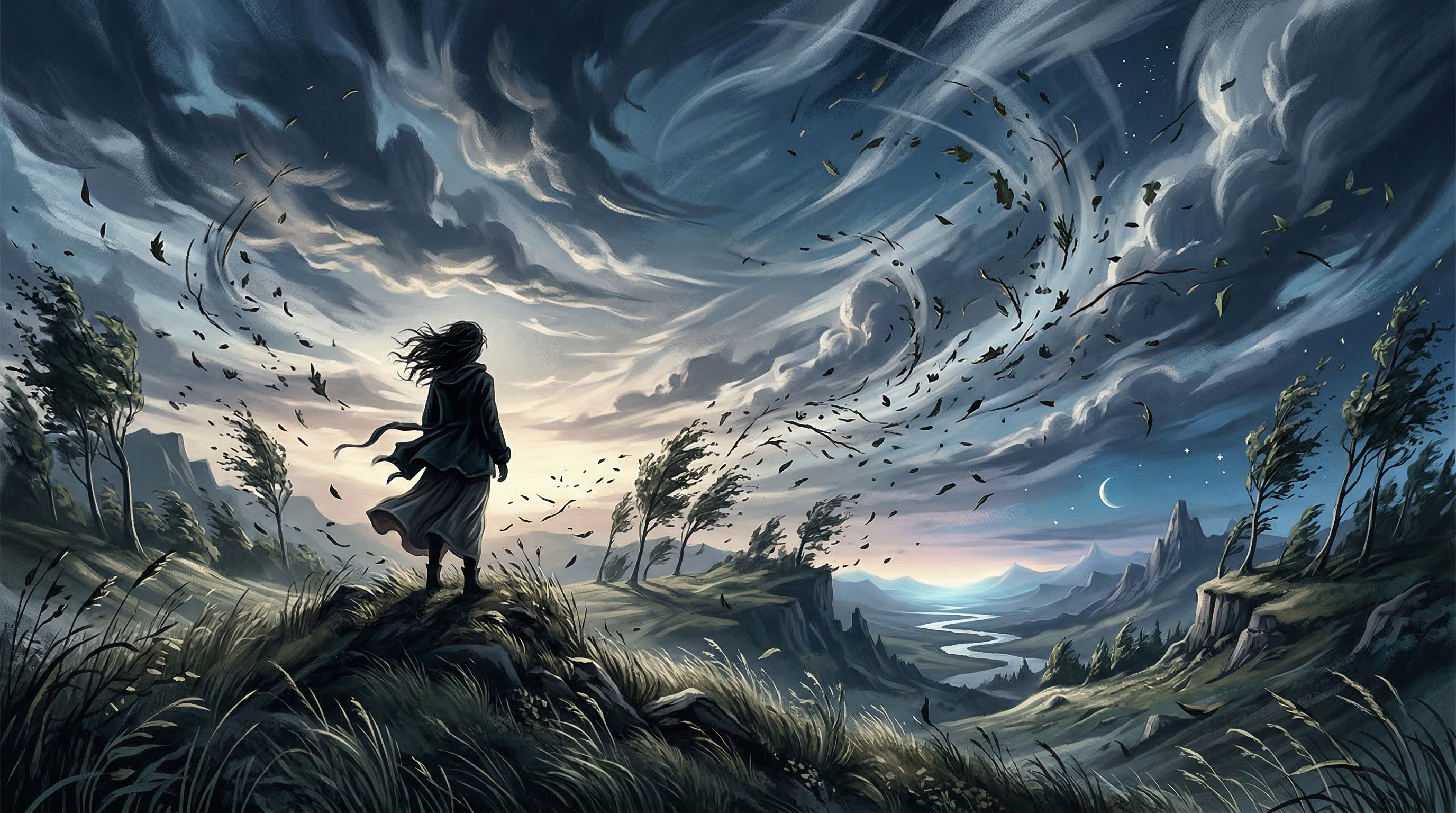
I sometimes encounter dreamers who worry when they see their tent blowing away in a violent wind. They see it as a threat. I see it as an invitation to let go. If the tent is fragile, it’s to force you to listen to the wind, to feel the rain, and to stay in touch with the wild nature of your subconscious. You aren’t in danger; you are simply... exposed. And it is within that exposure that we learn the most about ourselves.
The adventure of simplification and time that stretches
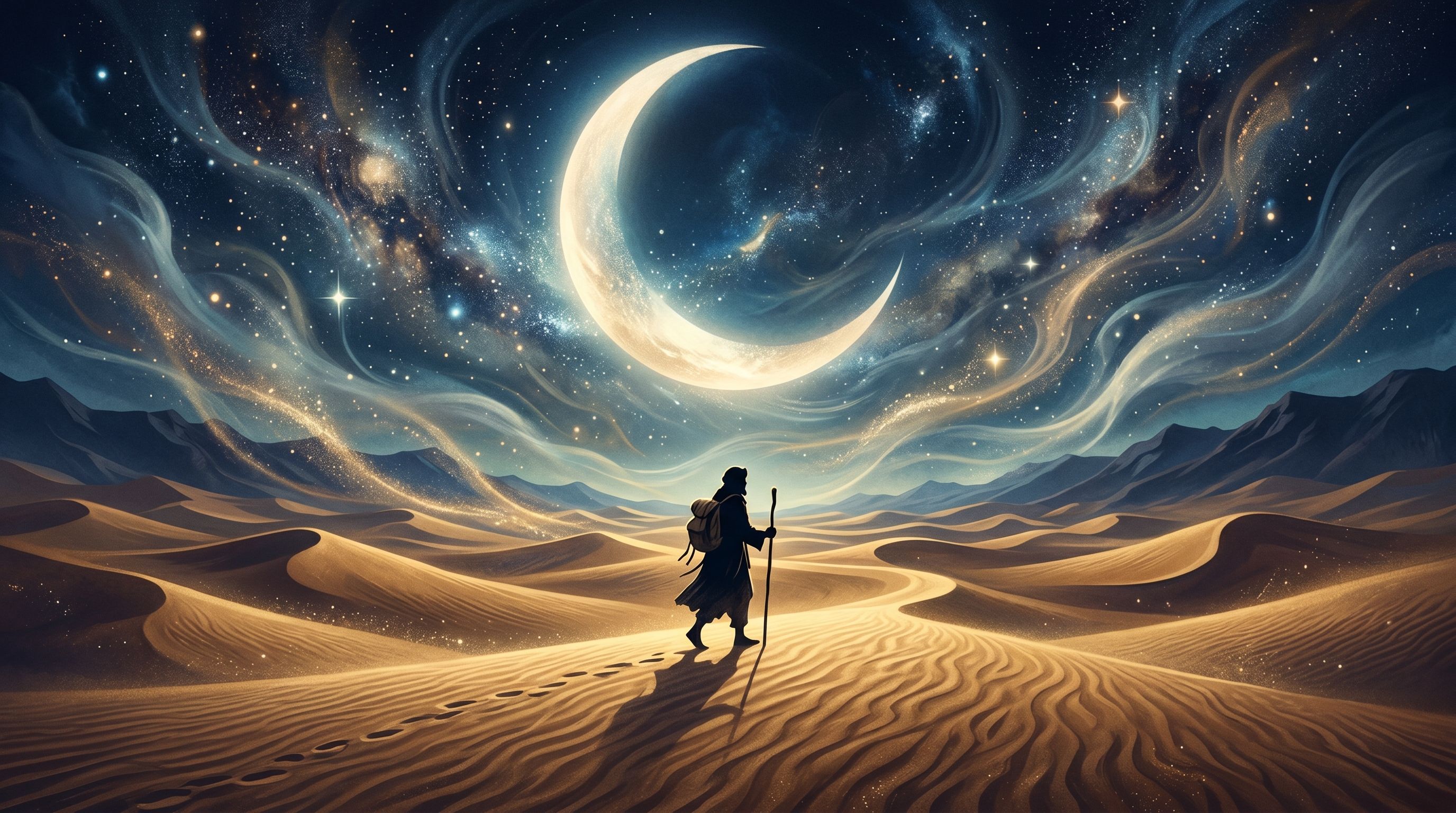
Have you noticed how time flows differently when you sleep beneath the canvas? In a dream, a tent alters your perception of the present moment. It is the very symbol of adventure—not the kind where you conquer lands, but the kind where you conquer yourself.
Some dream dictionaries claim that a tent symbolizes instability or poverty. Honestly, that bothers me. It’s such a narrow view! To me, the Baku who devours your anxieties, the tent is a luxury of the spirit. It’s choosing to carry your home on your back so you can be ready to leave at dawn. It’s a matter of rhythm. If you feel like your life is racing by, like the hands on a frantic watch, the tent in your dream comes to slow things down. It imposes simplicity upon you: a sleeping bag, a flashlight, and the sound of your own breathing.
I once spoke with the shadow of a dreamer who felt suffocated inside their tent. By digging deeper, we realized the tent wasn't the problem; it was what they were trying to force inside it: office worries, old grudges, and imaginary furniture. A tent cannot support surplus. It is a sacred space for the essential. If you feel cramped, ask yourself what you can leave outside before you zip up the entrance.
The nuances of your inner campsite
Not every tent tells the same story. I have seen circus tents, immense and colorful, which spoke of a need to perform or to rediscover a childlike joy. I have seen military tents, rigid and cold, expressing a need for discipline in the face of emotional chaos.
But the most beautiful, in my eyes, remains the small hiker’s tent, isolated under the stars. It represents that sanctuary you build for yourself in the middle of nowhere. If you dream that you are pitching your tent, it is a powerful act of creation: you are deciding to make yourself "at home" in an unknown place. You are befriending uncertainty.
Sometimes, the interpretation remains blurred, and that is perfectly fine. The subconscious isn’t a machine to be repaired; it’s an ocean to be contemplated. Your tent is your small boat on that ocean. Don’t necessarily look for a definitive answer. Instead, ask yourself: "What did I feel when I touched the canvas?" The thermal or tactile sensation in a dream is often more revealing than the symbol itself.
If you wake up with a strange nostalgia for wide-open spaces or, conversely, a desire to check the sturdiness of your walls, take a moment to write down these details. Your dream geography is a precious map.
grand and smelling of sawdust, representing a desire to perform or perhaps the chaos of a life put on display. I have also seen tiny, claustrophobic nylon domes, shivering in imaginary blizzards. But my favorites are the ancient, heavy wool yurts. They carry the wisdom of ancestors who understood that to move with the seasons is the only way to survive. When you dream of these fabrics, pay attention to the texture of your shelter. Is it thin and synthetic, or thick and breathing? A fragile, translucent wall in a dream often mirrors your own raw sensitivity during waking hours. It is an experience of exposure, quite similar to the defenselessness of dreaming of nudity, where the ego sheds its armor. Do not fear this thinness; it is precisely through these porous borders that the light of your deeper intuition can finally seep in.
I remember a dreamer who came to me, exhausted by a sudden and painful divorce. In her waking life, she felt her entire world had turned to ash. Yet, every night, she found herself sitting quietly inside a small green tent pitched in the middle of a vast, silent forest. She was terrified of this isolation, viewing the tent as a symbol of her sudden poverty and abandonment. I had to gently remind her that her subconscious was actually being incredibly kind to her. When the great stone temple of her marriage fell, her soul did not leave her out in the freezing rain; it built her a temporary sanctuary. The tent is the ultimate grief chamber of the mind. It is a place where you are allowed to be small, to pack up your broken pieces, and to heal without the pressure of rebuilding everything overnight. It whispers that it is okay to just exist, temporarily, in the in-between.
There is also a deeper, almost sacred dimension to this canvas room that modern dream books completely ignore—which frankly irritates me. They love to label a tent as a sign of financial instability, missing the profound spiritual heritage of the temporary shelter. For millennia, prophets, nomads, and seekers have retreated to tents to fast, to pray, and to await visions. In the quiet darkness of your dream tent, you are actually participating in this ancient ritual. Your mind has cleared away the distractions of your noisy, permanent life to create a sacred void. Honestly? Sometimes I doubt if we are meant to interpret these dreams at all. Perhaps the tent is simply a quiet room your spirit built so you could hear yourself think. It is a space of pure potential, a blank canvas where your true self can quietly sit, waiting for the storm of daily worries to finally pass.
If you want to keep a record of these ephemeral places you visit at night, you might enjoy sketching them or collecting them. In the Midnight Mind app, we have a little Studio where you can transform these memories into comic strips, so you never forget the exact spot where you pitched your tent between two worlds.
Sleep peacefully, traveler. The canvas is thin, but it is woven from your own inner resources. Nothing bad can happen to you as long as you accept that everything is just passing through.