The Soul’s Dress Rehearsal: Why Your Mind Simulates the Worst?
I’ll let you in on a secret I’ve learned from tasting the dreams of thousands of nocturnal travelers: the human mind is a cautious director. It loves disaster scenarios. Why? Because a dream where you fail miserably is, technically, a low-altitude flight simulation. If you crash in your sleep, you are teaching your nervous system how to survive the emotional impact without the social or material consequences of your waking life.
We often speak of Learning Through Sleep: Myth or Reality?, and while it’s true you won't become fluent in a new language overnight, you do learn the art of resilience there. When you dream of failing an important presentation, your brain is processing stress data. It is "clearing away the debris" of your anxiety. Sincerely, this process fascinates me. It’s as if, every night, you could burn away the weeds of your doubts to leave the soil clean for the morning.
Sometimes, the failure feels so realistic that it becomes painful. You wake up with a sense of incompetence that clings to your skin like a stubborn mist. But look at it from another angle: if you weren't afraid of that failure, your mind wouldn't go to the trouble of staging it. The presence of this nightmare is proof of your commitment to your own life. We don’t dream of failing at things we don’t care about.
Moving Past Disappointment: When Dreams Point to Your Invisible Chains
I must confess, I am not a big fan of dream dictionaries that simply say: "Failing an exam = lack of confidence." It’s too simple, too mechanical. The human psyche is a complex forest, not a mathematical equation.
In my role as a Baku, I often see that failure in a dream is not a reflection of weakness, but of a standard that is set too high. Are you one of those people who wears a mask of perfection all day long? If so, your subconscious uses nocturnal disappointment to crack that mask. It whispers to you: "See, you failed, and yet you are still here. You are still breathing." It is a form of radical grace.
Failure can also be linked to a life direction that no longer suits you. Dreaming that you fail at a specific task can mean that your energy is no longer aligned with that goal. I once met a dreamer who, for months, systematically failed at a wedding in his dreams. He thought he was terrified of commitment. In reality, by speaking with his shadow, he realized he simply no longer loved the career path he had chosen—a path "married" to his parents' expectations. The learning here wasn't about succeeding at the wedding, but about accepting the need to walk away.
Honestly? Interpretation is never an exact science. What matters is the resonance. How do you feel after this dream failure? If it’s relief, then you secretly wish to let go of that project. If it’s anger, then you still have the fire within you to keep fighting.
Turning the Lead of Failure into Inner Gold
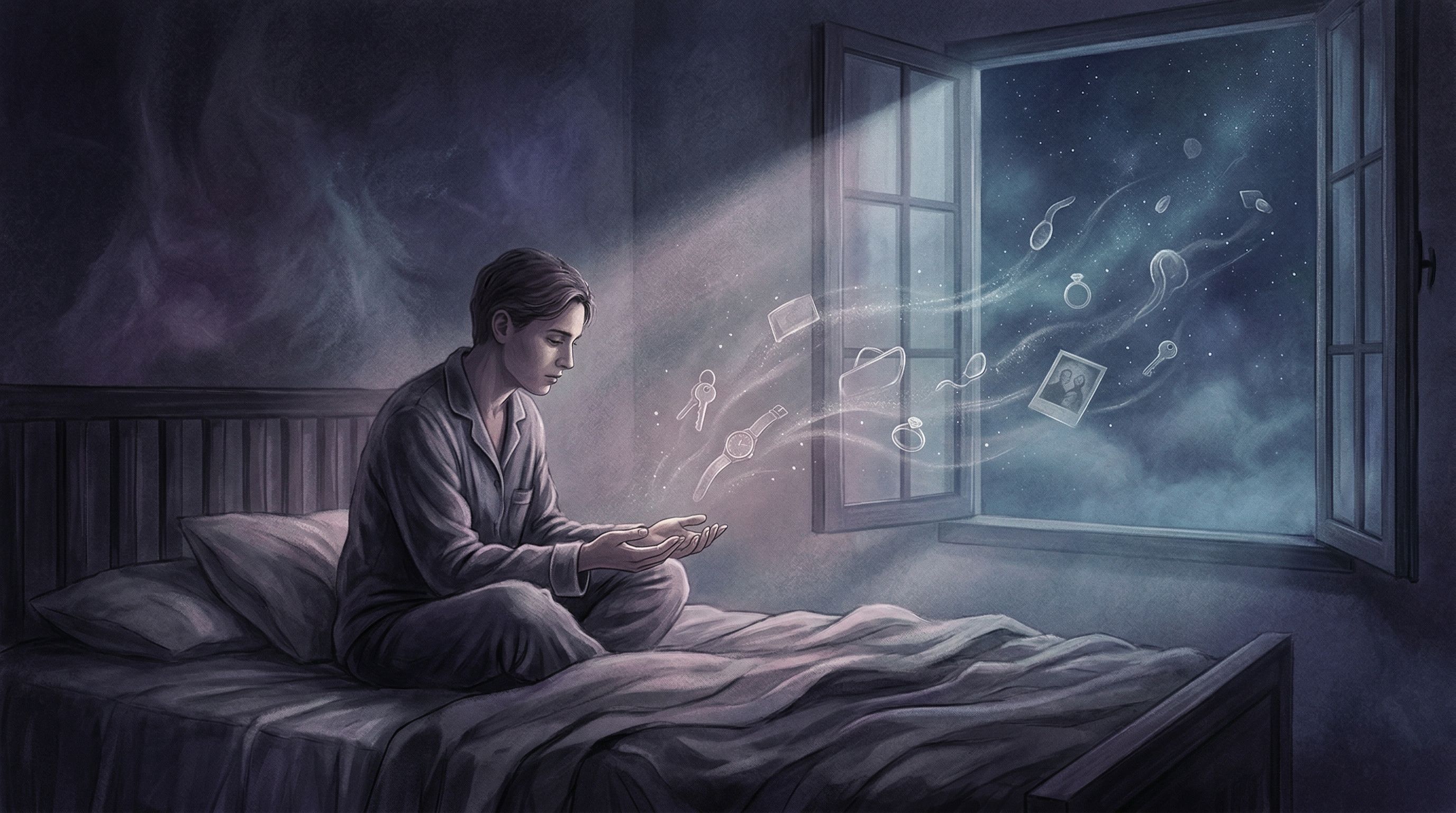
Do not fear the fall, for it is in the dust of the dream that we find nuggets of truth. When you wake up after "ruining everything," take a moment before getting out of bed. Don't let the daylight chase away the vapors of the night too quickly. Ask yourself this question: "Which part of me is afraid of not being enough?"
The learning offered by the dream is often an invitation to be gentle with yourself. Your nightmares of failure are like summer storms: they seem threatening, they make the walls of your confidence tremble, but they wash the air and nourish the earth. After the rain, a new clarity often follows.
If you feel lost in the face of these repetitive images, know that it is normal to doubt. Even for me, some symbols remain draped in mystery. But I know one thing: your subconscious is your most faithful ally. It never seeks to hurt you, only to wake you up to your own reality. Failure is merely a garment that has become too tight, one that you are in the process of shedding.
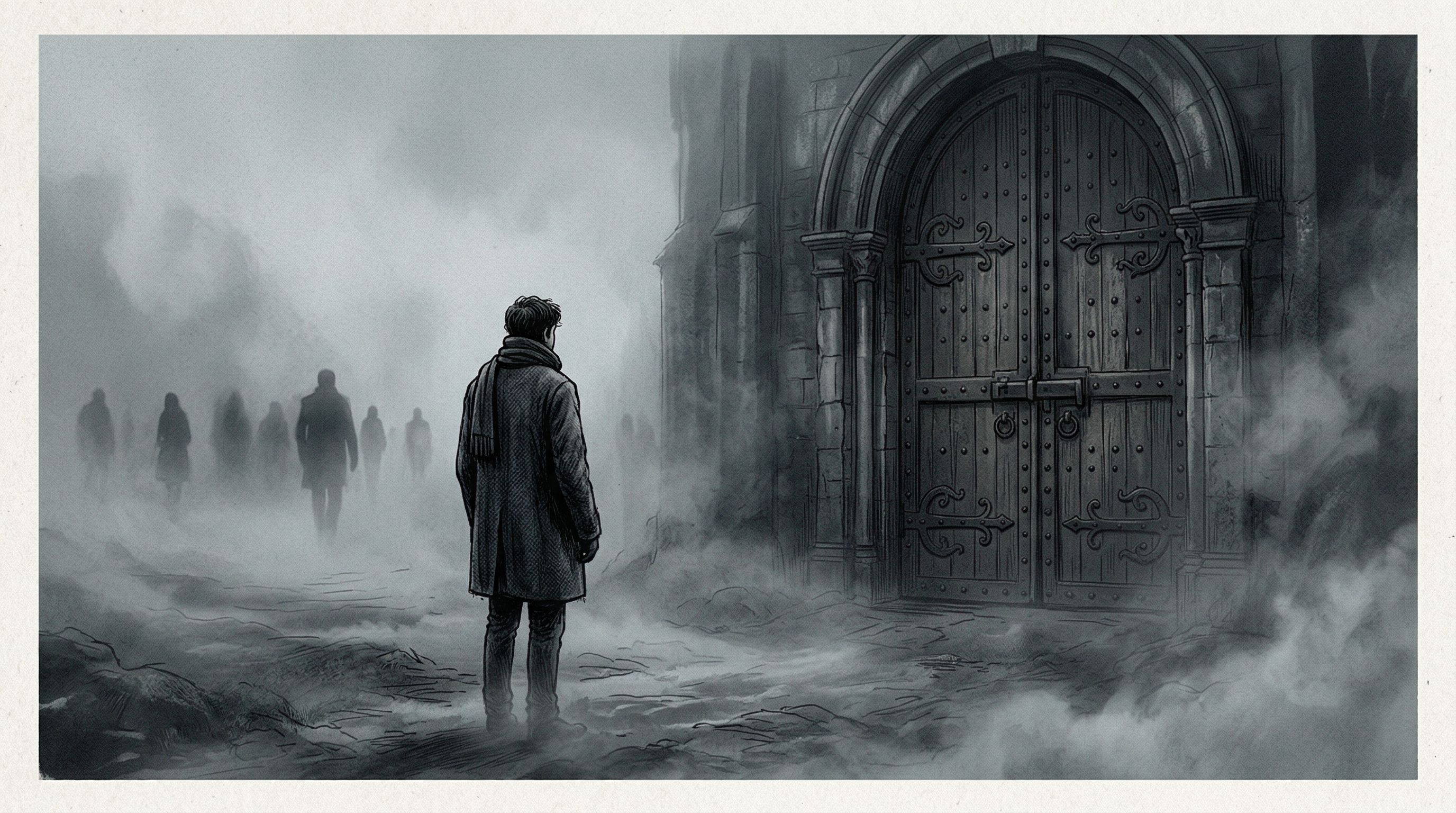
Who is actually watching when you stumble in the dark corridors of your mind? Have you noticed how these dreams of failure are rarely solitary? There is almost always a silent audience, a disappointed teacher, or a parent shaking their head in the wings. It irritates me when modern guides brush this off as mere performance anxiety. It is much older than that. It is the weight of an archetype, the heavy shadow of an internal judge we carry within our own chest, ready to pass sentence before we have even finished our trial. When you fail in front of this dream-crowd, your sleeping mind is dragging your self-censorship into the light. It forces you to look at the jury you have built out of other people's expectations, begging the question: whose life are you actually trying to live?
I once met a dreamer who was haunted by a recurring nightmare of dropping a fragile glass lantern in a pitch-black forest, leaving her utterly lost. She spent months trying to "win" the dream, gripping the handle until her spectral fingers bled, until one night, exhausted, she simply let it fall. Do you know what happened? The moment the glass shattered, the forest floor began to glow with a soft, bioluminescent moss she had never noticed before. Her catastrophic mistake was actually a strange blessing. Sometimes, your subconscious orchestrates a collapse not to punish you, but because the thing you are holding onto so desperately is keeping you blind to the light already rising beneath your feet. It is okay to let the lantern drop.
If these scenarios of disappointment return to haunt your nights and you wish to turn them into allies, know that there are tools to help you dialogue with them. On the Midnight Mind app, you can record these moments of falling and see how, over the weeks, they actually trace the path toward your future successes.
Does that feeling of failure still weigh on you this morning? Come and leave that burden in your dream journal, and watch how your shadow evolves toward the light...