The Poetry of Gliding: Between Control and Surrender
What fascinates me about the symbol of the sled is the total absence of friction. In your waking world, everything seems to require a colossal effort—the energy of an engine, the strain of muscles, or the constant noise of social expectations. But in the silence of your unconscious, gliding over snow means accepting that the terrain is doing part of the work for you.
It is a bit like watching the path of a small stream: the water doesn’t fight gravity; it embraces it. When you dream of a sled, your mind is testing your ability to let go. Are you trying to dig your heels into the snow to slow down, or are you leaning into the curve?
I often see dreamers worry about this lack of brakes. You might tell me, with a hint of anxiety, that you couldn't stop the movement. But I would ask you: why would you want to stop when the path is clear? The sled speaks to your ability to trust your own trajectory. If you dream that you are steering with ease, it means you have found a secret harmony with your destiny. You aren't forcing events; you are accompanying them.
On the other hand, if the sled tips over or the snow is too deep, perhaps you are trying to move in a direction that isn’t yet "frozen"—not quite ready. There is a form of patience inherent to winter. You cannot glide on bare earth. Sometimes, your dream is simply saying: "Wait for the right conditions; don't burn your strength trying to pull a sled over gravel."
---
The Neurology of the Frozen Landscape
From a scientific perspective, the sensation of gliding or sliding is often linked to the unique state of your body during REM (Rapid Eye Movement) sleep. During this phase, your brain triggers a state called muscle atonia—a temporary paralysis that prevents you from acting out your dreams.
Some specialists suggest that when your brain sends signals to move but receives no feedback from your paralyzed limbs, it interprets this "weightlessness" as gliding, flying, or sliding. This is why the sled feels so smooth; it is the perfect mental construct to explain why your body feels both heavy and incredibly light at the same time.
Furthermore, the "white space" of the snow-covered landscape in your dream might be a reflection of your brain's need for neural pruning. Just as snow covers the clutter of a garden, sleep allows your brain to clear out unnecessary information. Dreaming of a vast, white expanse is often a sign that your cognitive system is trying to reduce "noise" and return to a state of clarity.
🌙 Yume's Echo: Sometimes, the greatest courage isn't rowing harder against the tide, but letting go of the oars and allowing the slope to guide you toward your own truth.
---
The Winter of the Soul: A Space of Clarity
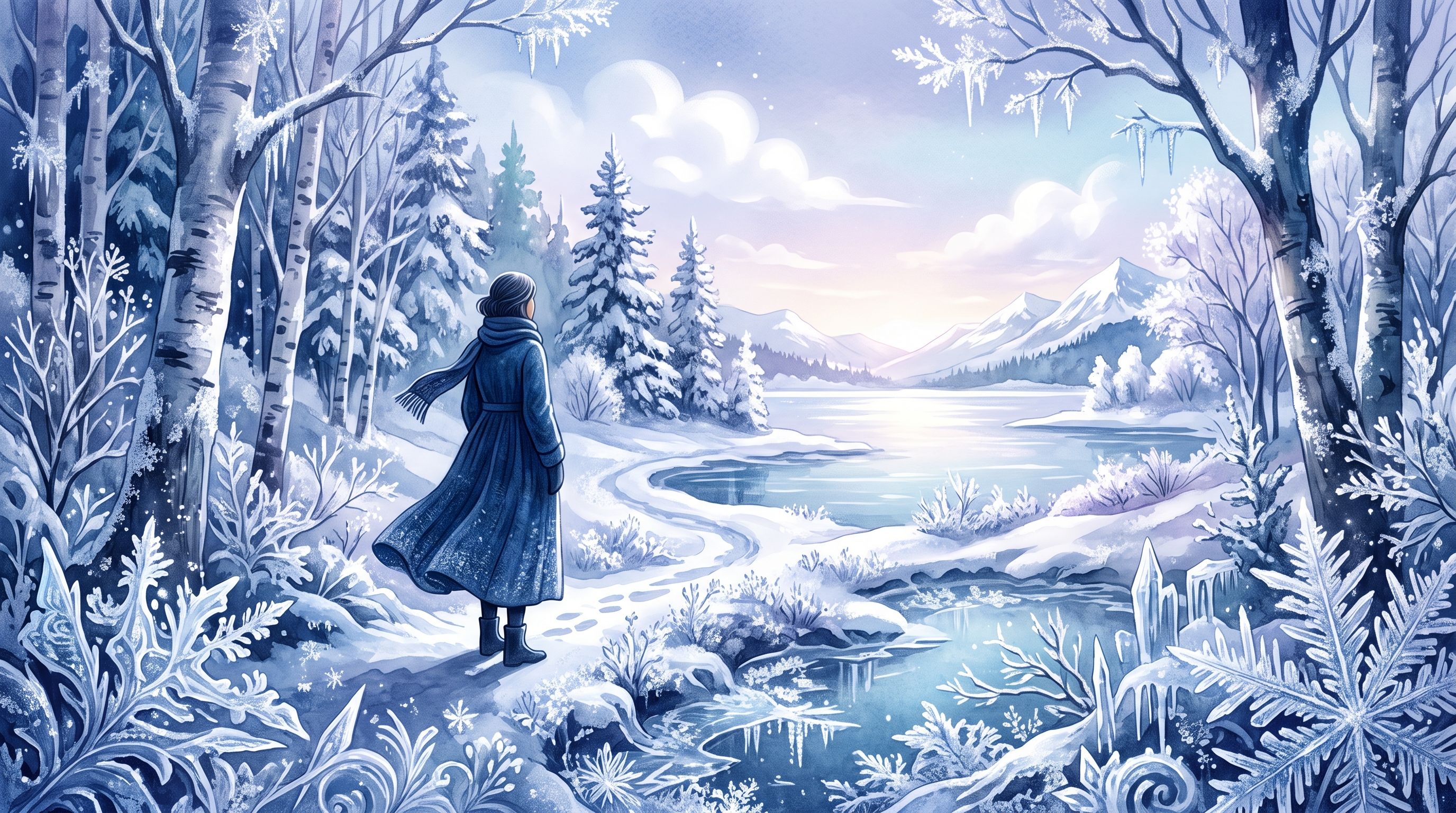
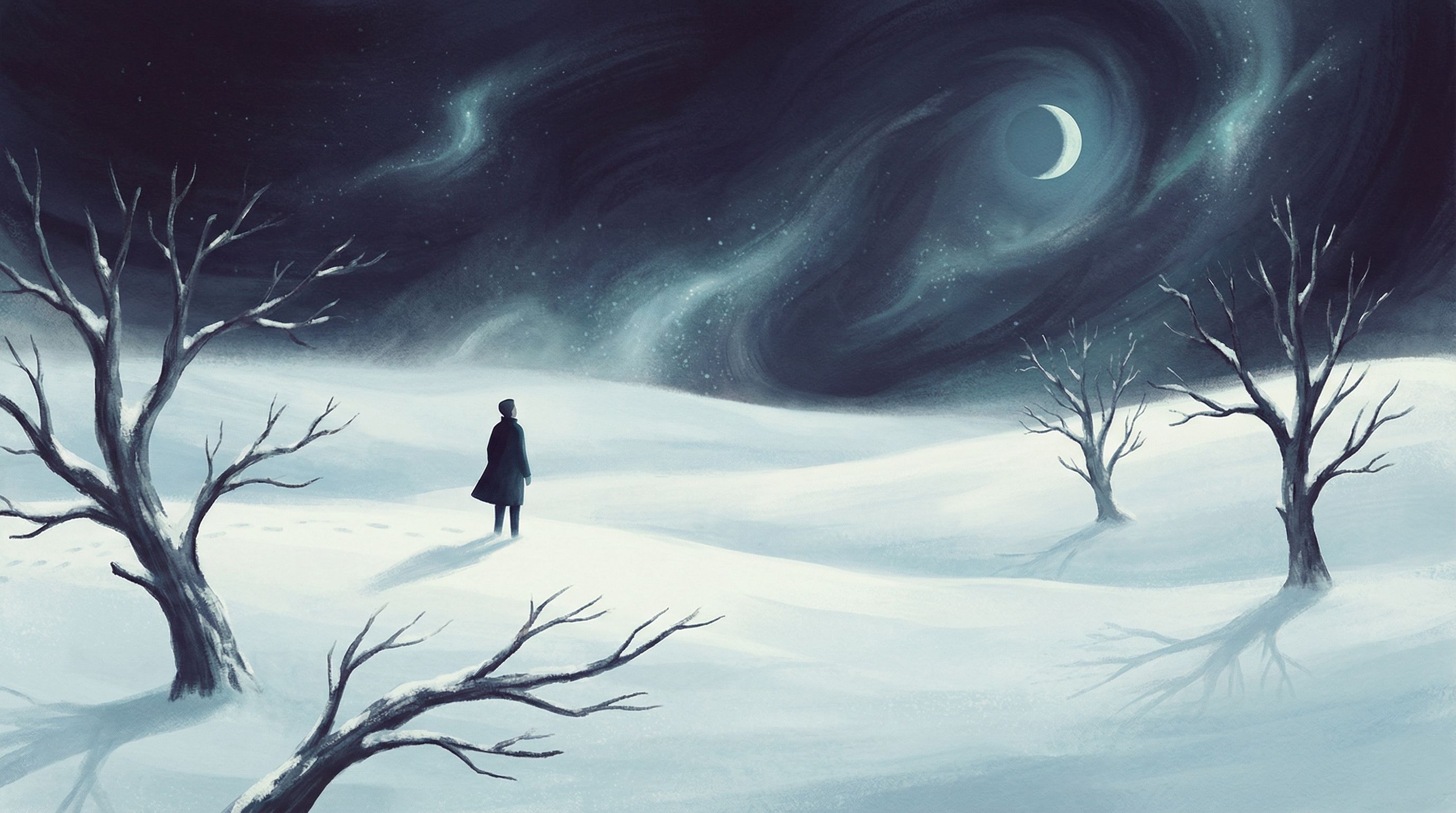
Winter, in the language of symbols, isn't the dreary season it's sometimes made out to be. It is the season of great simplification. When snow covers everything, superfluous details vanish. Only the essential remains. Dreaming of a sled in this context is often a sign that you are going through a period of internal sorting.
I’m sometimes a little annoyed by dream dictionaries that systematically link cold to loneliness or sadness. It’s such a narrow view! To me, the Baku, the cold within a dream is a healing anesthesia. It allows you to look at your scars without them burning.
The sled then becomes a vehicle for recovery. It carries you across your most desolate inner landscapes with a lightness you couldn't achieve on foot. It is a much more protected way of traveling than, for instance, being exposed like a sea urchin on the ocean floor. The sled provides a platform, a boundary between you and the freezing depths of your subconscious.
---
Nuances of the Crew: Are You Alone on Your Journey?
Sometimes, the sled isn't empty. The passengers or the creatures pulling the vehicle change the entire texture of the message.
If you see vigorous dogs pulling you, it is your instinct—your wilder, more animalistic self—that is guiding you. You are trusting your gut feelings to pull you through the cold. If it is a sleigh pulled by reindeer, we touch upon something more spiritual, more airy, almost magical. It suggests a movement that is guided by higher ideals or a sense of wonder, much like the delicate balance of a flamingo standing in still water.
But what if the sled is motionless? A sled sitting still in the middle of the night is an image of rare power. It suggests that all the tools are there, the vehicle is ready, but you are perhaps waiting for a signal, an emotion, or "the right snow" to set off.
Do not see this as a failure or a sign of being stuck. In the world of dreams, stillness is a very intense form of action. It is the moment where potential energy accumulates before the descent. You are gathering the gravity you will need for the journey ahead.
---
Use Case: From Burden to Glide
I remember a dreamer who repeatedly saw herself hauling heavy, rusted objects on a rough wooden sled. She was exhausted and convinced that the dream was a nightmare about her family burdens and the weight of her past.
However, when we looked closer at the mechanics of the dream, we realized something vital: the sled was what made the load moveable. Without it, she would have been trying to carry those heavy weights in her arms, and she would have collapsed within steps.
The dream wasn't showing her her misery; it was showing her her ingenuity. She had found a way to let her past glide instead of carrying it on her back. By the end of our reflection, she realized she could stop pulling and wait for a slope. The moment she stopped forcing the movement, the "winter" of her life became a tool for transition rather than a source of struggle.
---
Listening to the Sound of the Runners
Never forget that the sled is a vehicle of transition. We don't live on a sled; we cross a land to go somewhere else. It is a reminder that your current situation, however "cold" or "slippery" it may feel, is a passage.
It has its own beauty, its own music—that very specific crunching sound beneath the runners. I encourage you to listen to that sound in your next dream; it has something to tell you about your inner solidity.
If this journey across the snow continues to haunt your nights, take the time to note the color of the sky or the feeling of the wind on your face in your journal. These details are the breadcrumbs your mind leaves behind.
Your dreams are not riddles to be solved with a magic wand, but traveling companions just waiting for you to sit beside them for a moment. If you want to explore these snowy paths more in depth, your Baku is always here to listen.
I once listened to a dreamer who woke up exhausted every morning, convinced she was failing some unspoken test. In her dreams, she wasn't riding the sled; she was harnessed to it like a beast of burden, dragging it up a steep, frozen mountain. How it pains me to see people turn their own instruments of release into instruments of torture! They carry their worries like heavy cargo, refusing to let the slope do the work. If you find yourself pulling the wooden frame instead of sitting on it, ask yourself what weight you are refusing to drop. Sometimes, this struggle happens when we try to force movement over areas of our psyche that have completely frozen over—similar to the emotional stasis one feels when trapped on a massive glacier. The sled is begging you to sit down, pull your coat tight, and trust the gravity of your own healing.