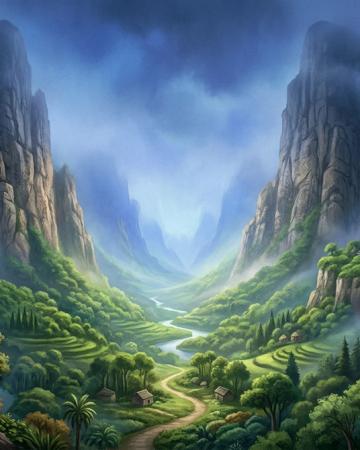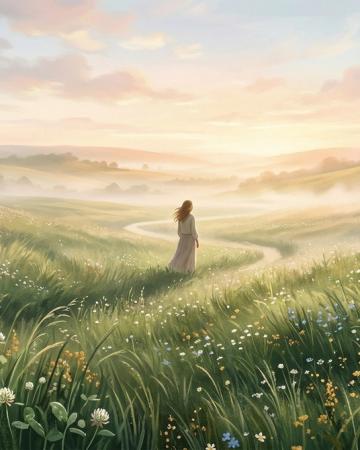
A hill has something a mountain doesn't: from the bottom, you can see the top. The summit is right there, a few hundred steps away, and that's what makes the climb so telling in a dream. You know where you're going. What's left to read is your pace, the ground under your feet, and what you find once you get up there.
What does it mean to climb a hill in a dream?
Most often, an effort you know you can make: a goal within reach that takes consistency more than heroics. How you climb tells you more than the fact that you're climbing.
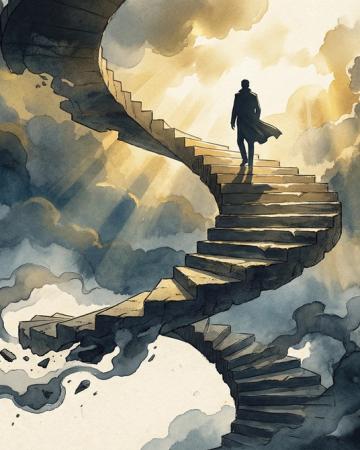
What matters here is the action more than the scenery, so start with your stride. A steady pace, even out of breath, usually goes with a project that's genuinely moving: studying for an exam, getting back on your feet after time off, a move, a relationship you're rebuilding one step at a time. Charging up the hill, desperate to be done, raises a different question: is it a real deadline pushing you, or just the urge to have it over with?
Artemidorus, a dream interpreter of the second century, drew a line between flat roads and roads that climb. A smooth road heading uphill, in his reading, meant plans that would get done, but late and with plenty of discouragement along the way. I like that distinction. The slope doesn't stop you from arriving; it slows you down. If your dream left you tired but not beaten, that's probably what it's about.
And stopping halfway up? I don't read it as giving up. In many of these dreams, that's the moment you turn around and see how far you've come. If your dream ended there, try to remember what you saw when you looked back. It's often the most useful part of the dream.
Hill or mountain: what does the size change?
Size sets the scale of whatever is on your mind. A mountain is about a challenge bigger than you; a hill is about one your own size, the kind you can climb in a day.
The Book of Isaiah has a clear image for this. To prepare a road through the desert, "every valley shall be exalted, and every mountain and hill shall be made low" (Isaiah 40:4). The hill is one of the obstacles on the road, right next to the mountain, only smaller. That's why a hill dream deserves your attention even when it seems ordinary. It's often about everyday effort, the kind you don't tell anyone about because there's nothing heroic in it: paperwork that keeps dragging on, the weeks when you just have to hang in there, a habit you're trying to build.
Sometimes the hill grows while you dream, or the top keeps moving away as you walk. When that happens, I look at what in your life seemed doable and no longer quite does. Sometimes the task really has gotten bigger. Sometimes it's exhaustion that has changed how you see it, and a night's sleep or a little outside help brings it back to its real size.
What does it mean to keep slipping on a hill?
A slope of mud or sand where every step sends you back points to effort that isn't sticking. More often than not, the ground isn't ready, rather than you lacking willpower.
Picture a hillside soaked after a downpour. You climb two steps, slide back one, your hands grabbing at the grass. It's one of the most frustrating dreams there is, and it looks a lot like situations where you keep starting over: paperwork that gets sent back, the same argument coming around again, a project stuck waiting on someone else's decision. Mud adds a sense of getting bogged down; sand, a sense of foundations that won't hold.
Before you ask whether you're trying hard enough, ask whether you're on the right side of the hill. Should you wait for the ground to dry? Go around another way? Ask someone for a hand? The dream is rarely questioning your courage. It's questioning your method.
Some dreams go further: you slip all the way down and can't stop. Those are more about the fear of losing what you've gained. And if you wake from these dreams as worn out as if you'd really been climbing, and it keeps happening, talk to your doctor: sometimes the dream is only pointing at a tiredness with a cause of its own.
What does it mean to go down a hill?
It depends on how you go down. An easy or joyful descent often means relief, the end of an effort; a descent you can't control points to losing your grip or a fear of sliding backward.
The traditions don't agree on this one, and I find that disagreement useful. In the books compiled under Ibn Sirin's name, going down a hill reads as loss or humiliation, but coming down a steep slope as reaching safety. Artemidorus, for his part, thought the best thing to do with rough terrain was to cross it, find the path, and come back down to the plain. In other words, going down has no fixed meaning.
To read yours, look at three things. First, your speed: running down a hill with your arms flung wide is the pleasure of a weight falling away. Then your direction: were you heading home, or getting away from something? Finally, the ending: reaching the bottom on your feet isn't the same as rolling and falling.
What do you see once you reach the top?
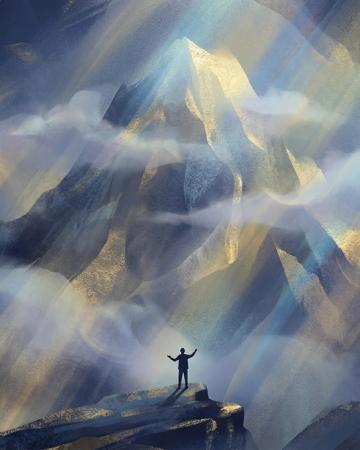
The summit is where you gain perspective. What you see from up there, and how you feel seeing it, often shows what you're starting to understand, or getting ready to leave behind.
From the top, what seemed huge shrinks: the house, the road, the whole town fit in a single glance. If the dream shows you a valley or a town spread out below, ask yourself what in your life would be easier to see from a distance right now. A conflict, a choice, somewhere you'll soon be moving on from.
The light matters too. A view at twilight, with the lights coming on one by one, often has something of a goodbye about it: you climb up to look one last time at a period of your life, a place, an earlier version of yourself. A view in broad daylight, sharp all the way to the horizon, tends to go with a decision that's getting clearer.
And what if there's nothing to see once you're up there? A summit lost in cloud, a ridge blocking the view, another hill behind the first. That dream often leaves a letdown behind, the feeling of reaching a goal that doesn't deliver what you hoped: the degree in hand, the job landed, and the sense that nothing has changed. It isn't saying the effort was wasted. It's asking what you really hoped to find at the top, and whether that's something you need to look for somewhere else.
Psalm 121 opens with the same gesture: "I will lift up mine eyes unto the hills, from whence cometh my help." The summit is where you look for help. And sometimes there's nothing to do up there but sit. A dream where you stay at the top doing nothing, watching the clouds drift by, isn't lazy. It often means you need a rest after a long climb.
Why dream of a hill you know?
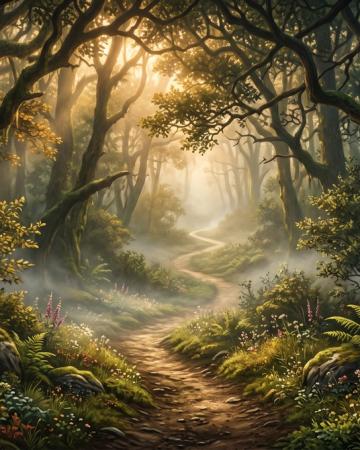
A real hill, the one from your childhood, a vacation spot, or a town where you used to live, points first to the time when you used to climb it. The dream is then about that period as much as about effort.
Childhood hills have one odd quality: they shrink. The one that looked enormous at eight takes ten minutes to climb at forty. If your dream puts you back on that slope with a child's legs, it may be about an effort that feels bigger than it is, because it wakes up an old way of living it: the fear of coming in last, the wish that someone would wait for you at the top.
Look at who was there, too. A parent walking ahead, friends running, no one at all. The people on a familiar hill often show who you link with effort, or with support.
Here's what I'd suggest for this dream: draw your hill. A single line will do, with an X where you were when the dream ended. Then write next to it the project in your life that's at the same point on its own slope. If you'd like, share this one with me in the app, along with the exact spot where you stopped: that's often where I start reading.