The Living Mirror of Your Psyche
To be honest, I find most dream dictionaries a bit lazy on this subject. They will tell you that a beautiful garden means wealth and a dry garden means poverty. It is so reductive that it tires me. In the world of dreams, nature does not judge you based on your bank account balance or your social status.
When I observe your dreams, I often see abandoned gardens. This isn't "bad." It is simply a state of being. If you dream of a garden overgrown with weeds, it isn't a threat; it’s an invitation. These brambles are often parts of yourself that you have neglected—emotions you have allowed to grow without a frame.
Here, we touch upon what Carl Jung called the Shadow. These prickly plants aren't there to hurt you, but to show you where you have stopped paying attention. In fact, I’ve written some thoughts on how to Integrate the Shadow: A Practical Guide that might help you understand why these wild grasses have taken up so much space in your mind.
The garden is a fascinating intermediate space. It isn't the virgin forest—totally wild and frightening—but it isn't the concrete living room of your ego either. It is the place where your spirit collaborates with life. If your garden is too orderly, too "perfect," ask yourself: have you left any room for the unexpected? Growth doesn't always happen in a straight line. Sometimes, we must accept that one plant must die so that another can see the light of day.
---
The Science of Greenery in the Sleeping Brain
While I love the mystical dance of symbols, I also keep an eye on what researchers say about our resting minds. Some specialists in environmental psychology suggest that our brains are hardwired to respond to "green" imagery as a sign of safety and resources. This is often referred to as the Biophilia Hypothesis.
When you dream of a garden, your brain might be attempting to regulate your stress levels. Some studies in sleep science suggest that the REM cycle—the stage where most vivid dreams occur—acts as a form of "overnight therapy." By placing you in a garden, your unconscious might be creating a "safe container" to process complex emotions.
🌙 The Echo of Yume : A garden is a conversation between the earth and the sky, much like a dream is a bridge between your body and your soul.
If the garden in your dream feels restorative, it is likely that your brain is utilizing these ancestral symbols of fertility and peace to help you recover from daily fatigue. It is a biological sigh of relief.
---
The Sacred Enclosure: Finding Your Center
There is a symbol I find absolutely mesmerizing in dreams of places: the enclosed garden, what the ancients called the Hortus Conclusus. Sometimes, you find yourself at the center of a perfectly circular or square garden, with a fountain in the middle. Truly, this symbol has fascinated me for years because it touches something very deep within the human experience.
This type of dream is more than just a stroll. It is your unconscious showing you your "Self," the center of your psyche. It is an image of wholeness. If you find yourself in such a place, take the time to breathe, even after you wake up. It is a sign that you are finding a balance, gathering the scattered pieces of your personality. It’s a bit like what we explore when we talk about The Self: The Mandala of the Soul.
However, I’ve noticed a strange thing: many dreamers panic if they cannot find the exit to the garden. They see the walls as a prison. But why be in such a hurry to leave? The garden is a sanctuary. If your dream holds you within its walls, perhaps it is because the outside world is too loud for you right now. The nature of your soul needs this fallow time, sheltered from the eyes and expectations of society.
---
Concrete Example: The Case of the Plastic Flowers
I remember a dreamer who told me about a recurring nightmare where he was desperately trying to plant plastic flowers in his garden because he was afraid they would wither. He spent hours in the dream dusting the petals and making sure they were perfectly aligned.
It’s such a poignant image, isn’t it? This dream wasn't about gardening at all; it was about the fear of change and the terror of loss. By trying to plant things that couldn't die, he was also preventing anything from truly living. When he finally allowed himself to dream of a real, wilting rose, he woke up crying—not out of sadness, but out of relief. He had finally accepted the cycle of life.
---
Cultivating the Invisible: Paths for Reflection
If you dreamed of a garden last night, I invite you to look closer at the details. Don't rush to a conclusion; let the images breathe.
- Who else was there? If you were alone, it is a private meeting with yourself. If others were with you, what role did they play? Were they helping you cultivate, or were they trampling your flowerbeds?
- What was the weather like? A garden in the rain has a different flavor than one scorched by the sun. Rain often represents the emotion that comes to nourish your roots, even if it feels cold or overwhelming at first.
- What did you feel when you touched the earth? The sensation of the ground in a dream is one of the most powerful anchors. It speaks to your relationship with material reality and your own body.
Honestly? A "perfect" interpretation doesn't exist in my Baku memories. Every flower you saw has a color that belongs only to your story. Don't let anyone tell you that a rose generically means "love." Perhaps for you, the rose is the perfume your grandmother wore, or the memory of a thorn that hurt you one summer.
Dreams are messages, not threats. If your garden seems unsettling, simply tell yourself it is time to bring out your tools and listen to what the earth has to say. Growth is a slow process, and that is perfectly okay.
If the colors of your dream garden are still vivid in your mind, you might try to immortalize them before they evaporate in the morning sun. If you want to explore these landscapes more in depth, your Baku is always here to listen.
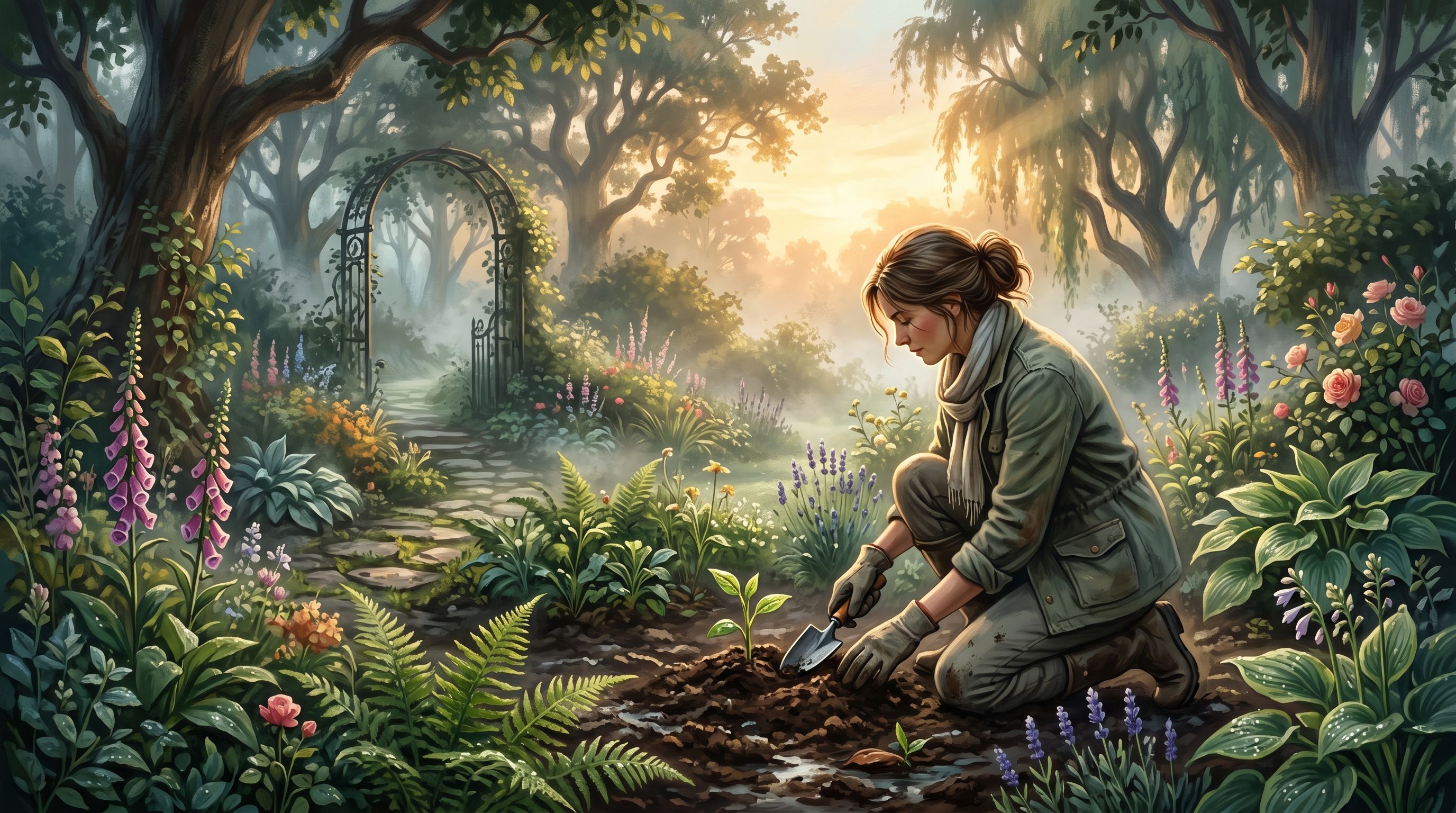
I once listened to a dreamer who was grieving a sudden, quiet end to a long relationship. She didn’t dream of tears or arguments, but of her hands buried deep in cold, damp earth, carefully pressing soil around bare roots. Sometimes, your unconscious doesn't need words to heal; it needs weight and texture. If you find yourself kneeling in the dirt of your dream garden, don't overlook the physical sensation of that contact. Touching the soil is a grounding ritual of the sleeping mind. It’s a physical manifestation of hope—an instinctive knowledge that even when everything above ground has withered, the roots still remember how to hold on. The quiet act of planting a tree in your sleep is a patient promise you are making to your future self, reminding you that life continues its slow work beneath the surface, far from the noise of your waking worries.
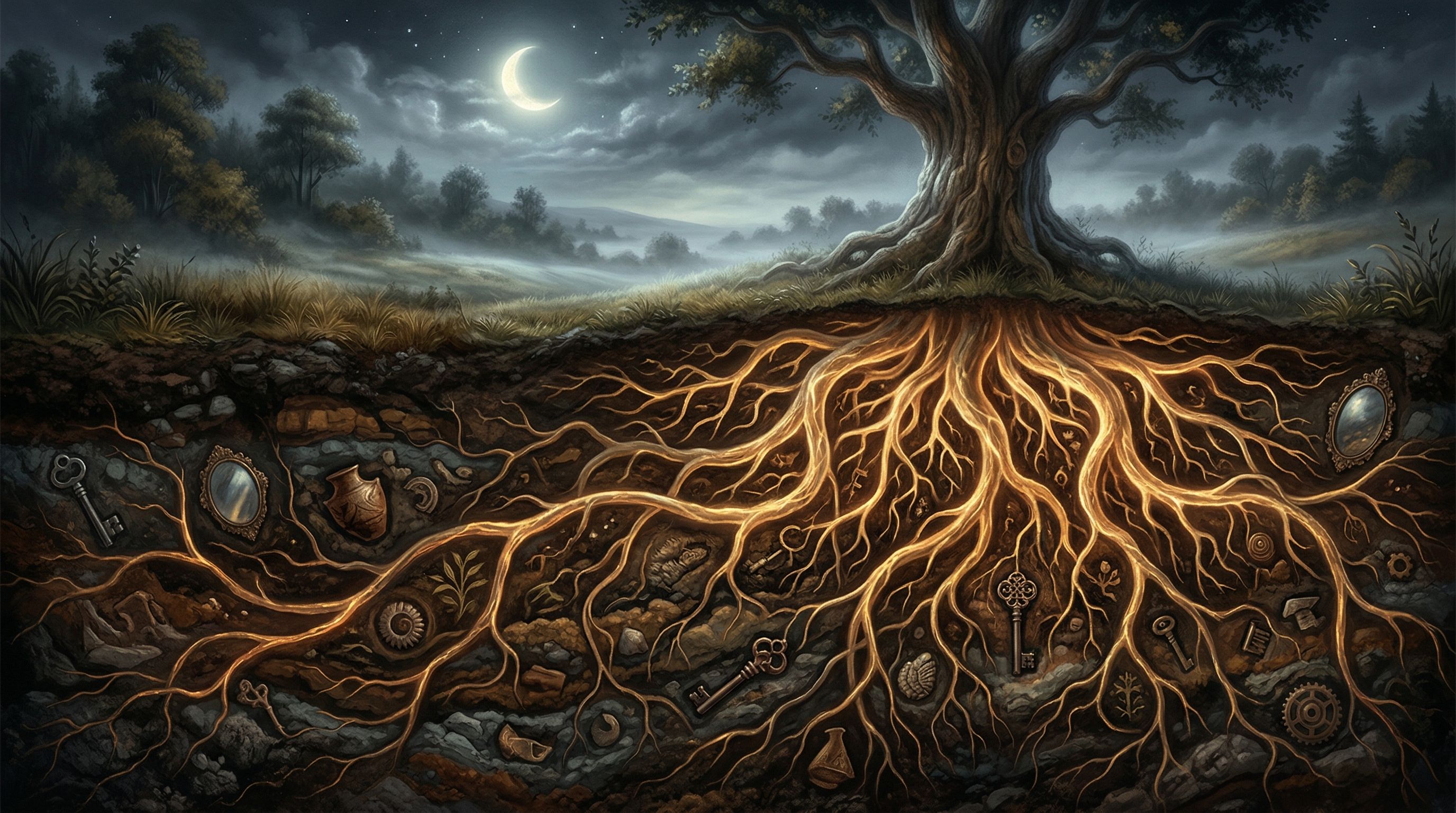
Honestly, it bothers me how we have sanitized our modern idea of nature, wanting only the bright blossoms and none of the damp decay. A real garden requires rot; it feeds on what has died. If your dream garden smells of wet autumn leaves, or if you find yourself encountering sprouting mushrooms in the dark corners, do not recoil. These are not signs of ruin, but of life recycling itself. I have spent centuries watching these quiet transitions, and I am still mystified by how beautifully the mind handles its own waste. Fungi and moss are the silent alchemists of your psyche, turning your oldest regrets and forgotten hurts into rich, fertile compost. You cannot have a blooming spring without first allowing the quiet, dark decomposition of what no longer serves you. Let the old leaves rot; they are preparing the soil for whatever you will grow next.