The mechanics of the soul and the weight of routine
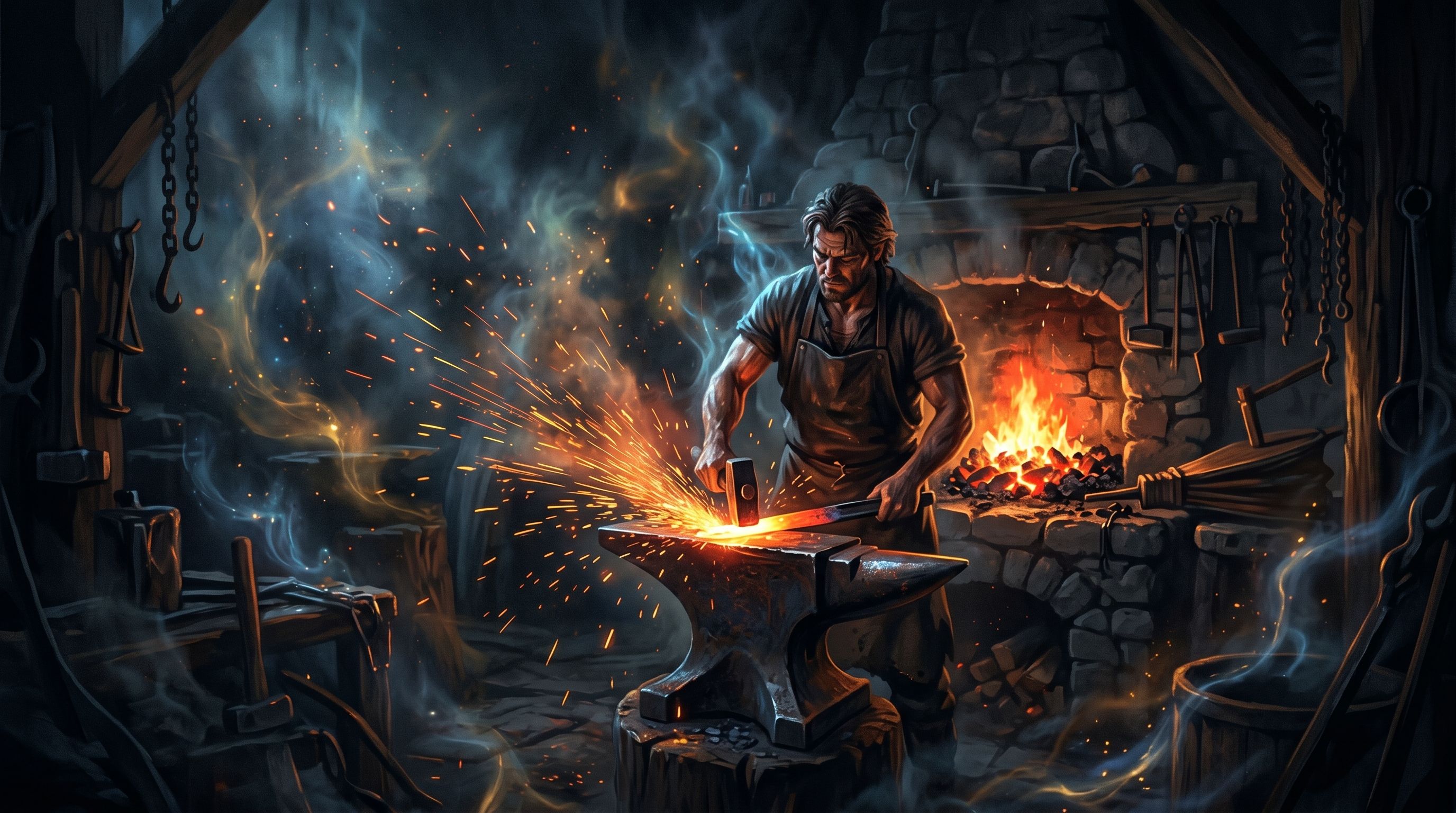
Sometimes, when I slip into a dreamer's visions, I feel a bit sad to see these immense metal structures replacing forests or rivers. Why does the mind choose such a setting? To me, the factory is not just a building; it is the symbol of our own "inner machinery." We spend our days wanting to be productive, checking boxes, and following a rhythm that is not always our own.
If, in your dream, the factory is running at full speed without you ever seeing the finished product, it is often a sign that you are caught in a routine that has lost its original purpose. You are running, but toward what? You are producing, but for whom? I once met a dreamer who spent his nights screwing bolts onto clouds. He was exhausted. His mind was simply showing him that his work, though poetic in appearance, had become an endless mechanical chore.
It is fascinating to see how the subconscious uses the image of the assembly line to tell us about our loss of individuality. We become a part, a cog. If you feel like you are just a number in this dream factory, perhaps your "Self" feels stifled by social or professional expectations. We often come back to this idea of time escaping us, much like when we frantically look at this watch in a dream without ever managing to read the time correctly. The factory is time captured and transformed into output.
Between creation collective and alienation: the factory as a mirror
I am not one of those who believe that a factory in a dream is necessarily a bad omen. That is a somewhat simplistic view found in too many interpretation manuals. A factory is also a place of extraordinary creation. It is where forces unite to manufacture something greater than a single person could achieve alone.
If the factory in your dream is bright and the workers (who are often facets of yourself) are working in harmony, then it is a magnificent image of your ability to structure your ideas. You are in a phase of creative production. You have the tools, you have the energy, and your entire being is collaborating to give birth to a project or a new version of yourself. It is a form of modern alchemy. We take raw material—an idea, a desire—and transform it into tangible reality.
However, I remain cautious when the machines race out of control. If the factory is dark, dirty, or the machines are grinding dangerously, it means your balance is threatened. Your mind is screaming that you are pushing the machinery too hard. The body is not a machine, and the soul even less so. In those moments, it is crucial to stop and weigh the pros and cons, much as if you had to rebalance your scales internally to avoid sinking into exhaustion.
The factory asks us a fundamental question: are you the factory manager, or are you the one tied to the machine? Sometimes, we dream of trying to fix a machine that refuses to start. To me, this is often the symbol of an emotional blockage. Something in your usual process no longer works. The routine is broken, and that might be the best thing that could happen to you, even if it feels scary at the time. It is an opportunity to step out of the building and see if the grass is still growing outside.
Taming the sound of the machines
My advice as a Baku, if you frequently return to these metal hangars, is not to try to "work" harder in your dreams. Look at the objects coming off the production line. Are they finished? Are they useful? Often, the factory dream stops as soon as the dreamer decides to drop their tool and walk toward the exit.
Dreams are messages, whispers that sometimes use industrial megaphones to make themselves heard. If the factory exhausts you, it is time to inject a bit of the unpredictable and some poetry into your waking life. Do not let the production of your survival stifle the joy of your existence. You are not a standardized product; you are a creator who has sometimes lost their way in their own manufacture.
Have you noticed the smell of these places? In your dream, is it the sharp, metallic tang of cold steel, or the suffocating heat of a furnace? I often find that dreamers focus so much on the meaning of the machines that they ignore what their skin is telling them. To me, a factory is a modern, somewhat tragic transformation of the ancient alchemist's workspace. Where ancestors once sought spiritual transformation in a quiet mystical laboratory, modern life has scaled it up, ironed it out, and stripped away the magic to replace it with mass production. If your dream-factory smells of burning oil or sulfur, your body might be signaling a deep, organic fatigue. The subconscious is not just a storyteller; it is a physical house. When the machinery in your mind runs too hot, the walls of your actual body begin to feel the heat.
But what if the factory is dead silent? I occasionally wander into dreams where the great assembly lines are completely still, covered in rust and reclaiming dust. Honestly, these silent ruins fascinate me far more than the roaring ones. Many dreamers wake up from these empty spaces feeling a profound sense of panic, as if their worth has vanished because the production has stopped. They think, 'I am broken.' What a simplistic, exhausting way to view oneself! I see it quite differently. An abandoned factory in your sleep is often a sacred pause—a quiet mutiny of your soul. The engines have shut down because they had to. It is the aftermath of a burnout, yes, but also the fertile ground of a transition. When the old machinery of your identity stops grinding, the silence that follows is not a void; it is the first breath of a new life.
I once met a dreamer who was trying to manufacture delicate glass butterflies on a massive, heavy iron press. Every time the heavy stamp came down, the glass shattered into glittering dust, yet she felt compelled to keep pressing the lever. She was crying. It was a heartbreaking image of someone trying to force their fragile, intuitive creativity through a harsh, rigid system. In her waking life, she was a painter trying to conform to a corporate marketing job. This friction is a classic way of losing your powers to the demands of efficiency. When you force your softest, most spiritual gifts into a rigid, industrial mold, you don't get products—you get debris. If you find yourself in front of a machine that destroys what you put into it, please, stop pulling the lever. Your gifts were never meant to be standardized.
If you feel lost amidst these gears and would like to identify who those strange colleagues working alongside you every night are, the Midnight Mind app has a Dreamed People Journal that could help you put names to those shadowed faces and understand what they are trying to tell you about your own daily management.
Sleep peacefully, let me eat your mechanical worries, and remember that even in the largest of factories, there is always a window that looks out onto the stars.