The Forge of the Soul: When the Hammer Becomes Construction
In my wanderings through the dreams of humans, I have often noticed that the hammer appears when you stand at a vital crossroads. It is not a passive object like a mirror or a lamp.
Unlike a microscope that invites you to minute observation, the hammer demands the movement of your arm and a deliberate expenditure of your energy. It is a tool of engagement.
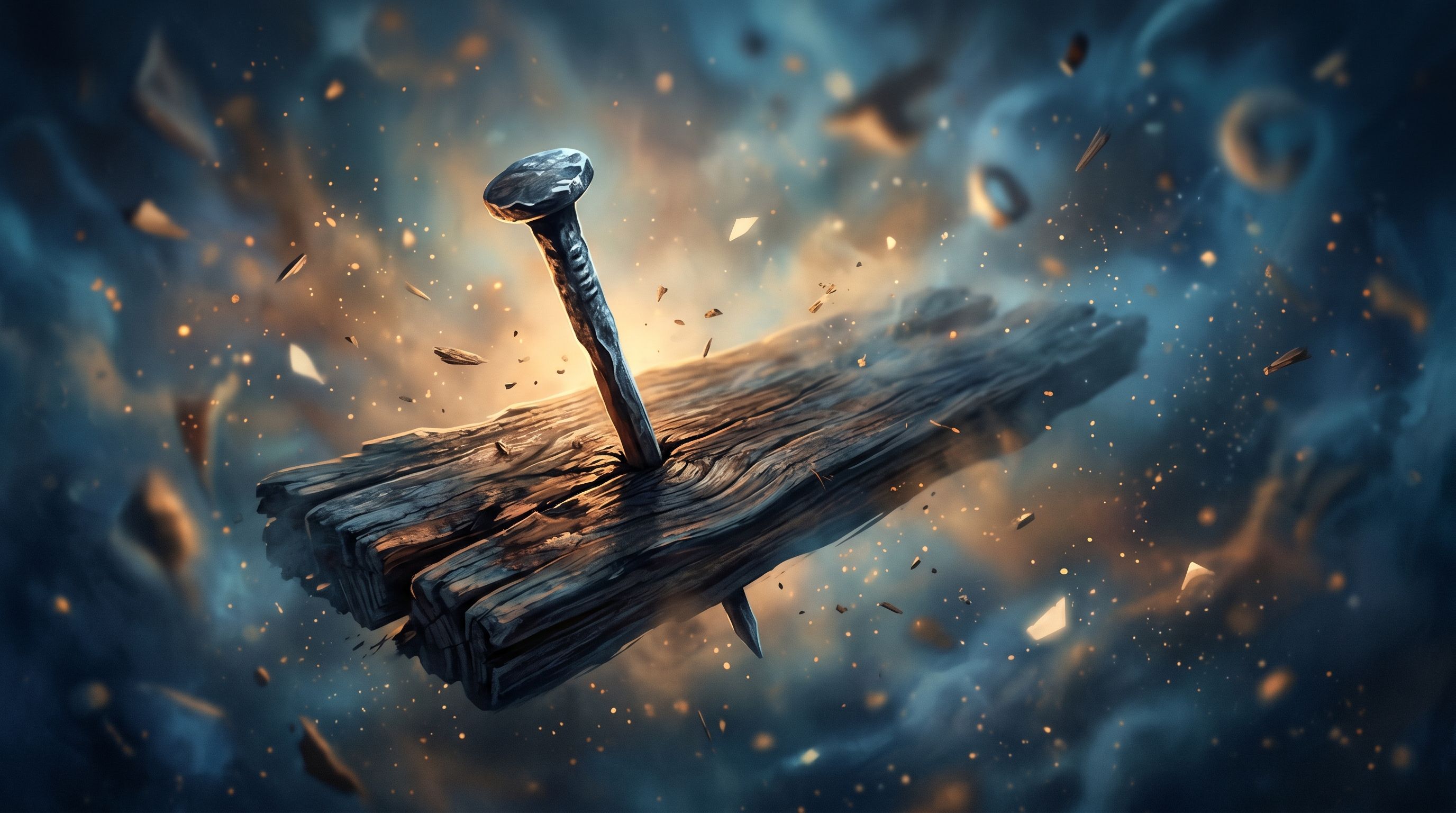
If, in your dream, you see yourself nailing boards or building the frame of a house, it is a magnificent image of your own power of construction. You are no longer just dreaming of a better life; you are actively assembling it.
I am often asked if such a dream guarantees success in the waking world. As a Baku, I do not care for the ready-made answers found in dusty old grimoires. Instead, I look at the texture of your intention.
If the hammer feels heavy in your hand but you manage to lift it with purpose, it suggests you possess the internal resources to transform your daily reality. You are "pinning down" ideas that were previously too volatile or fleeting.
This is what we call anchoring. You are taking the ethereal whispers of your mind and giving them weight and stability.
Sometimes, the construction is more subtle and intimate. You might dream of repairing an old piece of family furniture or reinforcing a door. In these moments, the hammer becomes a tool for healing.
You are attempting to solidify the foundations of your personal history. There is a certain nobility in this gesture—a form of patience that I always find moving in humans.
You do not settle for watching things crumble; you pick up the tool and take responsibility for the repair. It is a mark of great spiritual and emotional maturity to realize that some things are worth the effort of the strike.
The Necessary Crash: Destruction as a New Beginning
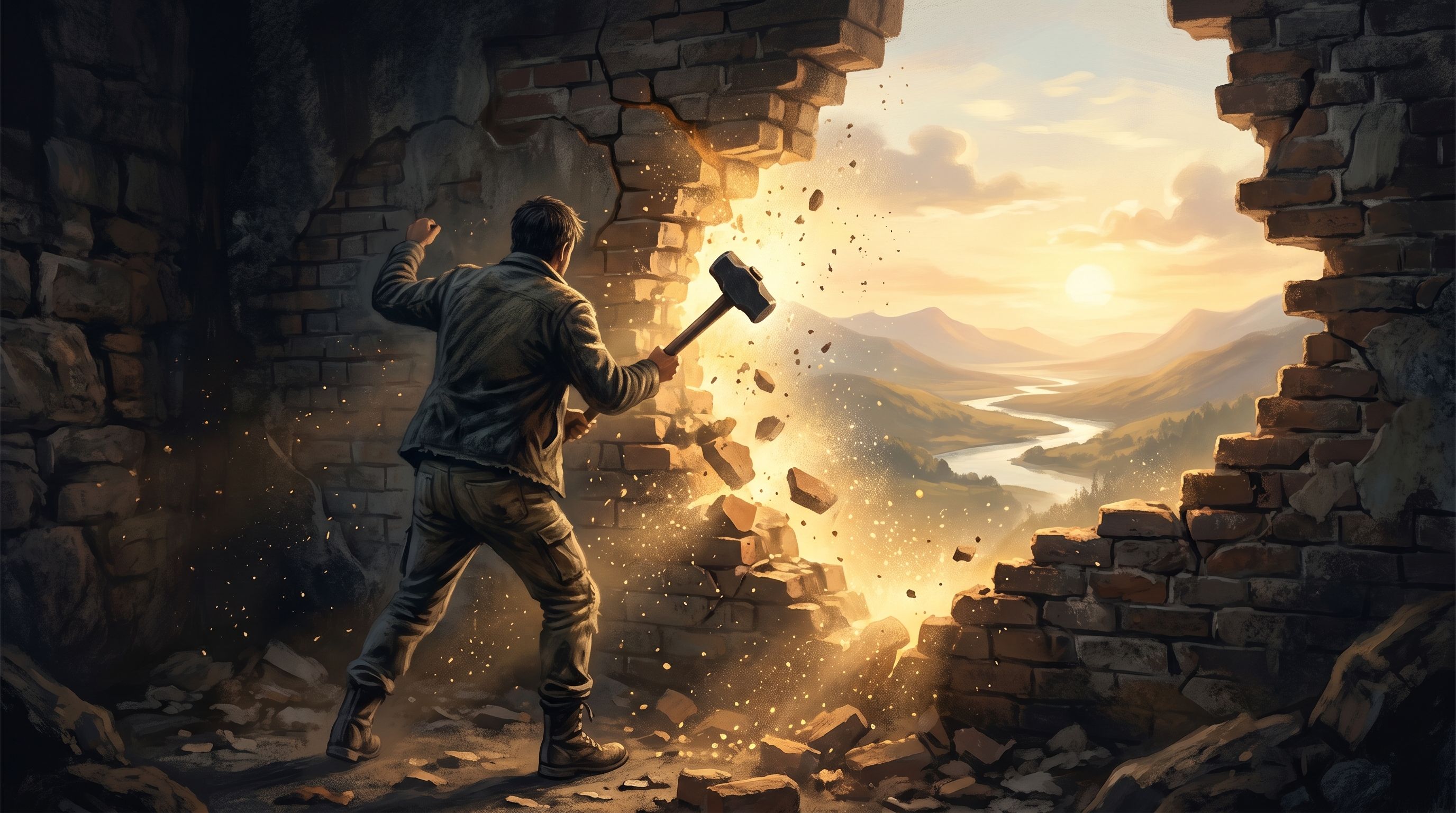
There is another side to this tool, one that can feel a bit more frightening: destruction. I sometimes see dreamers wake up in a cold sweat because they have wielded a hammer to break down a wall or shatter a precious object.
You might wake up with a sense of guilt, fearing that you harbor a repressed anger or a violent streak. But listen to me closely: to destroy in a dream is often an act of making space.
A hammer does not possess the blind, chaotic fury of a tornado that sweeps everything away without distinction. A hammer is precise. It hits exactly where you aim.
If you break something with it in your sleep, it is usually a deliberate destruction. Your subconscious uses this image to tell you that certain structures in your life—perhaps an old habit, a limiting belief, or a stagnant relationship—have become too narrow for you.
It is a form of liberation. To build something new, you must sometimes accept reducing the old to splinters. It is an alchemical process: we break the form to release the essence.
🌙 Yume's Echo: To strike is to exist. Whether you are hitting a nail or a wall, you are telling the universe that your hands are ready to change the shape of your world.
I once knew a dreamer who spent his nights demolishing a massive stone statue with a sledgehammer. He was exhausted upon waking, feeling as though he had fought a war.
By speaking with his shadow, we understood that this statue represented the "perfect image" he was trying to project to please his parents. The hammer was his only ally in becoming himself again. It was the only way to crack the marble of expectation.
However, you should be mindful of how you handle the tool. If the hammer slips from your grasp, if it wounds someone, or if it breaks in your hands, perhaps you are trying to force a situation that requires a different approach.
Just as you cannot navigate the rhythm of time by force, you cannot heal every wound with a hammer. Sometimes, brute force is simply an admission of helplessness in the face of an emotion you cannot yet name.
Concrete Example: The Glass Partition
I recently encountered a dreamer who repeatedly dreamt of hitting a thick glass partition with a small hammer. No matter how hard she struck, the glass wouldn't break; it only vibrated. This use case perfectly illustrates the "wrong tool" or "wrong timing" scenario. The glass represented a barrier in her career that she was trying to "smash" through sheer willpower. The dream was suggesting that her approach was too blunt. Instead of a hammer, she needed the precision of sharp edges to cut through the bureaucracy. The hammer was her frustration, not her solution.
The Verdict of the Gavel: Decisions and Finality
I remain deeply fascinated by the specific symbolism of the judge’s gavel or the auctioneer’s mallet. If you see this type of object in your night, the dream changes its hue entirely.
It is no longer a matter of manual labor or physical construction, but of a verdict. "It is so, and not otherwise."
The strike of a gavel is the symbol of an irrevocable decision. Perhaps you need to settle a dilemma that has been gnawing at you for too long?
The sound of that wood hitting the bench is the final period you have not yet dared to place in your waking life. It is the end of the debate.
My advice to you, dreamer, is to observe your hands within the dream next time the hammer appears. Are they agile or trembling? Is the hammer a natural extension of your body, or is it a burden you are dragging behind you?
The answer to your current struggle lies in that feeling of mastery. Do not fear the noise of the strike; it is simply the sound of "becoming" clashing with the present moment.
Have you ever noticed how dreams can strip away the physical laws of our world? Sincerely, the sensory texture of these nights fascinates me. I once met a dreamer who swung a massive iron mallet with all his might, only for the impact to land in total, suffocating silence. It gently tires me when popular manuals claim a hammer always represents raw power. When your dream strike makes no sound, it is not about strength—it is about emotional isolation. You are straining every muscle, attempting to make an impact or break a habit, yet your reality refuses to echo back. It is the agonizing weight of feeling completely invisible, of trying to rebuild your life while those around you act as though nothing is happening.
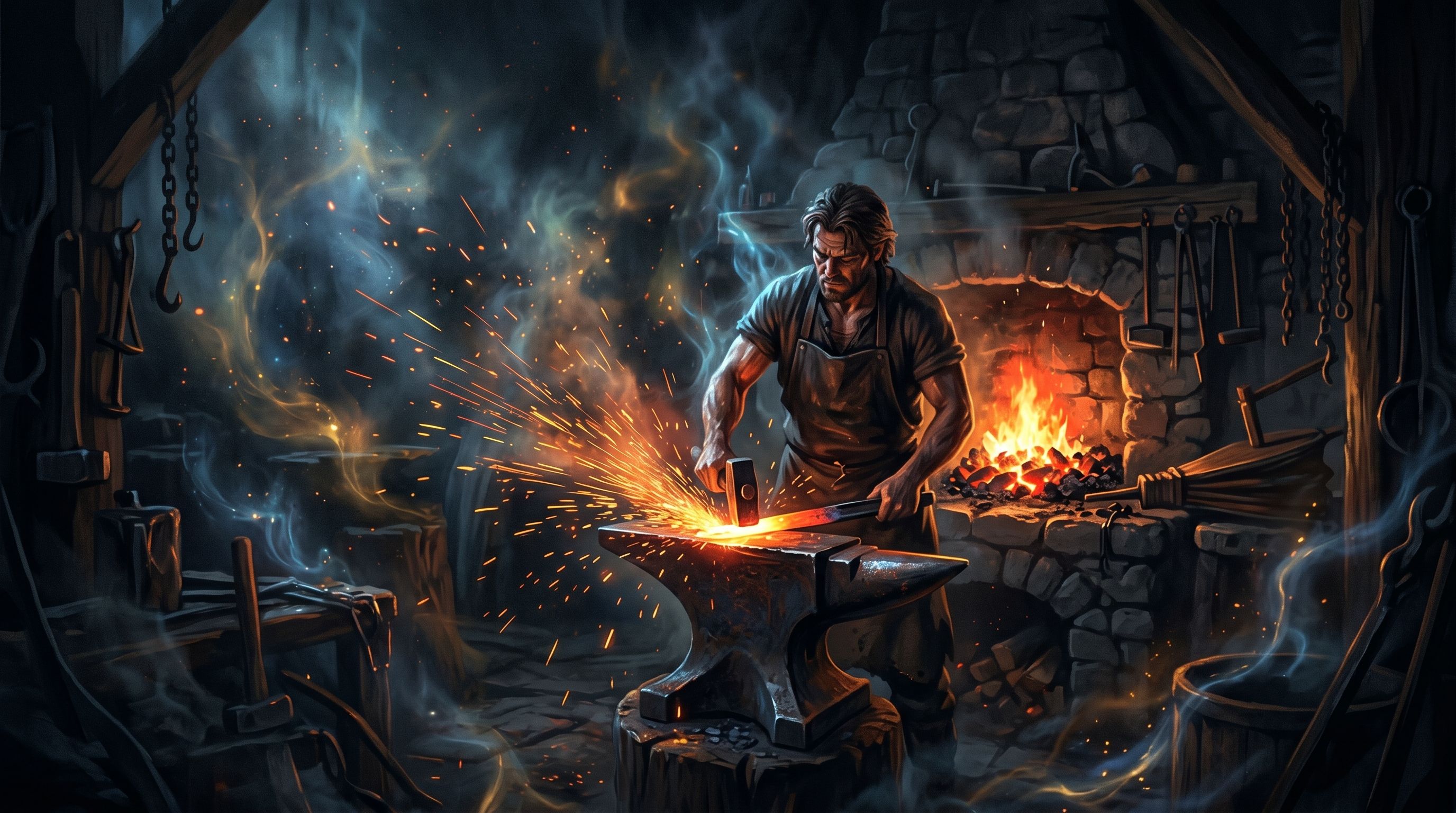
Then there is the matter of ownership: whose workshop are you standing in? If you are swinging that heavy iron not out of a creative spark, but because an unseen eye is monitoring your pace, the tool becomes a chain. I see this heavy, rhythmic labor in dreamers who are suffocating under professional pressure, desperately trying to meet targets that aren't their own. If you feel exhausted swinging the mallet under a watchful gaze, you might be bending your own spirit to appease a demanding boss or a rigid family legacy. It is worth pausing to ask: are you truly forging your own path, or are you merely sweating to shape someone else’s metal?
If you feel the need to explore these echoes further and understand what your hands are trying to build, your Baku is always here to listen. If you want to explore your dreams more in depth, your Baku awaits you in the Midnight Mind app.