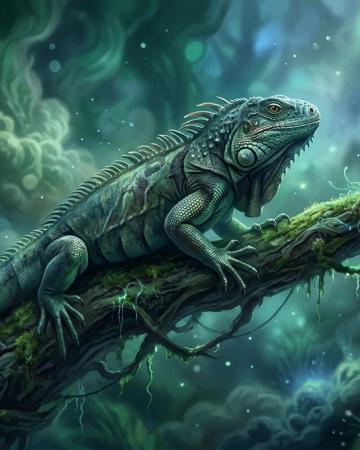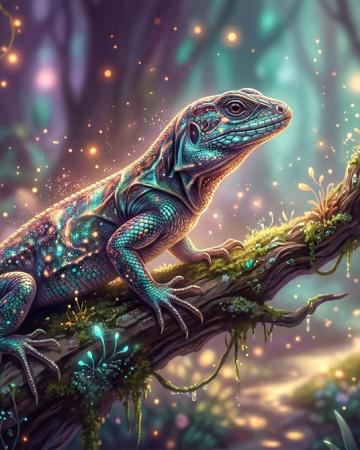
People say a chameleon changes color to hide. Biologists who compared several species of dwarf chameleons in southern Africa reached a different conclusion: the species that change color the most are the ones whose males use the most conspicuous signals in fights and courtship, and the study found no link with better camouflage (Stuart-Fox and Moussalli, PLOS Biology, 2008). Color also follows temperature: the animal darkens to absorb heat and lightens to reflect it. So its colors mostly serve to communicate and to manage body heat, and camouflage is only part of the story. That is worth knowing before you read the dream as a symbol.
Is the chameleon in your dream hiding or showing itself?
If it hides, the dream is mostly about caution; if it shows itself, it is about what you let people see. The same animal can carry either message, so note what it was doing before you look for a meaning.
Plenty of dream sites read the chameleon as a sign of hypocrisy or fickleness. I think that reading is lazy: it judges the dreamer without asking what they are going through. A well-hidden chameleon is more often a need for protection. Maybe you are in a stretch, at work or with family, where showing your true colors feels risky and you would rather watch before you speak. That reserve is worth something as long as it stays your choice. If you are wondering where the role you play begins, dreaming of a mask asks the same question from another angle.
A chameleon that displays its colors without trying to vanish does what the real animal does: it says something. Ask yourself what you are not putting into words right now that your mood is showing anyway.
The finer shades matter too, because the real animal uses them as a language: bright colors often signal aggression or courtship, dark ones more often submission. If your chameleon brightens when it faces someone, ask who in your life makes you want to stand tall. If it darkens as that person approaches, see whether you feel pushed to give way, and whether you chose that.
What do a chameleon's colors mean in a dream?
Color sets the mood of the dream, as it does for the real animal: calm, fear, excitement, or cold.
- A green chameleon often points to quiet growth, to adapting to a new environment without strain.
- A dark or black chameleon can reflect fear, a wish to burrow in against a threat you sense in waking life. The real animal also darkens to take in heat, so if the dream felt icy, ask whether you are looking for shelter or just for warmth from other people.
- A chameleon in bright, shifting colors suggests a lot of energy, sometimes a mood that changes fast. You may be trying out several sides of yourself. If the transformation itself stayed with you, dreaming of metamorphosis goes further on that theme.
The question that matters is whether you change color because you want to or because you feel you have no choice. Adapting is a strength as long as you stay in charge of it. When it becomes an obligation, it wears you out.
What does it mean when the chameleon disappears into the background?
When it vanishes completely, the dream is less about cunning than about erasing yourself.
Imagine you are looking for the chameleon on a branch and only find it when it moves. Or it grows so pale, almost see-through, that all you can see is its tiny beating heart. This dream can come during a stretch when your life is organized around someone else: a newborn, a sick relative, a job where you adjust to everyone. If you keep adapting, you can stop seeing yourself.
Ask one simple question: what defines you outside your roles? What would you do today if no one expected anything from you? You are allowed to exist without blending into the scenery all the time. If that feeling of vanishing settles in, a therapist or a steady friend can help you look at it closely. A dream can point to exhaustion, but it can't treat it.
Why dream of a chameleon when you adapt to everyone around you?
Because the animal is the picture of adjusting, and the dream asks who stays the same behind the adjustments.
Changing your tone with your boss, with your parents, or with your friends is normal, and none of those tones is fake. What should get your attention is the exhaustion afterward, or the fear of being rejected if you spoke the same way everywhere. Jung's psychology calls this social face the persona, the one the ego shows to others (see the Jungian tradition below). Linking the chameleon to the persona is my own reading; Jung never writes about the animal.
To tell whether your chameleon is flexible or constrained, look at what you felt in the dream. Admiration, curiosity, amusement: adapting feels like a skill. Unease, shame, a wish to rip that color off: it is being forced on you. What remains is choosing your adjustments instead of giving up on all of them.
Why do the chameleon's eyes look in two directions?
Because it watches several things at once, and the dream is about your wider view.
In a real chameleon, each eye moves separately while the animal scans its surroundings, which gives it a field of view close to a full circle. When it aims at prey, both eyes turn forward. That back-and-forth is a good picture: look everywhere, then focus.
When we are hooked on a problem, we get tunnel vision. The chameleon seems to suggest keeping one eye on the past, so you don't repeat the same mistakes, and the other on the future, or simply looking at the situation from another angle. Before you say something you might regret, or grab an opportunity, take the time to see everything. If the animal's gaze is what stayed with you, the page on dreaming of eyes adds to this reading.
What does the chameleon's slow walk mean?
It invites you to slow down, but it also raises the question of delay: caution that protects you, or an opportunity passing by?
The rocking of its walk, back and forth, makes it look like it tests the ground before putting its weight down. Its Greek name, khamaileōn, means "ground lion": an animal close to the earth that advances by checking. If that motion struck you, and you are in a transition (a breakup, a loss, a career decision), it tells you that you are allowed to hesitate without feeling guilty.
A Zulu story, though, puts a price on that slowness. In the account Callaway recorded, the chameleon is the first one sent to carry humans a message of life, dawdles on the way, and is overtaken by the lizard with the opposite message. Hold both meanings in mind. Ask whether your slowness is protecting you or letting others decide for you, and pick whichever is true for you right now.
What does it mean to touch a chameleon's skin?
A rough, dry, almost mineral skin often points to the tiredness of adapting.
The dream does not just show the animal; it lets you feel its texture. If you touched that skin, or felt your own limbs covering with scales, look at how tired you are. When you keep adjusting to what other people expect, you can stiffen from within: your energy freezes to handle the stress, when what you need is the suppleness of a fluid body to let tension flow through.
The chameleon's skin protects it, but it becomes a burden if you wear it day and night. Ask yourself where you feel cramped inside your own role, and what one detail you could change this week. If the feel of the skin is what stayed with you, that page goes through its readings.
When you wake, before the image fades, write down three things: the chameleon's color, what it was doing (hiding, walking, looking at you), and what you felt when you saw it. Then think back over your day: when did you change your tone without deciding to? If you want to follow these colors from one night to the next, bring the dream to the Midnight Mind app and I will follow the thread of your nights with you.