The Pearlescent Labyrinth: When Thought Becomes Visible
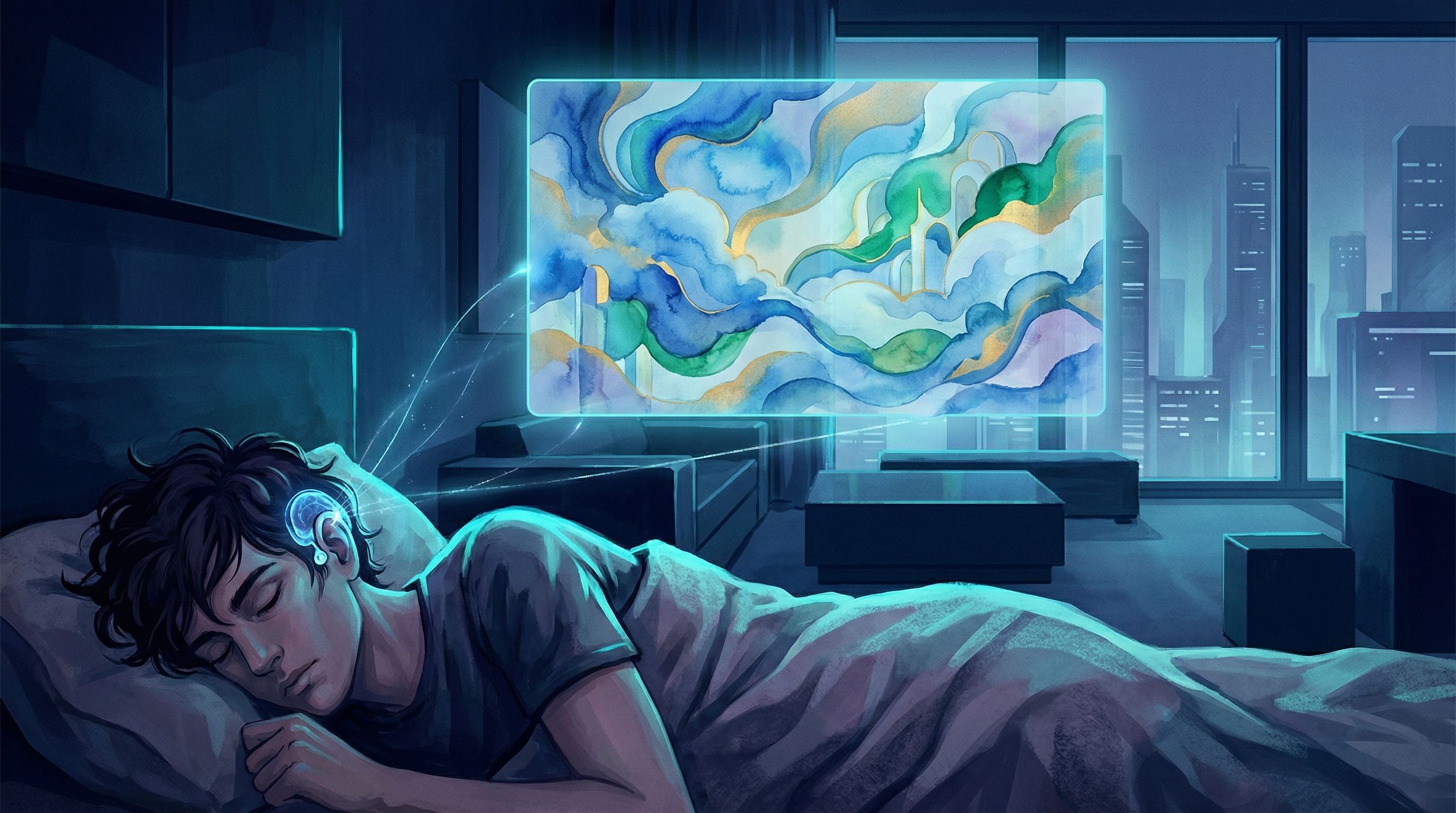
As I lean over a dreamer's sleep, I often see thoughts that look like tangled silken threads. But when the symbol of the brain itself appears explicitly, it means your subconscious no longer wishes to hide behind flowery metaphors. It is showing you the engine under the hood.
Honestly, I find this fascinating, even if it might seem a bit cold at first glance. For many, the brain is the seat of control. Dreaming of a neat, well-organized brain—almost like a piece of art in a gallery—often suggests that you are trying your best to maintain logical order in a life that is, by its very nature, beautifully chaotic.
You are searching for structure, for a method, or a mathematical solution to a problem that perhaps only requires a little tenderness and letting go. It is as if you are trying to find the symmetry of twins within the messy reality of your daily choices.
In contrast, if this brain appears damaged or if you find it difficult to handle, it is a gentle alarm from your psyche. Dreamers sometimes tell me of brains made of glass, fragile and ready to shatter. It is a perfect image of mental vulnerability.
You might find yourself asking: "Am I overthinking?" The answer is likely etched into the texture of that dream-organ. If the brain feels heavy, it is because your worries are weighing down your ability to simply "be."
It’s a bit like that strange sensation when you realize you are navigating mindfully through your own nocturnal landscape: you are trying to understand the mechanism instead of simply living the experience.
---
The Illusion of Mastery and the Need to "Unplug"
I have never been a great believer in dream dictionaries that claim a brain strictly means "intelligence." It is so much deeper than that. In my wanderings through dreams, I have noticed that the brain often appears to those who are a little afraid of their own emotions.
By focusing on the organ of thought, you might be attempting to place distance between yourself and your feelings. It is a form of intellectual protection, a shield made of neurons and logic.
Imagine seeing a brain floating in a jar. It is the image of a researcher observing themselves but forgetting to actually live. You may feel as though you’ve become a machine for processing data, solving problems at work, or managing family logistics.
In this state, you might forget that you have a body, senses, and skin that craves the sun. The brain in a dream is a mirror asking you: "Where has your warmth gone?" It is an invitation to find the grace of a flamingo standing still in the water, rather than the frantic firing of synapses.
🌙 Yume’s Echo: Sometimes, the mind is a mirror that forgets it is also a window. Don't just look at the glass; look at what lies beyond it.
---
Concrete Example: The Clockwork Mind
I remember a dreamer who came to me with a recurring vision. He dreamed of a brain made entirely of gold clockwork gears. He was so proud of its precision and its rhythmic ticking until a tiny, delicate flower began to grow between the teeth of the cogs, stalling the whole system.
He was terrified in the dream, feeling like he was "breaking down." I suggested to him that this flower was his long-neglected creativity, which had been stifled by his rigid logic.
Sometimes, the "glitch" in the system is exactly what saves us. The brain in his dream wasn't failing; it was being reclaimed by his soul. It was a reminder that we are biological, not mechanical.
---
Learning to Listen to the Silence Between Thoughts
If this symbol visited you last night, try not to search for a purely rational explanation right away. The brain, in the world of dreams, is a paradox: it represents reason, yet it appears in the most irrational place of all.
My advice, as a devourer of dreams, is to simply observe the state of this brain. Is it luminous? Is it shadowed? Does it feel alive?
If the image felt unsettling, perhaps you are simply saturated with theories, podcasts, analyses, and "self-improvement." Some specialists in the psychology of sleep suggest that our dreams act as a "synaptic pruning" process, clearing out the clutter of the day.
Sometimes, the mind just needs to stop being an object of study. It needs to become a playground again. Dreams are never threats, even when they show us our inner workings. They are messages of rebalancing.
If you dream of your own "gray matter," it might just be your brain’s way of thanking you for working so hard, while gently begging for a small vacation. Let your thoughts flow like water in a river, without trying to build a dam at every turn.
If you want to explore your dreams more deeply and find the peace your mind deserves, your Baku is waiting for you.
It always amuses me—and perhaps saddens me just a little—how modern dreamers isolate the brain as if it were the sole ruler of their being. In older Eastern traditions, we did not separate the mind from the heart; they were two chambers of the same breathing house. When you dream of a glowing, detached brain, your spirit might be grieving this very separation. Your dreaming self is pointing to a cold exile, a divorce between what you think and what you feel deep in your chest. It is a quiet plea to bring the marrow of your thoughts back down into the warmth of your belly. After all, a thought without a heart is just a ghost wandering through an empty palace. Have you been ignoring the soft, instinctual murmurs of your body lately?
There are nights when this organ does not appear as a quiet monument, but rather as something put on trial. I once met a dreamer, a brilliant architect, who dreamed her brain was being weighed on a rusty scale in front of a silent crowd. It felt like standing before a severe judge who knew all her unspoken doubts. This kind of dream typically visits those who suffer from the silent exhaustion of having to prove their worth every single day. If you see your brain being sliced, examined, or measured in your sleep, it is rarely about your actual intelligence. It is the shadow of your self-criticism, a physical manifestation of that nagging fear that you are "not enough," or that your intellectual armor is about to fail you.
Sometimes, you do not just look at the brain; you find yourself walking inside it. The gray matter becomes a series of high, damp walls, and the sulci turn into narrow, winding alleyways. Wandering through these fleshy corridors is much like being trapped in a circular labyrinth where every turn leads back to the same unanswered question. It is an incredibly claustrophobic dream, filled with the hum of static electricity and the smell of ozone. If you find yourself lost in this cerebral maze, please do not panic. The way out is never found by thinking harder or running faster through the corridors. It is found by stopping, closing your dream-eyes, and waiting for the physical world—the sound of rain, the weight of your blankets—to pull you back down to earth.