The Primal Language of the Unconscious
When you close your eyes, the boundaries of your civilized self begin to dissolve. In the silence of the REM cycle, your brain doesn't just process data; it reconnects with an ancestral heritage. For thousands of years, humans lived in intimate contact with the animal world. It is only natural that your psyche still uses these forms to express complex emotions that words cannot quite capture.
In my work as a Baku, I often see dreamers who are startled by the appearance of a wild beast. They ask me, "Why a tiger? Why a snake?" The answer usually lies in the "instinctual" layer of your mind. Animals don't overthink. They don't lie. They simply are. When an animal enters your dream, it is often a part of you that is trying to reclaim its right to exist without the filter of social etiquette.
Some researchers in the field of evolutionary psychology suggest that dreaming of animals might be a "threat simulation" mechanism, a way for our ancestors to practice reacting to predators. However, from a psychological perspective, these creatures are far more than just threats; they are messengers of the soul.
---
The Cat: Feline Intuition and the Hidden Feminine
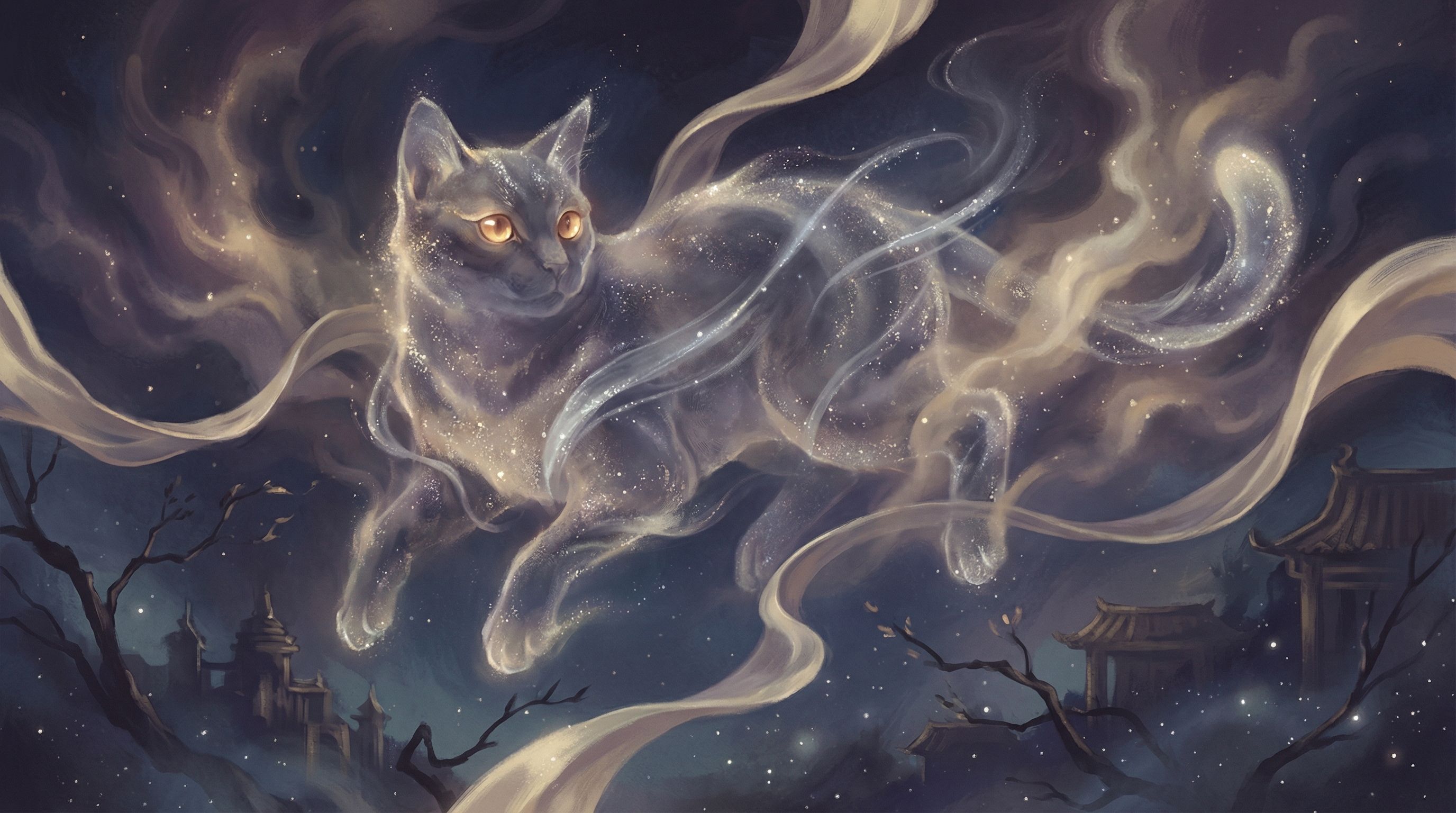
The cat is perhaps one of the most frequent visitors in the dreamscape. Mysterious, independent, and notoriously elusive, the cat symbolizes intuition—that quiet, persistent ability to perceive the world beyond the five senses. If a cat appears in your dream, it might be inviting you to listen to your own inner voice, to trust your gut feeling even when your logic is screaming otherwise.
In Jungian psychology, the cat often represents aspects of the dark feminine aspect, or the Anima. This isn't "dark" in an evil sense, but rather "dark" as in "hidden" or "mysterious." It is the part of you that knows how to navigate the shadows of your own mind.
However, your personal relationship with cats changes everything. If you find them comforting, a dream cat might be a guide. If you are allergic or fearful, the cat might represent a perceived threat to your independence or a "cunning" influence in your waking life. I remember a dreamer who felt haunted by a black cat; she eventually realized it was her own repressed creativity—something she felt was "unpredictable" and "wild"—trying to find its way back into her daily routine.
🌙 Tsuki’s Echo: A cat never asks for permission to exist. When it walks through your dreams, it is often asking you why you still do.
---
The Dog: Loyalty, Protection, and the Shadow Hound
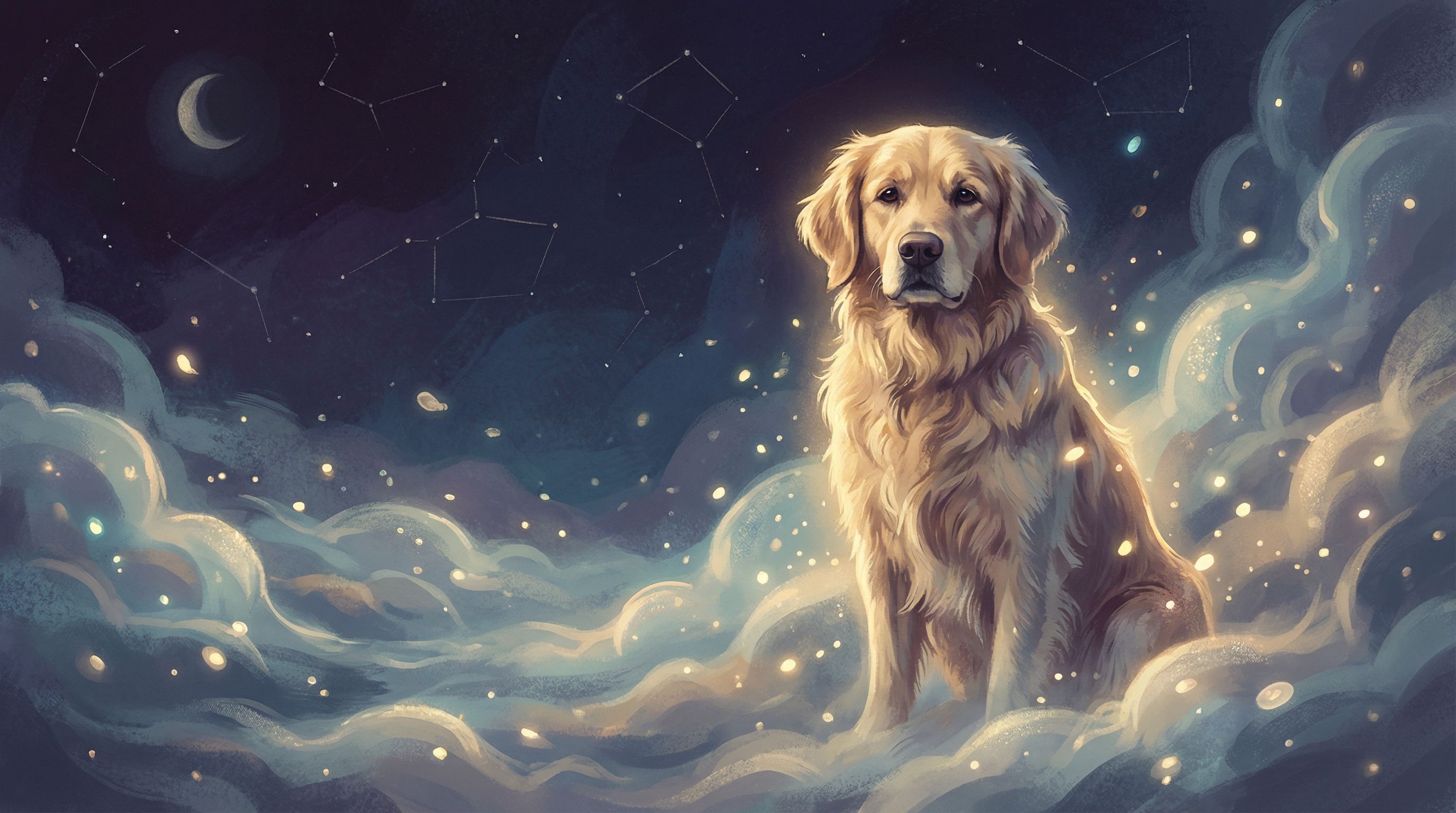
The dog is often called "man’s best friend," and in the world of dreams, it frequently carries the weight of your relationships. A dog in a dream can symbolize fidelity, your need for emotional security, or the way you protect those you love. It is the guardian of the threshold between your public persona and your private heart.
But we must look closer. An aggressive, barking dog isn't just a "bad sign." It might reflect an internal conflict—perhaps a part of you feels betrayed or abandoned. Or, conversely, you might feel guilty for not living up to the expectations of your "pack."
Consider the state of the dog. Is it a well-fed golden retriever, or a starving stray? A lost dog often mirrors a part of yourself that feels disconnected from its purpose, wandering the streets of your subconscious looking for a home. Never forget that why the dream dictionary is a scam is precisely because it ignores these nuances. A dog is never just a dog; it is a reflection of your capacity to bond and your fear of being bitten by those you trust.
---
The Horse: Vital Energy and the Tamed Instinct
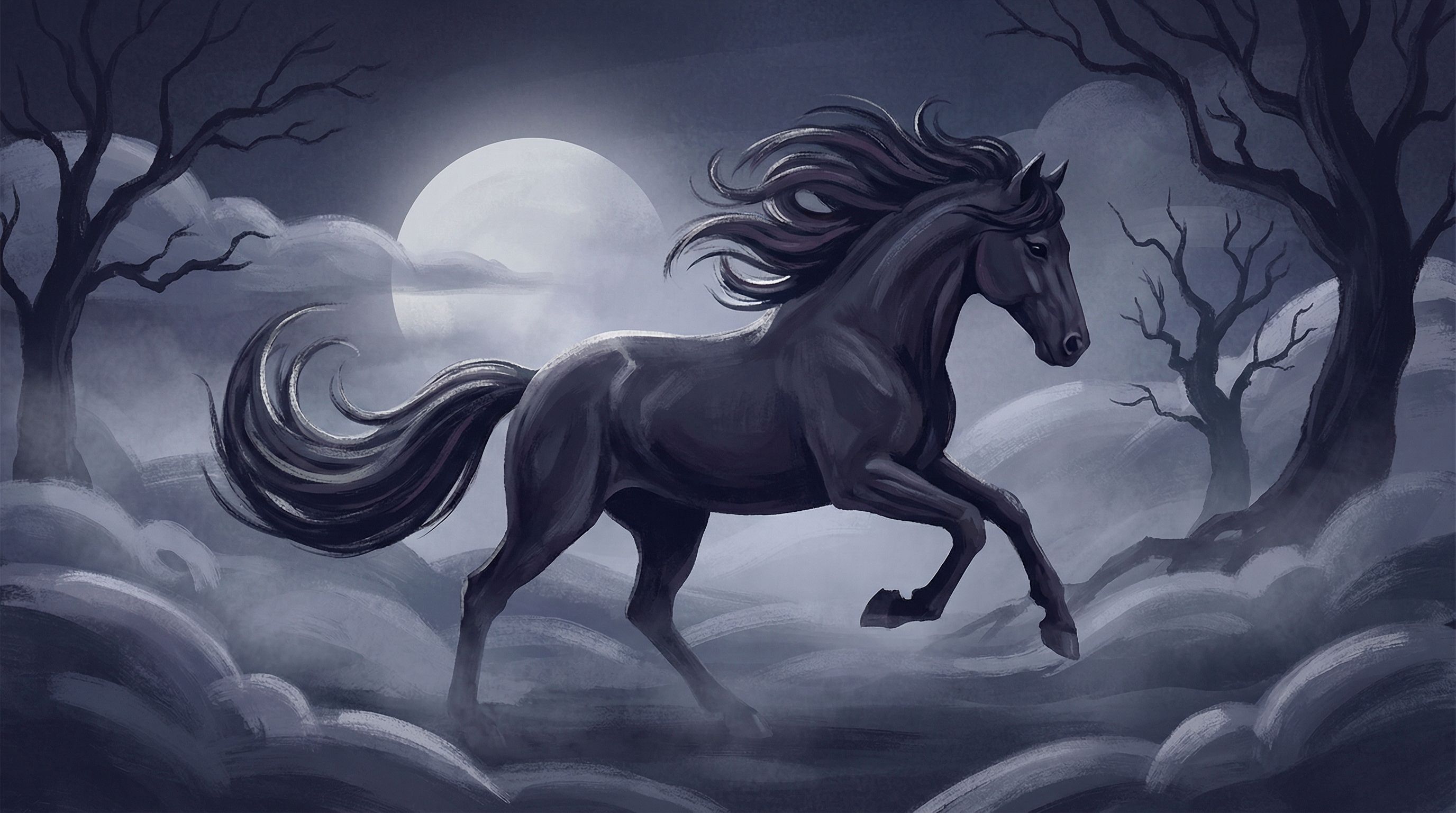
The horse is a powerhouse of symbolic energy. It embodies vitality, passion, and the raw "Libido"—not just in a sexual sense, but as the fundamental life force that drives you forward. Dreaming of a horse is often a call to reconnect with your desires and to step out of the "stable" of your comfort zone.
There is a beautiful tension in horse dreams: the balance between the rider and the steed.
- If you are riding a horse with ease, you are likely in harmony with your instincts.
- If the horse is bolting, your passions might be overwhelming your rational mind.
- If the horse is bridled or trapped in a small pen, you might be stifling your own potential to satisfy social conventions.
I find the horse to be one of the most poignant symbols of the human condition. It represents the raw power of the unconscious, but also our unique ability to master and direct that power toward a goal. It asks you: Are you leading your life, or are you just holding on for dear life?
---
A Concrete Example: The Bear in the Garden
To understand how this works in practice, let's look at a common scenario. Imagine you dream of a large bear sitting in your backyard. You are inside, watching it through a glass door. You feel a mix of terror and awe.
In this case, the bear represents a massive, perhaps "hibernating" power within you. The glass door is your ego—the barrier you've built to keep your "wild" side at bay. The dream isn't telling you that a bear will attack you; it is suggesting that there is a significant emotional force (anger, strength, or a need for solitude) that you are observing but not yet integrating. By acknowledging the bear, you begin the process of bringing that strength into your waking life.
---
How to Decode Your Own Dream Bestiary
Interpretation is a subjective art, not a rigid science. If you want to understand the animals that visit you, I suggest following these steps:
1. Capture the Atmosphere: Don't just note the animal. Was the light dim? Was the air cold? Your emotional reaction to the animal is more important than the animal itself. 2. Personal Associations: What does this animal mean to you? Forget what you read in a book. Does a snake remind you of a pet you once had, or a specific fear of the grass? 3. The "If I Were" Technique: Try to describe the animal as if you were explaining it to an alien. "A lion is a creature that is king of its domain but sleeps most of the day." Does that description sound like someone you know, or perhaps a part of yourself? 4. Look for the Dialogue: Did the animal speak? Did it look you in the eye? These interactions are direct communications from your subconscious.
---
Finding Your Totem
If you feel adventurous, you can try to invite a specific animal into your dreams. This isn't about control, but about opening a door. Before you sleep, visualize an animal that embodies a quality you feel you lack—perhaps the courage of a lion or the perspective of an eagle.
Sometimes, the unconscious will answer. Other times, it will send you something entirely different, a symbol you didn't know you needed. That is the beauty of the dream world; it knows you better than you know yourself. Every creature that crosses your path at night is a piece of the puzzle that is "you."
If you want to explore your dreams more deeply, your Baku is waiting for you. What will you find in the wild corners of your mind tonight?
Sometimes, it isn't the animal itself that carries the weight of the message, but the architecture of its confinement. I once met a dreamer who kept dreaming of a magnificent panther, but it was always pacing behind rusted iron bars in a cramped, damp cage. He was a highly successful lawyer, yet profoundly suffocated. We so often trap our truest impulses behind the bars of safety and social duty, creating a mental prison. When you find yourself wandering through a zoo in your sleep, observing silent, heavy-eyed beasts behind thick glass, your subconscious is showing you your own captive wildness. Honestly, it breaks my heart a little to watch how quickly we domesticate our instincts just to keep our waking lives tidy. A caged animal is a part of you that has ceased to run, silently waiting for you to remember where you hid the key.