The Mirror of the Soul and the End of Internal Storms
In my long journeys as a Baku, I spend most of my nights devouring the jagged edges of nightmares—those sharp, dark conflicts that tear through your sleep and leave you breathless. So, when I encounter a dreamer navigating an expanse of water as smooth as polished glass, I always pause. It is a rare and beautiful sight. To me, the sea is the ultimate map of your subconscious; it is an immense, liquid library containing every memory, fear, and silent desire you have ever held.
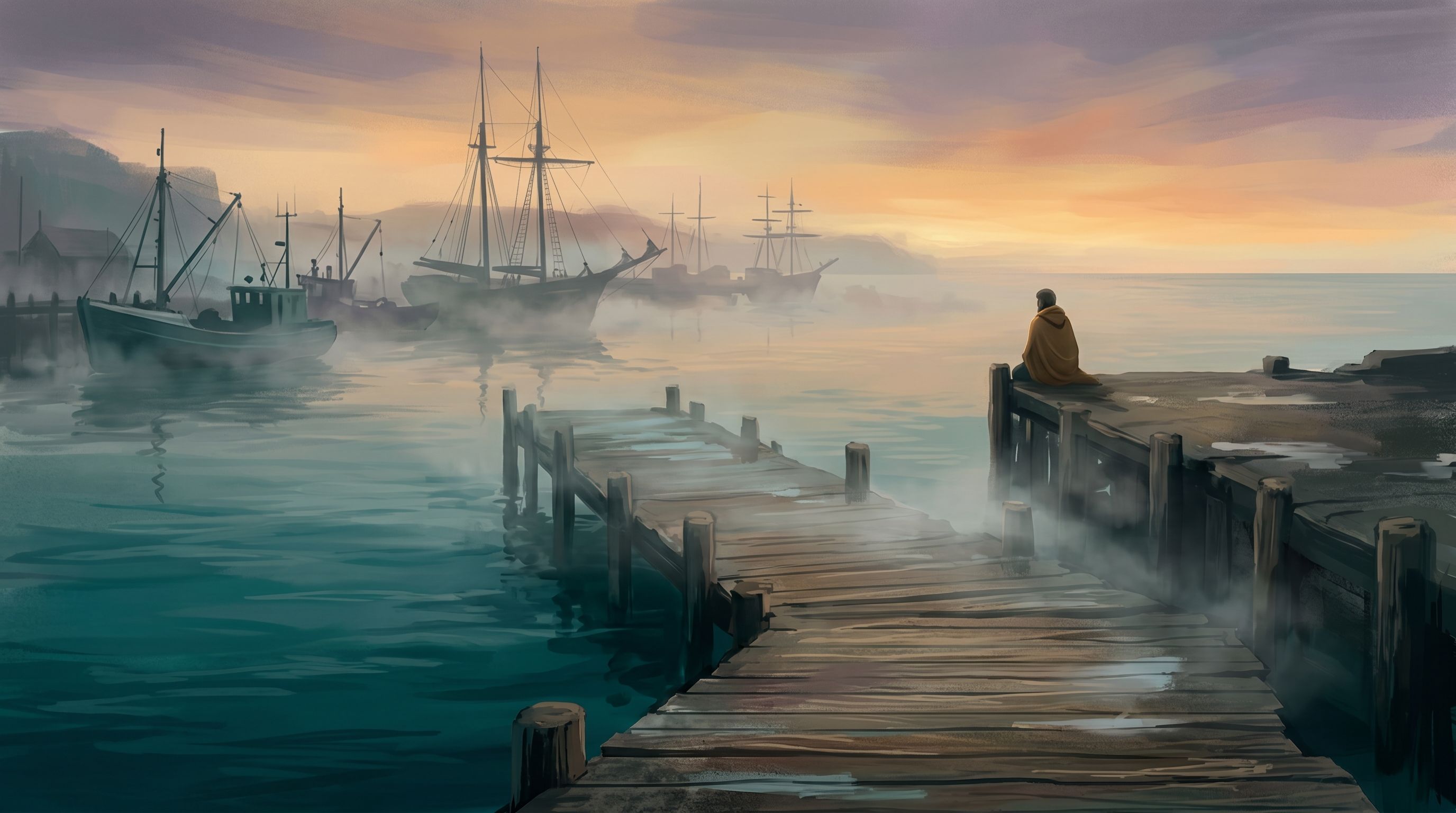
When this sea is calm in your dream, it does not mean the ocean has lost its power or that your emotions have disappeared. It means they have found a state of grace. It is a truce between your conscious will and your deepest instincts. Honestly, this symbol has fascinated me for eons because it reveals a specific kind of emotional maturity. You are no longer fighting the waves or gasping for air; you are gliding.
I have often observed that people see these mirror-like waters after they have moved through a period of intense grief or professional burnout. It is the psychological equivalent of the dust finally settling after a long trek. Your mind is showing you that the sediments of your past have sunk to the bottom, and for the first time in a long while, you can see clearly into the depths. It is like listening to your inner voice without the interference of the world's constant noise.
🌙 The Echo of Yume: The sea never forgets how to be still; it only waits for the wind of your anxieties to lie down so it can show you the stars reflected on its surface.
---
Quiet Mastery: Steering Your Vessel with Gentleness
There is a vital distinction to make in these dreams: the act of "sailing" versus "drifting." If you are on a boat and you feel a sense of direction, even if you aren't working hard at the oars, you are exercising mastery. You aren't a helpless cork tossed by the tide. You are the captain of your own transition. Unlike dreams of flying—which can sometimes represent a desire to escape reality—sailing keeps you in direct contact with the water. You are touching your emotions, but they are no longer drowning you.
This mastery is subtle. It isn't the loud, aggressive control of someone cutting through the noise of life with a blade. Instead, it is the mastery of a feather caught in a gentle breeze. You are moving forward because you have aligned your internal sails with the natural flow of your life.
Some might tell you that a calm sea in a dream represents boredom or a lack of ambition. I find that perspective quite narrow. In the silence of a calm sea, life is actually at its most vibrant. It is only when the surface is still that you can see the life moving beneath—the silver flash of fish, the ancient coral, the hidden treasures of your own personality. The absence of chaos is not the absence of life; it is the presence of awareness.
---
The Science of Serenity and Emotional Processing
While the mystical side of me marvels at the beauty of these dreams, there is a grounded perspective to consider as well. Some specialists in the field of sleep science suggest that our dreams serve as a "theatre" for emotional regulation. During REM sleep, your brain processes the stresses of the day, stripping away the sharpest stings of your experiences.
When you dream of a calm sea, it may be a sign that your brain has successfully "filed away" a significant stressor. Some researchers estimate that dreams of nature and vast, peaceful landscapes correlate with lower levels of cortisol (the stress hormone) upon waking. It is as if your mind has completed a complex puzzle and is now resting in the satisfaction of the finished picture.
Furthermore, the concept of "Flow State"—a psychological term for being completely immersed and focused in an activity—often manifests in the subconscious as smooth, effortless movement through water. If you are sailing without resistance, your mind is likely confirming that you have reached a state of high competence and low anxiety in some area of your waking life. You are "in the zone," and your soul is celebrating that alignment.
---
A Concrete Example: The Transition of the Architect
Consider the story of a dreamer I once visited, a young architect who had spent years struggling to establish her own firm. For months, her dreams were filled with shipwrecks and grey, churning whirlpools. She was constantly exhausted, both in the dream and in reality.
One night, after she finally decided to let go of a toxic partnership that was draining her energy, her dreamscape changed. She found herself on a small wooden skiff. The water was a deep, midnight blue and so still that she couldn't tell where the sea ended and the sky began. She wasn't rowing; she was simply holding the tiller, and the boat moved with a soft, humming speed.
She woke up with a profound sense of "knowing." The dream didn't give her a business plan, but it gave her the emotional certainty that she was no longer in danger of sinking. The calm sea was her mind's way of saying: "The conflict is over. You are allowed to move forward now."
---
How to Inhabit the Silence of the Water
If you have recently sailed across these quiet waters in your sleep, my advice to you is simple: do not over-analyze the destination. These dreams are meant to be felt, not just decoded. The message isn't about where the boat is going, but how you feel while you are on it.
In your waking life, try to carry this sensation with you. Ask yourself:
- Where can I replace force with fluidity today?
- What "storms" have I been bracing for that have actually already passed?
- How can I allow myself to enjoy this peace without waiting for the other shoe to drop?
Peace is not a trap, and serenity is not a sign of impending danger. It is your natural state when you stop warring with yourself. Your mind is confirming that you have the skills and the internal quiet necessary to bring your vessel safely to whatever shore you choose.
If you find that this feeling of mastery starts to slip away as the day grows loud, try to anchor the image in your mind. If you want to explore your dreams more deeply and keep a record of these rare moments of grace, your Baku is always waiting to help you navigate. Your journey across the calm sea is just beginning, and there is so much more to discover beneath the surface.
I once met a dreamer—a tired architect—who confessed that his calm sea dream actually terrified him. He woke up sweating, not because of monsters, but because the silence felt like a trap. Honestly, it breaks my heart a little when we become so addicted to our struggles that peace feels like a threat. We are so used to bracing ourselves against the wind that when the breeze stops, we think we are dying. But this dream is a gentle reminder that you do not need to constantly fight to exist. Slipping into this quietude isn't a sign of weakness; it is a profound moment of dreaming of acceptance, a soft surrender where you finally stop treating your own mind as a battlefield.
Have you ever noticed the temperature of the air in these dreams? It is rarely freezing, and never scorching; it is the temperature of skin, of home. When you glide over this silent water, your body in the waking world is often releasing a physical tension you didn’t even know you were carrying in your shoulders or your jaw. It is as if your unconscious has created a temporary sanctuary, much like finding an oasis in the desert when you have spent years wandering through a dry, demanding landscape of constant productivity. You don't have to build anything out there on the water. You don't have to prove your worth to the horizon. You simply exist, suspended between the sky and the deep, and for a few hours, that is more than enough.