The act of cutting: when a decision takes shape
I have often wondered why the mind chooses such a physical, laborious image to speak of our inner choices. Cutting down a tree is not a trivial gesture; it requires effort, sweat, and above all, it cannot be undone. Once the trunk is on the ground, it cannot be glued back together. In the world of dreams, if you see yourself wielding an axe or a chainsaw, it means you are likely at a breaking point in your waking life. You are no longer in the soft hesitation of a choice at a crossroads; you are in the realm of pure action.
There is something fascinating about this creative destruction. For a forest to renew itself, old trees must sometimes fall. If you dream that you are cutting down a majestic tree, do not see yourself as an executioner. Instead, ask yourself: "What in my life is taking up too much space and preventing me from seeing the sky?" Sometimes, it is our own past successes that end up stifling us. We cling to a structure, a career, or a relationship because it is solid, like an oak, but we forget that it keeps us in constant shadow. To cut is to decide to find the light again, even if the price to pay is a momentary sense of emptiness.
Meaning of Felling It
Felling a tree in a dream marks an irreversible choice. Unlike trimming a branch, bringing the trunk down cannot be undone—and your mind uses that weight when a waking decision has matured. You may be ending a job, belief, relationship dynamic, or family story that still has roots in your history. Guilt does not cancel the message; it shows how deeply the old structure was planted. Notice whether the tree was dead, diseased, or still green—that shade changes whether the cut is cleanup or sacrifice.
Between roots and treetops: the weight of the past
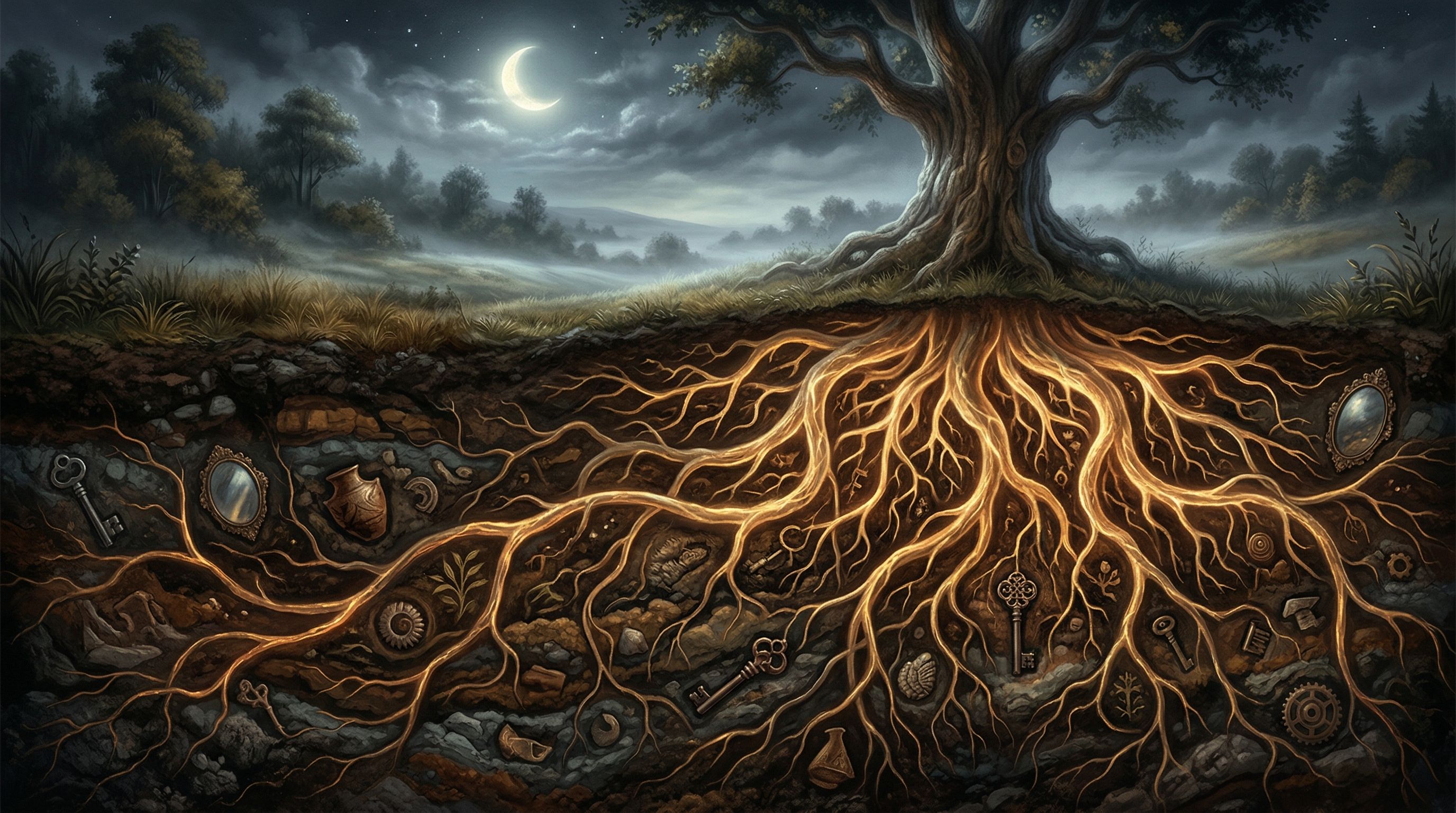
Trees are the archives of the earth, and in your subconscious, they are the archives of your history. Every ring in the wood is a year, an experience, a scar. When you decide to cut down a tree in your dream, you are touching your very foundations. This is where the feeling of loss comes in. Is it a tree you planted yourself? Or an ancient tree that seems to belong to your childhood garden?
Honestly, I always find it a little sad to see these great ancestors fall in your dreams, but it is often necessary for the evolution of the soul. If the tree represents an authority figure or a heavy family tradition, felling it is an act of emancipation. It is a way of saying: "I no longer need this protection that has become a prison." It is similar to the sense of lack one feels during a symbolic feeling of amputation: we lose a part of ourselves, certainly, but it is a part that was preventing us from walking freely.
I sometimes hear dreamers tell me they cut down a dead, dry tree that no longer produced leaves. There, the message is crystal clear. Your subconscious is tidying up. It is getting rid of sterile structures. You don’t have to fear this loss, for it is only dead wood cluttering your inner garden. The sap is no longer flowing; it is time to make room for young shoots.
The symbolism of the tool and the effort expended
The way you cut this tree says a lot about your current emotional state. If you are struggling with a blunt tool, exhausting yourself without the wood giving way, it means your decision is not yet ripe, or you do not yet have the means to handle the consequences of your actions. You are wearing yourself out in a struggle against something too deeply rooted within you. It’s frustrating, I know. We sometimes feel like life is resisting us, when it is simply our own hand that is trembling.
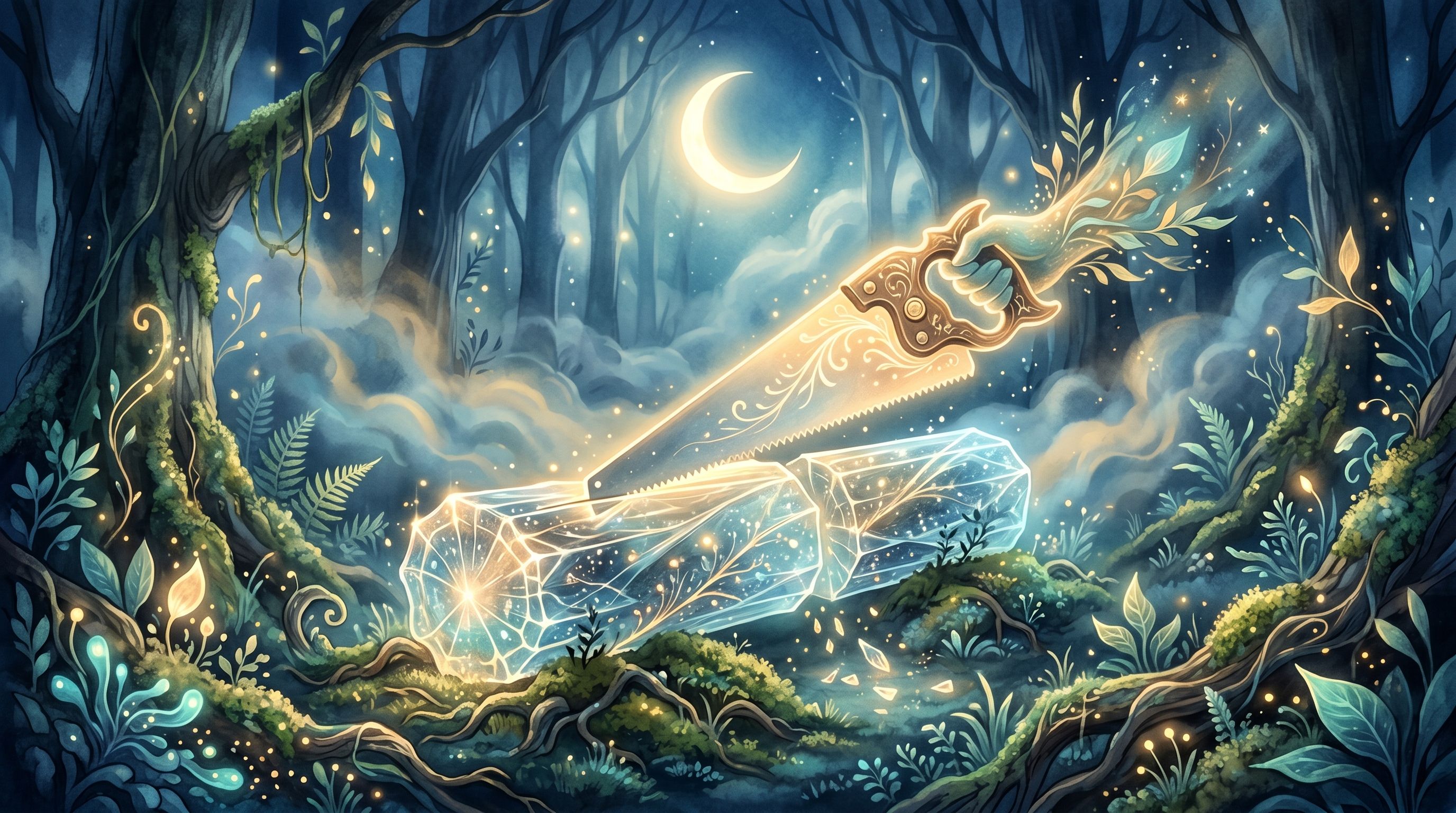
Conversely, if the tree falls with surprising, almost magical ease, it means you are ready. The change has already been made in your mind; the dream is merely validating the fall.
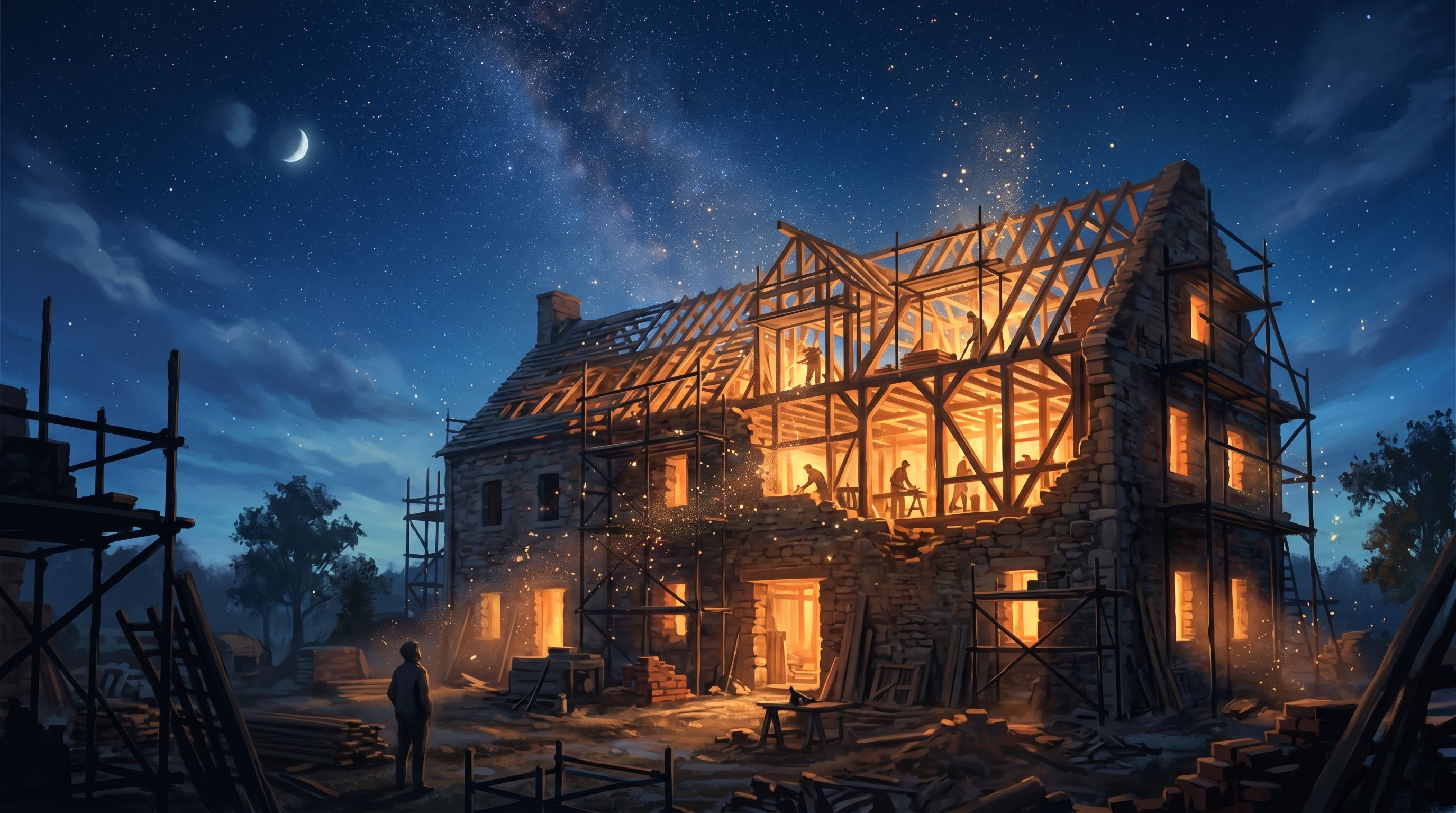
I have a particular affection for dreams where one cuts a tree to build something else: a house, a bridge, a fire. Here, the polarity of destruction shifts. We are no longer felling to remove, but to transform. This is the dreamer’s alchemy: taking the raw material of past experiences—even those that are "over"—and using them as firewood for the future. It is an image of great wisdom offered by your mind. You are losing nothing; you are transmuting.
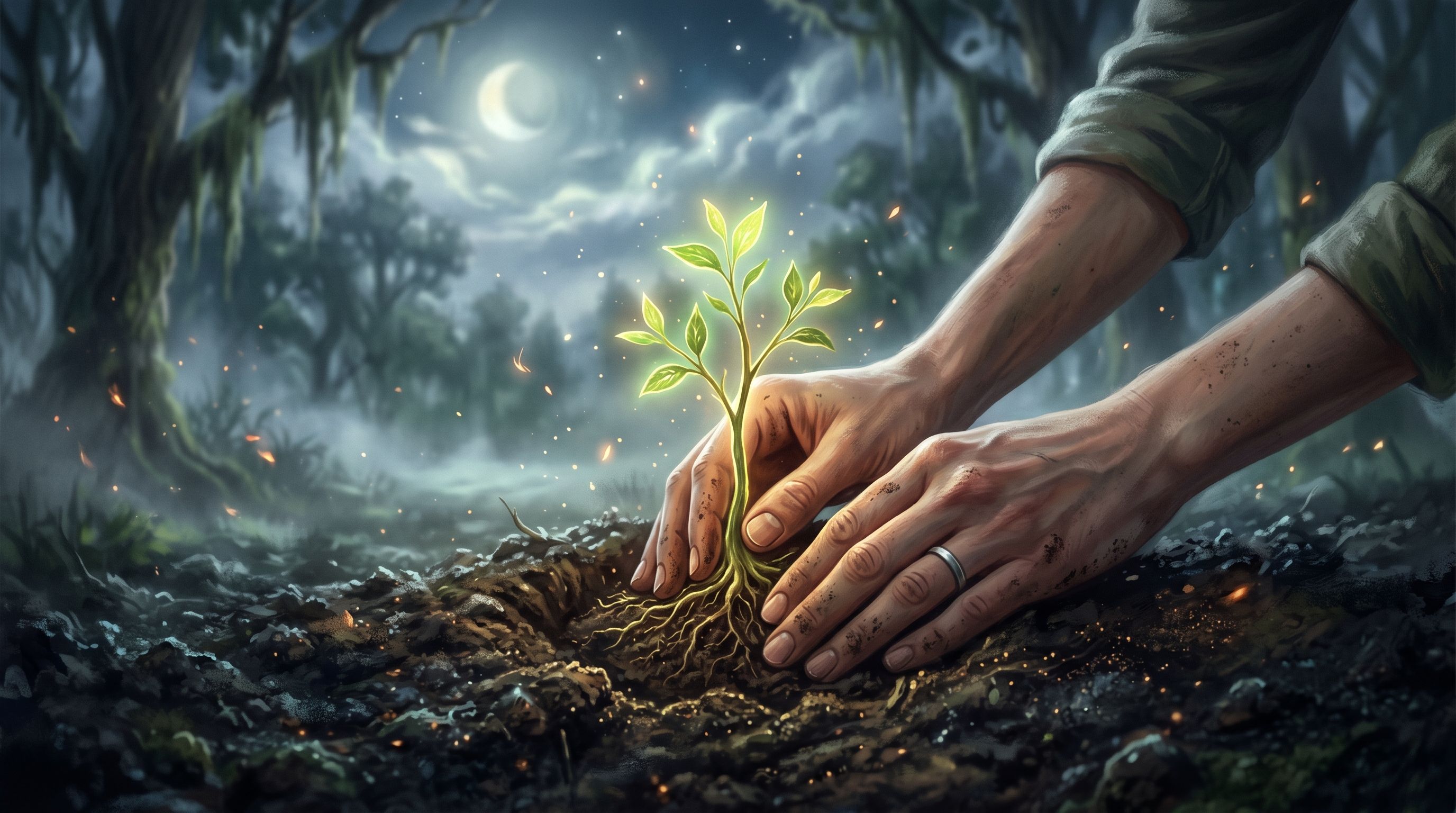
Never forget that in the world I travel, nothing truly dies. The tree that falls becomes the soil of tomorrow. Do not fear the axe; fear instead the stillness of a forest so dense that nothing new can grow. Your life needs clearings—moments of emptiness so that new dreams can finally poke their heads through the earth.
I once met a dreamer who was haunted not by the visual image of the falling timber, but by the smell of the sap. She told me it smelled of sharp, bleeding pine—an olfactory memory so vivid it lingered in her throat long after waking. When you cut down a tree in the night, your senses often register the strike far deeper than your waking mind cares to admit. You feel the vibration of the blade traveling up your arms and settling into your chest. It is a highly visceral, somatic experience, much like the phantom ache of dreaming of amputation. Your body knows that something living is being severed. This sensory weight isn't there to punish you; it is simply your dream-self ensuring you fully register the magnitude of your choice, forcing you to feel the raw reality of a transition you might otherwise try to intellectualize.
In my corner of the world, we do not view trees merely as timber or obstacles; we know they house spirits, the kodama, who sing when the wind passes through the canopy. To fell a tree in Shinto tradition requires a quiet prayer of apology, a recognition of the sanctuary you are dismantling. I sometimes get gently annoyed when modern dream dictionaries reduce this symbol to a simple career move or a neat psychological cleanup. It is never just that. When you dream of cutting down a tree, you are engaging in a sacred, albeit painful, negotiation with your own inner ecosystem. You are shifting the balance of your psychological soil. The shadow you cast is changing, and the birds that nested in those branches—representing your thoughts, your fleeting worries, your creative bursts—must now find another home. It is a spiritual displacement that requires a moment of internal reverence.
But what of the stump left behind? Honestly, this symbol remains beautifully mysterious to me because the dream rarely ends with the crash of the trunk. It is the aftermath that holds the true medicine. Sometimes you stand over the rings of the felled giant and find it was hollow all along, rotted from the inside by old, quiet griefs. Other times, you are left staring at a clean, bleeding wound in the earth, feeling a sudden, terrifying emptiness, not unlike the vulnerability of dreaming of teeth falling out. Yet, in the logic of the wild soul, a stump is never truly dead. It becomes a nurse log, a fertile ground where moss, mushrooms, and eventually, fresh green shoots will feed on the decay of what once was. The space you cleared with such trembling hands is already preparing its quiet, green reply.
If the crash of that tree still echoes in your thoughts and you need to see the scene from another angle, you can try to draw it or set the stage in our comic studio on Midnight Mind. Sometimes, seeing the wood fall in pictures helps us understand that what we cut was merely an old memory we no longer needed to move forward.