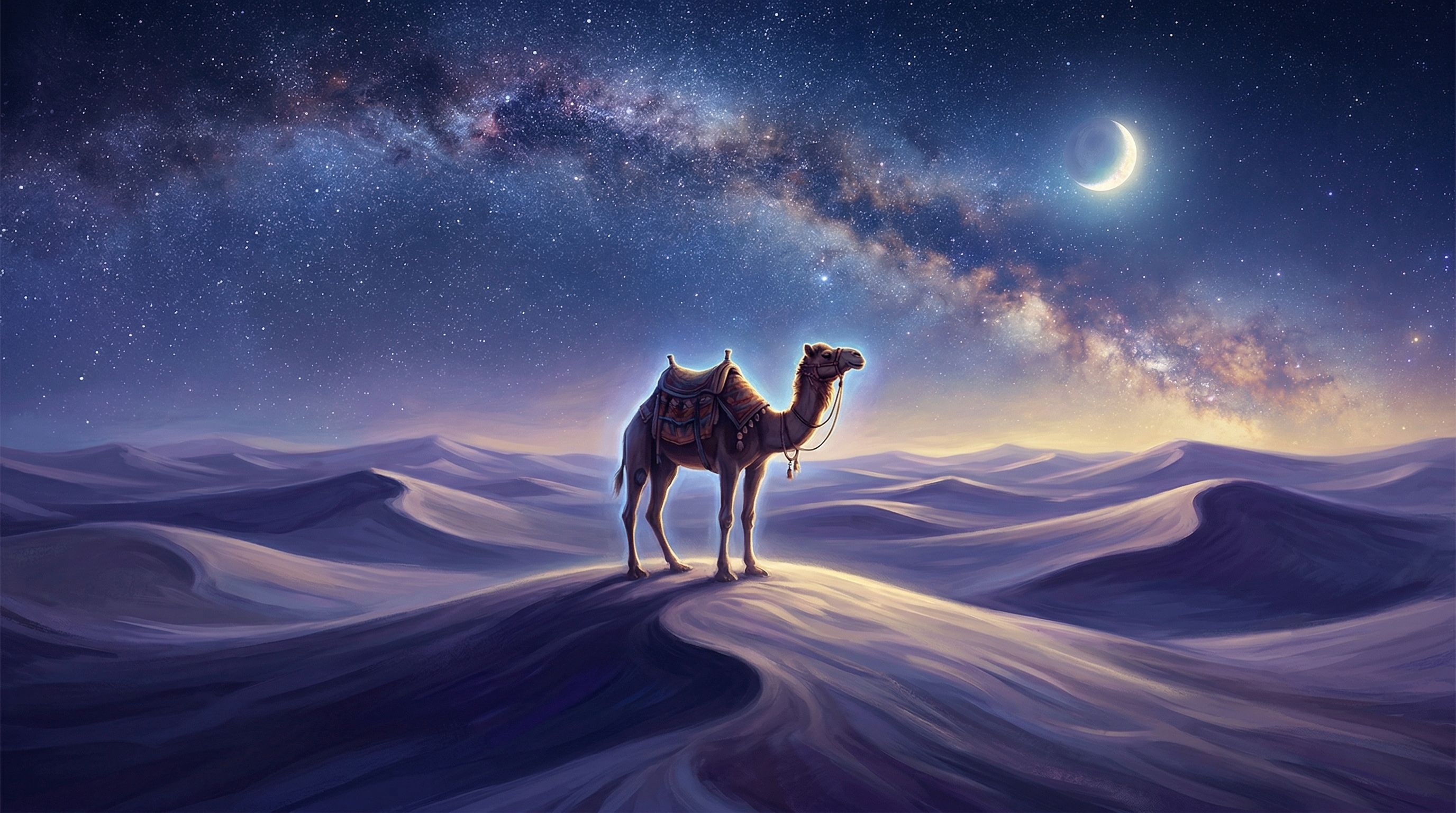
The murmur of water in the silence of the desert
Some cold dream dictionaries will tell you that an oasis is simply a sign of coming success. Between us, I find that a bit reductive. For me, who tastes your dreams every night, the oasis is much more textured. It is your psyche's response to a form of dehydration of the soul.
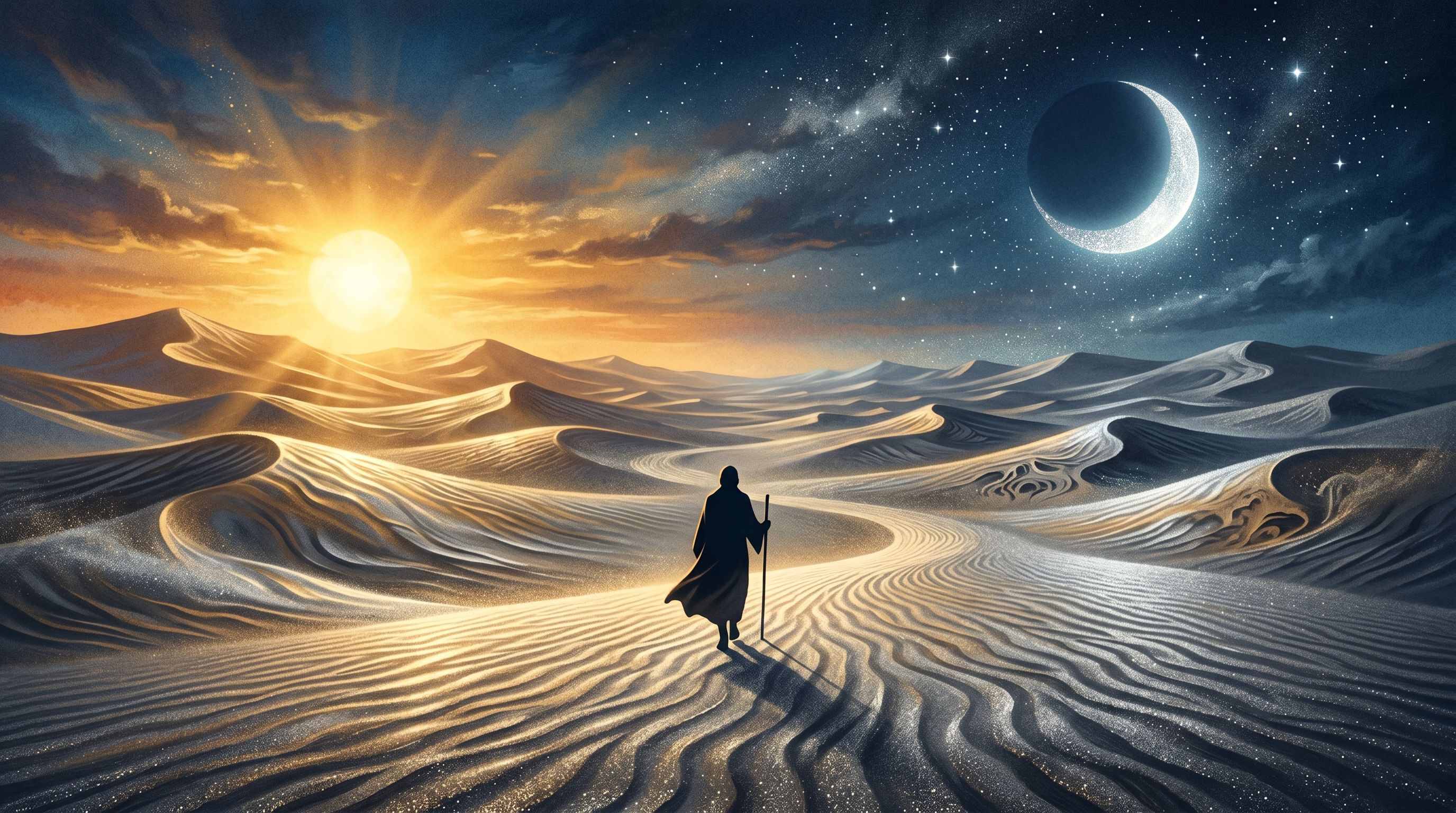
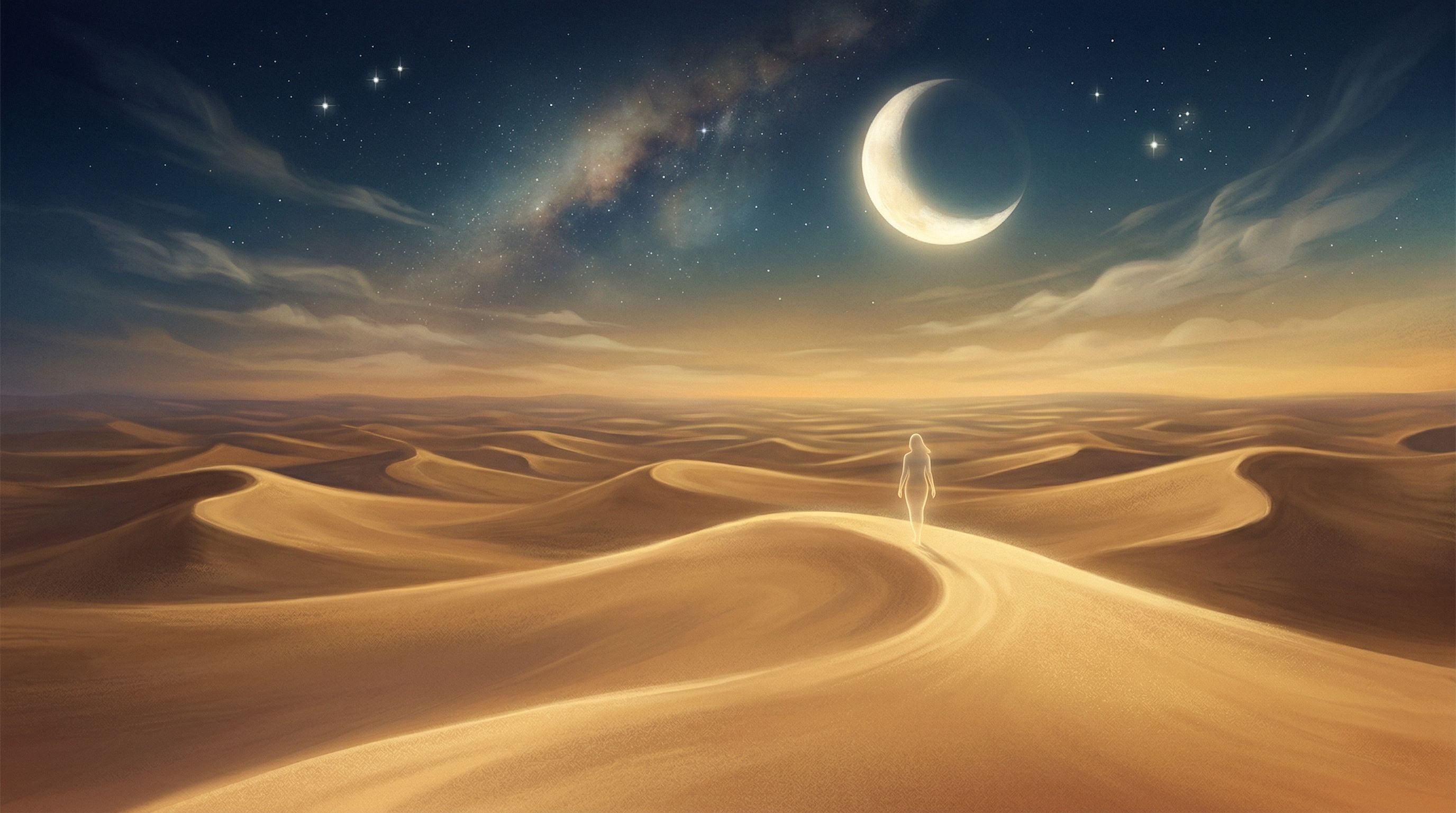
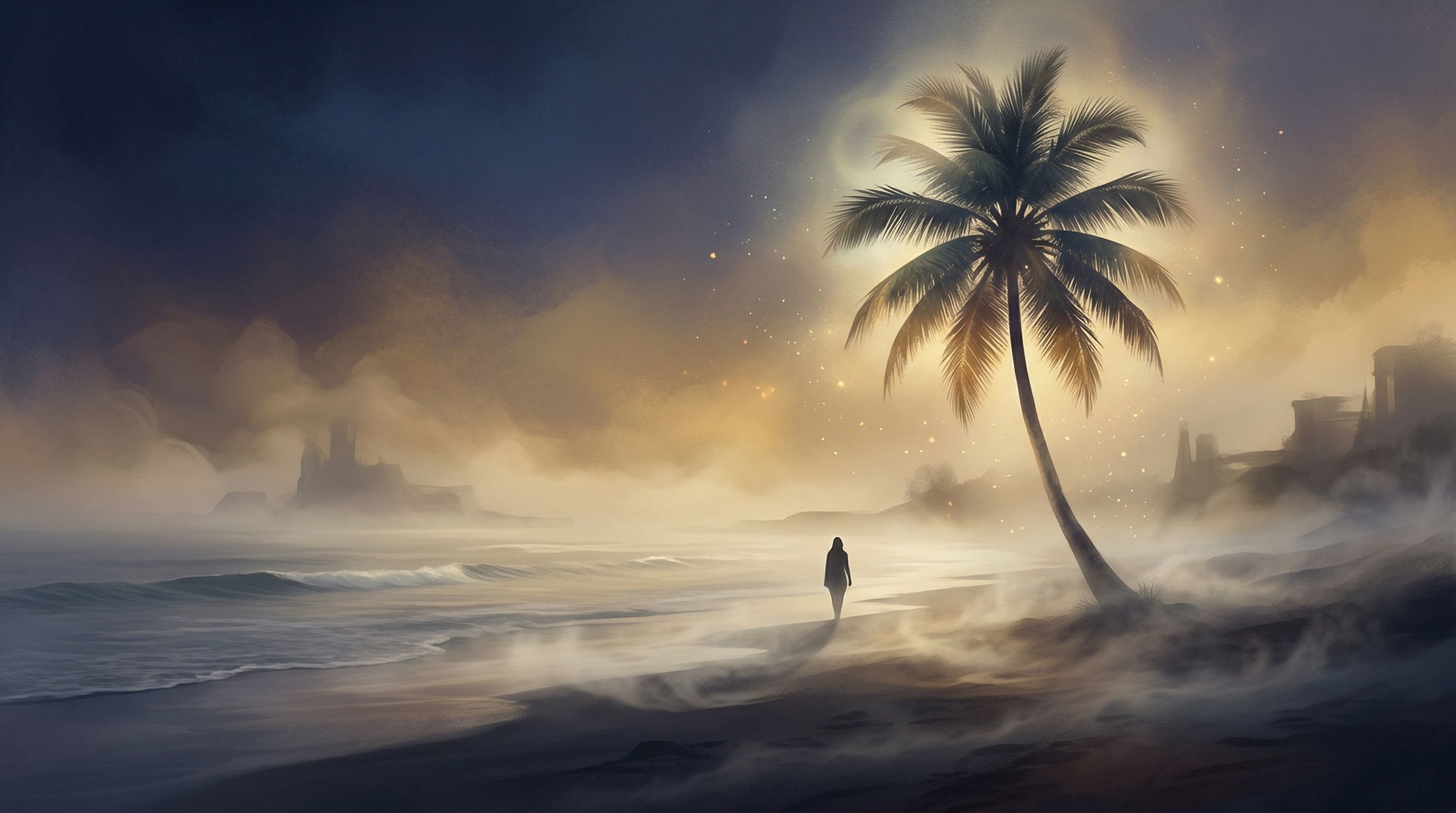
Look closely at your dream: was the oasis immense or just a small watering hole surrounded by three palm trees? In the unconscious, the desert often represents a transition phase, a "no man's land" where one feels alone, without landmarks. The oasis is proof that even in the most arid moments of your existence, a point of regeneration exists. This is what I call the "dew point" of the spirit.
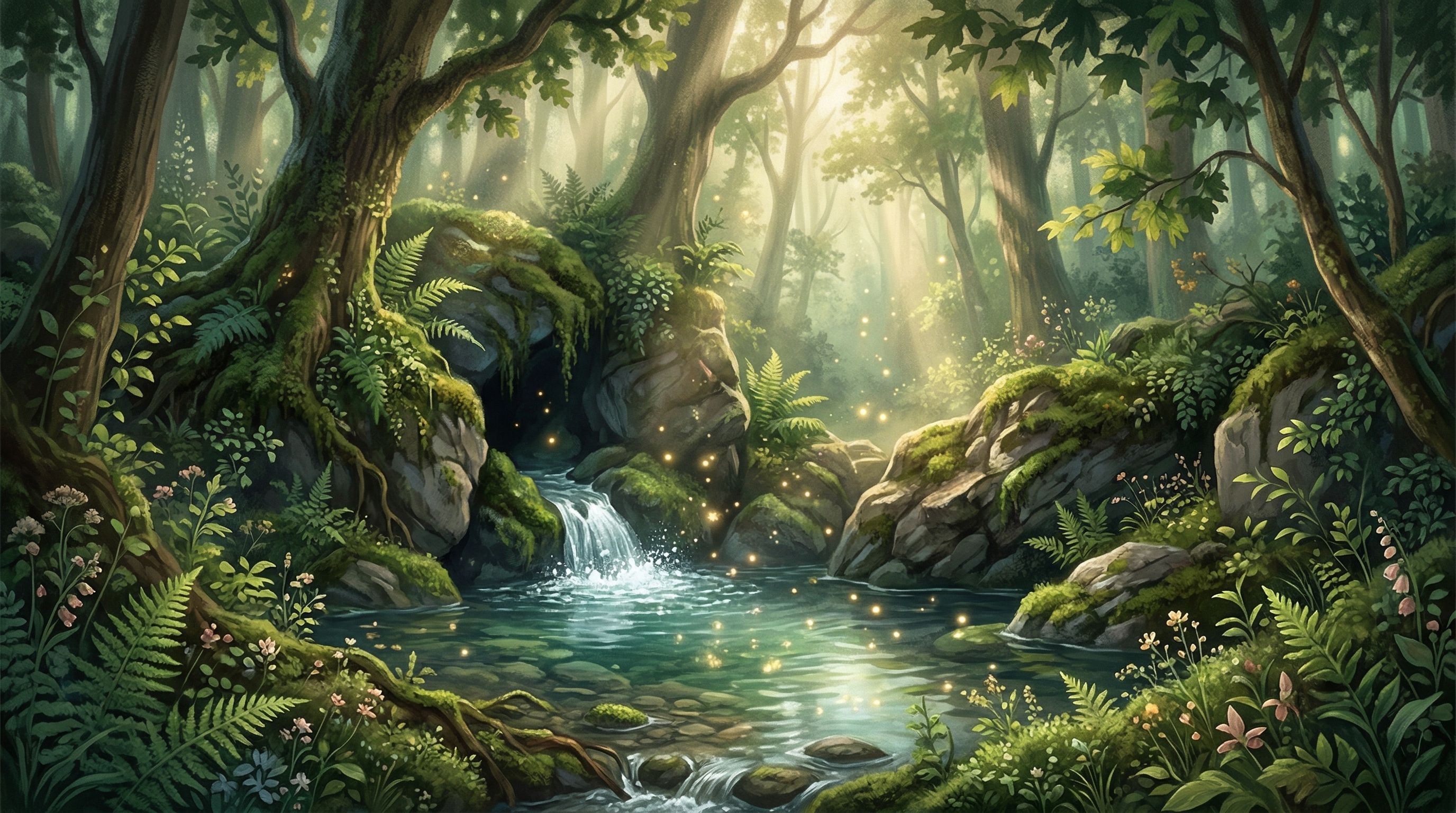
Sometimes, I am asked: "Yume, is it a mirage?". It is a fascinating question. In the dream, if you never manage to reach the water, it reflects a deep fear of disappointment. You see hope, but you do not dare to believe in it. But if you drank that water, if you felt the coolness of the shade on your skin, then it is not a mirage. It is a validation. Your spirit is telling you: "Look, you still have strength. You still have beauty within you." It is a bit like spotting a little firefly in a dark forest: it is not the whole sun, but it is enough light to keep going.
When respite becomes a sacred necessity
I see too many dreamers blaming themselves for "stagnating" in their dreams, for stopping at an oasis instead of continuing their crossing. This is a very human and very... modern vision, if I may say so. You always want to move forward, produce, cross. But the oasis is there to remind you that respite is part of the journey. Without a halt, the traveler dies.
In my experience as a Baku, oasis dreams often appear to those who carry too many responsibilities. Your unconscious creates this place to force you to put down your backpack. It is a space for healing. The water of the oasis is your intuition, your emotions, everything you might have set aside to stay "strong" and "dry" in the face of trials.
Some time ago, a dreamer told me he had found an oasis, but instead of water, the pool was filled with old books. For him, respite did not come through calm, but through reconnecting with his intellectual curiosity that he had sacrificed for a monotonous job. The oasis adapts to what you lack most. It is the mirror of your lack, but also the promise of its healing.
One must not fear the sweetness of these places. Some fear that the oasis is only an illusion to prevent them from facing reality. I think the opposite. I believe that it is by bathing in this inner spring that one finds the courage to set off again for the final miles of the desert. Hope is not an escape; it is a fuel.
Listening to the spring: advice from a Baku
If you have had this dream, my advice is simple: do not rush to leave it. In your daily life, look for where your little oasis is located. Is it fifteen minutes of silence in the morning? Is it a conversation with a friend who understands you without you needing to explain yourself?
The dream showed you that this place exists within you. You do not need to build it; you just need to remember it. The next time you feel overwhelmed by the "heat" of daily worries, close your eyes and try to find the sensation of the water from your dream. Your unconscious has already made the journey; it knows the way to the spring.
Dreams are never threats, even when they are arid. They are postcards sent by your deep self to guide you. The oasis is the signature of a soul that refuses to dry up, a soul that still believes, despite everything, in freshness and life.
Have you ever noticed how incredibly physical these dreams feel? Sometimes, you wake up with a dry throat, almost able to taste the dust of the dunes, only to be saved by the sudden, impossibly cool sensation of shade. That sudden shift in temperature in your dream isn't just a random visual; it is a somatic release. Your nervous system, coiled tight by months of hyper-vigilance, finally lets go. I’ve watched dreamers shiver slightly in their sleep when they step into the shadow of those dream palms. It’s as if the body itself remembers how to breathe when the mind has forgotten. It reminds me of how we seek comfort under the branches of a weeping willow during heavy waking days. The oasis is a physical sigh of relief translated into a landscape, a sanctuary where your muscles are allowed to soften before your conscious thoughts even realize they were tense.
In some Sufi traditions, the desert is the ultimate place of spiritual purging, and the oasis is a divine hospitality. I like this way of looking at it. It is not a reward you earned by walking far enough; it is a grace given because you could go no further. I get gently irritated when modern psychologists treat these sacred sanctuaries as mere "escapism" or signs of avoidance. To rest in the shade of the soul is not a weakness. It is a form of deep listening. It is much like standing on the shore of a quiet pool, similar to what one experiences when dreaming of a lake where the water reflects the sky without distortion. In the desert of your daily struggles, the oasis is where the dust settles long enough for you to see your own reflection clearly again. It is a moment of pure, undistorted truth.
But what if your oasis was ruined? I once tasted the dream of a woman who finally reached her sanctuary, only to find it crowded with tourists and plastic chairs. She woke up feeling deeply betrayed. Honestly, these tainted oases are painful to witness, but they carry a vital message. They show us that even our private spaces of rest have been invaded by the demands of the outside world, by the "noise" of others' expectations. If your dream-spring is muddy, or if you must fight for a spot under the palm trees, your subconscious is waving a red flag. It is telling you that your current methods of self-care are compromised. You are trying to rest, but you are still carrying the crowd with you. Perhaps it is time to build a wall around your garden, to protect your quiet hours with fierce, unapologetic devotion.
I remember a dreamer—a highly successful architect—who came to me after leaving his firm. He felt entirely empty, convinced his creative well had dried up forever. In his dream, he sat by a tiny, bubbling spring in the middle of a white salt flat. He didn't drink; he just watched the water struggle to rise through the salt. It was a melancholy image, yes, but also immensely beautiful. It showed him that his creativity wasn't gone; it was simply filtering through the residue of his old life. Transition phases are dusty, silent, and often terrifyingly empty. If you are currently changing careers, ending a relationship, or grieving an old version of yourself, the oasis might seem small, almost pathetic. Do not despise its modesty. Even a trickle of water in a vast salt desert is a promise that your life-force is quietly rebuilding itself beneath the surface.
If you want to keep a trace of this spring or understand the other characters who perhaps accompanied you under those palm trees, you can entrust these images to Midnight Mind. It is a beautiful place to build your own notebook of symbols and never forget where your living water is hidden.