When the Inner Ocean Becomes Too Heavy to Carry
I’ll be honest with you: I am not a fan of traditional dream dictionaries that claim a tsunami simply equals "misfortune." That kind of interpretation lacks the nuance your subconscious deserves.
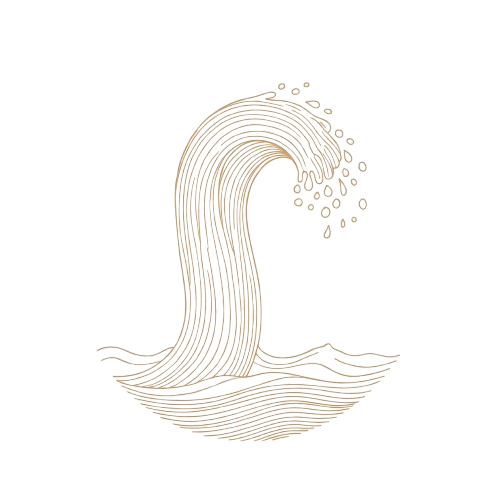
As a Baku who travels through the architecture of sleep, I see a tsunami primarily as a matter of volume. Imagine your mind is a vessel; sometimes, we pour too much into it—stress, unspoken words, or heavy responsibilities.
This is what specialists often refer to as emotional flooding. Some research suggests that our brains use these intense water metaphors to process high-arousal emotions that we haven't addressed during the day.
If you have already explored my thoughts on swimming, you know that water represents the flow of our feelings. A tsunami is simply an emotion that has been compressed for too long and finally reclaims its space with raw force.
Are you going through a period where it feels like "it's all too much"? Sometimes it’s grief, a breakup, or simply a job that is consuming you.
The wave isn't there to drown you; it’s there to tell you that your current defense system—whether it is denial or emotional rigidity—is no longer enough. You must accept that your pride or your certainties might get a little "wet" to let the flow pass through.
🌙 Yume’s Echo: Sometimes, the heart must break like a wave to finally let the light reach the depths.
Survival or Observation: Where Do You Stand?
What always fascinates me in the stories dreamers share is their position relative to the water. Your location in the dream tells us everything about your current state of mind and how you handle pressure.
If you are swept away by the foam, you might already be in the middle of an emotional storm in your waking life. You feel you have lost your grip, and that is okay.
Sometimes, stopping the struggle is the most courageous thing you can do. Letting yourself be carried consumes less energy than trying to swim against an entire ocean.
If you feel vulnerable, much like in dreams where you cry with your whole body, your subconscious is inviting you to let go of the need for control.
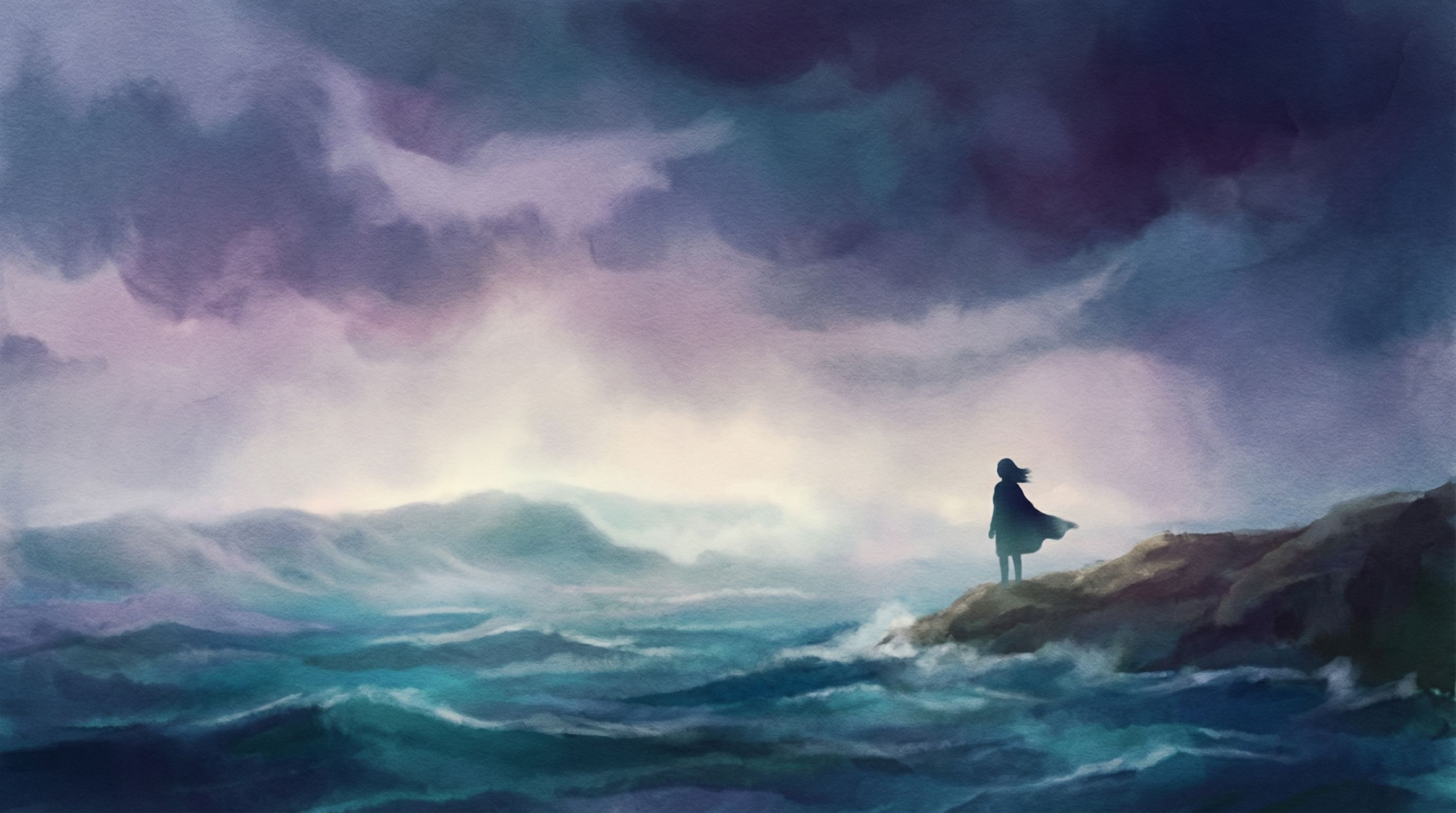
If, on the contrary, you observe the tsunami from a distance, it shows a form of wisdom or perspective. You feel the danger coming, you feel the social or family pressure rising, but you’ve managed to find a place of safety.
This is an invitation to remain vigilant but serene. You are the witness to your own transformation, rather than its victim.
I have also met dreamers who tried to build small barriers with sand or wooden planks. It’s a touching human reflex, but you cannot negotiate with a tsunami.
You cannot stop a deep-seated emotion with logic or small arrangements. Sometimes, you have to accept that certain things in your life must be swept away so the landscape can be renewed.
Concrete Example: The Mountain Observer
I recently spoke with a dreamer who repeatedly saw a massive wave approaching while she stood on a high cliff. In her waking life, she was facing a major career shift she felt "unprepared" for.
By standing on the cliff, her subconscious was showing her that while the change (the wave) was massive and life-altering, she actually possessed the psychological height to survive it.
Once she recognized the wave as "change" rather than "failure," the dreams stopped being nightmares and became a source of quiet strength. She realized she didn't need to stop the wave; she just needed to trust her position above it.
The Radical Beauty of a Necessary Reset
It is difficult to see beauty in an image of destruction, but nature—and the subconscious—abhors a vacuum. After the wave passes, the debris often gives way to bare soil upon which something more authentic can be built.
The tsunami is a symbol of radical cleansing. We dream of this when we need a "reset." It is brutal, certainly, but the subconscious isn't always a delicate poet; sometimes it’s an architect using a wrecking ball.
If you feel stuck in a routine that suffocates you or an identity that no longer fits, your mind triggers this wave to break down obsolete structures.
I would rather see you face your inner tsunami than watch you slowly fade away in stagnant, lifeless water. The wave, at the very least, contains incredible vital energy.
It proves that you are alive, that your emotions are powerful, and that you have the capacity to transform. If you find yourself noticing specific details about how you see the wave, you might find it helpful to reflect on how eyes relates to your perspective on life.
So, the next time you see the horizon darken in your sleep, don’t try to run until you’re breathless. Breathe. Look at the wave.
Ask it: "What are you taking away that I no longer need?" You will be surprised to see how much clearer the water becomes once you stop fearing it.
Have you ever noticed the terrifying quiet that precedes the wave in your dream? It is not the roar of the water that truly shakes us, but that sudden, unnatural withdrawal of the tide—the way the wet sand is left naked and gasping for air. I often feel this physical constriction in the dreamers I visit, a tight knot localized right in the heavy weight of the chest before the wall of water even appears. Your body knows what is coming before your conscious mind does. This silence is the absolute suspension of your daily illusions, the brief second where you realize you cannot pretend anymore. When the sound finally returns as a deafening rumble, it is almost a relief. The mind can finally stop waiting for the other shoe to drop, allowing the suppressed emotional weight to crash through and break the stagnant silence of your waking life.
I sometimes marvel at how differently we view water depending on our cultural fears. In Western thought, we desperately want to preserve the landscape, to keep everything dry and orderly. But in the older shinto traditions of my home, water is never just a passive element; it is an active, occasionally violent agent of purification, sweeping away what we call kegare—the heavy, invisible dust of accumulated spiritual fatigue. To have your inner world devastated by a wave is, admittedly, a terrifying form of grace. Yet, I am tired of clinical interpretations that treat this as a mere anxiety attack. It is a sacred demolition. The wave clears the debris of dead relationships, outdated career paths, and old resentments. It leaves behind a clean, albeit wet, shoreline where something completely authentic can finally take root.
I once met a dreamer, a quiet violinist, who told me she spent months running from these giant waves, waking up drenched in cold sweat. One night, cornered by a wall of dark water on a narrow beach, she simply stopped running. She closed her eyes, opened her arms, and let the wave swallow her whole. Instead of drowning, she discovered she could actually experience breathing underwater with a strange, cool ease. Honestly, this paradox is one of the most beautiful transformations I witness in the dream realm. The moment you stop fighting the inevitable collapse of your current circumstances, the nature of the nightmare changes. You realize that the very thing you feared would destroy you is actually an environment you are fully capable of surviving, perhaps even thriving in.
Sleep peacefully, I am watching over your shadows. If you want to explore your dreams more in depth, your Baku is waiting for you in the Midnight Mind app.
— Yume